Morning Ethics Warm-Up, 5/5/2018: “Why We Can’t Have Nice Things” Edition

Good Morning!

(I’m happy to report that my Clarence Darrow ethics program for a lawyer group yesterday in Annapolis was received wonderfully, in no small part due to actor Paul Morella’s moving and powerful recreations of Darrow’s courtroom oratory. As is often the case, attendees said that they didn’t realize a legal ethics presentation could be so interesting. If fact, there is no excuse for any kind of ethics NOT being interesting…)

1. I call this “cultural defacing.” At 10:30 last night, I watched the end of “The Princess Bride,” and was thrilled to arrive just as the final showdown between Ingo Montoya (Mandy Patinkin) and Count Rugen (Christopher Guest). Here is the scene, a classic one, which begins with the Count apparently fatally wounding Inigo with a dagger:

Inigo Montoya: Hello, my name is Inigo Montoya. You killed my father. Prepare to die.

[Inigo advances on Rugen, but stumbles into the table with sudden pain. Rugen attacks, but Inigo parries and rises to his feet again]

Inigo Montoya: Hello, my name is Inigo Montoya. You killed my father. Prepare to die.

[Rugen attacks again, Inigo parries more fiercely, gaining strength]

Inigo Montoya: Hello! My name is Inigo Montoya! You killed my father! Prepare to die!

Count Rugen: Stop saying that!

[Rugen attacks, twice. Inigo avoids and wounds Rugen in both shoulders. Inigo attacks, bellowing:]

Inigo Montoya: HELLO! MY NAME IS INIGO MONTOYA! YOU KILLED MY FATHER! PREPARE TO DIE!

[Inigo corners Count Rugen, knocks his sword aside, and slashes his cheek, giving him a scar just like Inigo’s]

Inigo Montoya: Offer me money.

Count Rugen: Yes!

Inigo Montoya: Power, too, promise me that.

[He slashes his other cheek]

Count Rugen: All that I have and more. Please…

Inigo Montoya: Offer me anything I ask for.

Count Rugen: Anything you want…

[Rugen knocks Inigo’s sword aside and lunges. But Inigo traps his arm and aims his sword at Rugen’s stomach]

Inigo Montoya: I want my father back, you son of a bitch!

[He runs Count Rugen through and shoves him back against the table. Rugen falls to the floor, dead]

Except “you son of a bitch” was cut!

We settled this when the TV showing of “Gone With The Wind” let Clark Gable’s iconic exit line, “Frankly my dear, I don’t give a damn” remain uncensored, and later,when John Wayne as Rooster Cogburn uttered the words, “Fill your hand, you son of a bitch!” before charging Ned Pepper and his gang. It is unfair and disrespectful to wreck the best work of writers and actors for the few remaining people on earth who take to their fainting couches when rude language meets their ears. You don’t edit Rhett, or Rooster, or Inigo, or even John McLane when he says, “Yippee ki yay, mother fucker!” Show the movie, or don’t show the movie, but don’t ruin the movie for the most easily offended in the audience. Continue reading

Morning Ethics Warm-Up, 4/30/18: Going Out Like A Lamb

Good Morning!

It’s especially good because this is the last day of one of the worst Ethics Alarms months ever, with the lowest daily average of views for an April since 2013. I have no idea why, and I wouldn’t change anything anyway. I have my dark suspicions, though….

1 Pig brain ethics. Researchers at Yale University restored circulation to the brains of decapitated pigs, and kept the organs alive for several hours.  Now ethicists are wondering if this was ethical.

Hmmmm:

  • I’m going to go out on a limb here and guess that if you asked the pig, he’d say that cutting his head off was more unethical than keeping his brain alive afterwards.
  • Like a lot of bioethics controversies, this is more “ick” than ethics.
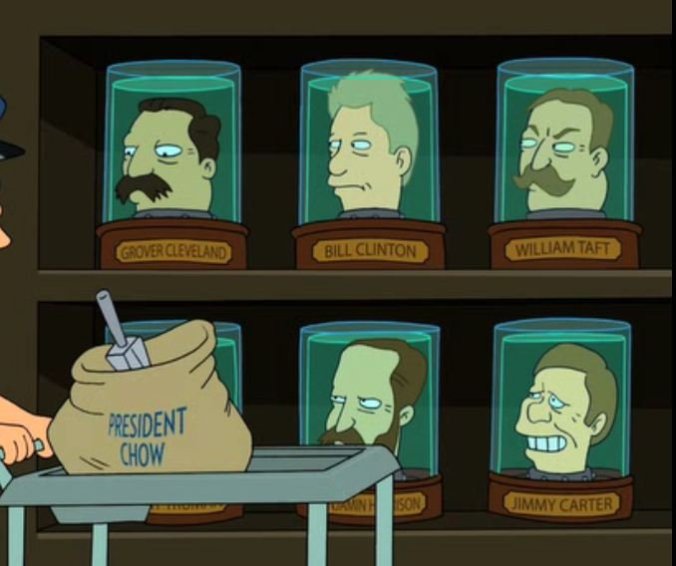
  • Go on, make a “Futurama” joke.

2. Human brain ethics. Is we getting dumber? This Facebook quiz claims that “nobody” can get even 5 of these 10 questions right, and that if you get all ten right, you’re a genius. I hope that isn’t true. I would say that anyone who can’t get at least 8 of the 10 right is either under 15 or cognitively damaged. I really want to know what the average score is. If most Americans really can’t answer these, then we need to dismantle the public school system and start from scratch. And any teacher who can’t answer at least nine of the ten questions should be fired. Continue reading

Comment Of The Day: Morning Ethics Warm-Up, 4/7/2018: #2: “Williamson No Longer Of The Atlantic’”

This is an epic Comment of the Day using an unusual approach. Michael West explores aspects of public discourse that is at the core of ethical misunderstanding and ethics malpractice by focusing on a multi-party twitter exchange regarding an issue discussed on Ethics Alarms, the firing of former National Review writer Kevin Williamson after he doubled-down on an extreme position regarding abortion: he believes it is murder, and therefore believes that capital punishment is a fair punishment for what should be considered a crime. Moreover, he said that because of the violent and depraved nature of the crime, a violent execution, like hanging, would be appropriate for the women who allowed their fetuses to be aborted.

Michael also used his comment to highlight a concept we have not used on Ethics Alarms, at least by name, “the Overton Window.” That is defined as “The spectrum of ideas on public policy and social issues considered acceptable by the general public at a given time.” Of course, what the “window” is can be tricky to determine. Donald Trump broke the alleged window repeatedly. My preferred approach to this “window” is to challenge it, and to try to expand its boundaries, consequences be damned. I equate the Overton Window with de facto censorship and thought-control.

I am especially glad that this comment again raises the Williamson firing and the related ethics issues. These are rich topics, and yet the matter fled the blogs and commentary sites quickly, paved over by successive outrages of the day.

Here is Michael West’s Comment of the Day on #2 in the post, Morning Ethics Warm-Up, 4/7/2018: “Ruggles Of Red Gap” And “Williamson No Longer Of The Atlantic’.”  This is a bit challenging to read, but worth the effort. For clarity, Michael’s commentary is in bold italics.

I think this is an informative tweet dialogue on a handful of levels. For one, it reveals some informal fallacies that inevitably ruin any discourse and are especially ruinous tendencies in any summarized forum (which twitter represents the extreme end of the spectrum). It also reveals what I think is the fundamental problem with the discussion [on Ethics Alarms.]. I think we’re operating on two different meanings of “mainstream”. Simultaneously this reveals two different attitudes regarding the Overton Window.

As for the term “mainstream”, Almaqah below seems to mean it as “anything someone is willing to hear another person discuss.” I presume [commenter Chris’s]  friendliness toward Almaqah’s opinions implies [he] generally believe the same. When I use it, and I think when most others use the term, we use it as more of a quantitative assessment, where “mainstream” means “anything that a sufficient percentage of people believe”, to which it might be effective to add “that it holds enough weight to begin to sway policy discussions” …but that’s not essential.

I think Almaqah’s subsequent side-bars reveal a somewhat concerning attitude towards diversity of opinion as well as tolerance of that diversity. He seems to think that acceptable discourse should be extremely narrow and that anything outside of that window should not be tolerated one bit.

Cast of Characters (mostly from their twitter profiles):

@_Almaqah

Gabriel Malor (@gabrielmalor) – “Oklahoman. Attorney. Contributor at @FDRLST, @dcexaminer, and other places. Keep reminding me that I’m supposed to be rising above.”

@Elwampito – “petty bourgeois”

Mollie Hemingway (@MZHemingway) – “Senior Editor, @FDRLST”

Katherine Mangu-Ward – Editor in Chief of Reason Magazine

FyodorPossibly a libertarian & probably anti-Trump… (judging from a quick scan of tweets)

@MsBaileyGurl – “fundamental human rights and fast wifi. So easy to please.”

Mark Hemingway (@Herminator) – “Senior Writer @WeeklyStandard. Husband of @MZHEmingway”

Jacob T. Levy (@jtlevy) – “Tomlinson Prof of Political Theory, McGill. RPF http://amzn.to/1osWYDC Niskanen http://tinyurl.com/gpu3rzw Opinions here are mine not McGill’s.”

Alexandra DeSanctis (@xan_desanctis) – “Buckley Fellow at National Review. Co-host of “Ordered Liberty” with @DavidAFrench. @NotreDame alum. ”

Bre Payton – “the culture and millennial politics reporter for The Federalist”

@JackFromAtlantapossibly a conservative & possibly an Eastern Orthodox Christian (judging from a quick scan of tweets)

@UrbanAchievrprobably a leftist, most probably anti-Trump (judging from a quick scan of tweets)

Oliver Darcy (@oliverdarcy) – “senior media reporter, @CNN. writing at the intersection of media & politics.”

Kirsten Powers – “USA Today Columnist / CNN Political Analyst / Cohost of @thefaithangle podcast”

Here’s the opening salvo, as Almaqah responds to Gabriel Malor (which “El Wampito” rapidly jumps into).

@gabrielmalor – “The man just lost his job because of his political beliefs. The people celebrating it, particularly the ones who work in media, are trash human beings, not to mention completely unself-aware morons.”

@_Almaqah (two combined tweets) – “Stop convincing me “executing women who have abortions” is a conservative belief, I’m trying to be generous. Also he’ll be fine, NR will take him back. Most prolifers say they don’t want to punish women who have abortions, so it’s odd to see some of them conflate KW calling for execution with normal conservative beliefs. Which is it?”

@Elwampito – “it’s the latter”

@_Almaqah – “I’d like to give them the benefit of the doubt!”

@Elwampito – “i mean, if you believe abortion is murder and support the death penalty, it would seem to fit unless you think women lack moral agency or something”

@_Almaqah – “This is true, most of them get around having to reach this conclusion by just saying women are victims of abortion too. KW was willing to say he takes their agency seriously and thinks they should be held culpable”

Here, Almaqah subtly shifts the accusation. The topic is the specific stance that women who kill their unborn children should be executed. Almaqah expands this to “Punishing women who seek abortion.”.There’s a significant difference here where his latter use of “punish” compels the person he’s arguing with to either agree or disagree to a general assertion which may or may not reveal an actual attitude towards the specific assertion. This isn’t rhetorically responsible dialogue.

@MZHemingway – “In only article pubbed @ Atlantic before being fired for being pro-life, NeverTrumper Kevin Williamson wrote enemy was @VDHanson.Interesting”

@_Almaqah – “Another person who equates ‘prolife’ with ‘wanting women who have abortions to be executed’. I’ll take your word for it!”

Molly Hemingway, is playing the typical journalist role of saying something triggering to her base, “Fired for being pro-life”, when she knows he was fired for having a stance about how to enforce those who have abortions. She isn’t being responsible with her tweet, and Almaqah capitalizes on this. But in reality, we know he wasn’t fired for being pro-life, but standing up *for* him and his right to hold opinions, is not an endorsement of those opinions NOR is it a claim that the opinions are “mainstream” (unless you insist on the Narrow Overton window definition of mainstream).

Here, Almaqah quotes the same Reason article, by Katherine Mangu-Ward, which [Chris] referred to and is linked in Jack’s piece.

@_Almaqah (two combined tweets) – “Kevin’s defenders would’ve been better off just saying ‘yes, punishing abortion w/execution is completely reasonable conservative belief, what of it?” instead of “he was just trolling, of course he doesn’t believe that horrible thing!” I mean, once you concede it’s a terrible thing to believe it, kind of hard to get mad when there are consequences for actually believing in it”

@Fyodor32768 (three combined tweets, bold is what Almaqah responds to) – “I think that conservatives probably believe that say the median viewpoint should be outright illegalization and that Williamson’s execution position is on the right side of the spectrum but not crazy. So by saying that his hanging position puts you outside the spectrum you are saying something about what the “baseline” opinion is that they dislike. Sort of like how a lot of mildly racist conservatives didn’t fully agree with Trump’s more forceful racism but didn’t feel it should be condemned as outside the pale because they though of their own more mild racism as the midpoint for views on minorities.”

@_Almaqah – “Yes, to them punishing abortion by execution is just a policy difference to be debated politely among friends. It’s not like Williamson called for something truly offensive like an 80% estate tax”

Almaqah, relying on the narrow, intolerant view of the Overton Window, again shifts the term from the specific “execution” to the broader term “punishment.” Fyodor does a great summary rebutting him here. Almaqah’s reponse is to belittle the notion of tolerating an individual, who while generally in agreement with most actual mainstream opinions, holds one or two more extreme ideas. This is problematic. If Almaqah’s attitude is to reign, we cannot tolerate individuals having anything other than exactly the same lock step views on every opinion we grant “mainstream” status…we must, upon discovery that one of our “orthodox” fellows, when holding even a single “out of whack” viewpoint, must be shut up and sent out of the camp.

@Herminator – “Kevin Williamson was Never Trump *and* one of the most talented writers of his generation. They still wouldn’t let him work for a a venerable liberal institution. Let that be a lesson.”

@MsBaileyGurl – “The lesson is…don’t advocate for the murder of women. Seems pretty easy for the ‘law and order’ party to get behind.”

@Herminator – “Adovocating for the murder of women who murder others is the issue at hand. This is misdirection.”

@_Almaqah – “”he doesn’t want to murder all women, he just wants to murder women who have abortions” might’ve sounded better in your head” Continue reading

Morning Ethics Warm-Up, 4/7/2018: “Ruggles Of Red Gap” And “Williamson No Longer Of The Atlantic'”


Good Morning…

(Do you remember when Saturday morning was fun? Stupid, but fun…)

1. Your cultural literacy note of the day. The Charles Laughton classic “Ruggles of Red Gap” was on Turner Movie Classics last night. The movie itself is wonderful—I recommended it in an Independence Day post here—but it is also a cultural literacy triumph.  In 1935, when the film was released, Lincoln’s Gettysburg address was in the process of falling out of the public’s consciousness. The film’s most famous scene, however, revived it. In a saloon, reference is made to “what Lincoln said at Gettysburg,” and all the cowboys in Red Gap ask each other, “What did Lincoln say at Gettysburg?” Then, quietly, unexpectedly, Ruggles the English butler (Laughton) and the only foreign-born man in the room, recites the speech. TCM host Ben Mankiewicz, in his post showing observations, revealed that when the film was first shown, audiences frequently stood and applauded Laughton’s rendition, and the Address itself became more widely known and quoted.

This is how popular culture works when it is in sync with national values, and not attempting to undermine them.

Here is the scene…for some reason YouTube doesn’t have it, but does have the entire film. The saloon scene begins at about the 56:09 mark:


2. The Atlantic-Kevin Williamson controversy. Unless you routinely plumb the depths of pundit wars and cultural bloodletting, you might well be completely unaware of this skirmish, but it is ultimately an ethics story. Continue reading

John Wayne Western Ethics: Just Thought I’d Mention This…

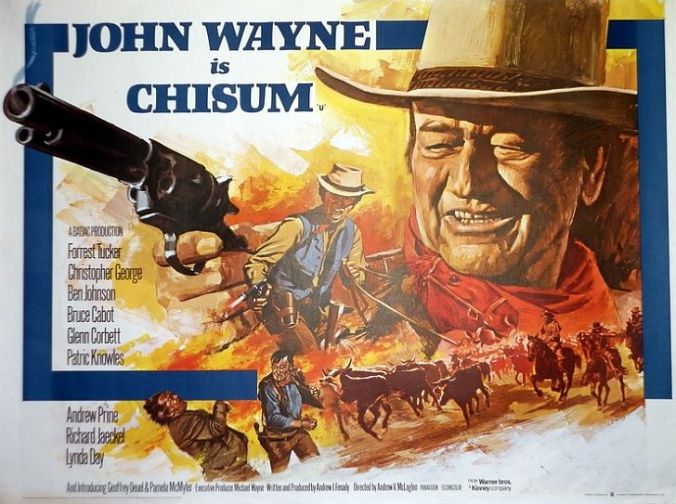
“Chisum” is a lesser effort by the Duke for sure; I saw the Western when it came out in 1970, and it made no impression on me at all, apparently. When I watched it again two days ago, almost nothing seemed familiar. There was one scene, however, that raised my eyebrows.

The story is very loosely based on John Chisum (of  Chisum Trail fame) and his involvement in the Lincoln County War of 1878 in the New Mexico Territory. At one point in the story, British rancher and Chisum’s neighbor Henry Tunstall rides to Santa Fe to seek help from Territorial Governor  Sam Axtell in the increasingly tense range war.  Henry does not know that he has been framed for cattle rustling, and when he  is intercepted by two deputies (they are in on the plot, but he doesn’t know that) who accuse him and tell him he is under arrest, he objects strenuously.  Saying he is late, Tunstall starts to reach into a pocket. One of the deputies shoots him dead. The two then plant a gun on Tunstall to back the story that the deputy fired in self defense.

But why did he have to do that? Continue reading

“Melanie Wilkes” Loses Her Defamation Lawsuit…But Was She Right?

A California appellate court yesterday dismissed a defamation lawsuit brought Dame Olivia de Havilland against FX Networks. De Havilland, now 101, is one of the last surviving—and lucid—members of Golden Age Hollywood royalty. Those who are culturally literate know her as Melanie Wilkes, Scarlet’s angelic sister-in-law, in “Gone With The Wind,” Maid Marion in MGM’s definitive “Robin Hood” with Errol Flynn (de Havilland’s most frequent leading man),  my personal favorite, poor Bette Davis’s evil tormentor in “Hush, Hush, Sweet Charlotte,”  and many other roles in an epic career that won her two Academy Awards. (If you don’t know her, get cracking! What’s the matter with you?)

De Havilland had  sued for damages, claiming her portrayal in the Ryan Murphy-produced 2017 docuseries, “Feud: Bette and Joan” about the feud between Davis and Joan Crawford, misappropriated de Havilland carefully nurtured image without her consent, and harmed her reputation by portraying her inaccurately, especially a scene where she is shown referring to her sister, actress Joan Fontaine (“Rebecca,” “Jane Eyre,” “Suspicion”—What is the matter with you?), as a “bitch.”

“When ‘Feud’ was first being publicized, but before it went on the air, I was interested to see how it would portray my dear friend Bette Davis,” de Havilland wrote the New York Times, explaining the suit. “Then friends and family started getting in touch with me, informing me that my identity was actually being represented on the program. No one from Fox had contacted me about this to ask my permission, to request my input, or to see how I felt about it. When I then learned that the Olivia de Havilland character called my sister Joan ‘a bitch’ and gossiped about Bette Davis and Joan Crawford’s personal and private relationship, I was deeply offended.”

“Feud,” she said, represented itself as historically accurate fiction, but falsely portrayed her as a hypocrite “with a public image of being a lady and a private one as a vulgarity-using gossip,” undermining what de Havilland  described as a hard-earned reputation for “honesty, integrity and good manners.” Continue reading

Ethics Review: “Three Billboards Outside Ebbing, Missouri”

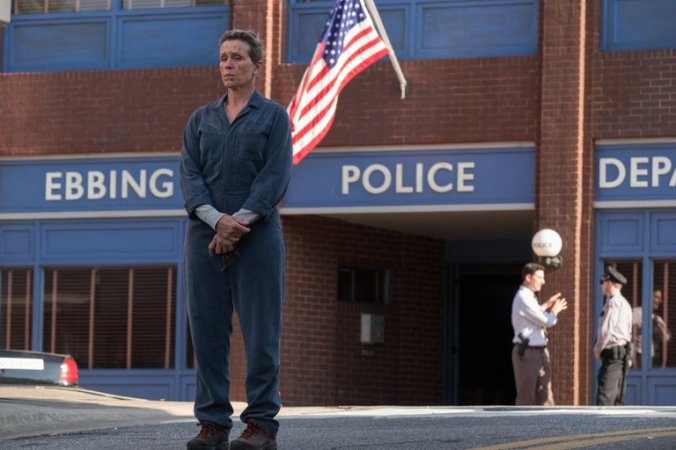
I watched last year’s “Three Billboards Outside Ebbing, Missouri,” twice, just to make sure it was the profound ethics movie I thought it was. It is. None of the reviews described it that way, of course. Here is the New York Times:

“The movie opens on low boil with Mildred behind the wheel of her station wagon near three derelict billboards…she uses the billboards to announce her crusade … a way to get things jumping (the investigators, the tale) and splash some foreboding on an outwardly pacific scene. Much of the story involves the ripples of outrage, confusion and buffoonery that the billboards inspire and that soon envelop almost everyone Mildred knows. Months after her daughter’s death, grief has walled her in; isolating and seemingly impenetrable, it is inscribed in the hardness of her gaze and in her grim new identity as a mother of a dead girl. The billboards turn that grief into a weapon, a means of taking on the law and assorted men — a threatening stranger, a vigilante dentist and an abusive ex (John Hawkes) — who collectively suggest another wall that has closed Mildred in….”

None of which addresses what is remarkable about the film, which is that it shows what causes our ethics alarms not to ring—Frances McDormand as Mildred and Sam Rockwell as Dixon, a racist and vicious deputy, in particular demonstrate  what it is like to be driven by non-ethical considerations of the darkest and most passionate sort—and more important, what causes them to start ringing again. Most reviewers described this as a dark and depressing film. The ethics alarms are mostly off again as the film ends, and that is ominous, but its main ethics message is uplifting in many ways. “Three Billboards” teaches us that even broken, ignorant, alienated human beings have the capacity to access their innate instincts for compassion, justice, forgiveness, selflessness and kindness, and even when our ethical selves seem permanently overcome and decisively defeated, they can burst out again, in control, salvaging what’s best about the species.

There is a moment early in “Three Billboards” that signals that it is not only going to show us what monsters anger and grief can transform us into, but also that what George Washington’s list of 110 Rules called “that little spark of celestial fire called conscience” is remarkably resilient.  A sheriff—the ethics compass of the story, played by Woody Harrelson— visits Mildred after her billboard messages embarrass him and roil the town. She is hard and cold as marble as he tries to explain his failure to find her daughter’s rapist/killer, even after he reminds her that he is dying of cancer. Suddenly the sheriff has a violent  spasm: he coughs up blood on himself and Mildred. And we see her fury evaporate in an instant. The compassionate and caring mother she once was emerges, if only for a few moments. ( McDormand is such a superb actress that she pulls off the sudden transition convincingly and movingly: you believe it, though it is like watching Mr. Hyde turn into Dr. Jekyll in the snap of a finger.) Later, when again her fury has been aroused, we see the same woman firebomb the police station and watch implacably as her nemesis deputy burns. A warning: just because the ethics alarms can ring doesn’t mean they are working well enough.

Sam Rockwell’s character also reveals surprisingly that his ethics spark has not been entirely extinguished, again thanks to a catalyst supplied by the sheriff. This transformation caused considerable  criticism of the film among critics and artists in Hollywood, and some attribute the film’s failure to win the Best Picture Oscar to the fact that a racist is redeemed and revealed to have an ethical core. But except for the sociopaths and psychopaths among us, admittedly a disturbingly large group, we all have that ethical core. We have the ethics alarms too, ready to be re-activated, even if they aren’t in perfect working order. Yes, this is  even true of racists. So much of our current political discourse is driven by the false construct that a single belief or a single lapse of reason marks an individual as irredeemable. Its easier to marginalize and demonize them that way. But it isn’t true.

Indeed Ethics Alarms often declares certain conduct and words as signature significance, proving that an individual is unethical because such actions and thoughts are alien to ethical human beings. “Three Billboards Outside Ebbing, Missouri” reminded me that people may be unethical–Mildred and Dixon, the deputy, could never be called ethical, for ethical people don’t set police stations on fire or throw young men out of second story windows, as Dixon does—but that even unethical individuals can find their ethics if you give them a chance.

And if they can find their ethics, so can all of us, and so can society. There is hope.

________________________

Addendum: I cannot leave “Three Billboards” without a salute to one of its most powerful scenes, when Mildred tells a priest why she doesn’t care what he has to say when he comes to her home to admonish her for the messages on the billboards:

Bingo.

Morning Ethics Warm-Up, 2/27/18: “Mrs. Miniver” Ethics, “Ick!,” And A Poll

Rugby in the morning

1 One of my favorite Hollywood ethics scenes. I watched “Mrs. Miniver” again last night, the 1942 WWII drama starring the magnificent Greer Garson. It has a wonderful ethics moment late in the film, when Lady Beldon, the wealthy town battleaxe (and the grandmother Mrs. Miniver’s recently minted daughter-in-law, soon to die tragically) presides over the English village’s annual flower show, in which she has won the coveted “Best Rose” prize every year. But beloved old stationmaster Mr. Ballard has developed a magnificent new rose (named after Garson’s character) and desperately wants to win as well. The Minivers tease their elderly relative about the near certainty that she will win as always regardless of the relative merits of her entry and “The Miniver” entered by Mr. Ballard, since the judges are terrified of her, and Lady Beldon has made it clear to all that she regards the annual prize as a virtual entitlement. After all, the prize is even called “The Beldon Challenge Cup.” Sure enough, the judges, who seemed to be having a harder time than usual concluding that Lady Beldon’s rose deserved the award, hand her a slip that places her rose in first place, and Mr. Ballard’s in second.

Lady Beldon shows the slip to Mrs. Miniver with an air of triumph.

MINIVER: This is really important to you, isn’t it?

LADY BELDON: Yes. It’s stupid of me, but there it is. I’ve won that cup for as long as I can remember.

MINIVER: Mr. Ballard’s terribly keen too.

BELDON: Well, he’s had his chance. Hasn’t he? You have such a way of looking at people. What do you expect me to do? Reverse the judges’ decision?

MINIVER: I wouldn’t put it past you. If you happened to disagree with it.

“But I don’t!” she harrumphs. She keeps looking at the two competing roses, though, and also at old Mr. Ballard (played by Henry Traverse, later to portray Clarence the Wingless Angel”in “It’s a Wonderful Life.” His look of anticipation and hope approximately mirrors the expression of a six-year-old on Christmas morning. And when it comes time to announce the winner, Lady Ballard pauses, looks at the two roses again, ponders,  crumples up the judges’ slip, and announces that “The Miniver” wins the prize.

Dame May Witty, one of the best character actors England ever produced, shows us with her face that she realizes she did the right thing as soon as she sees Ballard’s reaction to winning. And the assembled crowd gives her an even louder ovation than they give the winner. They didn’t even have to see the slip like the Minivers: they know what she did. And she knows they know.

I had a Lady Beldon moment many years ago, before I had even seen the movie. Continue reading

Morning Ethics Warm-Up, 2/18/18: Sunday Potpourri

Good Morning!

1. Now THIS is a bribe…Al Hoffman Jr., a Florida-based real estate developer and a prominent Republican political donor “demanded” yesterday that the party pass legislation to restrict access to guns, and vowed not to contribute to any candidates or electioneering groups that did not support a ban on the sale of military-style firearms to civilians. “For how many years now have we been doing this — having these experiences of terrorism, mass killings — and how many years has it been that nothing’s been done?” Mr. Hoffman said in an interview. “It’s the end of the road for me.”

The only ethical GOP response is, “Bye!” Donors may not tie their support to specific legislative measures. That’s a quid pro quo. a bribe. The party should—I would prefer “must”—respond by officially and publicly telling Hoffman that its elected officials  will do what they believe is in the best interests of their constituents and the nation, and he is free to contribute to whatever he deems appropriate.

Moreover, his statement shows that he doesn’t know what he’s talking about. This is yet another “Do something!” yelp.

2. Yet more anti-gun hysteria...Could there be a more nakedly emotional and irrational headline than this one in today’s Sunday Times: “Why Wasn’t My Son the Last School Shooting Victim?”(That’s the print version…the online headline is different.)

3. I may have to put “cultural appropriation” on my list of things have to flag every time it’s used…From a New York Times article about Wes Anderson’s new animated film about dogs exiled to a miserable island in the wake of “dog flu” comes this astounding cut-line:

“Critics Address The Issue Of Cultural Appropriation In ‘Isle of Dogs'”

It seems the American director’s work here is influenced by the films of iconic Japanese director Akira Kurosawa.  The Horror. Hey, what the hell business does Japan have running  professional baseball leagues? Here’s a quick poll as a warm-up for the Warm-Up:

Continue reading

Afternoon Ethics Warm-Up, 2/17/18: Mueller And A Movie

Good afternoon..

1 Well, we have some exit poll results…on my integrity and denial question in the Mueller indictment post I started at 4 am, hence the late Warm-up. Based on the comments so far, I am going to be disappointed: the “Trump is guilty of something” crowd is, so far, arguing that an indictment statement including  “There is no allegation in the indictment that any American was a knowing participant in the alleged unlawful activity. There is no allegation in the indictment that the charged conduct altered the outcome of the 2016 election” means that the President’s election was illegitimate and that he is guilty of wrongdoing. We also have such jaw-dropping moments as a commenter praising the Mueller investigation for not leaking the indictments beforehand—wow. Leaks are unethical, and when a grand jury is involved, illegal. The leaking from the Mueller investigation and the Justice Department have been a national disgrace, and we are now at the point when government lawyers not breaking the law is deemed worthy of praise in some quarters.

Of course, we don’t know what was leaked. Since leaking grand jury testimony is so serious and always sparks its own investigation, I wouldn’t bet against reporters having been tipped off, but using the advance notice to prepare their “Trump’s still guilty!” responses.

A better example could not be found of how the the news media and the intentionally divisive partisan rhetoric of the past decade have caused a fracture in the ability of Americans to perceive facts unfiltered by confirmation bias. I find this disheartening. But exit polls are not always accurate…

2. An unexpected take on the indictments. Eccentric conservative blogger Da Tech Guy  had some interesting observations:

“Section 1 and section 24 notes that it’s against US law for “certain foreign nationals” to enter the US without a visa providing truthful and accurate information to the government. Apparently these laws don’t apply to dreamers and those who brought them…section 41 talks about identity theft including social security numbers; again, this could be a charge against the DACA kids…Section 85 completes the list, the illegality here is that they pretended to be Americans and didn’t register as foreign agents while doing activities that if done by Americans would be completely legal…Does that mean that DACA folks and illegals who have held political rallies will be indicted next?…Section 89-95 on count 2 and section 96 again notes identity theft and moving money via such theft., boy this could be an indictment of the illegal alien DACA crowd if they wanted. But they don’t.”

3. Ethics movie review! I watched Denzel Washington’s “Roman J. Israel, Esq.” twice last week, in part because it is a legal ethics movie, and in part because Washington’s portrayal of an idealistic autism-spectrum civil rights attorney whose ethics alarms get corrupted is so unusual for him. I’ll basically pay to watch Denzel play canasta. Continue reading