Film studio Warner Brothers hired Vobile, a company that tracks down illegally-streamed copyrighted material online and files hundreds of thousands of takedown demands every month, to find which sites were stealing WB’s property and to handle the miscreants.
Vobile, on behalf of its client, asked Google to ban many websites from search results, because they violated copyright laws by containing Warner films and videos. Among the sites targeted: legitimate movie streaming websites run by Amazon, Sky Cinema, the film database IMDB….and Warner’s own websites. For example, Google was asked to remove links to the official websites for Warner films like “Batman: The Dark Knight” and “The Matrix.”
Nice job, Vobile!
Warner Brothers has yet to comment, although I would guess its comment would be along the lines of “#!%@*&!”
This is what comes of letting robots do human jobs, while charging fees as if humans were doing them. To be fair to Vobile, one sure way to stop illicit streaming is to block all streaming, just to be safe.
“The story, all names, characters, and incidents portrayed in this production are fictitious. No identification with actual persons, places, buildings, and products is intended or should be inferred.”
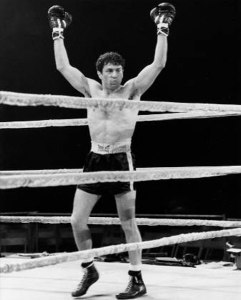
The character of Jake LaMotta is fictional, and any similarity to Jake LaMotta is purely coincidental…
This and disclaimers like it on movies and TV shows have driven me crazy for a long time. So often the text is an obvious lie. I first began obsessing about it during the early days of “Law and Order,” when Dick Wolf’s show would herald the fact that its episodes were “ripped from the headlines,” then end with a disclaimer that said it was completely fiction. Sometimes, an episode was obviously based on a specific crime and specific individuals, and the actors were made up to look like the actual criminals. The disclaimer was and is a lie, and since it was obvious, why did they bother? Legally, it does no good to publish a boilerplate disclaimer that says, “We’re not really doing what any fool can see we are doing, ” except to discourage potential lawsuits by stupid people. I am of the (minority, unfortunately) position that it’s unethical for lawyers to author legally meaningless language like this for the sole purpose of misleading the ignorant.
The background of the disclaimer is interesting; Slate just published the story, which I realized I once knew but had forgotten.
The 1932 MGM film “Rasputin and the Empress”, was based on the events leading up to the fall of the Romanovs, and starred John, Ethel and Lionel Barrymore. Its most famous sequence was a version of the antic assassination of Rasputin, an event largely known because of the book written by one of the assassins, Prince Felix Yusupov, portrayed as “Prince Paul Chegodieff” in the film. The film also suggested that the Prince’s wife, “Princess Natasha,” was raped by Rasputin—suggested but not shown, since Rasputin was played by John Barrymore (Drew’s grandfather) and the princess was played by his sister, Ethel. Princess Natasha was the avatar for Princess Irina Alexandrovna of Russia, who, like her husband Prince Felix, had escaped Russia before all the royals were killed.
Yusupov, living in Paris, heard about the film and decided that since audiences would recognize him as the fictional killer of Rasputin, they would also assume that his wife was raped by Rasputin. She wasn’t, or if she was, only she and the Mad Monk knew about it. Officially, Irina and Rasputin had never met. An MGM researcher had pointed out this factual discrepancy to the studio during production and warned that the Yusupovs could sue, but was pooh-poohed off the lot. She was correct, however, for Irina Yusupov sued the studio, and after watching the movie twice, the British jury awarded her £25,000, or about $125,000. MGM took the film out of circulation for decades, and when it turned up on Turner Classic Movies, the pseudo-rape scene was gone. Continue reading →
Marni Nixon died last month at 86, and I have been intending to write about her ever since. An accomplished soprano with perfect pitch and a rare gift for mimicry, Nixon secretly dubbed in the songs for Deborah Kerr as Anna in “The King and I,” Natalie Wood as Maria in “West Side Story” and Audrey Hepburn as Eliza Doolittle in “My Fair Lady,” three of the most successful and honored Hollywood adaptations of Broadway musicals. In doing so she was assisting in the perpetration of a fraud on critics and audiences, but one that had, and indeed has, some legitimate ethical arguments, and rationalizations too, to justify it. Why is using a stunt singer any more dishonest than using a stunt man? Isn’t film about making the audience accept illusions in pursuit of art? If an audience member will be more likely to enjoy a film thinking that a major star can really sing, why is it wrong to make it possible for them to believe that, at least for a while?
The reasoning would have more power if long before Marnie did her secret singing Hollywood hadn’t already made a classic musical, “Singin’ in the Rain,” that pronounced the practice fraudulent. Marni Nixon was a real life Cathy Seldon, the Debbie Reynolds contract player forced to supply the singing and speaking voice for a talentless silent film superstar, Lina Lamont, whose real voice would make dogs run for refuge and men claw off their ears, and whose continued status as a money-making asset for the studio depended on making her successful in talkies.
Ironically, even “Singin’ in the Rain” engaged in the same fraud it was ridiculing. Debbie Reynolds was a competent singer, but a richer, more mature voice was needed to match the image of Jean Hagen, the terrific comic actress playing Lina. So when Debbie was shown secretly replacing Lina’s nightmarish singing voice with her own, another singer was secretly used, uncredited, to dub Debbie. Her voice fit Lina perfectly, because the voice put in Debbie’s mouth while she was supposedly putting her voice into Lina’s was the real voice of… Jean Hagen. Continue reading →
Thank-you, O producers of the new “Ben-Hur,” for so quickly after my post ridiculing the new politically correct casting ethics in Hollywood—according to Turner Movie Classics, it’s just soooo wrong to cast an Anglo Saxon like Charlton Heston as a Mexican, for example—-coming out with the official trailer proving that the new, enlightened casting ethics really only applies when it means it takes jobs away from white actors. Okay, just American white actors. Or something….actually, this casting ethics rules are kind of made up as things shake out.
Which was what I thought all along.
In the 1959 Ben-Hur (starring, ironically, White Guy Charlton Heston as Judah Ben-Hur ), the plum part of Shiek Iderim was played by brilliant Welsh character actor Hugh Griffith, whose performance rightly won him an Academy Award. Yes, he wore dark make-up, because actors wear make-up. Ah, but these are enlightened days, and now we know, because it has been decreed by Ben Mankiewicz and the rest of the heralds of politically correct casting, that the casting of a master comic actor of unique gifts who was an audience favorite to play the sheik was insensitive and essentially racist, not to mention unfair to all of those unemployed but equally adept Arab actors qualified to play the part. So who plays the sheik in the new, improved, enlightened “Ben-Hur’?
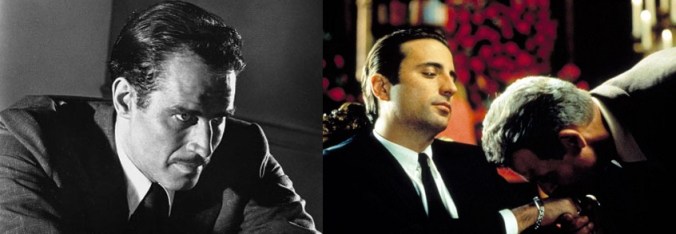
Pop Quiz: which is obviously unethical? Casting a Scotch-English actor as a Mexican, or casting a Cuban-American as a Sicilian-American?
I was watching Turner Movie Classics over the weekend, and guest Louis Gossett Jr, best known for playing the drill sergeant who makes An Officer And A Gentleman out of jerk Richard Gere, had chosen the Orson Welles cult film “Touch of Evil” for the evening’s viewing. Host Ben Mankiewicz noted that the film, which he agreed was a classic, now causes politically correct eyes—like his and Gossett’s— to roll because Charlton Heston had the role of a Mexican district attorney. Without saying why, both Ben and Lou tut-tutted and agreed that this would never be tolerated today, and the role would obviously be cast with someone like Antonio Bandaras. It was too obvious to decent viewers to explain, I guess.
We have gone over this issue before here, and more than once, but what was special and disturbing about this conversation was that it assumed a new cultural ethics standard as if everyone agrees with it; the previous standard, we now know in our wisdom, was wrong; and now it’s clear what is the right path going forward. This is how mass media, which is pervasive, powerful, and overwhelmingly controlled by none-too-bright and none-too-ethical knee-jerk leftists, accelerates the natural evolution of societal and cultural ethics. When the media sends a united message that an issue is decided, those of slug-like alertness and apathetic mind—and there are a lot of them— will simply absorb the edict without applying critical thought.
Oh…the right thing is to just let anyone who wants to come to this country jump the border. Got it. Oh…guns should be confiscated and banned by the government if it can save one life. Of course. Oh…the minimum wage should be a living wage. How true…
The fact that there is not and should not be cultural consensus on such conclusions because they make no sense logically or ethically will be buried by sheer repetition and certitude, unless sufficient numbers of people who are paying attention and do not surrender to false authority protest loudly and repeatedly. In a previous post on this topic, I wrote…
“Through the fog of such distortions, the idea of rigid ethnic casting doesn’t seem so crazy, though it is crazy indeed. I regard it my duty as someone who has both professional expertise in ethics and casting to slap down this rotten and indefensible idea every time it raises its repulsive head.”
Thus I am keeping my promise. The principle that Ben and Lou are assuming our society accepts is nonsense. It is also bad ethics. Continue reading →
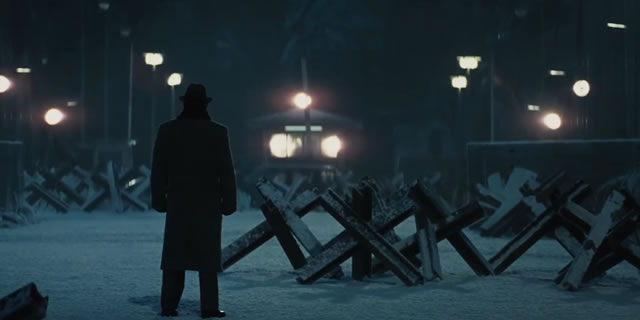
Today I taught another legal ethics seminar, this time for a government agency. I was discussing was the various government ethics dilemmas in “Bridge of Spies,” the story of how lawyer Jim Donovan helped secure the release of downed U.S. flyer Francis Gary Powers in a famous incident during the Cold War. Many of the issues covered in my presentation were explored in this Ethics Alarms post.
As the film portrays it, Donovan, an insurance lawyer, does such a tenacious job defending an accused Soviet spy from U.S. government prosecution that the CIA recruits him to broker the trade of his now-former client, convicted and in prison, for Powers. In discussing the classic government lawyer dilemma of “who is the client?,” I noted that the CIA agent who recruited Donovan told him that he would have no client. “Why did the CIA trust Donovan?” I asked socraticly. “Why did Donovan, an insurance lawyer, think he was qualified to engage in this kind of representation, it it was a representation?”
For the second time in nine days, an attendee piped up with an amazing piece of information.
“I suspect some of the answer to both questions is that James Donovan was the son of “Wild Bill” Donovan, who is considered the father of the Central Intelligence Agency,” he said. Continue reading →
The fact that I even know about this issue is both my reward and punishment for being a popular culture junkie.
To bring you up to date: Since the stars of the classic movie comedy “Ghostbusters” are now collecting Social Security (and one of them—Harold Ramis— is dead), Hollywood’s only sensible option to try to squeeze some more profit out of the property (and maybe introduce it to a new generation) was to remake the 1984 film. This was a risky enterprise, for even the sequel with the original cast more or less recognizable was a disappointment, and remakes of classics are inherently dicey. If an original film really was special and the stars truly stars, forcing younger contemporary stars to step into iconic shoes is asking for not just trouble, but humiliation. Poor Alex Cord, for example, never recovered from being cast as The Ringo Kid in a misbegotten remake of 1939’s “Stagecoach,” where he was supposed to replace John Wayne. It can work, as with Jeff Bridges’ turn as Rooster Cogburn, not only a Wayne role but the one that got him an Oscar, only if the remake is sufficiently excellent and different enough in tone and purpose that the original and the remake can co-exist without compelling unflattering comparisons. (“True Grit I” is a funny John Wayne valedictory with a great story; “True Grit 2” is more faithful adaptation by the Coen Brothers of a wonderful novel. I still like the original better.)
The best option, though, is often to make the reboot different in appearance and feel by switching race or gender. This is also helpful when everyone over the age of 13 has seen the original on TV about ten times already. The scheme attracts a new audience, ideally—the first “Ghostbusters” had a male teen demographic—and allows the remake to refer to the first version without seeming like pale copy. Almost never are the non-traditional casting versions big hits, but they can be quietly profitable. “Ghostbusters,” moreover, is a merchandising machine. The original spawned cartoon versions and action figures. Why wouldn’t the new movie?
However this is 2016 America, and everything is political as well as partisan. An all-female remake of “Ghostbusters” was launched with feminist swagger. The new version starring Melissa McCarthy (love her) , Kristen Wiig (great) andKate McKinnon ( also great), excellent comic actresses, given good material, would show that women can and do everything men can do—fight ghosts, make hilarious supernatural movies, be President of the United States. The July opening in an election year was no coincidence; it is part of the Hollywood effort to join the media’s efforts to make Hillary President despite, well, her lack of fitness to lead.
Although the usual naysayers when a classic is recast were immediately critical, most moviegoers were enthusiastic about the project. I know I was. Then the trailer came out. It is bad (you can watch it above). We are used to seeing great trailers for movies that turn out to be boring and horrible, but good movies with terrible trailers are rare because making previews has become a fine art.
The strikingly unfunny “Ghostbusters” trailer was especially ominous for a comedy. The usual method for hyping a mediocre comedy is to put all the funny bits in the trailer; I hate that, don’t you? Not only is the whole movie an unamusing slog with 6 minutes of laughs in 90 minutes of filler, but you’ve already seen the best gags. What does it say, though, when a trailer for an alleged comedy isn’t funny, and worse, the gags included don’t appear to be as side-splitting as the movie’s makers seem to think they are?
Quite a few readers have written that they would enjoy some of the problems I present in my seminars on legal ethics. I try to please, so here are some difficult legal ethics issues that arose in the screenplay of last year’s Oscar-nominated film “Bridge of Spies.”
The film tells the true story of Jim Donovan, an insurance lawyer who is recruited, in 1957, by his New York bar association to take on the representation of the accused Soviet spy Rudolf Abel, a job that we see Donovan not only do bravely and competently, but one that he takes all the way to the Supreme Court. He loses, and Abel goes to prison.
Legal ethics points:
That ends the representation, and Abel is no longer Donovan’s client, but a former client.
Lawyers still have duties to former clients: they must keep all of the confidences learned during the representation and after, and not use these against the interests of the ex-client, or reveal them ever, even after the ex-client is dead and buried, except under rare circumstances.
A lawyer is also not allowed to become adverse to the interests of a former client in a substantially related matter to the one he (or she) handled for the client.
Because when representing Abel, Donovan had argued against executing the spy on the grounds that he might a useful bargaining chip if an American was captured by the Russians—an argument he made to save Abel’s life, not to provide unsolicited advice to the government—the capture of U2 pilot Gary Powers after he was shot down in a spy plane makes the lawyer a candidate to make his own scenario come true. An East German official sends Donovan a letter claiming to be able to broker an exchange of Powers for Abel. When the CIA learns about the letter, they ask Donovan to go to East German and negotiate the deal. Continue reading →
I think you should see “Zootopia,” and maybe even let your children see it, provided that you are prepared to spend about two hours deprogramming them afterwards. Thus you may not want to read further unless you want to encounter numerous spoilers.
Children’s stories, TV shows and movies have long been the vehicle for moral and ethical messages, as well as allegories that may or may not worm themselves into unsuspecting juvenile psyches. Because there are young minds involved, engaging in what can be value-warping and indoctrination if not handled with proper humility and care is a high calling, and for the most part, Disney has always been up to the task.
I like Disney animated movies, and always have. I even like some of the flops, like “Treasure Planet.” Pixar, which is now part of the Disney creative empire, has been even more daring and aggressive in ethics story-telling, and has not seriously abused the privilege. Other studios, like DreamWorks, have been more heavy-handed in their moralizing. No animated film in memory, however, has set out to pound specific political and social points of view into the brains of kids as blatantly, relentlessly and ambitiously as “Zootopia.”
I should add “incompetently.” Like all fantasies with delusions of social significance, “Zootopia” relies on metaphors, and in this film, they become a tangle of confused and sometimes contradictory and hypocritical messages. Wrapped as they are in an often charming, funny, well-acted and well-plotted piece of technically expert art, these muddled messages approach being sinister. That the film has been almost universally praised—it has an amazing 98% positive rating on the review site “Rotten Tomatoes”—speaks either to a culture-wide conspiracy to turn the next generation into political correctness zombies, or to the mass incompetence of the film reviewing profession. Continue reading →
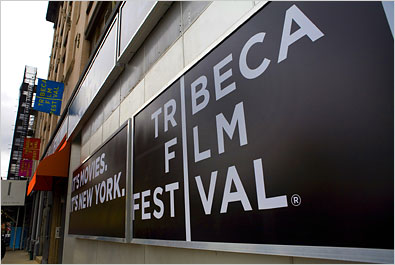
Until yesterday, “Vaxxed: From Cover-Up to Catastrophe” was an entry in the 2016 Tribeca Film Festival. It was directed and co-written by Andrew Wakefield, the disgraced doctor and researcher whose study purporting to show a link between vaccinations and autism was published in the British medical journal “The Lancet” in 2010 and then retracted. Wakefield subsequently lost his medical license because of undisclosed conflicts of interest and misrepresentations in his paper, and has been wandering the earth wearing the metaphorical sackcloth robe of the outcast ever since.
The decision by the festival and its founder Robert De Niro to screen the film was the focus of a furious controversy. Many consider Wakefield a murderer because his work has convinced parents to eschew vaccinations out of irrational fear sown by his false research conclusions. De Niro insisted that the film deserved a screening to provoke dialogue, but has had a change of heart, mind, or self-preservation instinct. He pulled the film yesterday, writing,
“My intent in screening this film was to provide an opportunity for conversation around an issue that is deeply personal to me and my family. But after reviewing it over the past few days with the Tribeca Film Festival team and others from the scientific community, we do not believe it contributes to or furthers the discussion I had hoped for.”
Translation:“When it comes to standing up for free expression, Andrew Wakefield and the anti-vaxxer delusion is not a hill worth dying for.”Continue reading →


 Ethics Alarms