The “Ghostbusters” Remake Controversy

The fact that I even know about this issue is both my reward and punishment for being a popular culture junkie.

To bring you up to date: Since the stars of the classic movie comedy “Ghostbusters” are now collecting Social Security (and one of them—Harold Ramis— is dead), Hollywood’s only sensible option to try to squeeze some more profit out of the property (and maybe introduce it to a new generation) was to remake the 1984 film. This was a risky enterprise, for even the sequel with the original cast more or less recognizable was a disappointment, and remakes of classics are inherently dicey. If an original film really was special and the stars truly stars, forcing younger contemporary stars to step into iconic shoes is asking for not just trouble, but humiliation. Poor Alex Cord, for example, never recovered from being cast as The Ringo Kid in a misbegotten remake of  1939’s “Stagecoach,” where he was supposed to replace John Wayne. It can work, as with Jeff Bridges’ turn as Rooster Cogburn, not only a Wayne role but the one that got him an Oscar, only if the remake is sufficiently excellent and different enough in tone and purpose that the original and the remake can co-exist without compelling unflattering comparisons. (“True Grit I” is a funny John Wayne valedictory with a great story; “True Grit 2” is more faithful adaptation by the Coen Brothers of a wonderful novel. I still like the original better.)

The best option, though, is often to make the reboot different in appearance and feel by switching race or gender. This is also helpful when everyone over the age of 13 has seen the original on TV about ten times already. The scheme attracts a new audience, ideally—the first “Ghostbusters” had a male teen demographic—and allows the remake to refer to the first version without seeming like pale copy. Almost never are the non-traditional casting versions big hits, but they can be quietly profitable. “Ghostbusters,” moreover, is a merchandising machine. The original spawned cartoon versions and action figures. Why wouldn’t the new movie?

However this is 2016 America, and everything is political as well as partisan. An all-female remake of “Ghostbusters” was launched with feminist swagger. The new version starring Melissa McCarthy (love her) , Kristen Wiig (great)  and Kate McKinnon ( also great), excellent comic actresses, given good material, would show that women can and do everything men can do—fight ghosts, make hilarious supernatural movies, be President of the United States. The July opening in an election year was no coincidence; it is part of the Hollywood effort to join the media’s efforts to make Hillary President despite, well, her lack of fitness to lead.

Although the usual naysayers when a classic is recast were immediately critical, most moviegoers were enthusiastic about the project. I know I was. Then the trailer came out. It is bad (you can watch it above). We are used to seeing great trailers for movies that turn out to be boring and horrible, but good movies with terrible trailers are rare because making previews has become a fine art.

The strikingly unfunny “Ghostbusters” trailer was especially ominous for a comedy. The usual method for hyping a mediocre comedy is to put all the funny bits in the trailer; I hate that, don’t you? Not only is the whole movie an unamusing slog with 6 minutes of laughs in 90 minutes of filler, but you’ve already seen the best gags. What does it say, though, when a trailer for an alleged comedy isn’t funny, and worse, the gags included don’t appear to be as side-splitting as the movie’s makers seem to think they are?

Oh-oh. Continue reading
The Real Legal Ethics Conundrums In “Bridge of Spies”

bridge-of-spies

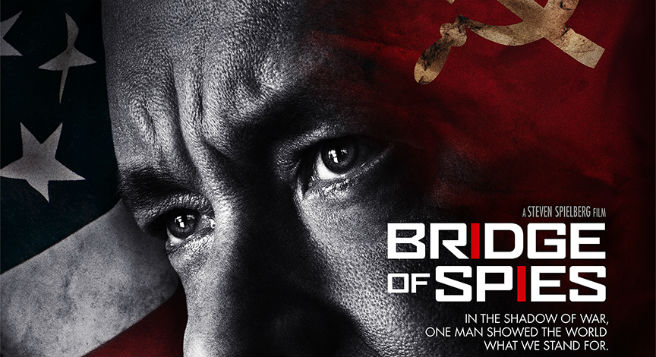
Quite a few readers have written that they would enjoy some of the problems I present in my seminars on legal ethics. I try to please, so here are some difficult legal ethics issues that arose in the screenplay of last year’s Oscar-nominated film “Bridge of Spies.”

I wrote about the film earlier this year, here.

The film tells the true story of Jim Donovan, an insurance lawyer who is recruited, in 1957, by his New York bar association to take on the representation of the accused Soviet spy Rudolf Abel, a job that we see Donovan not only do bravely and competently, but one that he takes all the way to the Supreme Court. He loses, and Abel goes to prison.

Legal ethics points:

  • That ends the representation, and Abel is no longer Donovan’s client, but a former client.
  • Lawyers still have duties to former clients: they must keep all of the confidences learned during the representation and after, and not use these against the interests of the ex-client, or reveal them ever, even after the ex-client is dead and buried, except under rare circumstances.
  • A lawyer is also not allowed to become adverse to the interests of a former client in a substantially related matter to the one he (or she) handled for the client.

Because when representing Abel, Donovan had argued against executing the spy on the grounds that he might a useful  bargaining chip if an American was captured by the Russians—an argument he made to save Abel’s life, not to provide unsolicited advice to the government—the capture of U2 pilot Gary Powers after he was shot down in a spy plane makes the lawyer a candidate to make his own scenario come true. An East German official sends Donovan a letter claiming to be able to broker an exchange of Powers for Abel. When the CIA learns about the letter, they ask Donovan to go to East German and negotiate the deal. Continue reading

“Zootopia” Is Unethical—But Funny!

I think you should see “Zootopia,” and maybe even let your children see it, provided that you are prepared to spend about two hours deprogramming them afterwards. Thus you may not want to read further unless you want to encounter numerous spoilers.

Children’s stories, TV shows and movies have long been the vehicle for moral and ethical messages, as well as allegories that may or may not worm themselves into unsuspecting juvenile psyches. Because there are young minds involved, engaging in what can be value-warping and indoctrination if not handled with proper humility and care is a high calling, and for the most part, Disney has always been up to the task.

I like Disney animated movies, and always have. I even like some of the flops, like “Treasure Planet.” Pixar, which is now part of the Disney creative empire, has been even more daring and aggressive in ethics story-telling, and has not seriously abused the privilege. Other studios, like DreamWorks, have been more heavy-handed in their moralizing. No animated film in memory, however, has set out to pound specific political and social points of view into the brains of kids as blatantly, relentlessly and ambitiously as “Zootopia.”

I should add “incompetently.” Like all fantasies with delusions of social significance, “Zootopia” relies on metaphors, and in this film, they become a tangle of confused and sometimes contradictory and hypocritical messages. Wrapped as they are in an often charming, funny, well-acted and well-plotted piece of technically expert art, these muddled messages approach being sinister. That the film has been almost universally praised—it has an amazing 98% positive rating on the review site “Rotten Tomatoes”—speaks either to a culture-wide conspiracy to turn the next generation into political correctness zombies, or to the mass incompetence of the film reviewing profession. Continue reading

Documentary Ethics: Is Pulling An Anti-Vaxx Documentary A Freedom of Expression Breach Or Simply Responsible?

tribeca_film_festival_ny

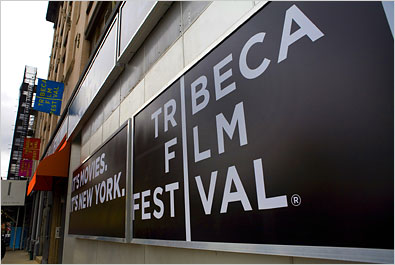
Until yesterday, “Vaxxed: From Cover-Up to Catastrophe” was an entry in the 2016  Tribeca Film Festival. It was directed and co-written by Andrew Wakefield, the disgraced doctor and researcher whose study purporting to show a link between vaccinations and autism was published in the British medical journal “The Lancet” in 2010 and then retracted. Wakefield subsequently lost his medical license because of undisclosed conflicts of interest and misrepresentations in his paper, and has been wandering the earth wearing the metaphorical sackcloth robe of the outcast ever since.

The decision by the festival and its founder Robert De Niro to screen the film was the focus of a furious controversy. Many consider Wakefield a murderer because his work has convinced parents to eschew vaccinations out of irrational fear sown by his false research conclusions. De Niro insisted that the film deserved a screening to provoke dialogue, but has had a change of heart, mind, or self-preservation instinct. He pulled the film yesterday, writing,

“My intent in screening this film was to provide an opportunity for conversation around an issue that is deeply personal to me and my family. But after reviewing it over the past few days with the Tribeca Film Festival team and others from the scientific community, we do not believe it contributes to or furthers the discussion I had hoped for.”

Translation: “When it comes to standing up for free expression, Andrew Wakefield and the anti-vaxxer delusion is not a hill worth dying for.” Continue reading

More Casting Ethics: The Stunt Performer Dilemma

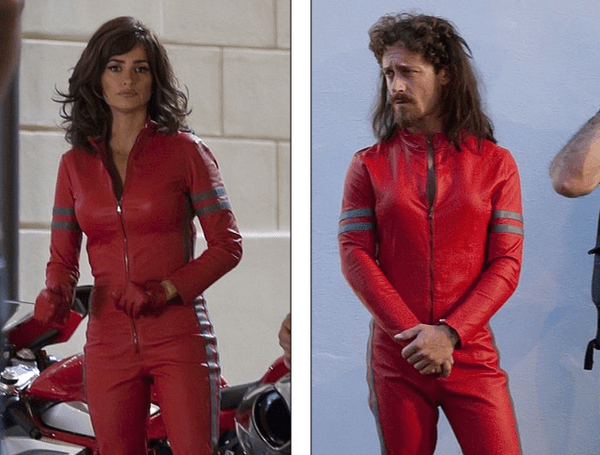
Penelope Cruz and her stunt double. Works for me!

Penelope Cruz and her stunt double. Works for me!

To recap: This month, we have already debated a wide range of casting ethics controversies…

The position of Ethics Alarms is identical in all three controversies. The only consideration in casting a role should be the director’s artistic assessment of who will do the best job meeting the artistic and commercial demands of that role, under the constraints of the project, which can include budget, locale and workplace conditions. Ethnicity, race and off-screen appearance should be secondary, and better still, irrelevant. Efforts to substitute political, diversity or affirmative action goals  for artistic ones undermine the integrity of the work, and are unfair to the audience as well as the work itself. Make-up is a tool of the performing arts, and is unrelated to blackface, which was a convention designed to denigrate African Americans. Confounding make-up used to allow a performer to play a character of a different ethnicity, race or skin shade with minstrelsy and blackface is intellectually dishonest or ignorant.

Now comes a new issue in this spectrum: the use of white, male stunt performers to substitute for black or female stars.

This article, in The Telegraph,  begins with the assumption that the practice is inherently unethical:

“For decades, white stunt performers would paint their faces and bodies black to double for black stars. Similarly, it was not uncommon for stuntmen to put on heels and wigs to double for women. This was not happening in a vacuum: all the while, black and female stunt performers were pressing for recognition and the right to work in the jobs for which they were best suited….There is an understanding within the studios that such incidents don’t look good and need to be kept hush-hush.”

If, as the article and the Hollywood activists it interviews assert, the practice of “blacking up” white stunt performers is designed to exclude qualified black stunt performers from working, then of course it is unethical. Given the close-knit stunt performer community, described as a white, male, “old boys network” in the essay, this is certainly possible, even likely. Nevertheless, the assertion that there is anything intrinsically unethical, unfair or wrong with using a disguised white stunt performer to substitute for a black star, a male stunt performer to substitute for a female star, or any other variation imaginable is, as with the Hispanic and Afghan complaints, based on non-existent ethical principles. Continue reading

Yet More Casting Ethics: Let’s Slap This Bad Idea Down For Good, Shall We?

What? They cast a Hispanic actor as Khan instead of a genetically engineered Mongolian actor?

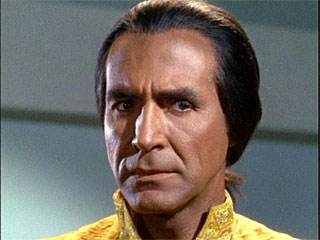
What? “Star Trek” cast a Hispanic actor as Khan instead of a genetically engineered Mongolian actor?

One way really terrible ideas take hold and do damage to the culture is for rational people to ignore them while zealots, ideologues and wackos keep repeating them over and over until they no longer sound as wrong as they are. Allowing illegal immigration to continue undiscouraged was one of those ideas, manifestly ridiculous and destructive. Now look where we are.

Ethic Alarms has had several posts on another really bad idea lately that is being pushed on the culture by political correctness and affirmative action activists: the loopy assertion that ethnic roles in movies and TV should only be cast with actors whose ethnic origins match those of the characters, and that if a director casts someone else, racism and bigotry are at play. Not too long ago, such an assertion would be regarded as too silly to discuss, but we have been through an intense period—the period known as “The Obama Era”— where tribal spoils, grievance-mongering and group identification have been accorded higher priority than, for example, talent, competence, experience or proven success. Through the fog of such distortions, the idea of rigid ethnic casting doesn’t seem so crazy, though it is crazy indeed.

I regard it my duty as someone who has both professional expertise in ethics and casting to slap down this rotten and indefensible  idea every time it raises its repulsive head. I recommend that you do the same.

Yesterday, Ana Valdez, the ex­ec­u­tive di­rec­tor of the Latino Donor Col­lab­o­ra­tive, wrote to the Washington Post to endorse film critic Ann Hornaday’s column complaining about white actors playing Middle Eastern roles (I managed to hold down my bile with that one), and  added…

She failed to ac­knowl­edge per­haps the big­gest white­wash­ing: the con­tin­ual cast­ing of white ac­tors to play Lati­nos. This has been go­ing on for decades, from Eli Wal­lach play­ing Calvera in “The Mag­nif­i­cent Seven” to Mark Ruf­falo play­ing Michael Rezen­des, a Bos­ton Globe re­porter, in “Spot­light.” Jen­nifer Con­nelly won an Os­car for her por­trayal of Ali­cia Lardé Nash in “A Beau­ti­ful Mind,” and Ben Af­fleck played Tony Men­dez in the Os­car-win­ning “Argo.” All of these char­ac­ters are Latino. Ethan Hawke, Meryl Streep, Cather­ine Zeta-Jones, Jeremy Irons and Glenn Close all have played Lati­nos in mo­tion pic­tures…. It does look like Hol­ly­wood is try­ing not to hire Lati­nos.

No, it doesn’t look like that at all. Continue reading

More Casting Ethics: In Search Of Acting Afghans

whiskeytangofoxtrot

The problem is that our educational system belches out new graduates who have been indoctrinated into rigid and often absurd ideas about right and wrong, They quickly fill the culture with those ideas and their freedom-stultifying emanations. The ideas act like viruses: if you don’t diagnose them and wipe them out, our very minds are at risk.

Here is an example, by mere coincidence, concerning casting ethics, the same topic as the recent post about how some African-Americans seem to want to discriminate on the basis of skin shade, at least when it comes to casting movies. (Who knew?) I was reading Entertainment Weekly on an airplane, as I only read Entertainment Weekly on airplanes, and this whole issue (The “Batman v. Superman” issue) struck me as being written by 22 year-olds. In a review of Tina Fey’s latest bomb (“Whiskey Tango Foxtrot”—“WTF,” or What the Fuck, get it?), reviewer Leah Greenblatt wrote this…

“And its more than a little disappointing that the two major Afghan supporting roles are filled by obviously non-Afghan actors….”

Leah doesn’t bother to explain why it’s a little disappointing; she just assumes it’s obvious, as in, “What? They didn’t hire real Afghans to play Afghans? I’m outraged!” Meanwhile, a young impressionable reader who assumed that a film reviewer has some expertise in such things, would absorb this heretofore unknown standard of decency and take it as cant. Contagion! This is how the political correctness virus eats our brains. Continue reading

Oscar Ethics Post Mortem: The Academy Just Guaranteed That Whatever Artists Win Oscars Next Year, They Will Have No Credibility Whatsoever

Good job, everybody!

Good news, Sipke! The fix is in: if you make a movie this year, no matter how crappy it is, you'll get a nomination. Happy now?

Good news, Sipke! The fix is in: if you make a movie this year, no matter how crappy it is, you’ll get a nomination. Happy now?

Thanks to an extended public self-flagellation by the Academy of Motion Picture Arts And Scientists last night, any future Oscar nominations or awards to black performers, designers, writers and directors will be regarded by the public and the Hollywood community itself with justifiable suspicion, doubts and cynicism. Last night’s ceremony, from Chris Rock’s all-race monologue to the choice of the music over the credits, was a tacit commitment by the Academy to henceforth and forever name sufficient minority nominees and winners regardless of the merits of their work or the comparative merits of their work to any white artists. Diversity is officially more important than merit. By hook or by crook, there will now be prominent honors to Hollywood blacks….even if some of the honored work is crap.

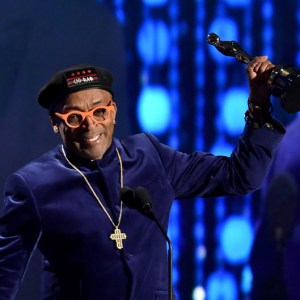
Not surprisingly, given its traditional and intellectually wan reflex liberalism, Hollywood painted itself into an affirmative action and quotas mandate. After last night, the voters won’t dare fail to nominate a whole bunch of blacks, so Spike Lee will come to the ceremony.  This does put pressure on black artists to actually turn in some outstanding, or at least plausibly decent, work to avoid making all those guaranteed nominations and awards look as phony and rigged as they will be. If the 2017 Oscars include nominations for Samuel L. Jackson playing Samuel L. Jackson, a lifetime achievement award for Sydney Poitier and a gift nod to James Earl Jones for a charming cameo as a crusty old hermit in “The Sandlot, Part 3,” it’s going to be even more obvious what’s going on. Continue reading

Ethics Quote Of The Month: “Bridge of Spies”

bridge-of-spies-656

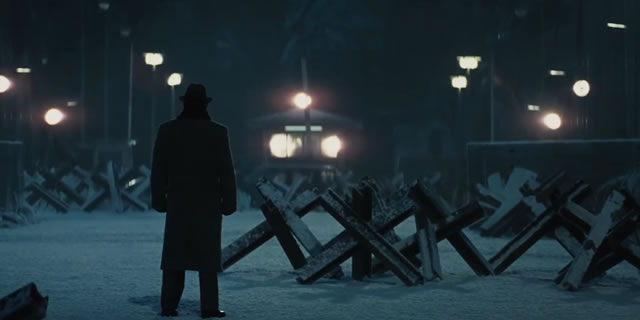
The shooting script for the Academy Award nominated film “Bridge of Spies” is now online. Written by Matt Charman and the Coen brothers, it, like the film that Steven Spielberg made out of it, provides an unusually accurate and nuanced portrayal of ethical lawyering. The movie is worth seeing, better more than once, and I expect that I will use many issues raised in it for class discussion as I teach legal ethics to lawyers this year.

There is one howlingly wrong scene, in which the lawyer, Jim Donovan (played by Tom Hanks) has a private discussion with the judge who will be sentencing his client, a convicted Russian spy. Donovan argues against a death sentence. If this happened, and I doubt it, it would have been an egregious ethics breach: this is called ex parte contact, and is strictly forbidden.

The film redeems this misstep many times over, especially in a scene that neatly explores both the duty of confidentiality and the duty of loyalty, as well as the crucial role of rules in society, and why “the ends justify the means” as well as those who advocate that philosophy must be rejected. “Ethics Bob” Stone told me that he now uses the scene in his business ethics classes.

The scene begins with Donovan meeting in a restaurant with a man who has been following him…. Continue reading

Keep It Up, Vulgarians

This morning I was listening to a CNN reporter in New Hampshire interviewing an ordinary, middle aged woman who is a Trump supporter, and she dropped a word inappropriate for TV live. The interviewer said, “You just said a cuss word!” and she just ignored him. In Phoenix, Don Harris, the head of Arizona’s largest NAACP chapter, was discussing the somehow national scandal over six white teenage Desert Vista High School students posting a photo of themselves aligned so the letters on their T-shirts spelled N-I-*-* E-R when he just couldn’t resist saying that a TV reporter who had just interviewed him had “nice tits”as he was speaking to another TV interviewer.

The recording was posted, and Harris had to resign as Chapter president. Called about the incident by another reporter, Harris said, among other things, “I’m really fucking sorry. I’m going to slash my wrists . . . Better yet, I’m going to throw myself out of a fucking window, except I’m on the first floor . . . I’m one of the best goddamned people in the state. They’ve seen me now, they’ve seen what I’ve done. I’ve given up my law practice. I’m down here six, seven days a week. That’s what my commitment is. I support NOW, the women’s organization — goddamn! — are you shitting me? Are you going to write this up?”

Why yes, Don, you vulgar fool, they are.

Harris and the dumb New Hampshire woman (I did say she was a Donald Trump supporter, right?) are victims of the crude and ugly culture of rudeness and incivility being imposed on the culture. If you don’t fight back, you will be sucked in: your civility and decency ethics alarms will become rusted and useless. At the 2016 Golden Globes awards, knowing they were on live TV and in front of an audience of adults, various presenters and award winners used the words cunt, sugar tits, fuck and fucking (twice). Speaking like this in private or controlled workplace surroundings is as old as the hills, but somewhere the principle has been lost in which such gutter discourse was understood to be ugly, lazy and the mark of an unmannerly lout when it leaks into more formal, or public settings. Who thinks this is a positive development? Continue reading