Ethics Quiz: “Don’t Eat The Daisies” Ethics

I’m trying to take a breather from the Syrian refugees, President Obama, Presidential candidates and rampaging college students, and an ethics issue from a 1960 Doris Day comedy is as far away as I can get.

In “Don’t Eat the Daisies,” a movie loosely (very loosely) based on the humorous mommy anecdote best seller by Jean Kerr, wife of then New York Times  theater critic Walter Kerr, newly appointed prime drama critic Larry McKay (David Niven), his lovely wife Kate (Doris), their four rambunctious kids, their sheep dog and their wise-cracking house-keeper (Patsy Kelly)—yes, this was essentially the “Brady Bunch” without the girls—move to the country. Doris gets roped into the annual musical (for charity, natch) of the very amateur Hooten Holler Players. They ask the Larry for a play they could use, and he isn’t very helpful, so Doris calls up Alfred North, an old friend of the couple and a successful novelist played by Richard Haydn, best known as the sneaky Max in “The Sound of Music,” who has just had his first Broadway play skewered by McKay (Integrity! Integrity!). He is secretly seething and seeking revenge. The betrayed playwright siezes his chance: he sends Doris an obscure, terrible Foriegn Legion melodrama by an unknown author, and the Hooten Holler players turn it into a musical spoof.

Days before its ready to open, after all the tickets have been sold, Doris asks David to watch a rehearsal. He immediately recognizes the plot and some particularly awful lines: he wrote the  play under a pseudonym! “BWAHAHAHAH!” laughs Max, or rather Alfred. Larry’s  onetime friend, now relentless foe, has set the critic up for humiliation and professional doom, for other New York critics have been tipped off that the play getting its world premiere by the Hooten Holler Players is in fact the creation of the hypercritical critic himself. Once this abysmal mess is seen and taken apart by the critic’s rivals, his judgment will never be taken seriously again.

Niven demands that the production be cancelled, and forbids the Players to perform his work. Doris, who stars in the play, begs him to reconsider: the humble theater group will be ruined, and the charity will lose much needed support. The critic explodes: why does she care more about the amateur theater group than her husband’s career? She tells him that his theatrical power and fame has made him petty and mean. Their marriage seems ready to disintegrate.

Your retro-Hollywood Ethics Alarms Ethics Quiz of the Day is..
What’s going on here, and what do you do about it?

Continue reading

Ethics Revelations In The Obituaries: Media Bias And “Big Al”

obits

Ethics revelations lurk everywhere, even in the obituaries pages:

The Surprising Integrity of “Big Al”

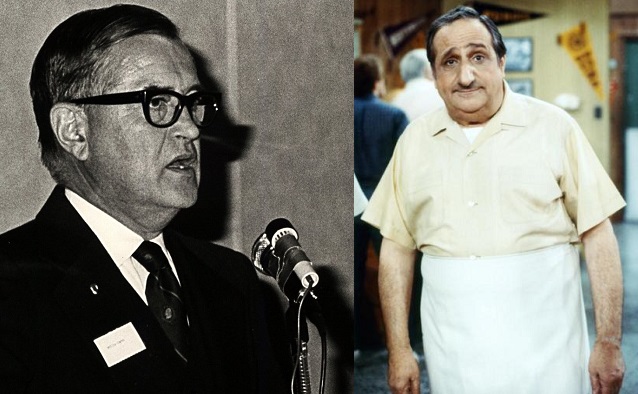
Al Molinaro, the rumpled, large proboscused character actor best known as “Murray the cop” on TV’s “Odd Couple” and the proprietor of
the diner on “Happy Days,” where he mastered the world-weary catch phrase of “Yeeeaaahh, yeah-yeah-yeah…,” died last week at the advanced age of 96. In his Washington Post obituary, I gained new admiration for Al. (I was always an Arnold (Pat Morita) man, myself, and if you don’t understand that reference, good for you. You ignored “Happy Days.”) At the end of Al’s obit, there was this…

“In 1990, Mr. Molinaro told the Chicago Tribune that Marshall, who went on to direct hit films including “Pretty Woman,” tried unsuccessfully to recruit him for big-screen work.

“I can’t work in movies with Garry because I’m so square that I won’t be in a movie that has four-letter words in it,” Mr. Molinaro said. “That puts me pretty much totally out of films these days. . . . You get to a point where you don’t want to do just anything for the career. You gotta live with yourself.”

Now that’s integrity, and in show business, of all places. Our culture remains civil and benign only if we are willing to fight for it, or at least withhold our assistance as it deteriorates. Molinaro had the courage and integrity to accept this civic duty, Few among as do, and actors—especially specialty character actors like Al, almost never do. I remember that Mel Brooks harbored dreams of getting John Wayne to play “The Waco Kid” in “Blazing Saddles,” and said that he ran in to the Duke and talked him into reading the screenplay.  Wayne called him the next day and told Brooks that he loved the script, but that he couldn’t take the role. “It’s too dirty,” he said. “I’m John Wayne!” But he said he laughed all night as he read it, and promised to be “at the head of the line” when it opens. Continue reading

World Series Ethics: His Decision Didn’t Work, But Mets Manager Terry Collins Was Right

KC wins

The end of the baseball season is traumatic for me, except for those few years that ended in Boston Red Sox championships, and those two golden glow seasons (1967 and 1975), when the team lost at the end but fought such a good fight that it felt like they had won. In my house we refer to the days between the end of the World Series and the beginning of Spring Training as The Dark Time.

On the plus side, I have about three more hours every day to do something productive.

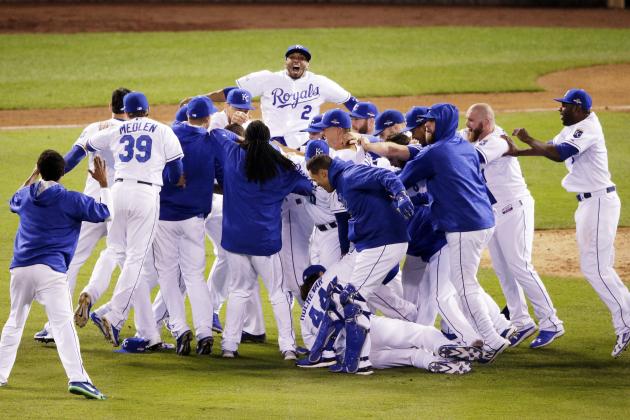
For the second consecutive year, baseball ended with an ethics conundrum in its final game. Last night, as the Kansas City Royals battled back from a late deficit again (they had done so in the previous game as well) to take the Series four games to one,against the New York Mets at Citi Field, the topics were trust, courage, leadership, and most of all, consequentialism. The latter is to baseball as apple pie—or baseball— is to America.

Let me set the stage. The Royals, having stolen the previous game from the Mets’ grasp by an unlikely 8th inning rally (the Mets lost one game all season when they were leading in the 8th; they lost two such games in this five game series). With their backs against the wall (on the short end of a 3-1 game tally, the Mets had to win last night to avoid elimination), the New York sent their ace, the remarkable Matt Harvey, to the mound to do what aces do: win. Harvey had it all last night. After eight innings, the Royals hadn’t scored.  Harvey looked fresh in the eighth, and got the Royals out without surrendering a baserunner.

All season long, with a close game after eight innings, Mets manager Terry Collins would tell his starter to take a seat and let his closer finish the game. This is standard practice now: complete games by starting pitchers are a rarity. Once, not too long ago, the league leader in that category would be in double figures. Now the top is usually about five. Moreover, nobody cares. The best teams have 9th inning specialists who almost never lose one-run leads, much less two, and the Mets had a great one, Jeurys Familia.

After Harvey’s dominant eighth, the Fox cameras recorded the drama unfolding in the Mets dugout. Collins’ pitching coach told Harvey that his night was done and Familia, as usual, would close out the game. Harvey pushed past the coach to confront his manager, passionately. Let me finish it, he insisted. The game is mine. Continue reading

A Bobby Jindal Critic Asks, “Would I Be Uncivil If I Were To Suggest That Somebody Punch This Man Right In His Dick?” Why Yes, I Believe You Would…

By all means, this should be our model for political discourse...

By all means, this should be our model for political discourse…

Gov. Bobby Jindal, desperately trying to stay relevant in the Republican race to be the party nominee in 2016, weighed in on the Oregon community college shooting with an extensive blog post that shows, if nothing else, that the Fifties live. It’s pretty awful, designating as “root causes” of the violence such Oldies but Stupidees as “glorifying violence” in popular culture (Actually, this one is closer  to 1650), movies, TV shows, music (Run, Tipper! This is your chance!) the decline of religion ( “…we flaunt the laws of God and common decency”—I think you mean “flout” there, Bobby), the decline of the family…you know the list. The problem with Jindal’s rant—other than its exaggerations, poor writing and hysterical tone— is that taking any single event and attributing it to generic causes is demagoguery, and as intellectually dishonest as  blaming the NRA every time someone is murdered with a gun.

The Huffington Post, mocking Jindal’s eminently mockable screed, asked “What about gun violence?” as if Jindal left out the one obvious “root cause.” Is it really necessary to point out that gun violence is responsible for gun violence? But that’s anti-gun code for guns, you see. Guns are responsible for the shootings. Take the evil guns away, and nobody dies! That this facile and deceitful dead end reasoning is so accepted among progressives and liberals that it is considered an obvious truth is depressing, but I digress.

Jindal is also depressing, since the only remedy for violent movies, TV shows and video games is censorship of one kind or another, and you know what the Right will do if it gets that started: TV couples will again be sleeping in twin beds like Rob and Laura Petrie by edict. His lack of logic is depressing too—how does someone like this get elected a governor?—when he attributes alleged conditions like “the family is a mess” to a rampage by someone who might have been raised like Opie Taylor but whose mind just snapped, as they have a tendency to do. Again, a single incident has specific causes. Jindal’s main argument is exactly as exploitative and dishonest as using the Oregon shooting to lobby for gun regulations that wouldn’t have stopped the shooting. Continue reading

“Kill The Messenger” And The CIA Crack Story Ethics Train Wreck

I finally saw the 2014 docudrama “Kill the Messenger,” which completed—I hope—the passenger list for a 30-year-old Ethics Train Wreck.

The film purports to be the true story of Gary Webb, the San Jose Mercury News reporter who wrote the sensational “Dark Alliance” series of investigative reports in 1996. The series attributed the inner city crack cocaine explosion in part to Nicaraguan anti-government Contra rebels in  the 1980s funding their efforts by drug smuggling and sales, all with the knowledge and assistance of the  CIA. The agency, the series claimed, was acting to support the Contras despite Congress rejecting the Reagan administration’s request for aid. Like most Hollywood accounts of anything, the film distorts and misrepresents facts to make a better story. Unfortunately, Webb’s story is made more dramatic by making him out to be a tragic hero and victim of a sinister alliance between the mainstream media and the U.S. Government. That’s not exactly true, fair or accurate, and in this matter, affirmatively harmful.

The fastest way to survey this particular Ethics Train Wreck is to list the distinguished passengers, more or less in order of boarding: Continue reading

The Ethics Alarms New NFL Season Ethics Quote Of The Week: Ex-Football Fan Steve Almond

football-brain-injury-symptoms

“We know, on some level, that a good many of the players we cheer for each Sunday will be revealed as all too human when they wind up battling dementia. But… fans have a whole suitcase full of rationalizations intended to preserve our right to consume, and thus sponsor, this hyper-violent game. “The players know the risks!” we insist. “They get paid millions!” But ultimately, our most effective dodge resides in our willingness to view the game as one big movie.”

Steve Almond, author of “Against Football, in an essay today for the Washington Post titled “Hollywood’s version of the gridiron is just fantasy football
(It hypes violence for the sake of drama — then reassures us everything is okay)”

Perfect timing for this article, a reminder of what fans are really watching and cheering for during the pro football season, which began today.

No, I won’t be watching.

Her’s another chilling quote from Almond’s article: Continue reading

The Ethics From U.N.C.L.E.

U_N_C_L_E_-logo-symbol-The-Man-From-UNCLE-TV-show

There’s nothing that can be done about this, but I’m going to complain about it anyway.

When I was a sprout, one of my favorite TV shows, indeed among my top 20 shows of all time, was “The Man From U.N.C.L.E.”  At least for its first few seasons—that balance between satire, intentional silliness, cool and plots worth paying attention to was hard to hold—the show simultaneously kidded the James Bond craze and delivered an hour of thrills and intrigue. It was a period piece, to be sure, of its time as much as “Perry Mason,” which is why, I assumed, that it wasn’t in syndication any more.

When I heard that it was getting the Hollywood reboot treatment, I knew what was in store, and it was. The movie, which came out last week, is an unremarkable meh, and the middling to sneering reviews, by people less than half my age and who never saw the original, are taking cheap shots at Robert Vaughn (the first Napoleon Solo) and David McCallum (the only Illya Kuyakin) and the original as if it were crap too.  As has happened so many times before, a careless and disrespectful movie exploiting all the good will created by an older work of art—yes, art, dammit—is burying its better model and has effectively poisoned it in the culture. Ultimately, the loss is ours. Continue reading

“Worlds Are Colliding!” If You’d Like To Meet The Ethicist And Blogger, Come See “Twelve Angry Men” And Meet The Director

12show_men

I’ve now received sufficient inquiries from readers to justify the risk of colliding my worlds as a professional stage director, an ethicist and a blogger.

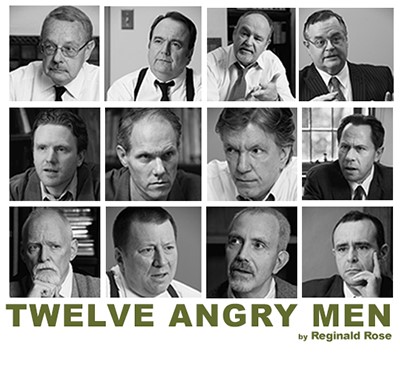
The final production of my quixotic theater company in Arlington, Virginia, “Twelve Angry Men” by Reginald Rose, is playing through August 8. After that, the American Century Theater closes its metaphorical curtains (we perform in a black box theater, in the round for this show) forevermore after 2o rewarding, daring, frustrating years. I know a lot of Ethics Alarms readers live in the Washington D.C, area, and I would love to meet you face to face for a change, which, if you come to a performance, is easy (though you have to let me know when—I don’t see every one.)

You can get information and make reservations here; there are some representative reviews of the show here and here.  Some background on the theater’s closing is here. I’ve written about some ethics issues in the movie (which is the script I directed for the stage) here, here and here.

For many reasons, this is as good a version of the story as you are ever likely to see, and in all honesty and modesty, that includes the classic movie. The script is better live on stage than on film (it is about all the jurors and the jury as a unit, not just Henry Fonda), it cannot be done justice on a proscenium stage; the cast is superb, and the director is a lawyer, an ethicist and a successful stage director who has studied the script for 30 years and directed it three times before to work the kinks out.

If you come, I’ll seat you myself.

Hope you can make it.

Update: You can hear a podcast, hosted by me, about the production here.

The Idiot Effect

Or would you prefer, "The Old Man and the Sea"?

Or would you prefer, “The Old Man and the Sea”?

Last night, in a rash moment, my wife and I used pay-per-view last night to watch a film called “The Lazarus Effect.” The “effect” seems to be that when you use an experimental medical procedure to bring someone recently deceased back from death, what arrives is not the same person but an altered, super-powered mutation FROM HELL!!!! The movie wasn’t terrible as mad experiments gone horribly wrong films go,  but what was immediately impressive about it was its length: the thing was running credits before an hour and fifteen minutes was up.

That’s a movie? In the Sixties and Seventies there were weekly TV dramas longer than that even if you didn’t count the commercials.

Recent studies have documented the diminishing attention span of the average American, with the young leading the way. The reasons for this are a matter of debate, but there is no doubt that the news media, entertainment industry and the arts are both accommodating this disability and contributing to it. The consequences are dire. Continue reading

Good, I Can Scratch That Off My Ethics Mysteries List: Han Shot First After All!

Star Wars Bar Script

Peter Mayhew, a.k.a. Chewbacca the Wookie, has released to the internet the page from his original Star Wars script that answers the crucial ethics dilemma discussed on Ethics Alarms in 2012.

As it seemed when we all first saw the film, Han Solo shot the porcupine fish-headed space-thug Greedo with a blaster before being fired upon, and I have no problem with that at all. It was self defense.

Nonetheless, a large group of activists, led by Greedo’s family’s lawyer and whipped into a frenzy by cable TV, demonstrated and protested based on a bar patron’s false report that Greedo had his hands up at the time. Luckily, the film proved this was false, though “Hands up! Don’t blast!” survived as a provocative refrain.

________________________

Pointer and Spark: Tim LeVier