“We know, on some level, that a good many of the players we cheer for each Sunday will be revealed as all too human when they wind up battling dementia. But… fans have a whole suitcase full of rationalizations intended to preserve our right to consume, and thus sponsor, this hyper-violent game. “The players know the risks!” we insist. “They get paid millions!” But ultimately, our most effective dodge resides in our willingness to view the game as one big movie.”
—–Steve Almond, author of “Against Football, in an essay today for the Washington Post titled “Hollywood’s version of the gridiron is just fantasy football (It hypes violence for the sake of drama — then reassures us everything is okay)”
Perfect timing for this article, a reminder of what fans are really watching and cheering for during the pro football season, which began today.
There’s nothing that can be done about this, but I’m going to complain about it anyway.
When I was a sprout, one of my favorite TV shows, indeed among my top 20 shows of all time, was “The Man From U.N.C.L.E.” At least for its first few seasons—that balance between satire, intentional silliness, cool and plots worth paying attention to was hard to hold—the show simultaneously kidded the James Bond craze and delivered an hour of thrills and intrigue. It was a period piece, to be sure, of its time as much as “Perry Mason,” which is why, I assumed, that it wasn’t in syndication any more.
When I heard that it was getting the Hollywood reboot treatment, I knew what was in store, and it was. The movie, which came out last week, is an unremarkable meh, and the middling to sneering reviews, by people less than half my age and who never saw the original, are taking cheap shots at Robert Vaughn (the first Napoleon Solo) and David McCallum (the only Illya Kuyakin) and the original as if it were crap too. As has happened so many times before, a careless and disrespectful movie exploiting all the good will created by an older work of art—yes, art, dammit—is burying its better model and has effectively poisoned it in the culture. Ultimately, the loss is ours. Continue reading →
I’ve now received sufficient inquiries from readers to justify the risk of colliding my worlds as a professional stage director, an ethicist and a blogger.
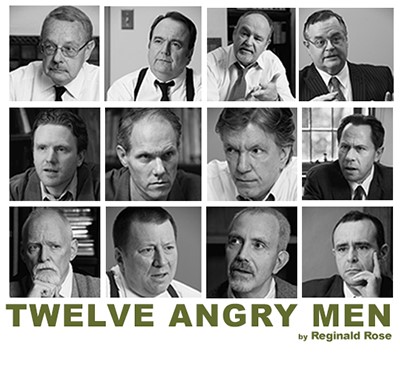
The final production of my quixotic theater company in Arlington, Virginia, “Twelve Angry Men” by Reginald Rose, is playing through August 8. After that, the American Century Theater closes its metaphorical curtains (we perform in a black box theater, in the round for this show) forevermore after 2o rewarding, daring, frustrating years. I know a lot of Ethics Alarms readers live in the Washington D.C, area, and I would love to meet you face to face for a change, which, if you come to a performance, is easy (though you have to let me know when—I don’t see every one.)
You can get information and make reservations here; there are some representative reviews of the show here and here. Some background on the theater’s closing is here. I’ve written about some ethics issues in the movie (which is the script I directed for the stage) here, here and here.
For many reasons, this is as good a version of the story as you are ever likely to see, and in all honesty and modesty, that includes the classic movie. The script is better live on stage than on film (it is about all the jurors and the jury as a unit, not just Henry Fonda), it cannot be done justice on a proscenium stage; the cast is superb, and the director is a lawyer, an ethicist and a successful stage director who has studied the script for 30 years and directed it three times before to work the kinks out.
If you come, I’ll seat you myself.
Hope you can make it.
Update: You can hear a podcast, hosted by me, about the production here.
Last night, in a rash moment, my wife and I used pay-per-view last night to watch a film called “The Lazarus Effect.” The “effect” seems to be that when you use an experimental medical procedure to bring someone recently deceased back from death, what arrives is not the same person but an altered, super-powered mutation FROM HELL!!!! The movie wasn’t terrible as mad experiments gone horribly wrong films go, but what was immediately impressive about it was its length: the thing was running credits before an hour and fifteen minutes was up.
That’s a movie? In the Sixties and Seventies there were weekly TV dramas longer than that even if you didn’t count the commercials.
Recent studies have documented the diminishing attention span of the average American, with the young leading the way. The reasons for this are a matter of debate, but there is no doubt that the news media, entertainment industry and the arts are both accommodating this disability and contributing to it. The consequences are dire. Continue reading →
Peter Mayhew, a.k.a. Chewbacca the Wookie, has released to the internet the page from his original Star Wars script that answers the crucial ethics dilemma discussed on Ethics Alarms in 2012.
As it seemed when we all first saw the film, Han Solo shot the porcupine fish-headed space-thug Greedo with a blaster before being fired upon, and I have no problem with that at all. It was self defense.
Nonetheless, a large group of activists, led by Greedo’s family’s lawyer and whipped into a frenzy by cable TV, demonstrated and protested based on a bar patron’s false report that Greedo had his hands up at the time. Luckily, the film proved this was false, though “Hands up! Don’t blast!” survived as a provocative refrain.
Today is June 6, the anniversary of the Allies’ invasion of Normandy, the audacious military strike that changed the course of history. I’ll be interested in seeing how it’s commemorated this year, 71 years later, especially by the news media. A lot of Americans under the age of 40 know almost nothing about it, or worse, the values it represents to the United States.
Fortunately, there is an easy and entertaining way to teach a young American about what happened on this day 71 years ago. That is to have him or her watch “The Longest Day,” producer Darryl F. Zanuck’s epic film based closely on historian (and sole credited screenwriter) Cornelius Ryan’s 1959 book. (You can get it at Amazon, here.)I usually find understanding military battles nearly impossible; written accounts completely confound me, and few movies about any battle make a serious effort to explain the tactics and strategy without reducing the facts to pablum. (I remember how much my father, who fought in the Battle of the Bulge, detested the big budget movie of the same name, which he found outrageously sloppy, and which he summarized as “Henry Fonda won the war.”)
Not “The Longest Day,” however. Since seeing the movie with my father as a kid, I have learned a lot about what was left out, but the movie is remarkably clear and accurate about what happened and why without being either too detailed or too simplistic. It’s also just a great, inspiring movie.
That we have “The Longest Day” is entirely due to the courage of one of Hollywood’s most dynamic, flamboyant and successful studio moguls, Darryl F. Zanuck. The original producer of the adaptation of Ryan’s book (which is terrific ) gave up on the project when 20th Century Fox refused to allow him an adequate budget. Zanuck, who was still producing films but no longer ran the studio he had built, bought the rights, and was determined to do the story, the event, and the men who fought the battle justice by mounting a production almost as ambitious as the invasion itself. Continue reading →
Commenter Penn posted a nuanced take on Adam Sirois’s dilemma. It would have been a COTD yesterday, but for some reason WordPress has decided to spam all of Penn’s comments of late, for no reason that I can detect. (I can only discourage commenters I ban by repeatedly spamming them until they go away.) If anyone else has a disappearing comment, e-mail me quick, and I can usually find it. I’m sorry: I swear, it’s not me!
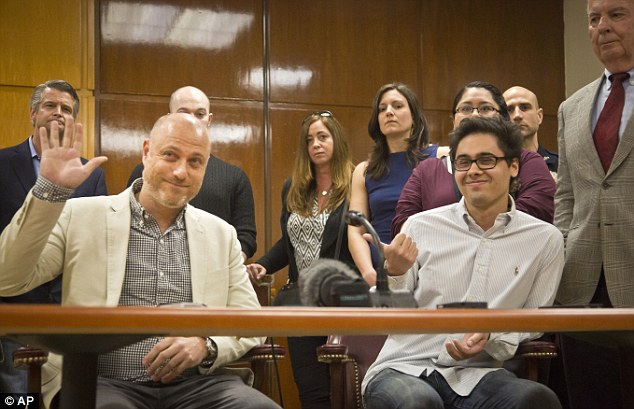
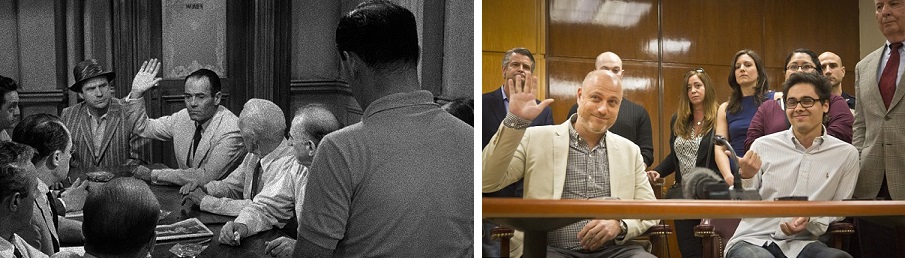
One point before I turn the blog over to Penn. His first comment is about that photo, much criticized, of the lone juror raising his hand in the press conference and “smirking” or looking”sheepish,” or “smug.” I liked Ann Althouse’s take on that:
“The photographers must have taken thousands of pictures of Sirois’s face, and the newspaper editors have chosen one, one that supports the “smirking… sheepishly” characterization. If he “looks like a smug little prick” to you, that’s because the editors decided to help you think that and because the man just had an 18-day experience and was the kind of person who could stand up for his beliefs in a group setting for more than 2 weeks. Most people would cave and go along to get along. These people are much more likely to have a pleasant, unremarkable face.”
In a remarkable example of life imitating art, a single juror, a 41-year-old health care worker, refused to vote guilty with the rest of the jurors deliberating on the case against the accused murderer of Etan Patz, a little boy whose disappearance in 1979 focused national attention on the child predator problem. The defendant, Pedro Hernandez, had delivered an elaborate confession to police, then revoked it. For 18 days, Adam Sirois battled the eleven other jurors, who told him that they were convinced by the evidence beyond a reasonable doubt. Sirois, however, said he had doubts, too many to send a man to prison for life. In the end, the vote was 11-1. Yesterday, the judge in the case pronounced the jury deadlocked—hung— and declared a mistrial.
Sound familiar? If Sirois was made the hero of a cable TV adaptation, it would be considered a shameless knock-off of “12 Angry Men,” the iconic 1957 jury film that originated as a live TV drama by the late Reginald Rose: Continue reading →
In the strange ethics category of “Conduct That Isn’t Exactly Wrong But That Will Have Nothing But Bad Consequences To Society If There Is A Lot Of It” (CTIEWBTWHNBBCTSITIALOI for short) is actors rejecting roles because they have philosophical or political disagreements with the script.
We’ve had two high profile examples of this occur lately. All we can do is hope that it’s a coincidence. The first was when about a dozen Native American actors, including an adviser on Native American culture, left the set of Adam Sandler’s first original movie with Netflix, “The Ridiculous Six,”a western send-up of “The Magnificent Seven,” claiming some of the film’s content was offensive.
Really? An Adam Sandler movie offensive?
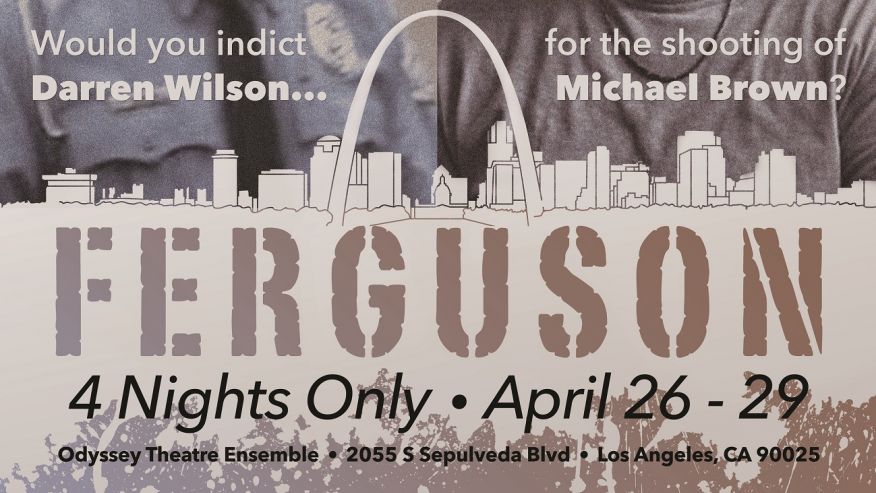
The second and more troubling was in LA, where five actors quit the cast of the new play “Ferguson,” which consists entirely of dramatizations of the Michael Brown murder grand jury testimony, because the actors apparently felt that it did not appropriately support the “Hands Up! Don’t Shoot!” narrative.
That’s really stupid, but I’m not getting into that again.
We don’t see many examples of professional actors doing this for several reasons. One is that they can’t afford to. Acting, except for the top fraction of a per cent, is anything but lucrative; it’s a subsistence level job, redeemable because it is, or can be, art, and tolerable as long as the actor doesn’t have a family to support, or has a trust fund.
The main reason this is unusual, however, is that an actor isn’t responsible for the content of the play, movie or TV show he or she acts in, but only the skill with he or she helps present that content to an audience. Actors—and technical artists like costume and light designers—are the conduits through which a writer’s work of performance art gets to live. They don’t have to like a show, agree with it or understand it, which is a good thing, since many excellent actors don’t have the education, experience or intellect to understand complex and profound works. As one realistic actor friend once told me, “If we were that smart, we’d be smart enough to be in another profession.” Continue reading →
Question:Are the seven GOP Senators who did not sign the Iran letter Ethics Heroes?
Answer: I almost designated them as such, but that would have been a mistake. There are too many non-heroic and even unethical reasons Sen. Lamar Alexander (R-Tenn.), Sen. Lisa Murkowski (R-Alaska), Sen. Dan Coats (R-Ind.) and Sen. Thad Cochran (R-Miss.), Sen. Susan Collins (R-Maine), Sen. Jeff Flake (R-Ariz.), and Sen. Bob Corker (R-Tenn.), Senate Foreign Relations Chairman might have chosen to refuse to go along with their colleagues. Based on the explanations I’ve read, that seems to be the case. Collins, for example, says that she didn’t think the letter would work. Wrong answer: the reason to reject the letter is because it’s a flat-out violation of legislative limits imposed on the Constitution. Similarly, Flake says that he didn’t think the letter was necessary, whatever that means. It is also likely that some of the seven felt they could have their cake and eat it too: they want the letter to undermine U.S. diplomacy, but don’t want to take the criticism that goes with signing it.
Question: Do I blame President Obama for the letter?
Answer: A friend who is such a knee-jerking Obama enabler and excuser that it’s a miracle he can walk posted yesterday’s Thirteen Ethics Observations On The GOP’s Letter To Iran on his Facebook page, and one of his knee-jerking friends wrote, “Typical: blame Obama.” I did not and do not blame Obama for the fact that the Republican Senators engaged in a foolish, dangerous and bright-line violation of the separation of powers, and anyone who could read the post otherwise is so deranged by bias that their faculties are impaired…or they just aren’t very bright.
I did write, and it is true, that the President shares significant responsibility for the poisonous and dysfunctional relations with the Congress that led to this fiasco. He is at the top of the government; it’s ultimately his job to make the government and the system work. Obama and his enablers reject accountability at every turn, but the unavoidable facts are that he is in charge, he took the job voluntarily, and whatever doesn’t work, including the government itself, is on his record. He never made a good faith, sincere, dedicated effort to work with the Republicans in Congress; he never worked to develop the negotiation, compromise, horse-trading, cajoling, quid pro quo skills that successful, competent Presidents have used to deal with the same levels of political opposition that he has found impossible to cope with. He took no steps to build trust in Congress, and engaged in serial conduct that was guaranteed to destroy trust, and has.
Finally, his illegal immigration executive order (the illegal accurately modifies both “immigration” and “order”) and his unilateral alterations to his own, incompetent and sloppy, health care law showed exactly the same contempt for constitutional limits as the Senate letter.
Obama is not to blame for the letter. He is absolutely and ultimately accountable for the conditions that prompted the letter and the decision to send it.
Question:Is there an ethical justification for sending the letter?Continue reading →