Musings On The Clarence Thomas Affair and Insideous, Unavoidable, Rationalization Eleven

If you are good enough and valuable enough, do you deserve one of these?

If you are good enough and valuable enough, do you deserve one of these?

A recent—and off-topic—comment caused me to begin thinking about “The King’s Pass,” #11 on the Ethics Alarms Rationalization hit parade,and perhaps the most perplexing of them all. The commenter referenced the 2010 discovery that Supreme Court Justice Clarence Thomas had inexplicably neglected to mention his activist wife’s annual income on his annual financial disclosure filings, meaning that he had filed a false affidavit and violated the law. Thomas claimed that he had made a careless mistake—for five years—and the matter was allowed to drop except for the angry agitating of the Anti-Clarence Thomas Furies, who are constantly searching for any way to get a conservative black justice off the Supreme Court short of assassination.

The episode had left a bad taste in my mouth, and I was happy to be reminded of it, bad mouth tastes being essential to triggering ethics alarms. I went back to read my post on the matter, and sure enough, I had followed the principle of rejecting The King’s Pass, and asserted that Thomas should be punished appropriately and formally…but that really ducked the question. Lawyers have lost their licenses to practice for single episodes of swearing to false information when it was far more obvious that a mistake had been made than in Thomas’s case, as when a hapless Maryland lawyer carelessly signed a legal document that had misrecorded  his address. The logic of this no-tolerance ruling was that a lawyer, above all people, should never swear to a falsehood, and that doing so, even once, was a serious breach of duty calling into question his fitness to practice law. I think the penalty for this particular act was excessive—it is cited locally as a cautionary tale—but I agree with its underlying principle, which should apply with even more vigor when the lawyer in question is a judge, and not merely a judge, but a Supreme Court Justice.
Continue reading

Ethics Hero: Pasco High School (Dade City, Fla.)

Graduate

I need this story to get the previous post out of my head.

In Mark Harris’s novel “Bang The Drum Slowly,” best known as the inspiration for the film that introduced Robert DeNiro to the movie-going public, a major league baseball team exhibits uncharacteristic kindness toward a third-string catcher who is dying of Hodgkin’s Disease. The book, like the film and the stage adaptation, is about kindness and the Golden Rule, an ethical value that seldom inspires literature or art. Kindness is not particularly exciting, but it may be the most ethical of all ethical virtues. The serious illness and impending death of someone in our life often brings the importance of kindness into sharp focus. “Everybody’d be nice to you if they knew you were dying,” says the doomed catcher, Bruce Pearson, to his room mate and champion, star pitcher Henry Wiggen.  “Everybody knows everybody is dying,” Wiggen replies. “That’s why people are as good as they are.”

Pasco High School student Vanessa Garcia  learned that she had an inoperable brain tumor when she was in elementary school. Until two years ago, treatment had kept the tumor  in remission, but the mass began growing again when she was 15. Undaunted, Garcia continued to go to school, work diligently, and keep a positive and uncomplaining outlook, earning the admiration of her classmates, teachers and school officials. Continue reading

50 Years After Kitty Genovese, Inhumans On A Bus

The title describes the public transit riders who watched this disturbing scene unfold on a Philadelphia bus, and did nothing:

2014 is the 50th anniversary of the infamous Kitty Genovese case, and dueling books on the incident either recount the accepted version that 38 people in an apartment building heard the 28 year-old woman’s screams as she was being stabbed to death but “didn’t want to be involved” and let her die, or adopt the revisionist theory that the apathy of bystanders was unfairly and inaccurately hyped by the news media. The incident on the Philadelphia bus tells me that the revisionists have a burden of proof that will be hard to meet. There was plenty of evidence already, like here, or here, or here, or here, or more recently here, that Kitty Genovese might not fare any better today. Continue reading

Déjà Vu: In D.C., It’s The Brooklyn EMTs All Over Again. How Can This Happen Even Once?

"Hey, I'm ready! Just go through the proper channels, and I'm On it! You can count on me!"

“Hey, I’m ready! Just go through the proper channels, and I’m On it! You can count on me!”

I guess it’s a sign of longevity that some ethics stories are recurring so exactly that I can handle them with previous posts. I never wanted to see this one repeat, however.

In 2004, two EMT’s let a pregnant woman die in front of them without offering aid, because they were on a break and wouldn’t abandon their coffee and bagels to save a mother and her unborn child. (They were suspended and yet kept their jobs.) Over the weekend, in Washington, D.C., a 77-year-old man, Medric Cecil Mills, collapsed across the street from a fire station. The man’s daughter ran across the street to seek help, and the firefighter she spoke to explained that he couldn’t respond until being dispatched and instructed her to call 911. The man died.

[A black humor note: when 911 was called and a rescue vehicle dispatched, it went to the wrong address.] Continue reading

The Fifth Annual Ethics Alarms Awards: The Worst of Ethics 2013 (Part Two of Three)

Snowden

The Ethics Alarms review of a truly disheartening year in ethics continues with fallen heroes, ficks, fools and follies with Part Two of the 2013 Worst of Ethics awards….and there’s one last section to come. Be afraid..be very afraid:

Fallen Hero of the Year

Edward Snowden, whose claim to civil disobedience was marred by his unwillingness to accept the consequences of his actions, whose pose as a whistle-blower was ruined by the disclosure that he took his job with the intention of exposing national secrets, and whose status as a freedom-defending patriot lies in ruins as he seeks harbor with not only America’s enemy, but a human rights-crushing enemy at that. The NSA’s over-reach and mismanagement is a scandal, but Snowden proved that he is no hero.

Unmitigated Gall of  The Year

Minnesota divorce lawyer Thomas P. Lowes not only violated the bar’s ethics rules by having sex with his female  client…he also billed her his hourly fee for the time they spent having sex , a breach of the legal profession’s rule against “unreasonable fees.” Yes, he was suspended. But for not long enough…

Jumbo Of The Year

(Awarded To The Most Futile And Obvious Lie)

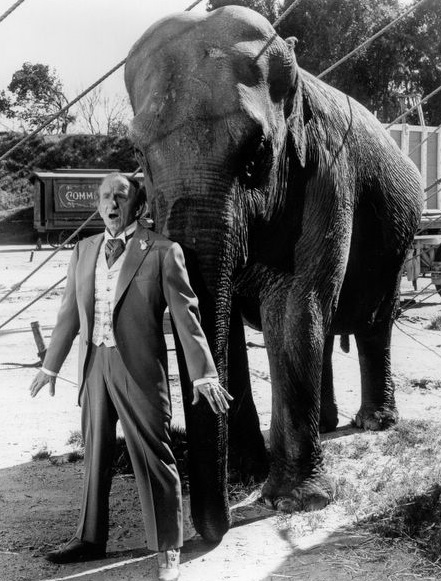
Jumbo film

“Now, if you had one of these plans before the Affordable Care Act came into law and you really liked that plan, what we said was you can keep it if it hasn’t changed since the law passed.”

—–President Obama

2013 Conflicts of Interest of the Year Continue reading

To Get Your Christmas Ethics Off To The Right Start…

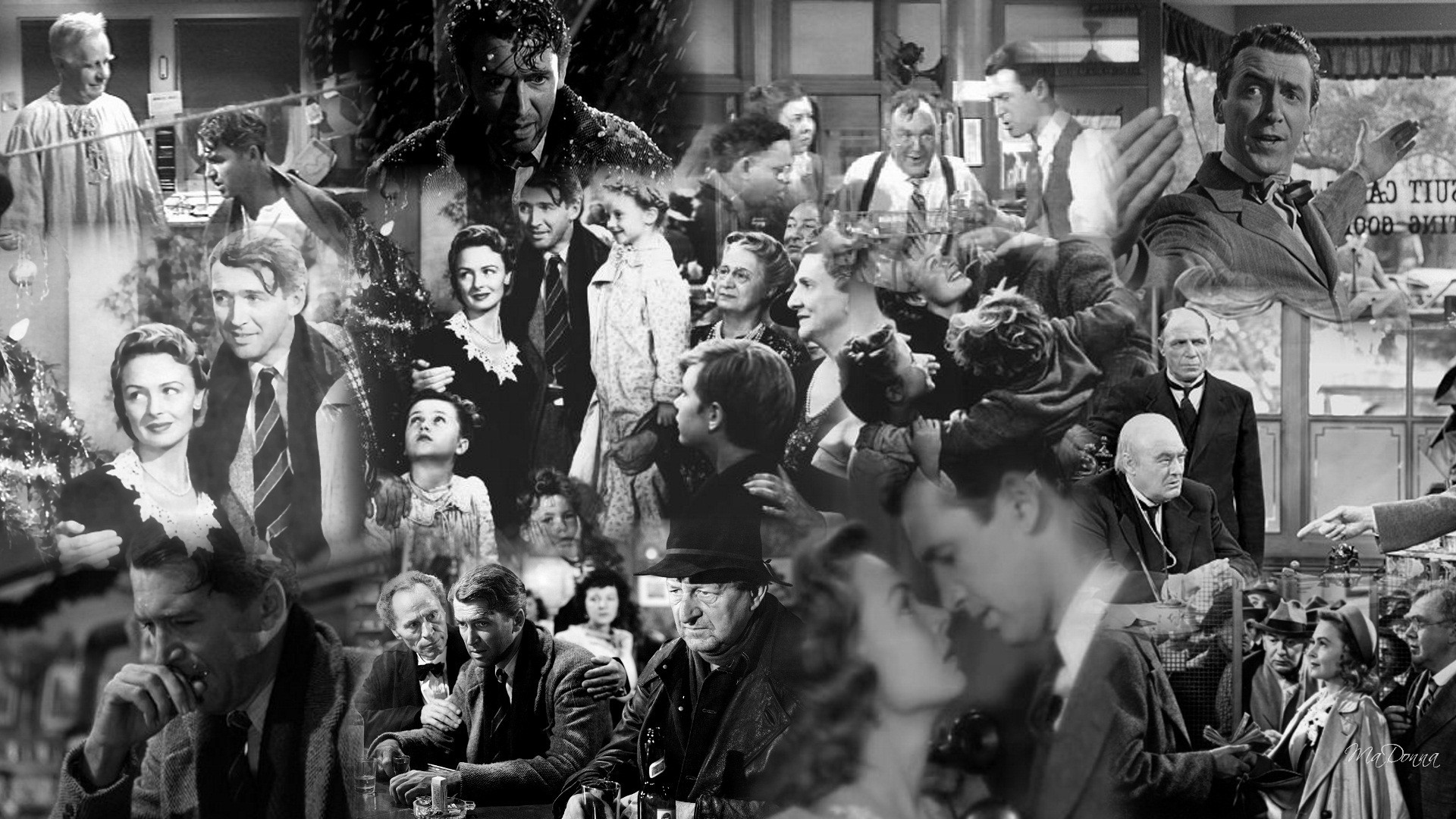
its-a-wonderful-life-collage-73136

…the Complete Ethics Alarms “It’s A Wonderful Life” Ethics Guide is here.

Just in case you forgot!

“Would You Rather”: An Ethics-Horror-Health Care-Dinner Party In Hell Movie You May Have Missed

“Would You Rather” is an odd 2012 film that sets up a film-long set of unlikely ethical dilemmas for its characters to solve. Desperate to save her dying brother with expensive medical treatment she can’t afford, the heroine (played by Brittany Snow) finds herself at a dinner party with seven other desperate strangers, hosted by a wacko family of millionaires who will help one of them after the others have been “eliminated” during the course of the evening. As what is described as a game progresses, each contestant is put through escalating rounds of risk, pain and torture in which they must make various Sophie’s Choices, such as…

  • Would you rather administer a painful shock to yourself with high-voltage electricity, or the person next to you? What if that person has been weakened by a previous shock? What if she is in a wheelchair?

“The Only Answer”: An Ethics Hero, A Life Saved, And A Troubling Hypothetical

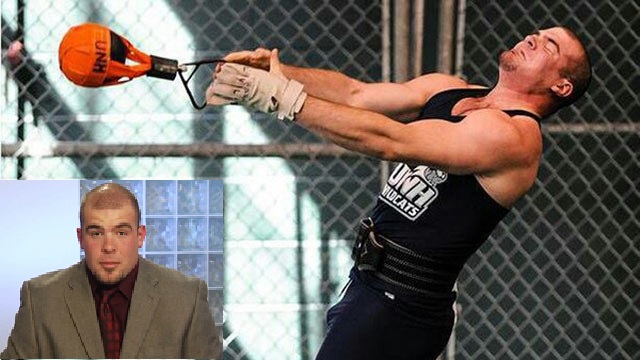
In this universe, a hero...and in an alternate one? I wonder...

In this universe, a hero…and in an alternate one? I wonder…

University of New Hampshire senior Cameron Lyle, a Division I college track and field competitor who excels in the shot put and hammer throw, has chosen to end his collegiate athletic career to save a stranger’s life.

He will donate his bone marrow today to a 28-year-old man suffering from acute lymphoblastic leukemia. Doctors told Lyle the man who will receive his marrow will live only six months without a transplant, and that there was a only one in five million chance for another non-family match. Yet the odds came up in his favor, thanks to  Lyle having his mouth swabbed to join a bone marrow registry two years ago. He was a perfect match.

Lyle says he never hesitated in his choice, once he was informed. “It’s just a sport,” he said. “Just because it’s Division I college level doesn’t make it any more important. Life is a lot more important than that, so it was pretty easy…It was kind of a no-brainer for a decent human. I couldn’t imagine just waiting. He could have been waiting for years for a match. I’d hope that someone would donate to me if I needed it.”

“He made his decision. He gave up his college season to do this. He’s a gentle giant,” Lyle’s mother said of her 6-foot-2-inch, 255-pound son. “He’ll do anything for anybody.”  Lyle’s coach Jim Boulanger, was also completely supportive, and, according to Lyle, came up with an instant Ethics Quote of the Month when the shot-putter told him of his plans.

“Here’s the deal,” Boulanger told Lyle. “You go to the conference and take 12 throws or you could give a man three or four more years of life. I don’t think there’s a big question here. This is not a moral dilemma. There’s only one answer.” Continue reading

Ethics Poison From Nike and Tiger Woods

Woods AdWoods Ad2

…and not for the first time, in either case.

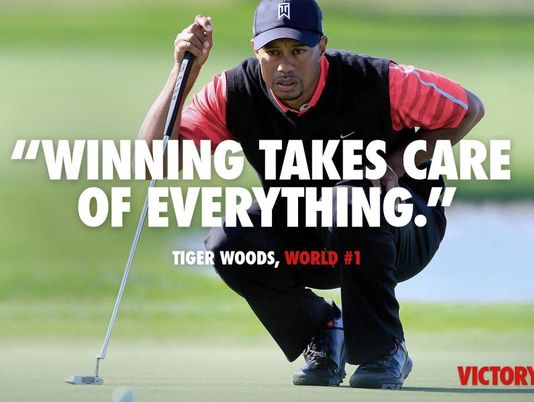
But Woods’ new ad for Nike in the wake of his resurgence in his sport, is audaciously unethical, braying a dangerous, corrupting message into the cultural atmosphere, endorsing, in five simple-minded words, consequentialism, the Star Syndrome, the King’s Pass, non-ethical considerations over ethical ones, and “the ends justify the means.” That’s a pretty impressive load of ethics offal in so few words: congratulations to the soulless ignoramus who devised it.

The assorted miscreants, past and present, who would have gladly stood in for Tiger in his damning ad include dictators, despots, mass murderers, gangsters and corrupt politicians like Richard Daley, Marion Barry, Charley Rangel and Tom DeLay, corporate bandits, assassins, robber barons, Wall Street criminals, athletic cheaters like Lance Armstrong and Barry Bonds, serial fathers like the NBA’s priapic stars, arrogant social misfits like Charley Sheen, con artists and liars in all walks of life, and of course, our most popular politician, the man whose entire career is based on Nike’s new motto, William Jefferson Clinton.

I almost forgot the terrorists. Continue reading

Ethics Hero: Lawyer/Blogger Scott Greenfield

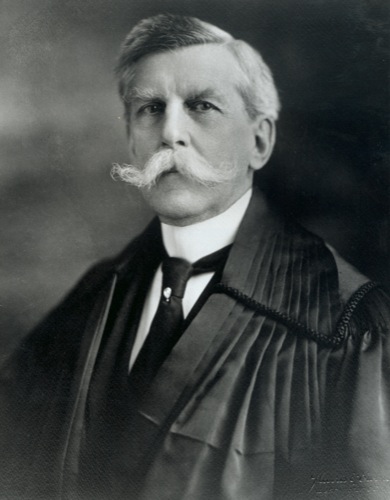
No question: Justice Holmes would think Scott Greenfield is a good man.

No question: Justice Holmes would think Scott Greenfield is a good man.

Criminal defense lawyer and caustic, if trenchant, blogger Scott Greenfield stakes out a noble and correct stand on legal ethics and ethics generally in a superb post titled, “What Tastes Good To You?” Read the entire post, but his essay springs from a question that has been posed in various forums (including,  in slightly different form,the Jack Lemmon comedy “How To Murder Your Wife”), to wit:

If you could commit any crime and get away with it, what would it be? 

Greenfield’s answer, the ethically correct one, is “none” : “Just because we can get away with it isn’t a reason to do wrong.” Thus does he definitively separate himself from what Justice Oliver Wendell Holmes referred to as “the Bad Man” in his famous 1897 essay, “The Path of the Law.”  For Holmes’ “bad man” never breaks a law, but only because he abhors punishment.From this starting point, Greenfield considers a professional debate about whether the legal marketing tactic (as determined by the courts) of buying up another firm’s name as a web “key word” to lead customers to one’s competing firm is “unseemly,” which is to say, unethical, though not technically unethical under the professional rules of conduct. One of the defenders of the practice describes the division on the issue to a difference in “taste,” leading Greenfield to aim carefully and fire: Continue reading