Casting Ethics: A Black Joan Of Arc?

Sure, why not?

From Playbill:

Manhattan Theatre Club has announced a Broadway revival of “Saint Joan” by Nobel Prize and Oscar winner George Bernard Shaw with direction by Tony winner Daniel Sullivan. Heading the cast as the famous heroine will be Condola Rashad, fresh off her Tony-nominated performance in “A Doll’s House, Part 2.”

Superficially, at least, the casting of Rashad, an African American actress, as the famous “Maid of Orléans,” the French teenager who gained political and military power as a self-proclaimed messenger of God and who was burned at the stake, would seem like precisely the kind of stunt non-traditional casting that I have condemned by subjugating the intent and art of a playwright to affirmative action and virtue-signaling. However, this is not a legitimate objection to this casting choice, and in fact the upcoming Broadway production is as close to a perfect example of how creative casting can enliven a production and deepen its ability to make an audience think.

Joan of Arc, of course, was not black. Nor was she Swedish, though Ingrid Bergman played her memorably enough in the most famous Hollywood version of  Shaw’s play, She also didn’t speak English, and certainly not Shavian English. She spoke French. Ethnicity, race and color are not part of Shaw’s drama, however, nor are they relevant to what Joan of Arc did in life, and what she meant to her nation, its history and our shared Western culture.

How many public schools teach anything about Joan of Arc? How many U.S. students graduate completely ignorant of the historical Joan, not to mention Shaw’s version? Yet hers is one of the most remarkable stories in recorded history.

Joan of Arc was born around 1412, the daughter of a tenant farmer, Jacques d’Arc, from the village of Domrémy, in northeastern France. She was illiterate, as were most  of her class and gender, but also was indoctrinated into the teachings of the Catholic Church by her mother.  France was engaged in what we now call the Hundred Years’ War with England, and England had France by the throat.  A forced  treaty in 1420 disinherited  Charles, French crown prince, and England’s King Henry V—there’s a famous play about him, too– was made ruler of both England and France. Upon his father’s death, Henry VI succeeded him as king in 1422. At this point England occupied much of northern France, and many in Joan’s village, Domrémy, were forced to abandon their homes under threat of invasion.

Thirteen year-old  Joan began to hear voices in her head. Today we think the cause was tinnitus, but she was certain God was assigning her the mission of  saving France by defeating the English, and installing Charles as its the rightful king. Joan took a vow of chastity, as part of her bargain with God; this allowed her to reject a marriage her father arranged for her when she was 16.

Around this time, Joan traveled by herself to  Vaucouleurs, a nearby stronghold of those loyal to Charles. With her faith and her persuasive claim of being a holy messenger, she attracted a small band of followers who were convinced her sudden appearance was the the result of a popular prophecy coming true, and that she was destined to save France. Joan cut her hair short and dressed in men’s clothes to make an 11-day journey across enemy territory to Chinon, where the crown prince’s palace stood. She met with the young man, and convinced him that she was the Real McCoy (they didn’t use that phrase in France, of course)  by allegedly telling him things only God would know. She also  promised Charles that she would see him crowned king at Reims, the traditional site of French royal investiture, and asked him to give her an army to lead to Orléans, then under siege from the English.

Charles granted her request. Think about this for a bit. A strange teenage girl, dressed like a boy and claiming to hear voices, meets with the leader of a nation at war and convinces him to put her in charge of an army.

Amazing. Continue reading
Casting Ethics And “The Music Man”

A recently closed summer production of “The Music Man” at the Berkshires’ Sharon Playhouse illustrates many of the ethics landmines overly ambitious directors and non-traditional casting can trigger.

New York director Morgan Green was hired to direct Meredith Willson’s  1957 classic. Until “Hamilton” came along, only two Tony winning musicals had a book, lyrics and music all written by one person: “The Music Man” and “Oliver!” “The Music Man” isn’t my favorite musical, but a strong argument can be made that it is the Great American Musical, celebrating small town Americana with Sousa-style marches, barbershop quartets, and the best ending in musical theater history (stolen, with great success, by “School of Rock.”) There is no need to mess with it, since the show is pretty close to perfect. I was taught that a production should be equally satisfying for an audience member who is seeing a show for the first time and for one who is seeing it for the last time.  A version that takes the show out of 1912 and litters the landscape with anachronisms and forced 2017 social and political references isn’t fair to either of these. This was, I presume from based on Jesse Green’s review, a “Music Man” for people sick of “The Music Man” (like Jason Green.) You know what? If a director is sick of a show, she has an ethical obligation to let someone direct who isn’t sick of it.

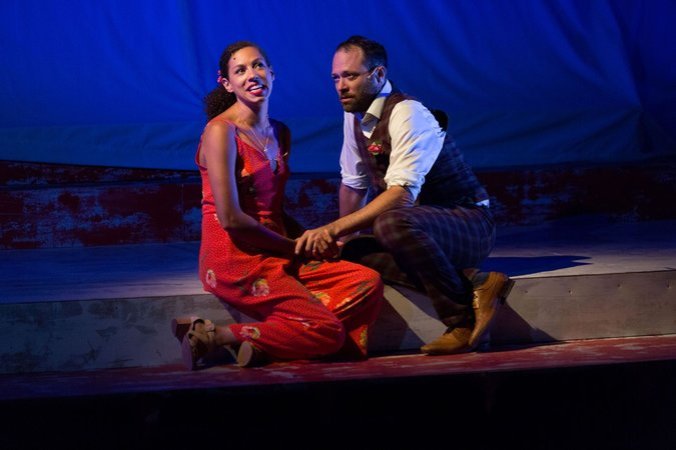
Naturally, there was the obligatory stunt casting of women in some men’s roles (but never men in women’s roles, of course), and  the non-traditional casting of a black actress as Marion (the Librarian) Paroo, the romantic lead originally created by the recently departed Barbara Cook in the original production.

I see no problem in principle with casting Marion as black. It’s certainly ahistorical, and the hint of a trans-racial romance in 1912 Iowa is unimaginable, but “The Music Man” is, or should be, about kids, romance, parades, sentiment and fun, none of which is impeded by non-traditional casting.

There is a problem, though. One of Marion’s big solos, in which she sings about her ideal man (whom her mother believes is too ideal to be real), is called “My White Knight.”

Oh-oh. Continue reading

Bad Ethics Chess: The Insufficiently Diverse High School “Sound of Music”

The real mystery here is how the school administrators and teachers could not have seen this coming. Thus the ethical value at issue is, as it often seems to be with public education, competence, or rather the lack of it.

In April of 2016, Marshfield High (in Wisconsin) presented its annual musical.  The production involved a cast of 40 students with 30 more in the crew and orchestra. Students from two elementary schools were in the cast. The show? Rogers and Hammerstein’s “The Sound of Music,” based on the story of the Von Trapp singers and their escape from Austria when the Nazis took over.

In March 2016, a complaint was received from a parent alleging that  the musical’s casting violated the district’s non-discrimination policy.  The parent asked why the cast did not “represent the demographics of the school district” and why a deliberate effort was not made “to ensure diversity in the cast.” The parent further said that even if the organizers of the play did not intend to discriminate, they did so “in the most overt and egregious manner.” For more than a year, district officials tried to keep the complaint and the resulting investigation out of the news. Now the investigation is out, and it found that indeed the casting did violate the policy.

I didn’t have to read the whole article, or much of it at all, to guess what happened. All I needed to know was that a high school with a diverse student body had chosen “The Sound of Music” as its annual musical. Everyone has seen the movie, and knows that it is about the cutest Austrian family on Earth stocked with a group of brothers and sisters whose ascending ages and heights constitute the most vivid visual image of the play.  High schools seldom produce this musical, for exactly these reasons. A theater department barging ahead with this Rodger and Hammerstein classic will be instantly risk appearing to exclude anyone who isn’t so white that their brilliant gleam will blind the audience (and African-American Nazis are even more jarring than  Hispanic-American and Asian Austrians), or it must commit to the most show-undermining non-traditional casting imaginable. There isn’t even a true choice: if you produce this show in a public school, you have to be ready to cast a black Maria, brown Nazis, Asian Austrian nuns and a brood of Von Trapps that suggests that the Captain was rather naughty in his travels, if admirably open to amorous affections regardless of race, color or creed. Continue reading

Morning Ethics Warm-Up: 7/17/17 [UPDATED]

Good morning, everyone!

1. President Trump is upset about an ABC-Washington Post poll that among other things indicates that 70% of those polled believe that he has acted “un-Presidential” since being elected. Several analysts have suggested that pollsters have slanted their polling pools toward Democrats (remember the election?), but my question regarding this poll is, “What the hell is the matter with the other 30%?”

How in the world could anyone conscious argue that Trump is “Presidential,” other than on the rather technical basis that since he’s President, what he does is by definition Presidential? It would be mighty nice if an aide, a Cabinet member, a daughter, a White House chef or someone would explain this to him, but I’m convinced: he doesn’t get it, he won’t get it, and what weve  seen is what we’ll continue to get.

2. ALERT! The forgoing was written after I was fooled by a fake news site, aided and abetted by Instapundit, which either was also fooled or linked to the site as its own joke.  Thanks to reader Tom Adams for being  more alert than I was and quickly flagging this.

And by the way, screw them. I’m taking off the link, and I will probably give the site an Unethical Website designation. The only hint that the site is a hoax site is the other stories (“GOP Adopts Christie’s Sad, Bewildered Face As New Party Mascot”), but I read dozens of stories every day, and if i stopped to check all the other boxed and highlighted pieces I would never have time to do my job. There is nothing on the home page designating the site as satirical. Unethical.

I apologize to anyone I led astray. Somebody alert Instapundit. I’m not speaking to it.  Here was the original post…

That said and mournfully accepted, he won, he’s President, and the fevered efforts to somehow turn back time (I would not be surprised to see a new Bon Jovi Direct TV ad on the subject)  by “the resistance,” the Democrats and the news media are profoundly anti-democratic. This is what Jake Tapper was alluding last week with his tongue stuck so firmly in his cheek that it almost broke through his face. “The conspiracy goes much deeper than anyone expected,” Jake Tapper said on his news segment “The Lead.” “We’re talking tens of millions of people involved in this secret plot to make sure Hillary didn’t make it into the White House and to prop up Donald Trump as the winner….It’s far more sinister than we thought.”

Yes, some conservative websites and others took Tapper’s pointed gag seriously. This tells us…

…how little trust CNN has left with many Americans..

…how dumb a lot of conservatives are…

…why broadcast news hosts and reporters, even fair and clever ones like Tapper, should avoid sarcasm, satire, or facetious statements, and stick to the facts.

…Jake Tapper should get away from CNN before its toxic culture ruins his reputation. Continue reading

“Ghost In The Shell” And “Whitewashing”

Once again, a Hollywood film has political correctness furies attacking its casting. This time, it’s the sci-fi “Ghost in the Shell,” starring Scarlett Johansson.

The sad fact is, movie makers can’t win. If a black actor isn’t cast to play a white character in the source material, Hollywood is engaging in bias by eschewing “non-traditional casting,” which is necessary to remedy de facto segregation and prejudice in movies. If Charlton Heston is cast as a Mexican, as in “Touch of Evil,” it’s “whitewashing”—prejudicial and racist casting of whites to play non-whites. Of course, when Morgan Freeman, an African American, is cast to play a dark skinned Semitic character in “Ben Hur,” nobody calls that “blackwashing,” for there is no such thing as blackwashing. Casting Denzel Washington as a white character from “The Pelican Brief”: great! Who doesn’t like Denzel? Casting Denzel as the white hero of “The Magnificent Seven” in the remake, when the white hero was non-traditionally cast with the sort-of Eurasian Yul Brenner in the original, was also great, because—who doesn’t like Denzel?  Casting  Andy Garcia, a Cuban-American, as member of the Italian Corleone family in “Godfather III” was also fine and dandy, but not the casting of sort-of Eurasion Brenner as the King of Siam in “The King and I,” (even though he won the Tony and the Academy Award for an iconic performance)—, especially with all those great Thai musical comedy stars available. So that was–what, “sort-of-whitewashing”?

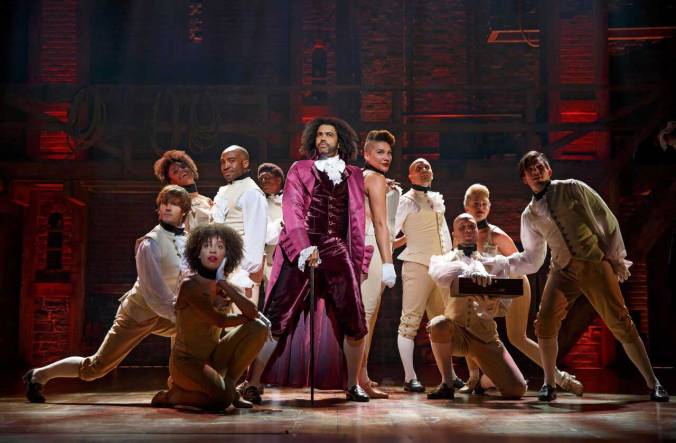
All right: how about a musical conceived with the novel conceit of having the Founding Fathers played by young black and Hispanic performers? Is that non-traditional casting? Minority-washing? Is it racist to stay with the original (brilliant) concept and tell white actors they can’t audition to be Hamilton, Jefferson, and Aaron Burr? Of course it’s not racist. After all, those actors are white. Screw ’em.

Are you seeing a theme here? Neither am I. What matters in casting a play, film or writing an adaptation is whether the final result works: How well do the actors play their roles? Is it entertaining? Does it make money?

Now the casting of  Johansson as an originally Japanese character in a Japanese manga comic and animated film is being attacked as racist. Whitewashing, you know. No, in fact the words applicable here are “adaptations,” “movies,” “cultural cross-pollination” and “commerce.”  In this case, not always, but in this case, the accusation of “whitewashing” is pure race-baiting.

More than forty years ago, the real life German prison camp escape engineered by captured WWII British fliers was made into the film “The Great Escape.” Brits were annoyed as production got underway, however, by the presence of heroic American prisoners in the cast, the characters played by U.S. stars James Garner and Steve McQueen. This was, British critics and veterans said, an outrage: Americans had nothing to do with the real escape. The answer by the producers contained three segments:

1. We own the film rights, and can do whatever we think will make the best movie.

2. The film is fictionalized, and makes no representations to the contrary.

3. Garner and McQueen will ensure that the film makes a profit in the U.S, plus they are both great and entertaining young stars.

Good justifications all. “The Great Escape,” as we now know,  is a classic, still honored the real event, and made lots of money. Somehow, British self-esteem recovered.

The Brits also didn’t complain when Japan’s great film auteur director, Akira Kurasawa, made an all-Japanese cast adaptation of “King Lear,” which is about a Celtic king. Wasn’t this–what, “yellow-washing”? Don’t be silly: all good stories can be told in myriad ways, in many cultural contexts. “Ghost in the Shell” is a science fiction fantasy. It is not about real people, and the characters were  Japanese because the author and intended audience were Japanese—you know, like the original “King Lear” was in Elizabethan English.

“Ghost in the Shell” director Rupert Sanders cast Johansson as the cyborg assassin named Motoko Kusanagi in the original and renamed the character “Mira Killian.” It is the “Who doesn’t like Denzel?” non-traditional casting principle, except the even more understandable “Who doesn’t like Scarlet, especially when she looks naked for much of the movie?” variation. The perambulations of critics trying to find something racist about the most obvious box office casting choice imaginable border on hilarious. At some point, actress Johansson decided it was more lucrative and fun being the next female action movie star than starring in solemn costume drama bombs like “The Girl With The Pearl Earring” and “The Other Boleyn Girl.” Since then, she has been rising as a bankable star in blockbusters like “The Avenger” films and “Lucy.” Quick: name another hot (I mean, of course, popular and bankable) female action star?

I’m waiting…

Writes Matt Golberg in a laugh riot called “Ghost in the Shell is Racist In Surprising Ways””  (another whitewashing screed, equally lame, is here): Continue reading

The New “Ben-Hur” And The Casting Ethics Double Standard

Thank-you, O producers of the new “Ben-Hur,” for so quickly after my post ridiculing the new politically correct casting ethics in Hollywood—according to Turner Movie Classics, it’s just soooo wrong to cast an Anglo Saxon like Charlton Heston as a Mexican, for example—-coming out with the official trailer proving that the new, enlightened casting ethics really only applies when it means it takes jobs away from white actors. Okay, just American white actors. Or something….actually, this casting ethics rules are  kind of made up as things shake out.

Which was what I thought all along.

In the 1959 Ben-Hur (starring, ironically, White Guy Charlton Heston as Judah Ben-Hur ), the plum part of Shiek Iderim was played by brilliant Welsh character actor Hugh Griffith, whose performance rightly won him an Academy Award. Yes, he wore dark make-up, because actors wear make-up. Ah, but these are enlightened days, and now we know, because it has been decreed by Ben Mankiewicz and the rest of the heralds of politically correct casting, that the casting of a master comic actor of unique gifts who was an audience favorite to play the sheik was insensitive and essentially racist, not to mention unfair to all of those unemployed but equally adept Arab actors qualified to play the part. So who plays the sheik in the new, improved, enlightened “Ben-Hur’?

Morgan Freeman.

Who looks as much like an Arab as Bruce Lee. Continue reading

Yet More Casting Ethics: “Hamilton’s” ‘No Whites Need Apply’ Open Casting Call

_hamilton

[ I am back from a speaking engagement that required over eight hours of driving, being in a supposedly “luxury resort” hotel room that had no Wi-Fi for most of my stay and no functioning TV for any of it,  and various other distractions and misadventures that prevented me from posting so far today. I apologize, though it is really the famous Omni Homestead in Hot Springs, VA. that should apologize. The good news is that my seminar was well-received, and that the disappointing trip–this time I was paid only with the supposedly sumptuous two-day  Homestead experience for myself and my long-suffering spouse, including outdoor activities that were impossible due to constant rain and a room with more things in poor repair than a Motel 6—is over.]


Broadway’s biggest hit, the Tony-winning  “Hamilton,” is under attack for, of all things, racism.

An open casting announcement on the show’s website read…

“Hamilton” is “seeking NON-WHITE men and women, ages 20s to 30s, for Broadway and upcoming Tours.”

Whaaaat? This joyous musical celebration of America’s founding and its Founders’ inspiration…engaging in racial discrimination? How could this be? Sniffed Actors Equity spokeswoman Maria Somma “The language … is inconsistent with Equity’s policy.”

Yes, this would be because Actor’s Equity has a lot of dumb policies, and like all unions, doesn’t really care about keeping the industry its members work in healthy, productive and profitable, only  making sure as many members as possible have jobs or at least shots at them. There is nothing whatsoever racist or discriminatory about a show that relies on the concept of non-white actors playing the very white Founding Fathers announcing that only actors who can fulfill that conceptual requirement will be considered for roles.

Civil rights attorney Ron Kuby, in an interview with the NY Daily News,  agreed the advertisement might technically violate the city’s human rights law, but that this is because casting is an anomaly. “It’s almost always illegal to advertise on the basis of race, but when you’re casting … it can be a bona fide occupational requirement,” he said. Continue reading

The Zoe Saldana-Nina Simone Controversy

I have been following this story for some time with a mixture of amusement and horror; satisfaction too, I suppose, as it is nice to see that black grievance-mongers are equally irrational when the imagined offender is black rather than white. There is integrity in this, after the irrationality of it all.

Nina Simone’s tribute website calls her a “classically trained pianist who evolved into a chart-topping chanteuse and committed civil rights activist.” As a white kid growing up in the Sixties, I missed Simone almost entirely: she wasn’t a regular guest on TV variety shows.  In college, I encountered aficionados who referred to her as brilliant, and I tried to appreciate her song stylings. She was one of those singers that  I could understand why she was famous and exceptional without wanting to listen to her for pleasure. At the time I regarded Simone as a cult singer, but that was unfair; she was obviously more important than that. I was also unaware of her considerable significance in the civil rights

Three years ago, Zoe Saldana was cast as Nina Simone in “Nina”, a major Hollywood film about the singer’s life, replacing singer Mary J. Blige, who was originally cast but dropped out. Immediately, the choice of Saldana, a rising black actress of Dominican and Puerto Rican parents best known for her work as Uhura on the “Star Trek” reboots, “Avatar,” and “Guardians of the Galaxy”, was attacked. She wasn’t a singer, isn’t a “true” African-American and doesn’t resemble Simone sufficiently, the critics said.

All of these accusations are ridiculous on their face. Most biopics about famous singers, though not all, star actors rather than vocalists: all singing is dubbed in after the film anyway. When, in the history of drama, has there been a rule that the performer’s ethnicity had to match the role he or she was playing? I wrote about the foolishness of this issue most recently here. What matters isn’t that Yul Brenner wasn’t really a Thai, what matters is that he was fantastic at playing the King of Siam. Continue reading

Ethics Quiz: The Anti-Washington Redskins Activist’s Bob Marley Costume

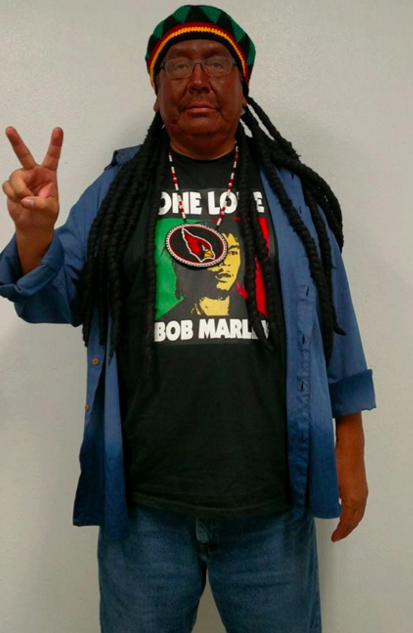
The Native American in the middle is dressed as a famous Jamaican. Would it have been offensive if he dressed as Sitting Bull?

The Native American in the middle is dressed as a famous Jamaican. Would it have been offensive if he dressed as Sitting Bull?

Terry Rambler, chief of the San Carlos Apache Tribe in Arizona, has  been at the forefront of the effort to force The Washington Redskins, a privately owned NFL sports franchise, to change its name and logo of long-standing because both are allegedly racist. [ As I have made clear many times, the team’s name is not racist, as neither its origins nor current use suggest or imply racist intent, purpose or impact, and the team’s owner has a First Amendment right to call his team whatever he wants. The decades long political correctness stunt has gained more traction under the Obama administration, because the Obama Administration and Senate Democrats do not respect the Constitution or follow it when it gets in the way of its agenda. (See: drones, Obamacare, immigration, NSA domestic spying, harassment of reporters, IRS partisan activities, recess appointments, Libya bombing, selective prosecution,  putting government pressure on the Redskins to change its name, etc )

But I digress.

This year, Rambler’s Halloween costume was Jamaican musician Bob Marley, complete with dreadlocks, wig, and rasta beanie. He also wore appropriate make-up to look like Marley.

Here is what the chief looks like most days:

Terry

Here he is on Halloween as the Reggae icon…

Halloween Marley

The costume is making  Rambler the target of criticism from both sides of the controversy: Redskins defenders who view his make-up as “blackface” and thus hypocritical, and his own Team Political Correctness, which sees Rambler as engaging in the same kind of insensitive conduct they claim the Washington Redskins embody.

To make things worse for Rambler, there was another recent Bob Marley controversy in  Gaston County, (North Carolina), where a sheriff’s captain  apologized  for wearing dark make-up as part of her own Marley Halloween costume after her in-costume photo appeared online.

And thus your Ethics Alarms Ethics Quiz of the Day is…

Was the Native American activist’s Bob Marley make-up unethical or hypocritical?

Continue reading

Othello Ethics: When Political Correctness Is Unethical

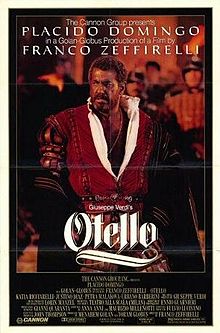
OtelloposterI don’t know how I missed the fact that opera producers and directors had stopped playing Shakespeare’s Othello in Verdi’s “Otello” as a black man, but I’m glad I did for this long—it allowed me a few more fleeting days of ignorant happiness without dreading the collapse of civilization as we know it. Apparently, however, that is the trend, and now the Metropolitan Opera is caving to the nonsense as well.

It makes perfect sense that most theater companies stopped using dark makeup on light actors for their “Othellos”, because there is seldom a valid reason to cast a white actor in the role: there are plenty of African Americans up to the task. Now, if a great white actor should want to play the role as a black man—like Laurence Olivier did in the 1960s—why not? Judith Anderson played Hamlet (“Hamlet lost” announced one critic); this is why it’s called “acting.” Still, I appreciate the position that the one black tragic hero in Shakespeare’s canon should not be casually distributed to an actor who can easily be cast in any of the other great roles, while black actors have far too few opportunities to star in the classics.

Opera, however, poses a different problem: Otello is a prime tenor role and there are not great black tenors in abundance. Moreover, it is one of the great tenor role: if you are a great tenor, it doesn’t matter if you are green—people want to hear you sing the role. Thus the Met’s new production of Verdi’s “Otello” that will open its season next month will star a white tenor, but not in black makeup. Continue reading