Medical Ethics: The Insideousness of Bias

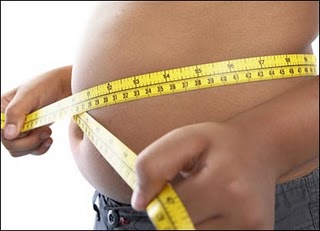
Obesity biasThe New York Times had an enlightening article about bias in its Science section this week. Apparently a study of the interactions between patients and their primary care physicians suggests that doctors are more pleasant, encouraging, empathetic, kinder—just nicer, in short—to their normal weight patients than they are to those who are obese.
From the article:

‘“It’s not like the physicians were being overtly negative or harsh,” said the lead author, Dr. Kimberly A. Gudzune, an assistant professor of general internal medicine at the Johns Hopkins School of Medicine. “They were just not engaging patients in that rapport-building or making that emotional connection with the patient.” …While such expressions of concern and empathy are not remarkable on their own, what was surprising was how absent they were in conversations with overweight and obese patients. And statements like these are no small thing. Studies show that patients are far more likely to follow a doctor’s advice and to have a better health outcome when they believe their doctor empathizes with their plight.

‘“When there is increased empathy by the doctor, patients are more likely to report they are satisfied with their care, and they are more likely to adhere to recommendations of physicians,” Dr. Gudzune said. “There is evidence to show that after visits with more empathy, patients have improved clinical outcomes, so patients with diabetes have better blood sugar control or cholesterol is better controlled.”’

Continue reading

Comment of the Day: “The Ethics of Bloomberg’s Soft Drink Ban”

Peter, who is a physician, a libertarian, and one of my oldest friends (we met in the 6th grade) from Arlington, Massachusetts, generously responded to my request for his professional expertise and philosophical perspective regarding the New York City soda ban.  Here is his thoughtful response, the Comment of the Day, on the post The Ethics of Bloomberg’s Soft Drink Ban: 

“It has become a reflex response to answer adverse circumstances with more regulation. To a lawyer, there is always a law, or regulation for any and every misstep in human behavior. Of course, we forget that we cannot predict the unintended consequences, not even to mention reviewing the effects of the laws we pass to determine if they are even having the INTENDED effect. Somehow, we believe that it is appropriate to pass laws to deny other people’s freedoms due to the “discomfort” of whiny types who have the connections and persistence to keep whining until they can get someone to pass a law. The consequence of such legislation’s continued passage, at ever more confiscatory levels of our liberties, is that we are legislating our way into a police state, and the widespread acceptance of the idea that it’s OK to deny personal liberty because it makes someone else “uncomfortable.” Again, as RR so aptly pointed out, “the government that is big enough to give you everything you want, is big enough to take away everything you have.” And this goes for not just your personal assets, but your freedoms as well.

“That said, in this context, yes, drinking lots of sugary sodas will make you fat, smoking will kill you, too much alcohol will kill you, doing extreme sports can kill you, and so on. And as long as one’s decisions affect only himself, have at it. However, when you want me to pay, through my insurance premiums, and my taxes, for the consequences of your stupidity, you cede the sovereignty of your decision to others beside yourself. If you want to ride your motorcycle without a helmet, while drunk, sure, do it. Just don’t expect me to pay the costs of your head injury. Continue reading

The Fat Kid, the Slippery Slope, and the Cliff

"Bill! They're putting me in foster care! How will you make THAT funny?"

Several recent ethics issues have raised the slippery slope question, which is itself a slippery slope. The rationale for any reasonable principle or act can usually be ratcheted forward in degrees until it becomes malevolent, dangerous or repugnant, including freedom, trust, loyalty, charity and honesty. Thus the easiest argument, at least for the mentally dexterous, that anything is unethical is the dreaded slippery slope.

The simple rebuttal to this is usually “let’s wait and see.” To claim that conduct is unethical for what it might lead to rather than for what it actually does is often, perhaps even usually, based on an unwarranted assumption, or a worst case scenario specifically concocted to foil otherwise unobjectionable conduct. When it is not based on an unwarranted assumption, however, is when proposed conduct or a new policy permitting it shatters a social norm or cultural standard that had previously been considered sacrosanct. In these cases, the slope isn’t merely slippery—which suggests “Be careful where you step next!”—but greased, meaning there is no longer any traction at all to stop a rapid slide to the bottom. A better cliché to use in such cases is “opening the floodgates.” Or perhaps “off a cliff.”

The recent post about the Dartmouth researchers who suggested that all manipulations of graphic images of celebrities be labeled as such is, I would argue, more floodgates than slippery slope. There is no obvious delineation point to stop the principle behind this oppressive constraint on illusion from spreading far beyond its origin. Similarly, the argument being made by the family of the mother with Stage 4 cancer that US Air is ethically obligated to refund the non-refundable tickets they could not use because of her terminal illness has no clear limits or coherent application. Are the refunds required because the mother is terminal? If she goes into remission, would the family be obligated to give the money back? What if she was only paralyzed? If the whole family was squashed by a boulder, would the airline be obligated to refund the money to their next of kin? What if the mother wounded herself terminally in a suicide attempt—would that change US Air’s supposed obligation of compassion? If so, would that mean that if the mother’s Stage 4 breast cancer occurred because she neglected to follow a physician’s recommended treatment, US Air could then refuse to refund the money without being pilloried for it? Sometimes that greased slope carries us into a swamp.

Now from Cleveland comes the story of the 200 lbs. + 8-year-old Cleveland Heights boy who has been taken from his family and placed in foster care because county case workers decided that his mother wasn’t doing enough to control his weight.  Continue reading

The Media Pundits’ Bigoted Preemptive Attack on Chris Christie

THIS seems to be a logical method for choosing a President.

Democrats and progressives are apparently terrified that a Republican will enter the presidential race who isn’t a religious zealot, a libertarian ideologue, a political tyro, a Mormon or a Texan, but a charismatic governor of a big northeastern state who is pragmatic, credible and successful. That would be Chris Christie, Governor of New Jersey, who may be about to throw his hat in the ring. So the word has gone out to the media, or the media is just sufficient trained to protect Democratic presidents without further instruction, that it needs to define Christie before the American public has a chance to form its own opinion, and the definition it has arrived at is fat.

You know, fat. As in Rush Limbaugh fat, fat like the political cartoonist Herblock always drew lobbyists and “Big Business.” Diamond Jim Brady fat; fat like Sydney Greenstreet, the villain in all those Humphrey Bogart movies. Fat means bad; fat means lazy; fat means unhealthy, and ugly. Fat people consume more than their share, and are disproportionately responsible for global warming and soaring health care costs, don’t you know. They  have no self-control; they don’t have self-respect. We dread being stuck next to one of these porkers in an airplane. You can’t trust fat people. That’s really all you need to know about Chris Christie. This is America—we worship beautiful people. Fit people. Thin people….like, say, President Obama. Do we want to be led by someone who is fat? Of course not! Continue reading

Hypocrisy Follies: The Ribbing of the First Lady

What's wrong with this picture?

Americans are becoming almost as confused about hypocrisy as they are about satire.

Michelle Obama’s Vail, Colorado vacation included taking her daughters out to eat ribs at Vail, and conservative radio critics immediately resorted the “H” word, led by Rush Limbaugh, who reported that the First Lady, fully-involved in an anti-obesity campaign, joined her own children in “feasting on ribs — ribs that were 1,575 calories per serving with 141 grams of fat, per serving.” Continue reading

Chris Matthews and Politically Correct Racism On the Left

“Chris Christie is moon over New Jersey, he should not wear white shirts, I tell you that. I saw him the other day and I was amazed by it, he must be 300 plus, and that’s something he’s just gotta deal with because you’re not going to say, ‘I’m going to cut the budget,’ well, how about starting with supper?”

That was Chris Matthews during an appearance in Washington, D.C., mocking New Jersey Governor Chris Cristie, not for his positions, not for his performance in his job, but because of his looks, specifically his weight. Later in the same session, Matthews criticized Mississippi Governor Hailey Barbour for his waist size. It isn’t only Matthews; media liberals have been using Rush Limbaugh’s weight as a punchline for years. Ted Kennedy, Gerald Nadler, Madeleine Albright and Charlie Rangel, however, were immune: being fat is only a justification for insults if one is conservative and fat. Continue reading

Self-Destruction Ethics Alarms: A Woman’s Unethical Quest For Fat

Yesterday, the world heard about Donna Simpson, a New Jersey woman who weighs in at about 500 pounds. She sasy she wants to be the fattest woman alive, and is managing her diet and exercise to achieve that lofty goal. Of course, all those Twinkies and pork rinds cost a lot of money—her weekly grocery bill averages more than $800—so she earns extra cash by putting herself on Gluttoncam, or whatever she calls it, where freakophiles can watch her gorge herself online for a reasonable fee. Her partner, the news reports say, is completely supportive. “I think he’d like it if I was bigger,” giggles Donna. “He’s a real belly man and completely supports me.”

Okaaaaay….

Obviously this situation is unusual…at least, I hope it is. Still, it raises many difficult ethics questions, some with broad implications:

  • We are told that it is cruel, greedy and heartless for insurance companies to withhold coverage for “pre-existing conditions,” and should be compelled to insure everyone without regard to special risks. Does this apply to Donna Simpson? Continue reading

Fat Ethics and Kevin Smith

Cult film director Kevin Smith was ejected from a Southwest Airlines flight last week for being fat. The talented  director (and sometime actor: he plays the character of “Silent Bob” in several of his own films) of “Clerks,” “Chasing Amy,” “Dogma,” and the Bruce Willis and Tracy Morgan comedy “Cop Out” was deemed too obese to fly, although he passed the supposedly definitive armrest test: he could lower both. Smith says this has never happened to him before, perhaps because he is in the habit of buying two seats—not because he needs them, but because he says he “hates people.” Although the airline apologized to him, Smith still hates Southwest, and is inclined not to let the matter drop.

Apparently a lot of people hate him too, just because of his weight.  Continue reading

Ethics Notes: Santa, the Senate, and Snow

Some random thoughts on ethics matters as I try to simultaneously finish the Ethics Alarms 2009 Best and Worst lists and deal with a series of bad extension cords running up my Christmas tree…

Continue reading

The Acceptable Slur

Reason Magazine’s website has an article today by Steve Chapman describing New Jersey Governor Jon Corzine’s tactic of ridiculing his opponent Chris Christie’s weight (among other barbs, Corzine has used an ad showing Christie looking unusually large with a voice-over about him “throwing his weight around.” Har Har.) as politically maladroit. He’s right, but Chapman neglects to discuss the ethical issue involved. Attacking someone for his or her physical attributes is unethical: rude, mean-spirited, unkind and uncivil, a pure violation of the Golden Rule. Suggesting that a person’s worth can be discerned from his or her physical attributes is, quite simply, bigotry. Corzine, a proud liberal, would never dream of attacking an opponent for his race, or a physical disability like a missing leg. But calling an opponent fat in a manner designed to appeal to the bigotry of others is acceptable to him, indeed, acceptable to many. Why is that?

This is an oddly popular form of bigotry for liberals, journalists (I know I’m approaching redundancy here) and media commentators. The most popular target of fat attacks is conservative talk show host Rush Limbaugh. Despite the fact that  Limbaugh has been in one of his svelte periods for some time, many newspapers and websites continue to accompany stories about his latest rants with an especially unflattering photo showing him roughly 100 pounds heavier.  John Kerry and other Limbaugh critics routinely include physical insults as they respond to his critiques. (They also frequently reference his problems with prescription pill addiction, an AMA-decreed medical malady. Their excuse for this is that Limbaugh has been unsympathetic to drug abusers in the past, an example of the unethical rationalization known here as the Tit for Tat excuse)  The junior U.S. senator from Minnesota got his job in part by making liberals giggle with his book entitled  “Rush Limbaugh is a Big, Fat, Idiot.”   But Limbaugh is just one target of many. The late, liberal Washington Post cartoonist Herb Block always drew the characters he didn’t like—Republicans, conservatives, bankers, “corporate interests,” “industrialists”—as human beach balls, to contrast with his poor, downtrodden, attractively thin liberal archetypes. Conservatives are guilty of fat-baiting too, of course; when they weren’t  using Mary Jo Kopechne to ridicule the late Sen. Edward Kennedy, they called him a tub of lard. Conservatives often have a more difficult time getting away with it, because liberals will rise in indignation to condemn such a tactic on the Right, especially if the target is a woman, as when conservative radio talk show Laura Ingraham was pilloried for referring to John McCain’s daughter Meaghan as “plus-sized.” Liberals appear to understand that using physical characteristics to deride and diminish someone is unethical, but believe there is an exception when the fat person in question is “bad,” as in “disagrees with them.”

Here is the sad truth. Many people, liberals and conservatives, are bigoted against fat people, and even those who are repulsed by bigotry based on race, religion or physical malady manage to rationalize regarding excessive weight as a sign of bad character, greed, gluttony, laziness, or, in the most recent trend, having too large a carbon footprint. Good, responsible people jog and exercise, like Jon Corzine. True, Corzine is a millionaire, and studies show that the higher correlation is not between wealth and fat, but rather poverty and fat, but never mind.  Though the culture now strongly reinforces the message that it is wrong for a white man to feel superior to a black man, it has yet assimilate the concept that a thin, fit, attractive American isn’t inherently preferable to a fat one, no matter what else the corpulent individual has to offer.

It’s time; indeed, it is past time. I think there is even  a case to be made that a fat individual may be overweight for ethical reasons. You can spend a couple hours a day jogging and pumping iron—14 hours a week, 56 hours a month, 672 hours a year—or you can spend the same time on pursuits that benefit people other than yourself, like your family, the poor, or society. Extra weight may be a form of sacrifice, a badge of honor.  What justification does Al Franken or Laura Ingraham, or a Hollywood actor who gets paid to be fit, have to question that choice or feel superior? If Oprah Winfrey wants to call herself fat, fine, but who can criticize how she uses her time? She cares about other things more than the scale and the mirror. Good for her.

But that’s just an argument that fat bigotry is unjustified. The primary point is that it is wrong, as wrong as any other form of bigotry. I don’t think Jon Corzine should necessarily lose the governorship because of it, because American culture, so far, has told him that fat bigotry is still tolerated. Still, if Corzine did lose, and lost in part because of his bigoted campaign, it would send an important  message—the message is that the “acceptable slur”  isn’t acceptable any more, no matter who the target is.