Lessons of The Colorado “Trans Bathroom Harassment” Hoax

“It’s a liberal world gone mad at one Colorado high school, where the rights of one transgender student have trumped the rights of other students forced to share a bathroom. The transgender student, a male who identifies himself as a female, has sexually harassed female students in the girl’s bathroom at Florence High School, Pacific Justice Institute reported.Not only have parents’ complaints gone nowhere, but the female students have also been threatened with dismissal from athletic teams and hate crimes charges if the complaints don’t stop, according to the institute, a nonprofit religious-rights organization that was alerted by concerned parents.”

 

"Jane Doe": Victim

“Jane Doe”: Victim

This was the story breathlessly reported in various forms this month by conservative media sources, including Fox News. Apparently the sole source for the claim that “a male who identifies himself as a female, has sexually harassed female students in the girl’s bathroom” is the statement that this “allegedly occurred” in a letter to the school sent by the aggressively anti-transgender, ultra-conservative advocacy group, The Pacific Justice Institute.  The PJI has prominently opposed California’s transgender bathroom law, and it seem clear that it viewed this story as a means to an end.

In a case of the conservative media playing the old game of “Telephone,” the PJI letter suggesting that such harassment may have happened was morphed into media reports that it had happened, as Fox, the Examiner, The Blaze and others adopted the story published by the online version of British tabloid, The Daily Mail, as fact. It wasn’t fact, and the Daily Mail has quietly pulled its original story. What appears to have happened is that some virulently anti-trans parents who were livid that the school permitted a boy who self-identified as female to use the female rest rooms contacted the PJI with unsubstantiated and apparently fictional claims, in order to focus hostile attention on the school. Interviewed about the incident, the school’s superintendent flatly denied that any incidents of the kind hinted at by the PJI and reported in the media actually occurred, and to this day, no evidence has been presented that they did occur, no specifics, names, quotes or facts whatsoever, just vague allegations. One student in the school provided this perspective: Continue reading

How Partisanship Makes Pundits Untrustworthy

Healthcare down

Ezra Klein is a relentlessly progressive Washington Post reporter. He’s obviously also a smart guy, and it is a shame that he has allowed his total immersion into pro-Democratic politics render him incapable of seeing current events in  anything but political combat terms. But that is what he has become, and as a result, his analysis of any issue must be considered pre-poisoned by the lack of any objectivity, and a rooting interest in “his side.”

Here is an instructive paragraph from his Post blog, in a post that was also re-written slightly as a column this weekend. He was nominally criticizing the Obama Administration’s Affordable Care Act website:

But the Obama administration did itself — and the millions of people who wanted to explore signing up — a terrible disservice by building a Web site that, four days into launch, is still unusable for most Americans. They knew that the only way to quiet the law’s critics was to implement it effectively. And building a working e-commerce Web site is not an impossible task, even with the added challenges of getting various government data services to talk to each other. Instead, the Obama administration gave critics arguing that the law isn’t ready for primetime more ammunition for their case.

Amazing, isn’t it? Continue reading

Here’s Something Else For Unemployed Law Grads To Worry About

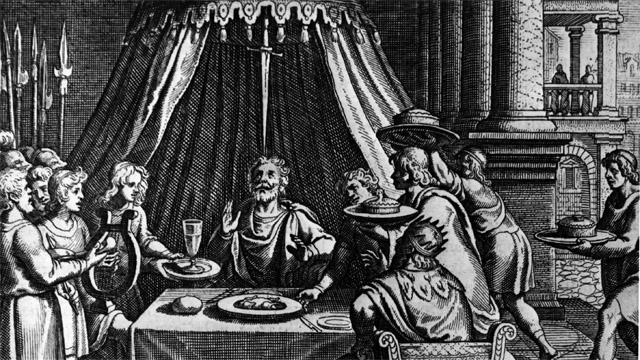
Damocles, Attorney at Law

Damocles, Attorney at Law

A legal ethics specialist with the D.C. Bar, speaking at the Bar’s mandatory ethics course, opined that a lawyer’s student loan debt could create an irresolvable conflict of interest preventing him or her from taking on certain cases, at least while complying with the ethics rules

I never thought about that before, but horrors!…he’s right! Continue reading

Howard Kurtz And The Critic’s Dilemma

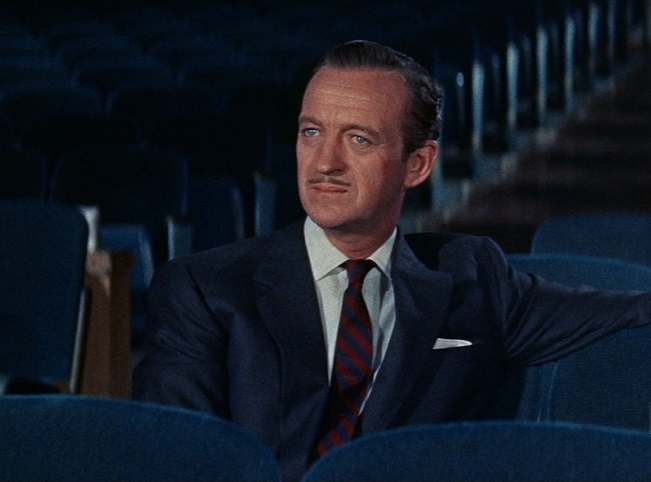
David Niven would understand, Howard.

David Niven would understand, Howard.

The Daily Beast has canned Howard Kurtz, the only current official news media critic in captivity, and now CNN, long the home of Kurtz’s “Reliable Sources” panel show that reviews the media’s choice and manner of news coverage during the week, is “reviewing” his status with that show as well. The sudden downturn in Kurtz’s fortunes is, we are told, the result of an accumulation of mistaken stories, missed facts and sloppy reporting of his own. I’ll buy that explanation, but there is more here too.

Kurtz’s departure was overdue. I have followed him for years, and his coverage, as I have pointed out periodically, was unacceptably politically slanted for a quasi-journalism ethicist. A typical performance was when he recently criticized —correctly—Republicans who were (and are) trying to twist the Boston bombing tragedy into an argument against immigration reform. In a reply to a comment on the recent Ethics Alarms post on the same topic, I noted that media commentators who saw nothing wrong with the Democrats using a Newtown massacre that would not have been altered in any way by background checks to push for more gun controls were suddenly applying the correct standards to a similar conservative manipulation of the Boston Marathon attack: Continue reading

Ethics Dunce: National Journal Writer Matthew Cooper (And Boy, Am I Sick Of It!)

Matt Cooper apparently thinks Clarence represented murderers because he LIKED murderers. That's not how it works, Matt.

Matt Cooper apparently thinks Clarence represented murderers because he LIKED murderers. That’s not how it works, Matt.

Matthew Cooper, like so many before him who should know otherwise, confounds the role of an attorney with the views of the individual serving as an attorney. This is a disturbing chunk of ignorance for a prominent journalist to pass on to the public, and as I have before, I am honor bound to point it out, and also to say: Understand what you’re writing about, journalists!  That’s one of your ethical duties.

In a National Journal piece about Ted Olson, who argued against Proposition 8 and for same-sex marriage before the U.S. Supreme Court, Cooper writes,

“While most folks were surprised by his support of gay marriage, I wasn’t. Yes, he was a conservative. But he had also defended the press as the longtime lawyer for the Los Angeles Times and in other First Amendment cases. He’d agreed to represent Tim Phelps, a Newsday reporter, in the Anita Hill case even if Phelps’s work was damaging to the conservative Clarence Thomas. He was conservative, but not reflexively so.”

Why is this old, basic and simple principle so difficult to grasp: a lawyer does not adopt his or her client’s views by virtue of representing them or advocating for them in court or the public square! The lawyer’s views are presumed to be irrelevant to the position he or she takes for a client. As the ABA’s Model Rules of Professional Conduct state (and legal ethics has held for centuries),

“A lawyer’s representation of a client, including representation by appointment, does not constitute an endorsement of the client’s political, economic, social or moral views or activities.” Continue reading

The Misleading Photo And A Senator’s Trauma: Emotions Over Reason In Policymaking And Public Opinion

misleading photo

Here is Senator Diane Feinstein explaining her qualifications to lead the charge on Capital Hill to restrict firearms, after Sen Ted Cruz (R-Tx) implied that she was not sufficiently schooled in the Second Amendment: “I’m not a sixth grader. Senator, I’ve been on the committee for 20 years,” Feinstein said angrily. “I was a mayor for nine years. I walked in, I saw people shot, I’ve looked at bodies that have been shot with these weapons, I’ve seen the bullets that implode. And Sandy Hook youngsters were dismembered… I’m not a lawyer, but after 20 years, I’ve been up close and personal with the Constitution. I have great respect for it.” Her emotional statement echoed her similar response to a challenge during another assault weapon ban debate, twenty years ago, when she was a freshman and could not cite her legislative experience. Then she said,

“I am quite familiar with firearms. I became mayor as a product of assassination. I found my assassinated colleague [Harvey Milk] and put a finger through a bullet hole trying to get a pulse. Senator, I know something about what firearms can do.”

So now we know. Diane Feinstein has reason to know guns can kill people, and has been personally traumatized by them. That is supposed to qualify her as a cool, rational, balanced and fair legislator in deliberations over whether citizens who have never broken the law and don’t intend to can buy the weapons they want to. Continue reading

The Red Caboose On The Penn State Ethics Train Wreck Arrives: The Paterno Family’s Report

1-train-wreck-kari-tirrell

To understand what the Joe Paterno’s family’s report (released on Feb. 10) regarding the late Penn State football coach’s culpability in the Jerry Sandusky child abuse cover-up means, one has to understand what lawyers do, and why it is completely ethical for them to do so, as long as their role isn’t misrepresented by them or their clients.

Lawyers exist to allow non-lawyers to have access to a legal system that is (needlessly) complicated and technical, and to provide their legal training, analytical skills and advocacy abilities to their clients’ legal and legitimate needs and objectives. A lawyer who interposes his or her own opinions, judgments and desires on the client without being asked to do so is, in most cases, behaving unprofessionally and unethically. This is an essential principle to grasp, and yet the vast majority of the public do not grasp it. Nonetheless, without the partisanship a lawyer brings to the attorney-client relationship, regardless of whether a client is rich or poor, altruistic or venal, kind or cruel, we would all be slaves to the laws we supposedly create ourselves, through the machinery of a republic.

An independent investigation of the Penn State administration’s failure to stop serial child molester Jerry Sandusky from harming young children found that iconic football coach Joe Paterno was at the center of the school’s misconduct and the catalyst for it. The investigation was performed by Louis Freeh, a lawyer, a former prosecutor, a former federal judge, and once the head of the F.B.I.  His charge was to find out what happened and who was at fault—not to nail Paterno or anyone else.  It was an independent investigation, with no dictated result. Don Van Natta, a sportswriter whom I supposed should not be expected to understand such distinctions, writes,

“If the Freeh report was a prosecutor’s relentless opening statement that delivered devastating, far-reaching consequences, the Paternos’ rebuttal is a defense attorney’s closing argument brimming with outrage and fury.”

Wrong, wrong, wrong. The Freeh report was not a work of advocacy in an adversarial setting, but akin to a judge’s objective decision after reviewing the relevant and available facts. The Paterno family report, in contrast, is a work of advocacy, like a brief arguing an appeal to overturn a judicial decision against a lawyer’s client. The charge given to Freeh in his investigation was to find out what went wrong and why. (It began with the assumption that something did go wrong, which was reasonable, since a child predator had somehow managed to roam the Penn State campus for decades, including a ten-year period after he had been seen sexually assaulting a child in a Penn State shower.) Freeh was not told to get Penn State off the hook, or to pin as much as possible on Joe Paterno. The authors of the Paterno family report, however, were charged with the task of rebutting and discrediting Freeh’s report in order to rescue Joe Paterno’s reputation and legacy. It is an advocacy memorandum, like the torture memos and the recent Justice Department justification of the killer drone program. Continue reading

Comment of the Day: “Are Musicals Reviewed By Ignoramuses?”

WordPress, for only the second time in three years, was kind enough to include my recent post about Stephen Sondheim’s footnote lament that musicals were the only art form largely reviewed by incompetents. This has brought a lot of new visitors to Ethics Alarms, and I hope they are interested in ethics as well as musicals. One such new reader is a Prof. Ratigan, who apparently does some reviewing himself. Here is his Comment of the Day, on the Jan 3, 2013 post (Here’s something weird—last year’s Jan.3 post was also about Sondheim!) Are Musicals Reviewed By Ignoramuses?…

Two points. The first is the literacy issue. I think it’s interesting that it would appear that a good reviewer is either a novice or a master where everything in between is amateur. I’ve been reviewing movies for the past year (on a blog) and I’ve definitely felt that in my own stuff. The more movies I watched and connections I could draw, the more it became apparent how much I really needed to do to become proficient. I needed to read a lot more literature, read a lot more scripts, and watch a lot more movies. Otherwise, I would start to create a context but have a nagging feeling that the director/writer/actor (who are often scholars of film) might/probably know more than me and were doing something else. It seems that these musical reviewers aren’t expected to take the next step from reviewer to analyst. Continue reading

Now THIS Is Hypocrisy!

121207_watters_redacted_605_431

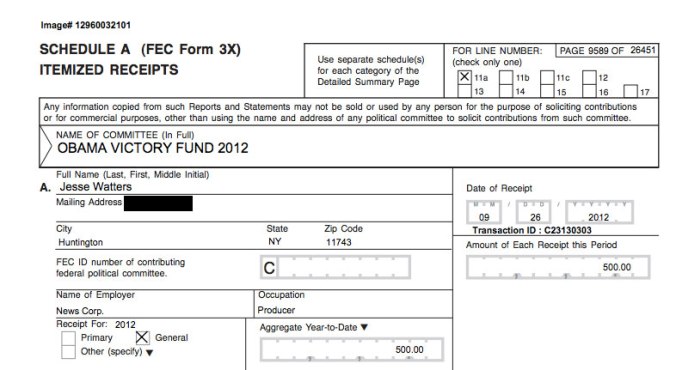
Fox News reporter Jesse Waters in his spare time

Fox News reporter Jesse Waters in his spare time

Hypocrisy is a concept that is widely abused by critics, who misidentify it with startling regularity. Someone who has engaged in conduct that he now opposes is not necessarily a hypocrite, for example. It is not hypocrisy to reform or change one’s mind. Nor is it hypocrisy for someone to criticize conduct that he or she knows is wrong, but cannot control in his own life. Someone who opposes official approval of status that the individual secretly holds is not necessarily a hypocrite either. A closeted gay public official who publicly opposes gay rights may be self-loathing, but not hypocritical. A gay public official can plausibly believe that gay marriage is not necessary, or that marriage is a tradition that can only refer to a couple of opposite genders: holding a sincere position that is self-critical or against self-interest isn’t hypocrisy.

Hypocrisy is a lie, not mere inconsistency. It is knowingly posing as something you are not, pretending to believe something you don’t believe, demonstrated by not making an effort to meet the standards you insist that others follow. D.C. Mayor Marion Barry, lecturing children about the evils of illegal drug use while smoking crack in his spare time, was a hypocrite. Law enforcement officials who intentionally break the law are hypocrites. Rep. Joe Walsh,  the Tea Party, “family values” Congressman who refused to meet his own child-support obligations, stands out among the many hypocrites in government.

Then there is Fox News correspondent Jesse Watters. One week after President Obama was re-elected, Watters told Fox Head Bloviator Bill O’Reilly that the Obama voters were mindless zombies who supported the President “as long as there was Obamacare, gay marriage and abortion on demand.” Now Federal Election Commission records have surfaced showing that Watters himself contributed $500 to the President’s re-election campaign.

Yes, he is a zombie. Continue reading

Ethics Hero: The Associated Press

BB is not pleased with the AP this day…

A bit more of this kind of thing will have me back on my feet in no time:

The Associated Press has changed its style book to oppose some euphemisms and loaded words. From Politico:

“The online Style Book now says that ‘-phobia,’ ‘an irrational, uncontrollable fear, often a form of mental illness’ should not be used ‘in political or social contexts,’  including ‘homophobia’ and ‘Islamophobia.’ It also calls ‘ethnic cleansing” a ‘euphemism,’ and says the AP ‘does not use “ethnic cleansing” on its own. It must be enclosed in quotes, attributed and explained.’ ‘Ethnic cleansing is a euphemism for pretty violent activities, a phobia is a psychiatric or medical term for a severe mental disorder. Those terms have been used quite a bit in the past, and we don’t feel that’s quite accurate,’ AP Deputy Standards Editor Dave Minthorn told POLITICO. ‘When you break down ‘ethnic cleansing,’ it’s a cover for terrible violent activities. It’s a term we certainly don’t want to propagate,’ Minthorn continued. ‘Homophobia especially — it’s just off the mark. It’s ascribing a mental disability to someone, and suggests a knowledge that we don’t have. It seems inaccurate. Instead, we would use something more neutral: anti-gay, or some such, if we had reason to believe that was the case. We want to be precise and accurate and neutral in our phrasing,’ he said.” Continue reading