Integrity Check: Obama’s Embarrassing Transparency Pledge

President Obama is getting a mixture of ridicule and contempt from some pundits over the revelation yesterday that he accepted an award for transparency in secret. From Forbes:

“President Obama was scheduled to receive an award from the organizers of the Freedom of Information Day Conference, to be presented at the White House by “five transparency advocates.” The White House postponed that meeting because of events in Libya and Japan, and it was rescheduled…That meeting did take place – behind closed doors. The press was not invited to the private transparency meeting, and no photos from or transcript of the meeting have been made available. The event was not listed on the president’s calendar…Nor is the award mentioned anywhere on the White House website, including on the page devoted to transparency and good government. Were it not for the testimony of the transparency advocates who met secretly with the president, there wouldn’t seem to be any evidence that the meeting actually took place.”

I can guess why the President didn’t want to publicize the meeting: the same day, he had to go on television and explain why he hadn’t been transparent to the U.S. Congress about his military plans in Libya. Or perhaps he knew that the news was about to leak that the Fed had secretly sent billions in loans to foreign banks during the financial crisis, not telling the public because it would make them worried and angry. Or maybe it was the just the dawning realization that transparency in government is often neither wise nor safe, and that he was sick of being embarrassed by awards that only point  up the yawning chasm between Obama’s idealistic words and reality. (See: 2010 Nobel Peace Prize) Continue reading


Obama’s Social Security Cover-Up, as the Media Snoozes

USA Today ran a sensible editorial a couple of weeks ago calling for the Obama administration to stop cravenly caving to groups like the AARP, Congressional Democrats, and increasingly, liberal/progressive commentators who claim that Social Security isn’t really a budgetary problem. The fiction: since Social Security has received more from taxpayers than it has had to pay out since 1983, the Social Security Trust Fund has built up a whopping $2.5 trillion, guaranteeing enough to meet the program’s obligations ( despite yearly deficits, now that the population is senior-heavy) until the money is scheduled to run out in 2037. The truth: the trust is empty. Congress had raided it regularly for non-Social Security spending, so now the yearly Social security deficits (37 billion dollars last year, a projected 45 to 57 billion in 2011, and a half trillion total in the decade underway) are putting a direct burden on the already reeling Federal budget.

Good for USA Today: this is responsible, public-spirited journalism. the public has heard so many lies from politicians and elected officials about Social Security that it is thoroughly misinformed and confused, and an informative, unbiased editorial from the nation’s most read newspaper is exactly what is needed. But the Obama administration couldn’t handle the truth, so it trotted out White House Budget Director Jacob Lew, who denied that there was a problem, writing in response… Continue reading

Nuclear Crisis Ethics

Meltdown! Radiation! Mutations! Well, I guess that's all we have to know.

I just heard, for the twelfth time, Sen. Joe Lieberman telling “Face the Nation” that the United States should put the brakes on nuclear energy plant construction “right now until we understand the ramifications of what’s happening in Japan.” Meanwhile, the anti-nukes crowd is out in full force, seeing Japan’s crisis as their opportunity to scare the bejesus out of the public, which is nervous about nuclear energy anyway since they know nothing about it, other than that something bad happened at Three-Mile Island, the Russians had a catastrophe at Chernobyl,  Jane Fonda made that scary movie, “The China Syndrome,” where they shot Jack Lemmon— “And don’t they make bombs with that nuclear stuff?”—and the fact that Homer Simpson works for a nuclear plant that creates three-eyed fish and is run by that evil old Montgomery Burns. Continue reading

The Missing Ethics Alarm: Spending Other People’s Money

How did I get HERE??

I confess: I honestly don’t understand this problem. From the first time I had an expense account, it never occurred to me to use it for my own pleasure. If I had to eat out on the road, I picked an inexpensive restaurant. I didn’t charge hotel room movies to my employer—he wasn’t sending me there to be entertained. I flew coach, and paid for any personal long-distance calls. Why? Because it wasn’t my money. I was a fundraiser for a non-profit, and I knew that whatever the donors were giving money for, it wasn’t for me.

It became apparent over the years that few of my colleagues or bosses saw it that way, when it came to their own expenses, and that elected officials and corporate officers not only readily use other people’s money extravagantly, but also that few people object when they do. The conduct is clearly irresponsible and unfair; I would call it dishonest. But those in high positions seem to regard it as their right. Continue reading

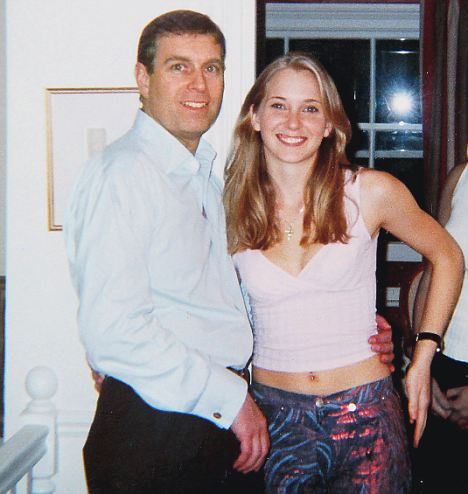
The Prince, The Sex Offender, and the Ethics of Friendship

Prince Andrew with one of his friend's victims in 2001

The ethics of friendship is complicated.

President Bush claimed to be friends with Vladimir Putin. F.D.R. once said that Josef Stalin was his friend. President Obama was famously friendly with dubious characters like Rev. Wright and William Ayres.

History is full of heroes and near-heroes who had infamous friends, though the extent of the often friendship is difficult to know. Sammy Davis, Jr. and Elvis were supposedly buddies with Richard Nixon. Bill and Hillary Clinton were close friends with Dick Morris. Wyatt Earp was a life-long friend of “Doc” Holliday; Andrew Jackson may have been friends with pirate Jean Lafitte, who helped him win the Battle of New Orleans. We simultaneously celebrate loyal friends, and yet we also judge people by the company they keep. Should we condemn individuals who have friends with serious character flaws or a history of unsavory acts? Or should we admire them for sticking with their friends when everyone else is turning against them? Continue reading

The Comment of the Day: “The White Male Scholarship”

Tim LeVier defends the controversial white male scholarship, as well as other scholarships determined by race and gender. Here is his Comment of the Day, in response to my post, “The White Male Scholarship”:

“…This is actually a subject that I feel passionate about for exactly the reasons you state. I’ve mentioned on this blog (in the comments) before about how I feel with regards to student groups that support every student except the straight white male. What’s a guy like me to do when everyone’s at their meetings? The names of their groups suggest exclusion of others and create an unwritten rule that you should only attend if you meet the qualifications.

“With regards to student groups, I think your post would be more accurate. I think there’s more opportunity for all individuals to flourish in mixed student groups plus it spreads awareness of your “race-based” goals when you aren’t just ‘preaching to the choir.’

“However, for scholarships, surprisingly, I have to take the opposite approach. I think it’s because I believe that with scholarships, it’s about providing opportunity, whereas with student groups it’s about taking opportunity. Continue reading

The White Male Scholarship

Does he really need a scholarship?

Colby Bohannan, president of the Former Majority Association for Equality, has set up a scholarship program for white males. To qualify, you have to be at least a 25 percent Caucasian, have demonstrated a commitment to education, achieved at least a 3.0 grade average, show financial need, and document a positive contribution to the community. Bohannan’s official reasoning is that white males are the only group that doesn’t have a scholarship dedicated to them. He is, he says, righting an injustice. Continue reading

Ethics Quote of the Week: The Washington Post

“Mr. Obama has spoken only once in public about the Libyan crisis. He has yet to condemn Mr. Gaddafi by name. He has not called for an end to the regime. He has expressed concern about protecting U.S. citizens – most of whom were evacuated from Libya on Friday – but has showed no intention of protecting the Libyans whom Mr. Gaddafi is slaughtering. The White House appears content to allow France and other nations to take the lead. But the reality is that as long as the president of the United States remains passive, the help Libyans are begging for will not come.”

—-The Washington Post, in an Editorial entitled “A Passive President”

President Obama is unilaterally abdicating the United States’ critical and honorable role as the world’s advocate for freedom and human rights. As President Obama calculated the political angles, people are dying at the hands of a mad dictator. He has condemned the Governor of Wisconsin with more intensity than he has Libya’s butcher.

There are certain sacred duties of being President Of the United States, and this one doesn’t apparently sit well with Obama’s famous “reserve.” It is the duty to lead the World to oppose evil, and he is ducking it as people die.

Cheers to the Washington Post for noticing, caring, and speaking out.

UPDATE: 2/26/11 The same day the Post ran its editorial, the White House announced that the President told Germany Chancellor Angela Merkel that “when a leader’s only means of staying in power is to use mass violence against his own people, he has lost the legitimacy to rule and needs to do what is right for his country by leaving now.” I suppose that covers “He has not called for an end to the regime” part of the Post’s indictment, though someone has to explain to me why Obama is condemning the Libyan dictator without mentioning his name ,and weirder still, only doing so by reporting what he has said to the German Chancellor.

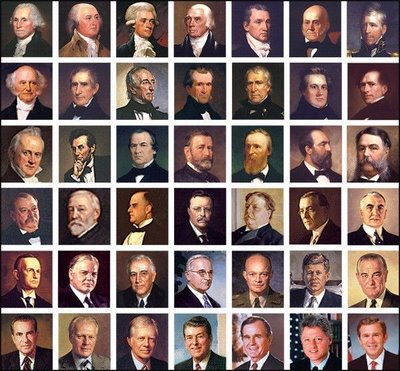
Presidents Day Ethics: The Presidents of the United States on Ethics and Leadership

In commemoration of President’s Day, Ethics Alarms presents the ethics wisdom of the remarkable men who have served their country in the most challenging, difficult, and ethically complicated of all jobs, the U.S. Presidency.

Ladies and Gentlemen, the Presidents of the United States:

George Washington: “I hope I shall possess firmness and virtue enough to maintain what I consider the most enviable of all titles, the character of an honest man.” Continue reading

Comment of the Day: “Ethics Carnage in Wisconsin: The Ethics Grades So Far”

Commenter Glenn Logan argues that President Obama’s C- Ethics Grade in the post is too high. Here is his Comment of the Day, on the post “Ethics Carnage in Wisconsin: The Ethics Grades So Far.”

“I think that Obama is getting grade inflation here. Obama was elected to lead all Americans, not just unions.

“While Walker’s position and comments may be imperfect, and Obama is certainly within his rights to disagree, it is his duty to all Americans to at least take the other side into account. Presidents who are entirely partisan are poor presidents, and in this instance, a C- is unfairly high.

“Combine that with his pronouncement to Republicans after he was elected that “Elections have consequences, and I won,” and in my view, you have an ethics train wreck.  This is as two-faced and unfair as it is possible to be, and dispatching his political organization to inject an even more partisan impact into the problem and the best grade I could give him is a D-.”