The “Survivor” Ethics Bomb: Dubious Setting, Interesting Issues

An ethics bomb exploded on  the CBS reality show “Survivor” last week.

Ethics bombs are unforeseen and unforeseeable incidents that suddenly start a chain reaction of ethics problems, dilemmas and conflicts in all directions. This was a lulu. Well, it was a lulu unless one thinks that nothing that happens on a reality show can teach any ethics lessons at all, since they are all, by definition, fake news. If you watch the show, what happens on it matters to you; you have accepted the devil’s bargain of pretending what is manipulated and edited  by writers and directors is “real” in exchange for being diverted and entertained—so the ethics scenarios that periodically break out seem worthy of serious consideration. If you would rather watch paint dry—this is my niche—caring about the pseudo-real crises that actually happened months ago in the most contrived situation imaginable makes as much sense as cheering at a professional wrestling match.

However, just as illuminating ethics issues are raised on “The Walking Dead”—kind of a post-apocalyptic version of “Survivor” with zombies—they can arise on a reality show. In this case, the ethics bomb spread out into unscripted “reality.”

“Survivor” has been on the air for 17 years and 34  seasons—I can’t believe I just wrote that— and is itself an ethics bomb, since it launched the reality TV virus into the culture. Copied from a Japanese show, the idea is that a group of contestants are forced to compete in a remote and harsh location, divided up into teams (tribes) that are guided through daily challenges that yield various prizes, ranging from food to immunity from being ejected.. Each episode sees the losing team gathered around a campfire (“the tribal council”) where they vote on which team member to kick “off the island,” a phrase that has entered our lexicon. Contestants form alliances with each other and often reveal their character, or lack thereof, by engaging in various Machiavellian tactics to survive, all captured on camera. Some contestants lie, cheat and steal. Sometimes it works.

Last week, the tribal council took a sharp turn into real world social tensions when player Jeff Varner, knowing that he was poised to be jettisoned by his tribe and desperately trying to get their ire focused elsewhere, attempted to undermine fellow contestant and tribe member Zack Smith. Varner began by darkly claiming that all was not as it appeared, for there was widespread “deception” afoot.

“There is deception here,” Varner said. “Deception on levels, Jeff, that these guys don’t even understand.” “Continue,” said show host and producer Jeff Probst, who has presided over and moderated each tribal council from the beginning of the franchise.

Varner then turned to  Smith and said: “Why haven’t you told anyone you’re transgender?”
BOOM!

Continue reading

Quick United Ethics Plane Wreck Passenger Addition: The Journalists And Others Smearing Victim David Dao

Which one is David Dao? What is he like? What has he done? IT DOESN’T MATTER…

I had to post this as soon as a comment on the original post mentioned recent revelations about the abused passenger on—and then off–  United Flight 3411 yesterday.

David Dao (that’s his name) will naturally be the object of research by the news media, because he’s now a public figure and they are overwhelmingly scum. However, whatever exposure his past and present receives as a result of his unwelcome celebrity due to a United employee fingering him for no particular reason as a passenger to sacrifice to solve problems of the airline’s own making, none of it has any relevance to the episode. There is no justification for further injuring Dao by invading his privacy. It is a cruel and unethical thing to do. It is unethical journalism, because the details of the doctor’s life do not contribute anything to an understanding of the story and the issues that the conduct of United raises.

Never mind! This is the Paul Newman film “Absence of Malice” crossed with “Airplane”—an innocent bystander is swept up in a controversy, and as a result is embarrassed before the world because journalists never consider the Golden Rule, and seldom care about fairness, decency, compassion or the consequences of what they publish. “The public has a right to know,” they posture. Really? Why does the public have any right to know about Dao, besides what they see on the YouTube videos?

TMZ, a bottom-feeding celebrity site,  first dug up Dao’s history, posting a click-bait headline.  The Courier-Journal, a Kentucky affiliate of USA Today, then piled on with a story about the “doctor with [a] troubled past.’  The New York Daily News,  The New York Post, The Washington Times, The Chicago Sun Times, D.C.’s ABC affiliate  and People Magazine all joined the fun, the game being “Let’s see if we can further embarrass and humiliate this man, because United didn’t do enough already.” People’s expose was titled “Revealed: All About the Doctor Dragged Off Overbooked United Flight — and His Troubled Past.”

Did I mention that the woman whose life is put on the front page in “Absence of Malice” kills herself? (Melinda Dillon received an Oscar nomination for the role.) Continue reading

In Kansas, A High School Ethics Train Wreck: An Unqualified Principal, Unethical Students, And A False And Dangerous Lesson About Consequentialism

Why are these students smiling sweetly? Because they sent the message to their teachers to be wary; after all, there’s a lot of dirt on the internet…

Ugh.

Seemingly every one is cheering the Pittsburg High School (Kansas) students on the school paper who investigated their newly hired principal, found her credentials to be dubious, and forced her to resigned from her $93,000-a-year job. You can read the story here and here.

For the purposes of Ethics Alarms, I’m not interested in the principal at all. What matters here is that journalists, teachers, TV talking heads and everyone else commenting on the story are proving themselves ignorant of basic ethical principles, like the fact that conduct that happens to result in something desirable doesn’t make the conduct appropriate if it wasn’t ethical at the outset, aka “consequentialism leads to bad lessons and bad ethics,” and “the ends justifies the means.”

From the article:

“Pittsburg journalism adviser Emily Smith said she is “very proud” of her students. “They were not out to get anyone to resign or to get anyone fired. They worked very hard to uncover the truth.”

Emily Smith is too incompetent and ethically confused to advise aspiring student journalists or any other students. The students “wanted be assured that she was qualified and had the proper credentials,” according to the student editor of the paper. That’s not their job, their duty, or their business. They aren’t journalists; they are students learning about journalism. Determining if the new principal was qualified was entirely the responsibility of the the Pittsburg Board of Education, which botched its job and approved hiring the principal at its meeting March 6. That the students did the due diligence the Board failed to do is being used as cover by the Board: Everything worked out because of these great students, who we have educated so well!

Wrong. Unbelievably wrong. Dangerously wrong.

What’s going on here? Continue reading

THREE Comments Of The Day (Really Useful Ones): “Tech Dirt’s Mike Masnick On The Internet Privacy Bill”

There were not one but three excellent, informative, detailed comments, one after the other,  in response to the post about the GOP’s elimination of the recent Obama FCC regulations of Big Data gathering by broadband providers. Technology competence is, I believe, the greatest looming ethics issue for the professions, and it is important for the general public as well. All three of these Comments of the Day are educational. If only the news media and elected officials were as well-informed as Alex, John Billingsley, and Slick Willy.

I am very proud of the level of the discourse on Ethics Alarms, and these three Comments of the Day on the post Ethics Quote Of The Month: Tech Dirt’s Mike Masnick On The Internet Privacy Bill are prime examples.

First, here’s slickwilly:

How to be safe with electronic data

First rule: anything online is vulnerable, no matter who secures it. It follows that any computer/device connected online is also vulnerable.

Second rule: Public WiFi is hack-able, and doing so is not that difficult. Someone just has to want to. Using it for playing games could make you vulnerable, and using it to access your financial information (banks, brokers, etc.) is stoopid

Third rule: Anything you do electronically is forever. Any tweet, snap chat, Facebook post, cell phone text or conversation, email, web post, browsing activity, and anything else may be saved by someone. Some of those are harder to get than others: browsing activity takes a snooper on the data line, or a court order to set a snooper up at your ISP. For instance, all cell phones activity is now all saved by the NSA, including where the phone was when. No, no one looks at it, not until they have a reason to research a person, perhaps years later. ‘Smart’ TVs can record you in your own home, without your knowledge, unless you take steps to stop it (electrical tape over cameras/microphones is a start, but still not enough)

Fourth rule: Any public activity can be recorded today. Besides CCD cameras everywhere and license plate readers on many roads, facial metrics can track you in most urban and many rural areas. Even going into the desert or mountains could be spotted via satellite, should the motivation be enough to look your way.

So don’t leave your computer connected to the Internet 24/7 (a power strip that stops electricity from reaching the computer helps cut connectivity when ‘off’), do nullify the ability of other devices to spy on you in your home, and never say anything electronically you do not want going public. Use complex passwords, and never the same for multiple sites. Password safes are better than written notes (and Apple Notes are silly to use for this.) How much you protect yourself depends on your level of paranoia.

Do you have something to hide? A secret you would rather not be made public? Do not document it electronically! Or use the method below.

Now, how to be safe with electronic information: Place it exclusively on an air-gapped (no network connection at all) computer. Place that computer in a heavy steel safe. Encase that safe in concrete, take it out to a deep ocean trench, and drop it overboard. Forget the coordinates where you dropped it.

The point is, nothing is fool-proof

You can take steps to lower the probability that your information gets out, but even using paper and quill pen was only so good as the physical security the document was placed under. Learn some simple steps and you will remove yourself from the radar of most predators. People are careless, apathetic, and just plain dumb, so anything you do helps keep you safer.

I keep such information in a secure, encrypted flash drive that is not stored in a computer USB slot. Could someone break the encryption, should they find the drive and wish to spend the effort? Sure. But if they want me that badly they will get me, one way or another. Why would they? I do not have any deep dark secrets or hidden crimes in my past. Even so, why should my business be available to anyone just to browse through?

Your mileage may vary, but doing nothing is unethical in my responsibilities to my family.

Now John Billingley’s contribution:

Continue reading

Ethics Quote Of The Month: Tech Dirt’s Mike Masnick On The Internet Privacy Bill

“We don’t solve problems by misrepresenting what the real scenario is. It’s true that ISPs have way too much power over these markets, and they can see and collect a ton of information on you which can absolutely be misused in privacy-damaging ways. But let’s at least be honest about how it’s happening and what it means. That’s the only way we’re going to see real solutions to these issues.”

Mike Masnick on Techdirt on the ignorance of  supporters, critics, and the public regarding consumer broadband privacy protections, which were just repealed by straight party line votes in Congress, as part of the Congressional Review Act, which allows the legislative branch to eliminate regulations and limits an agency’s ability to issue similar rules to the ones being struck down. President Trump is expected to sign the bill.

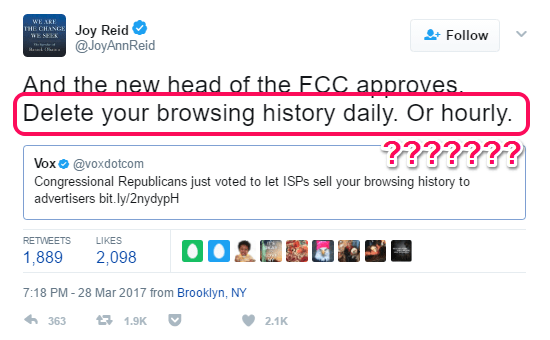
I can see both sides of the Internet “privacy” debate. All I ask is that the average screaming head on TV knows what she’s talking about, and that the news media try to educate citizens on the issue, not portray it as another Obama did it so it’s wonderful, Trump is overturning it, so it’s the end of the world. This morning I watched Morning News Babe Robin Meade roll her eyes while “describing’ what the bill does completely inaccurately. The bill, her unhappy face broadcast is baaaad like everything the Trump Administration and Republicans do is baaaaad. Then she explained that the bill would allow internet service providers, browsers and “search engines” to take your internet history and sell it to big corporations.  Then she giggled about how Max Temkin, inventor of some card game* I have never heard of, promised in a tweet…

“If this shit passes I will buy the browser history of every congressman and congressional aide and publish it.”

Robin, not having the foggiest idea what the bill really did, thought this was so funny and cool. She did not inform her audience, some of whom were actually seeking reliable information and not just tuning in to ogle, that..

  • The bill only undoes the Obama FCC regulations that stopped ISPs from gathering data on its customers’ internet use, and they hadn’t taken effect yet. In other words, it changes nothing.
  • Google, Amazon, Facebook, and other browsers and internet services still can gather anything they get their grubby cyber paws on. The FCC doesn’t regulate them.

You can’t buy Congress’ internet data. You can’t buy my internet data. You can’t buy your internet data. That’s not how this works. It’s a common misconception. We even saw this in Congress four years ago, where Rep. Louis Gohmert went on a smug but totally ignorant rant, asking why Google won’t sell the government all the data it has on people. As we explained at the time, that’s not how it works*. Advertisers aren’t buying your browsing data, and ISPs and other internet companies aren’t selling your data in a neat little package. It doesn’t help anyone to blatantly misrepresent what’s going on.

When ISPs or online services have your data and “sell” it, it doesn’t mean that you can go to, say, AT&T and offer to buy “all of Louis Gohmert’s browsing history.” Instead, what happens is that these companies collect that data for themselves and then sell targeting. That is, when Gohmert goes to visit his favorite publication, that website will cast out to various marketplaces for bids on what ads to show. Thanks to information tracking, it may throw up some demographic and interest data to the marketplace. So, it may say that it has a page being viewed by a male from Texas, who was recently visiting webpages about boardgames and cow farming (to randomly choose some items). Then, from that marketplace, some advertisers’ computerized algorithms will more or less say “well, I’m selling boardgames about cows in Texas, and therefore, this person’s attention is worth 1/10th of a penny more to me than some other company that’s selling boardgames about moose.” And then the webpage will display the ad about cow boardgames. All this happens in a split second, before the page has fully loaded.

At no point does the ad exchange or any of the advertisers know that this is “Louis Gohmert, Congressional Rep.” Nor do they get any other info. They just know that if they are willing to spend the required amount to get the ad shown via the marketplace bidding mechanism, it will show up in front of someone who is somewhat more likely to be interested in the content.

That’s it.

Got that, Robin?

Probably not. Continue reading

Ethics Observation On The Trump 2005 Tax Return

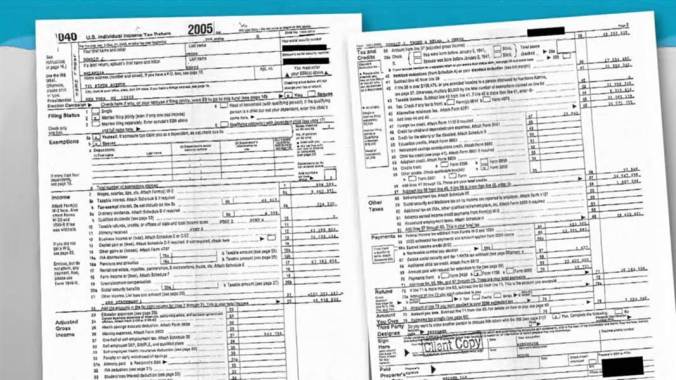
Yesterday, MSNBC host Rachel Maddow endlessly hyped the fact that  veteran investigative reporter David Cay Johnston had obtained President Trump’s 2005 federal tax return. When it was revealed, the scoop didn’t justify the hype. Trump  paid 38 million in taxes that year,  24% of his income—not the top rate, but not “nothing,” which was the rumor Democrats were selling during the campaign.

Ethics points:

1. Whoever leaked the return broke the law, and doing so was unethical.  No, it’s not illegal for the news media to take material stolen by others and sanctify it via their First Amendment protections.  It should be though. When they do this, they aide and abet a crime, and Freedom of the Press wasn’t supposed to allow THAT. At very least, journalists should be required to reveal the names of the criminals who steal and release our proprietary documents. The publication of these makes such thefts worse, not better.

2. I don’t see why the President’s tax returns from 12 years ago has any genuine relevance to anything now. The returns were relevant to the decision of whether or not people wanted to vote for him. Now, the tax documents have no purpose, except for the insatiable Trump-bashers to have something new to bash him with. Anything will do.

3. David Cay Johnston was dishing about his “scoop” with GMA’s George Stephanopoulos, and decided to start a new rumor. He speculated that Trump leaked the return himself.  No evidence, not a drop, and yet that’s what this veteran reporter felt was justifiable to say on national TV. Gee, can we call THAT fake news?

4. Then, as he did with Maddow, the reporter went on about all the conflicts of interest that Trump’s financial dealings have created. Again, this is re-litigating the election. At this point, there is no practical way to eliminate Trump’s conflicts and the appearance of impropriety that they create, and he’s not going to bother trying. Johnston, and others, including me, never made a clear case to the public why the President’s unprecedented financial entanglements should have been disqualifying; nor did Hillary, in part because her own financial entanglements were disqualifying. Well, the train left the station, y’all. You had your chance, and botched it. Johnston, like so many of the other bitter-enders who want to turn back time, ultimately get back to, “But…but…but…we never should have elected this guy! Surely there is something we can do to undo it!”

No, there isn’t. Cut it out. Continue reading

Supreme Court Ethics Quiz Of The Day: Jury Secrecy vs. Jury Bias

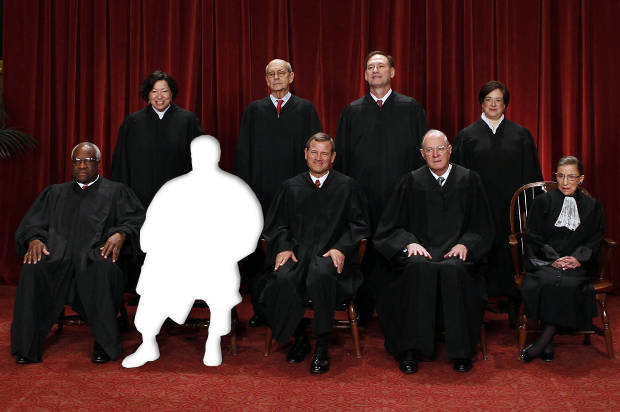
The Supreme Court ruled today that courts must reject the usual rule that jury deliberations are secret when evidence emerges they were marred by racial or ethnic bias. The 5-to-3 decision was triggered by statements made during jury deliberations in a 2010 sexual assault trial, when a juror said of the defendant, “I think he did it because he’s Mexican, and Mexican men take whatever they want.” The juror was a former law enforcement officer, and after the trial was over, two other jurors submitted sworn statements describing what he had said during deliberations.

 “He said that where he used to patrol, nine times out of 10 Mexican men were guilty of being aggressive toward women and young girls,” one juror recalled.

Those statements, the Court’s majority said,  warranted an investigation by the trial judge into deliberations that are ordinarily secret. Justices Ruth Bader Ginsburg, Stephen G. Breyer, Sonia Sotomayor and Elena Kagan joined Justice Kennedy in the majority opinion.

Continue reading

Ethics Observations On That “This Is The Future That Liberals Want” Meme

future_liberal_meme-4x3

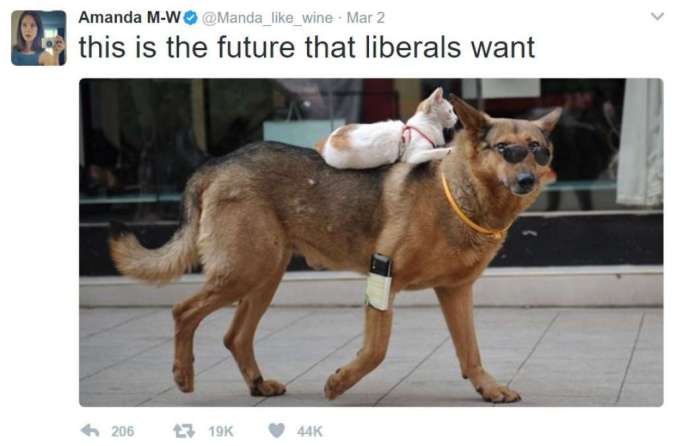
Boubah Barry, a Guinean immigrant and real estate student, saw a striking pair  riding on his subway into Manhattan on February 19. He snapped a photo, and posted it to his Instagram page. The post was shared by the Instagram account “subwaycreatures,” and eventually  /pol/ News Network attached it to a tweet this week with the message “This is the future that liberals want” as a warning about the  danger posed by progressive policies. Naturally, progressives saw nothing alarming about the scene, flooded the site with defiant endorsements of diversity, and shot the meme around the Internet with the same message: This is the future that liberals want, and so there! Then the satirists, adsurdists, and apolitical got into the act—thank god—and we had this kind of thing…


future-that-liberals-want-twitter-meme-6

and this…

this-is-the-future3

…this… Continue reading

Now THIS Is An Unethical IRS Employee…Howard Stern Too, But We Knew HE Was Unethical

[There is supposed to be a photo of Howard Stern here, but WordPress keeps refusing to embed it, thus showing the software’s admirable good taste.]

In May of 2015, Judith Barrigas of Sandwich, Massachusetts called the IRS service center  with a question about her tax refund. She reached IRS agent Jimmy Forsythe, who was goofing off on the job, on hold after a call to Howard Stern’s radio show on satellite radio. Forsythe, still on hold (or so he thought) took the taxpayer’s call, and when the Stern show took reconnected, Stern’s listeners somehow heard Forsythe’s conversation with Barrigas.  Stern and paid sycophant Robin Quivers then joked about the call, which concerned Barrigas’s payment plan: the IRS had applied Barrigas’s tax refund to pay her outstanding debts from 2011 and 2012, even though she complained she already had a repayment plan set up with the  IRS. Her call, which she assumed was private, should have assumed was private and was guranteed by federal law to BE private, was on the airwaves for nearly an hour.

“I’m learning so much,” said Stern at the time, before he finally cut off the surreptitious eavesdropping. “I feel like I’m in math class and I’m flunking because I don’t know one thing he’s saying. I think I’m going to bail on this guy. By the way, this is the most boring job ever. I’d rather live in my parent’s basement if I had to do that. I’d give out all the wrong information. All right, dude, later!”

Barrigas  has just sued  the IRS, the Howard Stern Production Company, and Stern individually for violations of the Federal Tort Claims Act,  unlawful disclosure of tax returns and personal information, and just the for the Stern side,  negligence, invasion of privacy, and the intentional infliction of emotional distress.

Ethics Observations: Continue reading

The 8th Annual Ethics Alarms Awards: The Worst of Ethics 2016: The Last Of The Worst

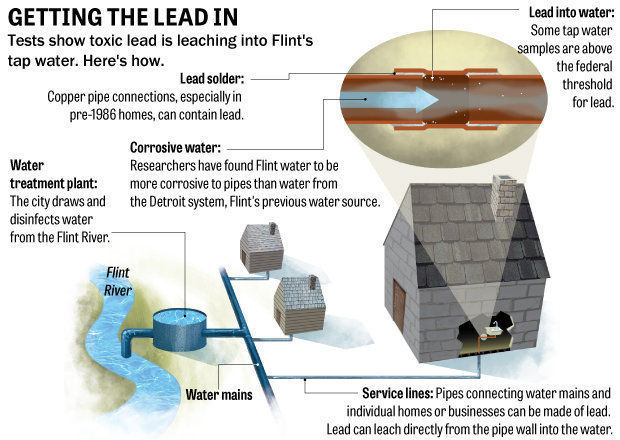
how-lead-gets-injpg-1e9d798a1edee129

Ethics Alarms wraps up the Worst in 2016 Ethics with the usual education and journalism breaches, Ethics Dunce of the Year, and more delights for the sadistic…

Unethical Government Fiasco Of The Year

The Flint, Michigan water crisisA failure of competence, diligence, responsibility and honesty, compounded by bureaucrats, elected officials, the city of Detroit, Michigan Governor Rick Snyder and the EPA made people sick and cost billions.

Good job, everybody!

Scam of the Year

Sen.Ted Cruz’s fake “official” mailer before the Iowa Caucus. Cruz’s campaign  sent out mailers labeled in all capital letters, “ELECTION ALERT,” “VOTER VIOLATION,” “PUBLIC RECORD,” and “FURTHER ACTION NEEDED.” On the other side, the mailer said, in red letters at the top, “VOTING VIOLATION.” The text read:

You are receiving this election notice because of low expected voter turnout in your area. Your individual voting history as well as your neighbors’ are public record. Their scores are published below, and many of them will see your score as well. CAUCUS ON MONDAY TO IMPROVE YOUR SCORE and please encourage your neighbors to caucus as well. A follow-up notice may be issued following Monday’s caucuses.

This is why Trump’s nickname for Cruz, “Lyin’ Ted,” was crude but accurate.

Ethics Dunces Of The Year

All the social media users and others who ended Facebook friendships, genuine friendships and relationship over the 2016 election. Haven’t they ever seen “It’s A Wonderful Life”? Morons. Shame on all of them.

Weenies of the Year

The college students who demanded that exams be cancelled, therapists be available, safe spaces be found, puppies be summoned and cry-ins be organized because the awful candidate they supported in the Presidential election lost, as candidates often do.

How embarrassing.

Unethical University Of The Year 

Liberty University.  This is the most competitive of categories, with all the schools that railroaded male students based on questionable sexual assault claims while quailing in fear of the Dept. of Education’s “Dear Colleague Letter,” and all the schools that signaled that the results of a simple election justified PTSD treatment for their shattered charges, as well as making it clear to any students who dared to tilt Republican that they were persona non grata. Nonetheless, Liberty University takes the prize with its unique combination of greed, hypocrisy, and warped values. From the Ethics Alarms post:

Last week, with great fanfare, Liberty hired Ian McCaw as its new athletic director. “My vision for Liberty is to position it as a pre-eminent Christian athletic program in America,” McCaw said during a news conference.

This is his first paying assignment since May, when he left his job as the athletic director at Baylor, also a Christian university. His departure was made essential after a thorough investigation that found that those overseeing Baylor’s  football team as well as the management of  the athletic department—that is, McCaw— had been informed of multiple gang rapes and sexual assault by team members and had ignored it, as any good football-loving Christian would….especially when a star was involved.

Continue reading