A Good Reason To Question Chris Christie’s Ethics

Thank you for that completely voluntary and generous contribution to the new ethics center at  my alma mater! You can leave your cell now."

Thank you for that completely voluntary and generous contribution to the new ethics center at my alma mater! You can leave your cell now.”

In a long report published in the Washington Post a week ago, New Jersey Governor Chris Christie’s conduct as a federal prosecutor was examined, under the headline, “Chris Christie’s long record of pushing boundaries, sparking controversy.” This is euphemistic, to say the least. What the report describes is clear-cut, undeniably unethical practices by Christie. They were arguably legal and technically permitted at the time (though no longer), but never mind: they were unethical, and would quickly set off the ethics alarms of any ethical lawyer or politician. For Christie, they did not.

I’ll focus only on the main practice in question. The Post’s Carol Morello and Carol D. Leonnig write,

“As the top federal prosecutor in New Jersey, Chris Christie struck an unusual deal with Bristol- Myers Squibb. In exchange for not charging the drugmaking giant with securities fraud, Christie’s office would require it to fund a professorship at Seton Hall University’s law school — Christie’s alma mater.The $5 million gift, one component of a larger agreement between the company and prosecutors, was hailed by the school, in South Orange, N.J., as a cornerstone of its new center on business ethics.”

Now there’s irony for you: a center on business ethics funded with an unethical gift from security fraudsters. For the passage above just as easily, and more accurately, might have read: Continue reading

Congressional Ethics: Why Is This Kind of Brazen Corruption Legal? Why Do We Tolerate A Congress That Conducts Itself This Way?

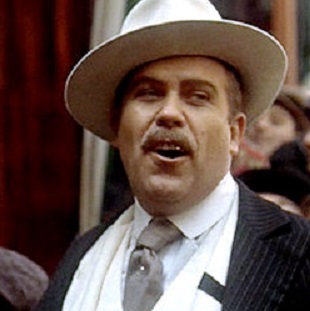
How is Eleanor Holmes Norton like Don Fanucci? In more ways than you might think.

How is Eleanor Holmes Norton like Don Fanucci?
In more ways than you might think.

Someone connected to a lobbyist released a voicemail of the D.C. delegate to Congress, Eleanor Holmes Norton (D, not that the same kind of voice mail hasn’t been left by countless Republicans too), shaking down an industry that is greatly affected by the committee Holmes chairs (though she may not vote on the floor, the District being the victim of taxation without representation) for a financial contribution, in a wounded/threatening tone reminiscent of the Sicilian gangster Don Fanucci in “Godfather Part II” who shakes down a poor merchant by asking for “enough to wet my beak.” Cenk Uygur is almost humorously unsettled by Holmes’ naked venality and the quid pro quo corrupt practices it represents, and I sympathize.

As long as voters, leaders and the news media tolerates this kind of culture, complaints about the unresponsiveness of our elected representatives are laughable. It should be obvious that the first step to a better republic is refusing to tolerate bribery.

Here’s the clip.

Weep.

_____________________________

Pointer: Instapundit

Source: Advice Goddess

The House Ethics Committee Sends A Message: “Keep Your Corruption Within The Loopholes, And You’re Still ‘Ethical'”

"We just want to be friends."

“We just want to be friends.”

Let us stipulate that when a body’s ethics committee shows itself to be hopelessly confused about ethics, the chances that the body it is supposed to enlighten will be anything other than habitually, shamelessly and irreparable unethical are somewhere between Frosty’s chances of surviving in Hell, and the likelihood of me doing an infomercial for Wen Hair.

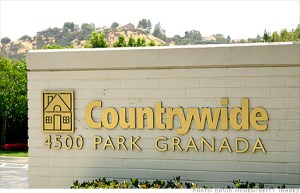
Remember the “Friends of Angelo” scandal? This was the so-called  “VIP program” that former Countrywide founder and CEO Angelo Mozilo used, not to be unkind, to bribe lawmakers into assisting Countrywide’s predatory mortgage loan practices, or at least to look the other way. In June 2008  it was revealed that key policy makers, including former Senate Banking Committee Chairman Christopher Dodd  (D-Conn.), and current Senate Budget Committee Chairman Kent Conrad (D-N.D.) received special terms on mortgages from Countrywide.

In 2009,the House Oversight Committee began investigating the program and learned that similar sweetheart loans were extended to almost a dozen lawmakers, executive branch officials, and other employees of Congress, the White House, Fannie Mae, Freddie Mac, and other government agencies. Countrywide also allowed some VIP program participants “free floats,” which meant that if interest rates fell during the time when loans were being processed, the company allowed applicants to take the lower rate at closing, something it does not typically do.

Let’s be clear: these are bribes. No matter whether they fall within or without specific laws or regulations, they are bribes. This is a large corporation providing special benefits to legislators and others in the government that it did not make available to the general public, in order to make “friends” with them. Why would a financial company like Countrywide want policy-makers indebted to it, to “like” it? Use your imagination. This is called creating a conflict of interest and warping independent judgment. We should expect our officials and elected representatives to recognize such transparent corruption, and avoid it. But they didn’t, and don’t.

One reason they don’t is that voters refuse to hold them accountable. Another is this:

From the LA Times:

“The House Ethics Committee has found no rules violations by  lawmakers and staffers who used a VIP loan program from Countrywide Financial Corp. saying the allegations of special treatment fell outside the panel’s jurisdiction. The committee’s leaders said its investigation largely led to the same conclusions as the Senate Ethics Committee, which determined in 2009 that there was “no substantial credible evidence” that Sen. Kent Conrad (D-S.D.) and former Sen. Christopher Dodd (D-Conn.) had broken rules by accepting loans through the special program…”

“The House Ethics Committee statement said that people in the VIP program appeared to be offered ‘quicker, more efficient loan processing and some discounts.’ But the committee said there was evidence showing those discounts “were not the best deals that were available at Countrywide or in the marketplace at large.” Because participation in the program “did not necessarily mean that borrowers received the best financial deal available either from Countrywide or other lenders,” it was not a violation of House rules to participate, according to the Ethics Committee.” Continue reading

Non-Douche Neil Patrick Harris Almost Gets It Right

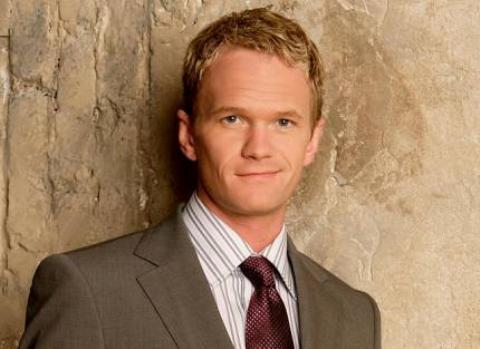
Neil Patrick Harris...no douche he! But is it for the right reasons?

In a cover feature story for Entertainment Weekly, Neil Patrick Harris (or whoever ghost-wrote for him) lays out his Hollywood Survival Guide. Secret of Hollywood Survival #6 for the star of “How I Met Your Mother” and ubiquitous awards show host is “Don’t Be A Douche”:

“Hollywood affords many opportunities to be a douche of epic proportions,” writes the grown-up “Doogie Howser,” “Avoid the temptation.”  He continues:

“Being a pleasant person has got to count for something….Actors sometimes take themselves far too seriously and put themselves on a different level [from the crew.] But everyone’s working really hard and should be afforded the same level of respect.”

For that, Neil gets an Ethics Alarms salute. Unfortunately, he scars his achievement by going on to explain how the make-up people, the film editor and the transportation department can really nail you if you don’t treat them well.

Given the breezy tone of the article, Harris was probably joking, but the joke reinforces the misconception many people have about ethics, which is that ethical conduct is a quid pro quo. It’s not. The Golden Rule isn’t “Do nicely unto others do they won’t screw you over,” and someone’s less than nice behavior  toward you doesn’t justify your being a douche to him. One isn’t respectful to the waiter because he’s liable to spit in your soup if you’re not, but because it’s the right way to treat other human beings.

Neil Patrick Harris certainly seems like a decent guy, and he probably is. I just wish, in the pursuit of a pretty stale joke about how the make-up people will get even by making you look like a troll, he hadn’t reinforced one of the most persistent of unethical rationalizations.

Appearance of Impropriety II: “Here’s Approval For That Deal You Wanted…What? Sure I’d Like to Work for You! Wow, I Never Saw THAT Coming!”

What's there to be suspicious about?

Meredith Attwell Baker, a member of the Federal Communications Commission who voted to approve Comcast’s takeover of NBC Universal in January, is leaving to  become senior vice president of government affairs for ….Comcast-owned NBC Universal.

Hey, why are you so suspicious, you jaded cynic, you? Comcast says it did not begin discussions with Baker about a possible job until after the takeover had her seal of approval. So it’s all on the up and up! Right? Right?

Okay, let’s say we believe that, since doing otherwise would amount to bribery. It doesn’t matter, and I don’t care. Taking a major job with  a company whose back you scratched with a favorable ruling as a government regulator looks terrible, promotes public distrust, erodes faith in regulatory structures, and is unethical. There are other jobs in the world for people with Baker’s credentials; she doesn’t have to take one that makes the U.S.  government’s business regulatory apparatus look like it’s fixed.

A condition of any regulator’s employment with a federal agency should be a pledge that he or she will never accept a paid position for a company that has benefited from the regulator’s rulings…not in a year, not in a decade, not ever.

Ethics Quiz: The Candies’ Foundation and Bristol Palin

" Hi! I'm Kim Kardashian, here to tell you that making a sex tape is a terrible mistake, even though my own sex tape made me and my two equally shallow sisters rich celebrities. Don't make the same mistake I did. Really. Trust me."

The Candie’s Foundation is a non-profit organization that, according to its website,

“…works to shape the way youth in America think about teen pregnancy and parenthood. We are an operating foundation rather than a grant-making foundation. The foundation develops and runs communication campaigns to raise awareness about, and motivate teens to prevent, teen pregnancy.”

The main source of its message to teens right now is that “Dancing With The Stars” icon, Bristol Palin. Palin, now 20, qualified herself for the assignment of speaking to teens about the importance of avoiding getting pregnant by getting pregnant when she was 16, and doing it center stage, while her mother was the Governor of Alaska. Thus using her position in Alaska’s first family to add prestige to the role of unwed teenage mother in that state, Bristol went on to national prominence as Sarah Palin campaigned for Vice President on the GOP ticket, with Bristol demonstrating during and after that jaunt that marrying the father of your child might not be such a good idea either, since he might be, as in the case of Bristol’s short-term fiancee, Levi Johnston, an immature, selfish, publicity-seeking dimwit.

Having done maximum damage to everyone but herself by becoming pregnant (with significant help from Levi, naturally), unwed mother Bristol Palin parlayed her own irresponsible behavior into the job of spokeswoman for The Candie’s Foundation. Well, her mother, I think it is fair to say, did the parlaying. It never hurts to help a prominent and rising cult political figure’s wayward offspring. Who knows when you might need a favor…or have an unemployable offspring of your own?

Bristol goes around the country talking with students and other teenagers, reminding them that they are too young to have kids, and that they should wait because it will screw up their lives. Of course, all of these teenagers know that the unwed, former teen mother telling them this has absolutely no credibility, and in fact represents the much more optimistic ( and completely unrealistic for anyone whose family isn’t rich and/or famous) position  that you can have a baby in your teens, get on lots of magazine covers, have your mother get you a job traveling around the country talking about it while someone else takes care of the baby, and become a celebrity in the bargain. Neat-o! Continue reading

Conflict of Interest, Lack of Integrity, Appearance of Impropriety…Other Than That, Gov. Walker, It’s A Great Hire!

"Why, no, his father's financial support played absolutely no part in his landing this plum job...I mean, just LOOK at him! He blew the competition away!"

Politics involves deals and trade-offs, quid pro quos and mutual back-scratching. The trick is to be a politician without undermining the public trust, and using those deals to benefit, not harm, the public interest. That means that certain deals, even relatively typical ones, may be unforgivable under certain circumstances. A prime example: Wisconsin Gov. Scott Walker’s hiring of Brian Deschane to oversee environmental and regulatory matters and a large staff at the Wisconsin Department of Commerce. Continue reading

Eroding Public Trust: Obama and General Electric’s “Appearance of Impropriety”

The fact that an official act appears to be sensible and fair does not necessarily mean that it is ethical.

Consider the EPA’s waiver of the new global warming regulations for a stalled power plant project in California. Officials reviewed EPA policies and decided it was appropriate to “grandfather” projects such as the Avenal Power Center, a proposed 600-megawatt power plant in the San Joaquin Valley, and thus exempt them from new federal limits on greenhouse gases and conventional air pollution. The Avenal Energy project, explains Environment and Energy News, is a combined-cycle generating plant consisting of two natural gas-fired General Electric 7FA Gas Turbines with Heat Recovery Steam Generators (HRSG) and one General Electric Steam Turbine.

Translation: It is a huge G.E. contract.

Hmmmm. Continue reading

Ethics Quiz: Can You Undo A Past Confict of Interest or Appearance of Impropriety?

In November, Ethics Alarms noted that Melanie Sloan, the head of the ethics watchdog group Citizens for Responsibility and Ethics in Washington, was involved in exactly the kind of Washington insider conflict of interest that the group typically slams politicians for engaging in:

“Melanie Sloan, long the leader and public face of CREW, announced that she is joining the new firm of lobbyist Lanny Davis, a long-time Democratic ally and famous for being Bill Clinton’s most ubiquitous apologist during the Monica Lewinsky scandal…Over the summer,  CREW aligned itself with the for-profit schools industry.  “Today, Citizens for Responsibility and Ethics in Washington (CREW) sent a letter to Sen. Tom Harkin (D-IA), Chairman of the Committee on Health, Education, Labor and Pensions (“HELP”), asking the committee to consider the financial motives of critics of the for-profit education industry,” a July CREW press release began. Later, Sloan again attacked the motives of for-profit school critics in a CREW blog post that linked to an op-ed piece Davis had written defending the for-profit industry. That industry then became a client of Davis’s lobbying firm.

“Got that? Sloan and CREW pushed the interests of Davis’s clients, then Sloan went to work for Davis, where she will, in part, be enriched by the very people whom she assisted in the name of ethics—by attacking the financial motives of for-profit school opponents! This is precisely the kind of D.C. two-step that CREW mercilessly exposes when elected officials do it, and now here is the very same CREW leader who once condemned such corrupt practices, doing it herself.”

Now, for reasons yet undisclosed. Sloan will not be leaving CREW after all.

Does that make everything all right, obliterating the conflict of interest exposed by her decision to take the lobbying job for a firm representing the same interests that CREW had defended? Is the stain of that apparent conflict now erased? Continue reading

Campaign Contributions During Key Votes: Call It Bribery

The quote from Sen. Max Baucus’s spokeperson instantly becomes a leading candidate for “Lie of the Year.”

“Money has no influence on how Senator Baucus (D-Montana) makes his decisions,” Kate Downen told the Washington Post. “The only factor that determines Senator Baucus’s votes is whether a policy is right for Montana and right for our country.” Is there any American so naive as to still believe this, not just about Baucus but about any member of Congress? The Post reports that despite Senate and House rules forbidding it, campaign contributions routinely spike when important bills are about to be voted upon. The sources of the sudden gifts to the lawmakers? Individuals, organizations and corporations who will benefit from the law’s passage or defeat. Continue reading