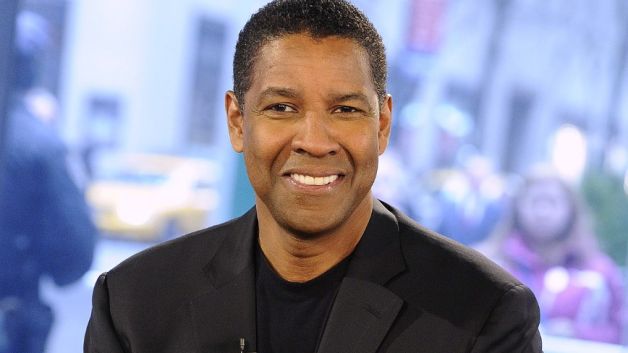
Ethics FYI To Hollywood, Pundits And Al Sharpton: There Is Nothing Racist–Or Unethical—About The Hacked Denzel Washington Memo

denzel-washington

Does anybody even bother to think about what racism is any more before accusing people of it? Do journalists think about the circumstances before they parrot knee-jerk accusations of racism from the likes of Sharpton and others? Based on the evidence of reaction to the infamous memo from a Sony honcho regarding the performance of Denzel Washington pictures abroad, apparently not.

Everywhere, this screed by an unnamed Sony executive is being called “shocking,” “unbelievable,” and, of course “racist.” It is nothing of the kind. In a scenario that reeks of the surreal Samuel L. Jackson fiasco where Ethics Alarms was virtually alone in noting that Jackson’s on-air accusation that a white TV host had confused him with fellow black star Lawrence Fishburne because “all blacks look the same to him” was unfair and completely meritless, the news media is just running with a demonstrably false accusation.

Here are the relevant portions of the e-mail exchange based on what has been reported in the media:

“I am not saying The Equalizer should not have been made or that African American actors should not have been used (I personally think Denzel is the best actor of his generation.) [But] Casting him is saying we’re ok with a double if the picture works. He’s reliable at the domestic [box office], safe, but has not had a huge success in years. I believe…the non event pictures, extra ‘bets’ should have a large inherent upside… Here there isn’t a large inherent upside….I believe that the international motion picture audience is racist – in general, pictures with an African-American lead don’t play well overseas…Sony sometimes seems to disregard that a picture must work well internationally to both maximize returns and reduce risk, especially pics with decent size budgets.”

Let’s examine this “unbelievable” e-mail, line by line and then as a whole, for ethical misconduct and incipient racism:

“I am not saying The Equalizer should not have been made or that African American actors should not have been used (I personally think Denzel is the best actor of his generation.)”

No problem there, right?

“[But] Casting him is saying we’re ok with a double if the picture works.”

The baseball analogy, a “double” over a “home run,” is a conclusion based on Washington’s films’ grosses and hard facts, not racism. It is a legitimate opinion, and one that in a business context must be made as a matter of fiduciary duty. Foriegn box office is about half (or more) of a typical film’s profit. If a star isn’t as popular in foreign markets as in the U.S., then metaphorically speaking, a “home run” is more difficult, and maybe impossible. Continue reading
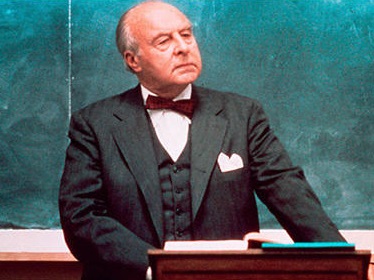

The Professor and the Insensitive Law School Exam Question

"Go ahead, tell Prof. Kingsfield that his exam is unfair because it triggers your emotions and you can't think straight. I dare you."

“Go ahead, tell Prof. Kingsfield that his exam is unfair because it triggers your emotions and you can’t think straight. I dare you.”

A Constitutional Law exam at UCLA Law School included this question:

CNN News reported: On Nov. 24, St. Louis County prosecuting attorney Robert McCulloch announced in a publicized press conference that Police Officer Darren Wilson (who has since resigned) would not be indicted in the August 9 shooting of Michael Brown. Michael Brown’s stepfather, Louis Head, was with hundreds of protesters assembled outside the police station, listening on loudspeakers and car radios when they learned Officer Wilson was not being charged. Standing on the hood of a car, Mr. Head embraced Michael Brown’s mother. Mr. Head asked someone for a bullhorn but it was not passed to him. He turned to the crowd, stomped on the hood and shouted, repeatedly, “Burn this bitch down!”

Police Chief Tom Jackson told Fox “News,” “We are pursuing those comments … We can’t let Ferguson and the community die [as a result of the riots and fires following McCulloch’s announcement]. Everyone who is responsible for taking away people’s property, their livelihoods, their jobs, their businesses — every single one of them needs to be prosecuted to the fullest extent of the law.”

County Attorney Robert McCulloch asks lawyers in his office whether to seek an indictment against Head by relying on a statute forbidding breach of the peace and another prohibiting rioting (six or more persons assembling to violate laws with violence). A recent hire in the office, you are asked to write a memo discussing the relevant 1st Amendment issues in such a prosecution. Write the memo.

The question is a fair and legitimate one, and very typical of law school exams, which often ask students to apply course content to current events. Nonetheless, it provoked a controversy.

Shyrissa Dobbins, a second-year law student in the course and is chair of the Black Law Students Association, complained, “Daily I think about Michael Brown and Eric Garner, and I have a challenge. Every day I think about this injustice and how I’m in a law school that won’t even make a statement about it.” Hussain Turk, a second-year law student who took the exam, argued that  exams should not ask students to address controversial events, and that the question was unfair, as it could be more emotionally difficult for black students to answer. “These kinds of questions create a hostile learning environment for students of color, especially black students who are already disadvantaged by the institution,” Turk said.

There is only one proper rebuttal for this foolishness:

“Grow up, deal with your biases, start thinking like lawyers or find a profession you can handle.”

Pathetically, the law professor, Robert Goldstein apologized in an email in an e-mail to students, saying, “I recognize … that the recent disturbing and painful events and subsequent decisions in Ferguson and New York make this subject too raw to be an opportunity for many of you to demonstrate what you have learned in this class this year,” and promised to discount scores students receive on the question if it lowers the overall score of the student.

Law school Dean Rachel Moran added to the misplaced sensitivity-fest, and her e-mail, said…

“In retrospect, however, he understands that the question was ill-timed for the examination and could have been problematic for students given the anguish among many in our community over the grand jury decisions in the Michael Brown and Eric Garner cases.”

Observations: Continue reading

The Sony Hacks, Hollywood Hypocrisy and The Full Pazuzu

Amy Pascal, apparently...

Amy Pascal, apparently…

You can’t make this stuff up. First North Korea apparently hacks Sony’s emails to punish it for producing a Seth Rogen comedy,—which, by the way, would justify a national response if the current leadership didn’t object to necessary retaliation on principle: this is a foreign attack on American soil, just not a fatal one—-then the revealed e-mails showing  enthusiastic Obama supporters Amy Pascal, Sony Pictures co-chair, and movie producer Scott Rudin making racist jokes worthy of  the readers of Chimpmania.

Of course, Buzzfeed shouldn’t have published hacked e-mails—private is private— but it couldn’t resist. Let’s see: Buzzfeed, Pascal, Rudin, North Korea…let’s throw in our government being unwilling to stand up against vile foreign governments cyber-attacking citizens and businesses: yes, I’d say this qualifies as an Ethics Train Wreck.

Here was the email exchange between Pascal and “The Social Network” producer Scott Rudin, when Pascal sought his advice on what she should say to the President at an upcoming Hollywood fundraiser:

Rudin: Would he like to finance some movies [?]

Pascal: I doubt it. Should I ask him if he liked DJANGO?” [ The violent Tarentino “Escaped-slave-kills-white-guys” Western mash-up revenge epic ]

Rudin: 12 YEARS [A Slave]”

Pascal: “Or the butler [“Lee Daniels’ The Butler”]. Or think like a man?” [ Steve Harvey comedy “Think Like A Man”]

Rudin: Ride-along. [“Ride Along,” a failed cop buddy movie-action flick starring a mostly black cast] I bet he likes Kevin Hart.

Let me focus for the nonce, however, on the absurd and self-indicting apology by uber-hypocrite Amy Pascal, who said: Continue reading

Unethical (and Cynical) Donation Of The Year: The St. Louis Rams’ Forgiveness Bribe To The Backstoppers

"Agreed, then: you can call us racist murderers, as long as you keep the donations coming...."

“Agreed, then: you can call us racist murderers, as long as you keep the donations coming….”

Let us be undiplomaticly clear about what the five St. Louis Rams players did when they came onto the field at the start of a Monday Night Football games with their hands in the air like the fictional, idealized, sanitized, imaginary and politically useful version of Michael Brown—you know: the angelic young college-bound African-American male who did nothing whatsoever to cause the circumstances of his own death.

The players were saying, on national television, with millions of people watching, that Officer Darren Wilson executed Mike Brown in cold blood; that the St. Louis police do such things, want to do such things, and will do such things, because they routinely target young black men for harm; and that police generally, around the nation, are virulent racists. That’s what the gesture meant, and that is what it was devised to convey. Continue reading

Transparency, Causation, Eggshells, Trust : Seven More Ethics Issues In The Eric Garner Case

jigsaw-puzzle-record

1. There is near unanimity in the response to the non-indictment by the Staten Island jury in the Eric Garner case. In light of the graphic video, it is hard to see how there wasn’t probable cause to indict. The coroner verdict of “homicide” would see to provide sufficient evidence all by itself. However, in the absence of the complete record of what the grand jury heard and saw, nobody can be certain that this was a miscarriage of justice. However, given the context of the case and its deleterious impact on faith in the justice system, that is no solace and scant mitigation. As in Ferguson, it is prudent and essential that the public see what the decision was based upon. It is true that those who are determined to see injustice, bias and racism will do so regardless of what the evidence shows–again, as in Ferguson—but the only evidence that has been made public, the various videos and the officer’s testimony–only makes the non-prosecution more suspicious.

2. Can the non-prosecution be justified? If so, the only reason I can see would be lack of proof of causation. Causation is tricky, and  juries get confused about how to analyze it. Since it is fair to assume Daniel Pantaleo did not intend to kill Eric Garner, the issues are a) whether his actions during the arrest were negligent, and b) whether they were the proximate cause of Garner’s death. That his conduct was negligent is not enough to sustain and indictment—that negligence had to be the reason Garner died. Remember, he was not choked to death. The medical examiner ruled that Garner died from a collection of factors: compression on his chest and throat, the position he was forced into, his obesity, weak heart, and asthma, all causing asphyxia.

  • If Pantaleo’s actions alone would not have caused Garner’s death, then it could be legitimately argued that he was not guilty of a crime. The other officers were given immunity for their testimony, which seems like either a bad decision by the district attorney, or intentional sabotage of the case against Pantaleo’s. If it was the collective action of the police that caused Garner’s death, it would be unjust to make Pantaleo the sole officer punished. If some of the testimony from the unchargeable cops made the case that it was another officer, or several, who really caused Garner’s death, that would explain the no indictment result.

In the widely seen video of the arrest, Pantaleo can be seen with his arm around Garner’s neck as Garner is taken to the ground and for some time thereafter, but in watching the video it’s difficult to determine whether Garner was in fact choked. And if he was, it did not appear it was long enough even to render him unconscious, much less kill him…I saw nothing excessive in the manner in which the officers subdued Garner. He was neither beaten with batons nor even punched. To me, it appeared to be a fairly typical scuffle with a large man who had clearly demonstrated his unwillingness to be arrested peacefully.

He misses the point. The question is whether the take-down was excessive for Garner, not some theoretical average arrestee. It is true that with a normal, healthy subject, what the officers did would not typically cause death….but Garner was obviously not normal, nor healthy. He was morbidly obese, and 350 pound middle-aged people tend to have the kinds of heath issues Garner in fact had. Nobody would argue that an elderly woman or a ten-year old girl or someone in a wheelchair should be manhandled like that. Such treatment was negligent for Eric Garner, and the deadly result could and should have been anticipated.

It is true that the officers couldn’t know that Garner had a weak heart and suffered from asthma, but it doesn’t matter: the rule in negligence is that “you take your victim as you find him.” If your negligence is the proximate cause of someone’s death, the fact that it wouldn’t have caused anyone else’s death is no defense. This is the so-called “Egg-shell Skull” rule.

Garner was an egg-shell perp. Continue reading

Journalism Ethics Reality Check: What The Entire News Media Did To Darren Wilson With Dorian Johnson’s “Hands Up” Story Is EXACTLY Like What Rolling Stone Did To UVA With “Jackie’s” Rape Account, Just Worse.

Am I the only one who sees this?

Two train wrecks, same track...

Two train wrecks, same track…

I discern that I was too subtle—imagine that!when I wrote,

In light of all this, it seems that women really have done a relatively poor job at intimidating the left-biased media as well as its progressive pundits and elected officials. If they had sufficiently pressured journalists into believing that to challenge their accounts of rape, substantiated or not, was proof positive of malicious animus, like the civil rights machine has regarding narratives of police racism, they could depend on much of the media continuing to repeat the Rolling Stone account as truth even if it is completely discredited. This is, after all, what we are witnessing right now, as the recent grand jury decision in the Eric Garner death has allowed columnists, reporters, and broadcasters—and thus protesters and politicians—to continue to represent what happened to Michael Brown as if Dorian Johnson’s discredited description of his friend’s death was fair, accurate and unbiased.

So let me be clear….

We are told the the news media is furious with Rolling Stone over its discredited and anonymously sourced gang rape accusation against the University of Virginia’s chapter of the Phi Kappa Psi fraternity. Why is it not similarly critical of itself for publicly and far more widely accusing a single, named Ferguson police officer, Darren Wilson, of a race-motivated, cold-blooded execution of an unarmed man based on the allegations of Dorian Johnson? They are, from a journalism ethics perspective, equally irresponsible and unprofessional, and predictably more harmful. It is, we can stipulate, worse for a police officer to be accused of first degree murder than for unnamed members of a fraternity to be accused of rape.

Note:

1. Both Rolling Stone and the mainstream media were eager to accept the stories being told as fact because of their own ideological biases.

Rolling Stone is committed to the current campaign of the left to portray college campuses as perpetuating a “rape culture.” The mainstream media, as it had already proved in its slanted and incompetent coverage of Trayvon Martin’s death and the trial of George Zimmerman, is a shameless ally of the cynical Democratic Party’s tactic of representing the nation as racist. Continue reading

Observations on the Eric Garner Non-Indictment

The New York Times, among others, reports that the Staten Island grand jury has brought no indictment in the Eric Garner case, in which a large African American man resisted arrest and was brought down by multiple cops, as one, Daniel Pantaleo, used a choke hold to restrain him. After saying that he couldn’t breathe, Garner, who was asthmatic, stopped breathing and died

Observations:

1. I haven’t seen all the evidence, and stipulate that there may be some good reason for the non-indictement that I am not aware of. That aside, however, it certainly seems like this case embodies many of the features that were not present in the death of Michael Brown but that the media and activist narrative attributed to it nonetheless. Garner’s case, in contrast, appears to demonstrate an unwillingness of the law enforcement and justice system to hold police officers accountable for the results of excessive force, even when the result is death.

2. Again, absent some significant evidence that has not been made public, I believe that the video of the fatal arrest, the fact that the choke hold tactic is prohibited by police department policy [ Note: I originally wrote that it was illegal; that was in error, and I apologize for the mistake], and the coroner’s verdict that Garner’s death was a homicide should have been sufficient to mandate the grand jury finding probable cause for at least a charge of negligent homicide.

3. This seems like a result worthy of protest. It is one more reason why activists continuing to use Brown’s death as a rallying point is foolish and wrong. For their purposes, it is a weak case. Garner’s is not. Continue reading

How Should We Judge Second Apologies?

Sure, who wouldn't think this was funny coming from a member of your school board?

Sure, who wouldn’t think this was funny coming from a member of your school board?

The most important feature of apologies is that they express sincere and honest regret for the real harm done. If the first apology for misconduct fails that test, how much credence should a second attempt have? Does it negate the first apology completely? Ought it to be read and understood in light of the initial, unsatisfactory apology? Or should it be ignored completely as a public relations document crafted to achieve a result, rather than to express genuine contrition?

The case of Chris Harris, a board member for the Hooks Independent School District in the town of Hooks, Texas, provides a fascinating test.

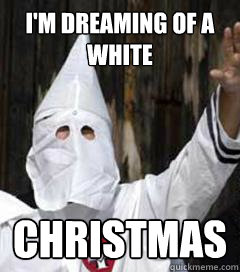
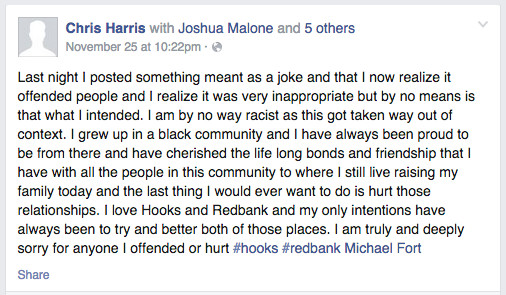
Lat week, Harris posted an image of a Klu Klux Klan member with the caption, “I’m dreaming of a white Christmas”  to his Facebook page. The reaction to this was what almost anyone with a fully functioning cerebrum would expect, a category that Harris does not belong to, or at least did not when he posted it. Perhaps after shouting, “Doh!” or perhaps not, Harris rushed to repair the damage, publishing this apology:

Harris apology 1

Terrible apology! Continue reading

President Lincoln’s Misunderstood Ethics Crisis: The Great Sioux Uprising

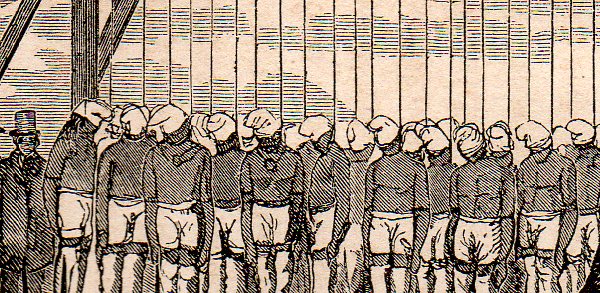
Dakota hanging

As part my so-far futile efforts to leave Ferguson in the rear view mirror, let’s revisit one of the Abraham Lincoln’s great ethical dilemmas during the Civil War, in which today’s date, December 1, was pivotal.

Minnesota’s Great Sioux Uprising, now usually called the Dakota-U.S. Conflict, was among the bloodiest Indian wars in the West, with hundreds of Native Americans, settlers and military casualties. The Sioux were defeated soundly, and the U.S. Army tried 303 Native Americans by military commission, finding them guilty of war crimes and sentencing them to death by hanging. Federal law required Presidential approval of the death sentences, and this was a problem Abraham Lincoln, the President at the time, did not need.

For it was 1862, and the Civil War was raging. This was a year full of Union defeats, indeed, disasters, like Fredericksburg, and both the war and Lincoln’s ability to lead it were in peril. Lincoln was also calculating all the political angles before issuing the Emancipation Proclamation. On top of the burdens of war and politics, he was coping with personal tragedy: his young son Willy had died nine months earlier, and Mary Todd Lincoln was teetering on emotional collapse from grief.
Now he had to decide whether to allow the execution of more than 300 Indians convicted in trials that were no better than kangaroo courts. Few Americans were concerned about the fate of the Native Americans, but Lincoln, with all of his other worries, took on the task of reviewing the trial records. What he found was manifest injustice.  Continue reading

Deval Patrick’s Indefensible, Terrifying Admission

Welcome to my nightmare...

Welcome to my nightmare…

It is 4:30 AM. I can’t sleep, and among the reasons are not, as you might think, the fact that my father died five years ago today and I miss him terribly, or that this is my birthday, and I am that much closer to my own death. No, the cause for my tossing in bed is that I read  Massachusetts Governor Deval Patrick’s comments on “Meet the Press” about the Michael Brown shooting (yes, those eleven Ferguson posts still weren’t enough) just before retiring, and they have been giving me nightmares.

What Patrick’s remarks suggest to me  is that this incident is quite literally driving Democrats, civil rights activists and African-Americans crazy, causing them to lose their grip on basic principles of ethics and democracy. Here is what Patrick said, in part, in his interview with Chuck Todd, who, incompetently, did not ask properly probing questions in response (falling over in a dead faint would have also been appropriate):

“Look, without knowing all the facts, of course I wanted to see an indictment. And mostly because I think a trial and the transparency of a trial would be good for the community. And because so many of us have the supposition that police officers are not going to be held accountable and not going to have to answer for the shooting of unarmed, young, black teenagers.”

I challenge any civil libertarian to defend this statement. Continue reading