The IRS scandal has spawned a new round of partisan “what ifs?” from Republicans and conservative commentators, the gist of them being that President Obama’s election in the 2012 contest was the result of cheating, and the IRS’s successful efforts to stifle Tea Party organization efforts. Surely the less than 2% difference between Mitt Romney and the President might have been bridged had the kind of conservative enthusiasm that marked the 2010 Congressional election not been unethically and illegally stifled! Wall Street Journal blogger James Taranto has dubbed Obama “President Asterisk.” A research paper from the American Enterprise Institute suggests that the post 2010 targeting of conservative and Tea Party groups seeking tax exempt status may have cost Mitt Romney the Presidency. Continue reading
respect
Ethics Quiz: The Judgmental Judge
Circuit Judge Royce Taylor in Murfreesboro, Tennessee is being excoriated by some as being sexist or at least presumptuous for daring to broach the topic of attorney attire in the courtroom, specifically female attorney attire. In a memo, he noted that the topic had arisen in recent Bench/Bar Committee meeting, and wrote,
“The unanimous opinion was that the women attorneys were not being held to the same standard as the men. It was requested that the judges require all attorneys to dress professionally. I have advised some women attorneys that a jacket with sleeves below the elbow is appropriate or a professional dress equivalent.”
What? An elderly male judge presuming to tell female professionals what they should or shouldn’t wear?
Your Ethics Alarms Ethics Quiz:
Is it fair and respectful for judges to require female lawyers to adopt the same dress standards as male lawyers in the courtroom? Continue reading
“Yeccch!” Ethics, The Saint’s Excuse, and Shotgun Shock PSAs
The above poster is being used by the Bristol, England, city council to get dog owners to pick up after their pets.
My reaction:
Yecccch! Ack!!! Gag!
Also this: What a lazy, inconsiderate, unfair and unethical assault on the majority in order to make an impact on a minority. Given the choice between wiping dog poop off my shoe or having my stomach turned by the image of a child eating it, I’m not sure which I’d take, or who I hate more, the inconsiderate dog owner, or the jerk who is willing to sicken me to get at him.
Good, noble, arrogant, self-righteous advocates for responsible behavior increasingly behave as if any collateral damage is acceptable, while their dubiously effective advocacy gets more shrill and ugly. Every time that current TV ad featuring the croaking, hideously disfigured ex-smoker talking while a photo of her lovely pre-cancer visage shows us the ravages of tobacco, I literally dive for the remote, just as I do when the animal cruelty spots begin bombarding me with images of sad-eyed, neglected and abused cats and dogs.
(I also do this when Piers Morgan, Nancy Grace, Donald Trump, Sean Hannity or Al Sharpton flash on the screen, but I digress.) Continue reading
Self-Webshaming At Dunkin’ Donuts
(Watch this after you’ve read the post. Kind of like dessert..)
The ethical considerations one should review when pondering whether to engage in webshaming nicely evaporate when the subject has chosen, though unwittingly, to webshame herself. Thus Ethics Alarms has no qualms about presenting for your consideration, revulsion, and rejection if she ever applies for a job from you, one Taylor Chapman, a 27-year-old woman who lives in the vicinity of Fort Lauderdale. She eagerly and proudly posted to her Facebook page the phone-video above, of her abusing an impeccable Dunkin’ Donuts employee, annoying a customer, and making serial statements with signature significance—no decent human being would utter even one of these appalling comments in public unless suffering from a brain trauma or extreme intoxication.
Chapman was angry because she and her friends had not received a receipt along with their large drive-thru order, and angrily (and abusively, based on Chapman’s manner, but we can only guess) demanded to receive their order free of charge, as Dunkin’ Donuts now promises as part of a service pledge. The employee handling the order apparently did not know how to proceed, and told the group that they would have to come by the store and see her manager the next day.
[An aside: That’s not good customer service, DD. If you make a guarantee that is supposed to mean anything, you have an obligation to train employees how to deliver on it. Telling customers who have not received the promised service that they have to come back to the establishment another day to receive what they are owed is unreasonable and a bait-and switch. I would have said to forget it. I would have written a letter. I would not have done what Chapman did, and I don’t know anyone who would.]
What Chapman did was to return the next day and demand her free order, tossing obscenities at the extraordinarily polite and unflappable employee (his name is Abid Adar, and you should send him flowers) on duty while she recorded the encounter as if it were a health department sting. Continue reading
Bad Valedictorian Ethics, Round #2: The Cut-Off Mic
This one is easy.
At Joshua (Tex.) High School, a Valedictorian, in this case one Remington Reimer, agreed to deliver school-approved text and nothing else as his graduation speech. Following the unethical example of double-crossing Valedictorian Roy Costner, recently slobbered over by Fox News as if he were a hero (imagine if Costner had torn up his promised speech and began bashing the Tea Party—do you think Megyn Kelly would have been kissing his shoes on the air then?), Reimer decided to grandstand as well, changing his speech from what he had assured the school he would be delivering. But while he broke his promise, the school, to its credit, did not. He had been told that if he pulled a Costner, his microphone would be turned off. As the wags at Fark neatly put it, “If you go off-script during your valedictorian speech and mention that you were threatened with having your microphone cut if you were to indeed go off-script, then your microphone just might get cut off for going off-script.” That’s what happened to Remington.
Good. Continue reading
More Graduation Ethics: The Cap And The Feather
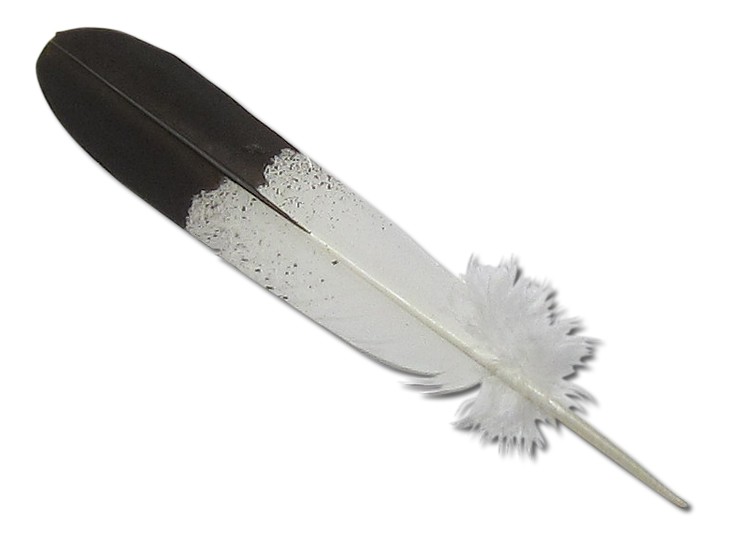
In contrast to the Roy Costner saga, we have the graduation conduct of Chelsey Ramer, proud member Poarch Creek Band of Indians and a graduating senior at Escambia Academy High School in Atmore, Alabama. Four years ago, graduating members of her tribe had worn ceremonial eagle feathers in their caps at the school’s graduation procession and the handing out of diplomas. The school tool no action then, because it was taken by surprise, but this year, Chelsey’s class was presented with new dress code, as well as a contract seniors had to sign in order to participate in graduation ceremonies.
It forbade any “extraneous items during graduation exercises.” It also said students violating the agreement would not receive their diplomas until appropriate disciplinary actions were taken and students paid a whopping $1,000 fine.
Chelsey says she refused to sign the contract. She decided that honoring her heritage with an eagle feather on her cap was worth whatever consequences that resulted. She wore the feather, and now the school is demanding that she pay the thousand dollar fine to receive her transcripts and diploma.
Ethics findings: Continue reading
Bad Valedictorian Ethics In Pickens County
People have to learn to stop applauding unethical conduct.
Roy Costner IV, honored with the opportunity to give the valedictory speech to fellow graduates of Liberty High School in Pickens County, South Carolina, decided to defy the School District’s decision to exclude prayers at graduation ceremonies. He began his prepared and approved graduation speech, then tore it up dramatically and segued into the Lord’s Prayer, to the apparent delight of many in attendance.
Wrong.
Roy accepted the invitation to give the speech under known conditions. He submitted text, supposedly in good faith. The school trusted him to meet his commitments. Instead, he hijacked the graduation ceremony for his own religious agenda. Continue reading
Ethics and “Casey At The Bat”
Today is the 125th anniversary of the publication of “Casey at the Bat,” arguably the most popular and famous of American poems, the creation of humorist Ernest L. Thayer in 1888.
The poem carries many lessons relevant to ethics and life within its tale of the hometown hero who fails spectacularly just when heroics are most needed and anticipated, such as…
- Don’t promise what you cannot be sure of delivering.
- Good faith failure isn’t unethical, a sin or a crime, but it still carries with it the need for someone to accept responsibility for it.
- The focus of disaster is always on the last individual who might have prevented it, but that is neither fair nor logical. The Mudville Nine lost the game, not Casey.
- Expecting miracles, last-minute rescues, heroic intervention and infallible rescuers is foolish and irresponsible.
- Respect your adversaries, for your own sake as well as theirs.
- “Pride goeth before a fall.”
Today, however, I am struck by how neatly the poem reminds us that in baseball there is no spin, no rock to hide under and no Fifth Amendment to claim. When a player fails, or makes a mistake, or misbehaves, it is usually all out on the field, watched in person by thousands, seen on TV by millions, and recorded forever. There is usually no way to deny or hide responsibility, and indeed part of the professionalism of baseball is accepting that, facing the media and the public, and saying, “That was on me. I failed. I’ll do better next time.”
Most of the time, that’s all the crowd asks after failure. Honesty and accountability.
As long as Casey doesn’t keep striking out, that is.
Here’s the poem, recited by the now-forgotten Bob Hope sidekick Jerry Colonna, he of the rolling eyes:
________________________________________
Spark: Craig Calcaterra
Graphic: Fine Art America
“Who Cares?” Ethics: The Key Question…Was This Employee Fired?
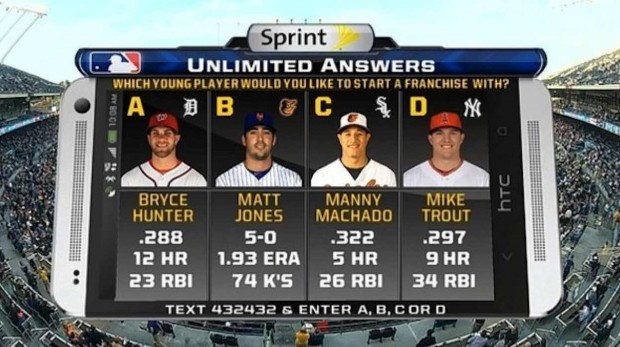
During a Kansas City Royals broadcast this week, the following graphic was displayed for the TV audience:
It has the following mistakes: Continue reading
Twelve Ethics Observations On “The Scandal Trifecta”
1. “The Scandal Trifecta” may be gaining traction in D.C. and in the news media as the hot term to handily describe the Obama Administration’s three instances of serious and significant misconduct: the Benghazi deceptions, the I.R.S. harassment of conservatives and conservative groups, and the Justice Department’s surveillance of Associate Press reporters. It should be rejected. I know conservatives and Republicans are especially smug and gleeful right now to have their suspicions and warnings confirmed, but this is a national crisis, at a time of dire challenges to the nation, and tragic in many ways. It is not a game, and should not be likened to one. Nor should the three situations be lumped together, though they have, to some extent, common seeds. They are each important in and of themselves, and packaging them like stop-light peppers risks allowing all or some of them receive less than the individual attention they must have. This is the first and last time I’m using the term, and I urge everyone, in the media or out of it, to similarly drop it. Labels matter, in this is a bad one.
2. Here’s someone Democrats and the rest of us can blame, in part: the left-biased news media. You see, knowing that the news media is looking to expose them when they make mistakes, blunder, show corruption and otherwise do a bad job when entrusted with the welfare of the greatest nation on earth makes our leaders better, more responsible, more objective, and more competent, out of fear, if nothing else. The media does nobody any favors when it lets its biases take over and lies down on the job—not the public, not Republicans, certainly; not the nation, not their profession, but also not even those they are desperately trying to help succeed. Continue reading