Trayvon-Zimmerman: Stop This Ethics Train Wreck!

Unstoppable?

The Trayvon Martin-George Zimmerman episode is escalating into a full-scale ethics train wreck at a frightening pace, pulling in participants and bystanders alike, and threatening to become a national catastrophe. Usually such things need to play out until all the carnage is exhausted, but this train wreck is different. Too many parties, including the media, are behaving irresponsibly, given the sensitivity of the issues at hand and the possible worse case scenarios. If the train can’t be stopped, it desperately needs to be slowed down.

At this point, however, I wonder if it can. The activists now driving the action obviously no longer care about little nuances like facts, fairness, and law. The participation of Ethics Train Wreck Engineer Extraordinaire Al Sharpton perfectly suits the situation. Whatever the witnesses say, whatever the facts may appear to be to rational and reasonable observers, too many people are invested in the presumption that a white racist shot an innocent black teen for “walking while black,” and nothing short of harsh punishment will avert claims of society-wide racism and the attendant anger, protests, and violence to come.

Disgracefully, more respectable media figures than Sharpton are also throwing kerosene on the fire.  Here, for example, is Pulitzer Prize winning Washington Post columnist Eugene Robinson’s opening to today’s column: Continue reading

Obama, Trayvon Martin, Biases and Kansas City Burning

In Kansas City, Missouri, a 13-year-old East High School student was walking home after the end of his daily classes when he was grabbed by two older teens just as he reached his front porch. They pinned his arms behind his back,  poured gasoline on him, and set him on fire. The victim of the attack was rushed to an emergency room, where he was treated and released. Doctors fear possible damage to his lungs and eyes, but outside of losing his eyebrows and some hair, he only suffered first degree burns.

The boy is white; his attackers were black. They allegedly said, as they were lighting him aflame, “You get what you deserve, white boy.”

This frightening incident occurred on March 2. I only recently learned of it, because the news media didn’t treat it as a national story. Though the boy’s attackers have not been found, no activists are demanding that the police chief resign. There have been no marches or protests, and students aren’t walking out of Kansas City schools. Nobody, as far as I can determine, has claimed that this is just the tip of a lurking race iceberg, and that it shows the racial hate of blacks toward whites that is hidden by the media and the culture. Most of all, the President of the United States did not say , just to give a wild, hypothetical example… Continue reading

The Principle President Obama Cannot—or Will Not— Grasp

President Obama's learning curve.

As I observed the uproar building over the neighborhood watch murder of Trayvon Martin, the Sanford, Florida teenager fatally shot by a 911 caller who found him “suspicious,” I found myself hoping against hope that President Obama could muster the restraint—restraint that he has too often failed to exercise in the past—to stay out of a local law enforcement matter that is far from resolved. Presidents are not talk-show hosts, and their comments carry excessive power and influence. Picking and choosing among the myriad Americans who suffer misfortune, tragedy and injustice to render support and sympathy is a fool’s game, and an irresponsible act by a national leader. President Obama is no fool, but in this area his flat learning curve has been shocking. He injected himself into the Cambridge police’s altercation with a cranky law professor before he knew all the facts; he rendered a verdict on a coal mine cave-in before fault had been established; he injected himself into a local controversy over the location of a mosque, and he even entered the dispute over Rush Limbaugh’s insults to a law student. Every one of these abuses of his office and influence attracted appropriate criticism (though not nearly enough of it) and caused other problems as well. I thought that maybe…maybe…the President finally might have figured out what virtually every other President understood by the time he had been inaugurated.

Nope! Continue reading

Unethical Advertising Slogan of the Month: Reebok

You read that right: the slogan, which Rebok printed up for use by an affiliated gym in Germany and which quickly went viral on the web, is

“CHEAT ON YOUR GIRLFRIEND, NOT ON YOUR WORKOUT!”

As blatantly unethical exhortations in pursuit of commerce go, this one is pretty spectacular. Consider:

  • It is disrespectful of women.
  • It advocates betrayal, dishonesty, disloyalty, infidelity, promiscuity and cheating.
  • It designates a higher priority to narcissistic self-maintenance over love, commitment, and stable relationships.
  • It represents an athletic equipment company giving the stamp of approval to cheating.

That’s a remarkable amount of bad ethics in just eight words. A masterpiece of economical cultural poison. Bravo! Continue reading

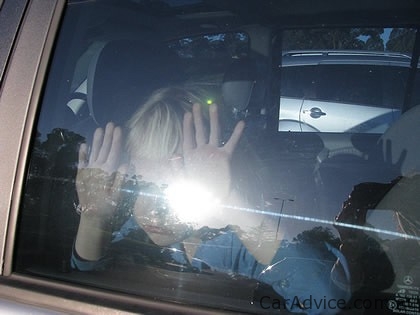
Revisiting the Tragedy of the Dead Child in the Locked Car

Almost two years ago, I wrote about Washington Post feature writer Gene Weingarten’s provocative and sensitive 2009 exploration of the tragic cases in which a distracted parent leaves a small child in an over-heated car. The issue, now as then, is how society should treat such parents, who are without exception crushed with remorse and guilt, their lives and psyches permanently scarred. Weingarten’s original piece, which won him a 2010 Pulitzer, did not take a position on how such parents should be treated by the criminal justice system. In today’s Washington Post, he does.

Weingarten writes:

“The parents are a continuing danger to no one, nor could anybody sanely argue that fear of prison is even a minuscule factor in preventing this. So we are left with the nebulous notion of punishing, for punishment’s sake alone, an act of accidental negligence that by its nature subjects the doer to a lifetime of agony so profound that it is unfathomable to anyone who has not lived it. Prosecution is not, in my view, warranted.”

Weingarten is thoughtful, analytical, reasonable, compassionate and fair. He is also, in this case, dead wrong. Continue reading

Comment of the Day: Time To Retire Editorial Cartoons—With Gratitude

Cartoonist and frequent combatant on Ethics Alarms Barry Deutsch did not disappoint—I was counting on a strong reply from him—in commenting on my post about political cartoonists. And I think he has me convinced. I think what I should have suggested, rather than advocating sending newspaper political cartoonists to the trash bin of history (soon to be followed by newspapers themselves), is that editors exercise some discretion over when an editorial cartoon, even by a respected cartoonist, just doesn’t meet editorial standards.

Here is Barry’s persuasive and educational Comment of the Day on the post Time To Retire Editorial Cartoons—With Gratitude:

“Oh, how could I possibly resist this thread?

“1) At his best, Tom Toles is a wonderful cartoonist, elegant and with an incredibly distinctive style. But he hasn’t been at his best for years. The particular cartoon you’re talking about — which can be seen here, if anyone’s curious — is an embarrassment.

“The problem with that Toles cartoon isn’t that it takes a side, or that it paints with a broad brush; many good cartoons do both those things. The problem is, it’s painfully stupid.

“2) There are good political cartoonists doing interesting work, but they’re mostly not found in mainstream newspapers.

“3) Even the best political cartoonists tend to produce more mediocre than great cartoons.

“4) It’s a very, very rare reader who can recognize the artistic merit of a political cartoon that they strongly disagree with politically.

“5) The economic base has fallen out from under political cartooning; every year, fewer and fewer newspapers support a staff cartoonist, and those that remain are seeing their incomes and outlets shrinking. And no one’s yet found a business model for political cartooning to thrive on the web.

“As a result, the most talented new cartoonists usually aren’t going into political cartooning, because they want to be able to eat and pay rent.

“6) Some of the most interesting political cartoonists have gone so far away from traditional political cartooning that no one even recognizes what they’re doing as political cartooning. See, for instance, Joe Sacco, who does journalism in comics form; his second book on Palestine, “Footnotes In Gaza,” is one of the best books about life in Gaza anyone’s done, in prose or comics.

Time To Retire Editorial Cartoons, With Gratitude

The nuanced subtlety of Pulitzer Prize winning Herb Block. Translation: "Nixon's a crook." Brilliant!!!

All right, hear me out. I love cartoons. I used to aspire to being a cartoonist. I have good friends who are cartoonists, and I know there are cartoonists who are strong contributors to Ethics Alarms. But for many years it has appeared to me that editorial cartoons have become an increasingly archaic form of commentary, one that misinforms the public and contributes to the venom and lack of nuance in public discourse.

Cartoons, by their very nature, deal in caricature, exaggeration and extremes for metaphorical and humorous effect. The practical effect of this, however, is that the opinions expressed through cartoons are also “supported” in a manner that would be outrageous in a written opinion piece. I know: you can’t hold a cartoon to the same standard as an op-ed. Fine—then don’t put it on the editorial pages. Continue reading

Needed: An Ethics Alarm For Twitter

Pat Heaton, Twitter road kill.

Twitter, I have concluded, is itself an ethics trap. What the social networking site allows one to do is to take the usual, daily, routine moments of bad judgment, bad manners, carelessness meanness, incivility, indiscretion and stupidity that we all are guilty of on a regular basis, and magnify their perceived harm and significance exponentially. For the famous, this is especially perilous—witness “Everybody Loves Raymond” star Patricia Heaton, one of Hollywood’s few  open conservatives. She decided to join the Fluke-Limbaugh Ethics Train Wreck with a snotty tweet (“If every Tweaton sent Georgetown Gal one condom, her parents wouldn’t have to cancel basic cable, & she would never reproduce — sound good?”), and it has turned into a career crisis. Pre-Twitter, such a sentiment could have been shared orally with a few friends in snark-fest, or sent as an e-mail to a few trusted associates. But the tweet was viewed as piling on, which it was.

Even the non-famous are at risk: many women were outed on various blogs as idiots for tweeting after the Grammys how much they would like to be beaten up by Singer Chris Brown. Nobody knows when a badly thought out or offensive tweet will be re-tweeted into immortality. Then there is Twitter negligence. Pop idol Justin Bieber just engaged in that form of unethical Twitter conduct. Instead of sending a partial phone number to one friend, he sent it to all of his thousands of followers, who then drove a poor innocent crazy by flooding him with over 1000 phone calls. Continue reading

Leroy Fick, Meet the Honorary “Ms. Fick 2012.” On Second Thought, Don’t.

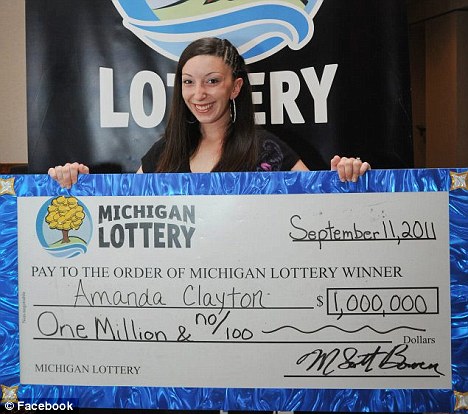
Amanda Fick, er, Clayton

Following in the despicable footsteps of Leroy Fick, the  Michigan millionaire lottery winner who collects food stamps because of a loop-hole in the law (and whose name, “fick,” has made the Ethics Alarms glossary as the word for someone who is willfully, openly and shameless unethical), here comes a Ms. Fick, a.k.a Amanda Clayton. She says that she is entitled to food stamps despite having two homes and a million dollar lottery prize that will leave her with $500,000 in the bank. No need for me to be creative here; what went for the Original Fick goes for her as well:

“What ethical principle doesn’t his conduct violate? He’s not responsible; he’s not accountable; he’s not fair. He doesn’t respect his fellow citizens or their opinions. He’s not loyal to his state or his community. He’s not compassionate, and I wouldn’t trust him to walk my dog: he’d probably sell him.  Is he honest? Applying for food stamps is an act that declares that you need them to eat, because that’s the only reason they exist: Leroy Fick isn’t honest.”

Ditto the honorary Ms. Fick, 2012, Amanda Clayton. And if there are any eugenics practitioners out there, please try to keep these ficks from ever getting together. That’s all Michigan needs…a litter of little Ficks.

Thanks to tgt for the tip.

Newt Gingrich’s Desperate, Dishonest, Irresponsible Pitch

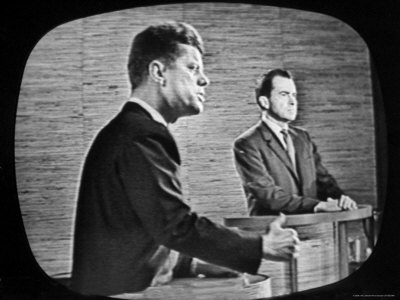
In 1960 the better hair beat the better debater. Maybe Newt's basing his strategy on his hair.

I heard it again on a radio ad for Newt yesterday, and decided that it was unfair to slam him for it, because the sponsor was his Super Pac, and we all know that (cough!) Super Pacs have no contact with the candidates they support. Then, last night, Gingrich made the argument himself, and not for the first time. The reason Newt Gingrich should be the Republican nominee for President is that he is the one best equipped to trounce Barack Obama in the debates.

“Wouldn’t it be great if we had our smartest guy going head to head against their smartest guy in the debates?” the perky actress playing a Newt supporter ( a dumb Newt supporter) said in the ad. “ “Newt would win for sure!”

The ad, please note, said absolutely nothing about whether Gingrich had any skills actually relevant to being President of the United States, and never said what his policies would be or how he would govern. Newt himself has talked about these things, but in the end he too boils his pitch down to one asset: He’s a better debater than Barack Obama. And the proper responses to that are, in order,