Soon To Be Justly Unemployed Ethics Dunce: Costa Cruises Exec Monica Bova

Among her next job options, public relations is probably not an option.

You are a cruise ship company executive. Your half-billion dollar cruise ship hit a a rock because the captain was fooling around, tipped over, and while it was sinking, the captain lied to the Coast Guard about conditions and fled in a lifeboat before the passengers were safe. More than 20 are missing, and eleven bodies have been found. What do you do?

If you are Costa Cruises Assistant director Monica Bova, you accuse the surviving passengers of “sensationalism” over the disaster.

“I have read, seen and heard so much nonsense from these survivors, who tended as usual to choose sensationalism rather than information,” she wrote in a post on an Italian website. “I realize that there may be conflicting opinions and I do not have the expertise to determine guilt and causes of the tragedy, but in a real emergency anything can happen.” Bova went on to call her colleagues the “true heroes”, adding that without them, none of the guests would have been able to evacuate. Continue reading

The “I Have A Dream” Speech Ethics Train Wreck

Dr. King's familiy says this was a "performance" not a speech. Funny: I thought he was just speaking the truth. I guess I was dreaming.

Take Martin Luther King Day, turn right at the “Stopping Online Piracy Act” (SOPA/ PIPA) protests, and you get to the ridiculous fact that you are breaking the law anytime you circulate a recording or video of the Martin Luther King’s immortal “I Have A Dream” speech.

Through a baroque combination of expediency, legal maneuvers, luck and greed, this vital part of American thought, rhetoric, culture and history is restricted by the copyright laws, and will not be in the public domain until 2037, or more than 70 years after King’s words were spoken in front of the Lincoln Memorial. Now, under SOPA/PIPA, if it passes, any educational website that includes a video of the King Video could be taken down by the Feds, but that’s a side issue. I am no expert on the bill, but you can brief yourself on what all the fuss is about here, here, here, and here, the bill itself. Similarly, if I tried to explain the legal process by which courts agreed that a critical chapter in American history should be unavailable to Americans unless they pay a fee, it would 1) bore you stiff, 2) confuse you, and 3) probably be wrong. So I recommend this post by Alex Pasternak over at Motherboard, who does a great job laying out the whole, tortuous, tragic story.

I’ll concentrate on the ethics train wreck feature, of which the basic elements are these: Continue reading

Romney, Firing, Leadership, and Ethics Bob’s Lament

Yes, yes, firing people is one thing Donald Trump does well too. Shut up.

Ethics Bob Stone sent in a comment late last night that I replied to, but that I think deserves more discussion, on several points. Responding to my Ethics Hero designation for Ron Paul for coming to his adversary’s defense over Romney’s now infamous remark about firing people, Bob wrote:

“…I think Romney’s “I like to fire people”–even taken IN context–displays an inner heartlessness. I know about creative destruction, and I myself have taken actions to lay off people, and even fired a couple face-to-face. I did what needed to be done. No apologies.

“But did I like it? I HATED it.

“Romney’s comment seems of a kind with his strapping the family dog on his car roof for a 500-mi trip, or his advocacy of breaking up families to deport the parent or child who’s illegal. Gingrich was right.”

There are several issues here, some minor. Continue reading

Comment of the Day: “The Priorities of U.S. Higher Education Defy Understanding”

When the topic on Ethics Alarms is education, Michael frequently scores a Comment of the Day, and he did it again following the post on the University of Maryland spending a fortune on its president’s residence. Here is his effort to help us understand the conduct discussed in The Priorities of U.S. Higher Education Defy Understanding. And I’ll have a closing comment at the end.

“I have asked these questions about what is driving up college costs. Here is what I have found: Continue reading

Ethics Quiz: Is This Racism, or Just Business?

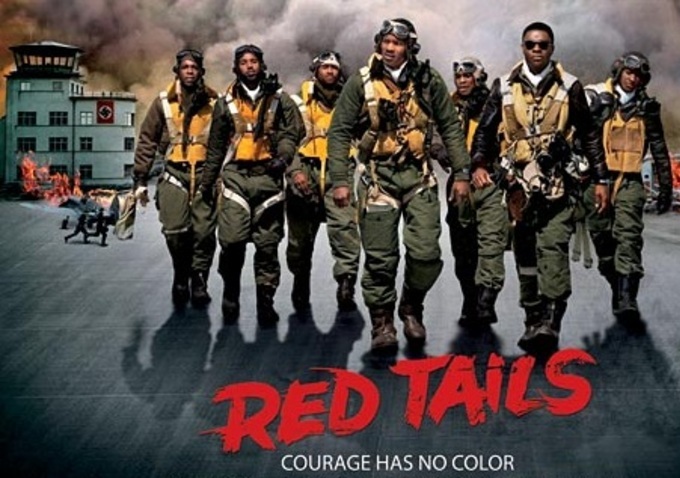
The Mother Jones headline is designed to provoke a gasp: George Lucas: Hollywood Didn’t Want To Fund My Film Because Of Its Black Cast.

The headline is literally accurate. Lucas tells the magazine that he had trouble finding backers for “Red Tails,” his upcoming film about the fabled Tuskegee airmen, because the studios told him that films without white protagonists didn’t draw a wide enough audience, especially overseas, to make his film a good investment for them. Presuming that the film-makers know their business—and presuming their real reason for rejecting Lucas was not that the movies he’s produced lately were god awful, —Lucas’s story raises this Ethics Alarms Ethics Quiz Question, which you may answer if you dare:

Is a studio that refuses to fund a movie with an all-black cast engaging in racism, or just practicing business responsibly? Continue reading

The Priorities of U.S. Higher Education Defy Understanding

The next president of the University of Maryland, apparently. Wait---that was the previous post!

The out-of-control costs of higher education are one of many systemic problems that plague America, and it is one that I confess baffles me completely. I do not understand why tuition is so high and continues to climb. I do not understand why universities pay professors huge salaries for minimal teaching duties, and I don’t see what expensive buildings and beautiful surroundings have to do with education. I don’t understand why students pay outrageous sums to be educated then take trivial and absurd courses, like the now-cancelled Columbia University undergraduate course that was to consist of hanging out with the Occupy Wall Street gang to endear oneself with course’s OWS-loving professor.

Most of all, I do not understand the persistence of the myth that a college education can, does, or should qualify a graduate for good job, when it appears that a large percentage of students, if not a majority, leave the campus unable to write, think, or name the men on Mount Rushmore. Decades ago, as an administrator at major law school, I was shocked to discover that the school held remedial reading and wring courses for some first year students, one of them a graduate of Yale.  Do you think the problem has improved since then? A college education in the U.S. is a poor and declining product that is over-priced and over-hyped, and I don’t understand why people are willing to go into debt to purchase it, and why the manufacturers haven’t cut costs, improved the product, and lowered the price.

Well, maybe I do understand. Like so many other problems, the reason for this one may be no more mysterious than the fact that those in charge are irresponsible, incompetent, and unaccountable.

This week brought the news that crews will begin demolishing the president’s house at the University of Maryland, and begin construction of a new 14,000-square-foot mansion that will cost the school at least  $7.2 million. The palatial new digs for Maryland U’s president is being built in the midst of the university’s pleas for donors to contribute funds to rescue Maryland students who may be forced to drop out because of their family’s financial plights.
Meanwhile, the current president, Wallace D. Loh, has said that he will cut eight varsity sports teams in June to save an estimated $29 million over the next eight years. Do you understand this? Continue reading

Comment of the Day on “The NAACP’s ‘Gotcha!’ Games”

"GOTCHA!"

An exchange between a spirited newcomer to Ethics Alarms, Roger, and me led to this Comment of the Day by Proam [ whom I keep meaning to ask whether his screen name is pronounced “Proam, ” and in “foam,” or “Pro-Am” } Here is his complex take: I’ll have a response at the end. Proam’s Comment of the Day on “The NAACP’s “Gotcha!” Games” :

“My $.02: the NAACP’s and Roger’s objections to what Santorum said are valid “gotchas.”

“It matters neither what Santorum really meant, nor what is the sum of Santorum’s character and values (call that his “heart”). What he uttered (“blacks”), insofar as how it matters to certain recipients, is off-putting and alarming, regardless of its timing, place, vehemence, or other quality, and therefore must matter to all recipients. It was worse than “lazy;” it betrayed a lack of sensitivity that others have (and are justified and deserving in having) about a matter of justice. It only takes one word – even part of one word; even no words at all but some other fleeting sound or sight, like a raised eyebrow – for one to make oneself clear, even clearer than ever had been intended, or than ever could be communicated with many words. Continue reading

Ethics Hero: Police Officer Robin Parker

The ethical way to take your medicine.

Officer Robin Parker, a Maine state police officer, was pulled over for drunk driving while off-duty and arrested, as he should have been, but as many officers in similar circumstances are not, due to “professional courtesy.”  Parker was put on administrative leave pending an investigation. His arrest was beginning to cause discord at the station, as some of Parker’s colleagues but some of his fellow officers were ostracizing the officers who arrested him.

Parker sent a mass email to all the officers. It read…

Dear Fellow Troopers,

I’m not sure I’m able to articulate exactly how I feel,  but I will try to put into words my thoughts.

Most if not all of you know by now what happened with me last Sunday evening. I was pulled over on the turnpike for suspicion of driving under the influence. I was subsequently processed and charged with that offense by Troopers within Troop G.

 I want to first thank all of you for your tremendous support and prayers. I will continue to graciously accept them as I move forward in this process. One thing I want to make perfectly clear to everyone. My decisions and choices were mine and mine alone. I have made some mistakes and I’m prepared to answer for them. I appreciate the kind words expressing sadness that I will have to deal with this in the courts and within the department. But these are the consequences for MY ACTIONS. I’m not saying this is not painful, because it is. I’m not saying this is not going to be hard, because it will be. I’m not saying I’m not ashamed and embarrassed, because I am. But, what I am saying is I own this and I’m prepared for the consequences. Continue reading

Why “He’s Suffered Enough” Is Not Enough

Not enough.

“He’s suffered enough” is one of the more popular and effective rationalizations, usually put into use in defense of white collar criminals and the likes of Roman Polanski, wealthy or once-respectable criminals for whom remorse and humiliation are deemed to be as devastating as incarceration.  Yet it is still a rationalization—a deceptive representation of the truth—and shows a misunderstanding of what official punishment needs to accomplish.

A sad drama has played out in a Montgomery County Maryland court, where twenty-year old Kevin Coffay was sentenced to twenty years in prison for fleeing the scene of a May auto accident that he had caused by being drunk behind the wheel, as Spencer Datt, 18; John Hoover, 20; and Haeley McGuire, 18, remained in the wreck after Coffay fled.  All three died.

Coffay was stunned by the sentence, and news reports say that the case has torn the community apart, with the families of the victims seeking retribution, and supporters of Coffay pleading for compassion and mercy. Their argument, as it always is in such tragedies, is that “he’s suffered enough”. This misses the point of the trial, the sentence, and the societal ritual that such events demand. Continue reading

The NAACP’s “Gotcha!” Games

Somewhere there must be advocates for the African-American community who realize that the practice of lying in wait for white politicians to make a mis-phrased or politically incorrect statement and then pouncing on them with indignant press releases charging racial insensitivity is counter-productive, feeding mistrust on all sides and tempting many on the political right to just by-pass issues of concern to blacks as a lost cause with a hopelessly biased audience. Somewhere—but not in the NAACP, which has relied for decades on playing “gotcha!” games to flex its PR muscles and appeal to its most racially polarized core. I remember poor Ross Perot speaking to the group in 1988, and being pilloried for referring to an his all-black audience once as “you people.” Of course, Perot was appearing with the expectation that he would explain what a Perot presidency would do to address the problems of African-Americans, a group he was not a member of,  yet the completely self-explanatory and accurate, if clumsy, “you people” was attacked as patronizing and vaguely racist.

Now GOP presidential candidate Rick Santorum is under fire by the NAACP for this statement: “I don’t want to make black people’s lives better by giving them somebody else’s money; I want to give them the opportunity to go out and earn the money.” Continue reading