Revisiting The Ethics Alarms Web Hoax Scale

Funny! Also deserved. But wrong...

Funny! Also deserved. But wrong…

To quote myself, planting false facts in the information supply may not make people sick like putting poison in the water supply, but it is damaging enough to be recognized as not worth tolerating for the occasional giggle. A year ago, I introduced the Ethics Alarms Web Hoax Scale,inspired by yet another unethical trick by the loathsome Jimmy Kimmel. As it turned out, 2014 was a banner year for web hoaxes, due to the activity of a couple webs sites that only exist to deceive the news media and make every American certain that they shouldn’t trust anything they read, anywhere.

As you know if you’ve read much here, I detest web hoaxes. I’m also not too crazy about those who use them to announce their superiority to the people who were fooled, essentially saying, “It’s harmless, unless you’re not smart enough to get it—like you.” This attitude emboldens and rationalizes for the hoaxers. I’ve fallen for some, usually when a source I trust has preceded me, marring the site with a post based on a lie. I don’t think it’s funny to make others involuntary accessories to deception.

I was reminded of the Web Hoax Scale, which, like the Race-baiting Scale, I want to finalize before making it a permanent part of the Ethics Alarms tool box, when my least favorite Republican Presidential candidate, Rand Paul, launched a fake Hillary Clinton site on Pinterest. It would have been a #1 on the original hoax scale , rated as harmless because no one who had ever heard of Hillary and who could beat my dog at Scrabble would think it was anything but a gag. (Should a hoax that doesn’t and can’t fool anyone qualify as a hoax at all?) I was going to write, however, that in this context, a fake website is inherently unethical whether it is recognized as such or not, and I have reflected that position in the revision of the scale. Continue reading

Life Imitates Saul

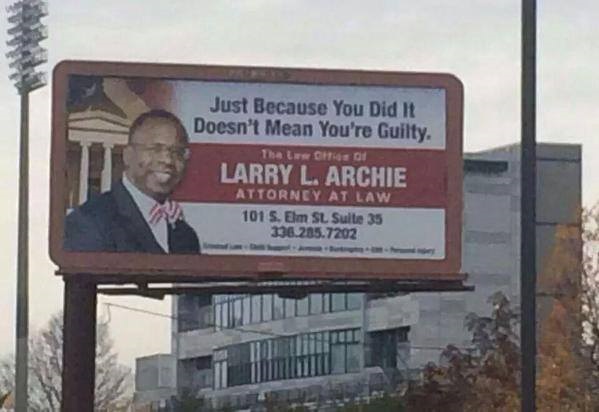
Lawyer Billboard

 The billboard ad of North Carolina lawyer Larry Archie has drawn a lot of attention in the state and on legal ethics forums.

Some observations:

1. I was a little late seeing “Breaking Bad” ( I tend to avoid show with drug dealers as heroes) so I didn’t see the obvious connection between the popular AMC show’s cynical, unethical and effective slime-ball lawyer Saul Goodman, played by Bob Odenkirk, and last year’s jaw-dropping—but funny!—video ad for the services of Pittsburgh criminal lawyer Daniel Muessig.

2. This is why we ignore popular culture at our peril….and I think the legal profession needs to stop laughing and start worrying. People really do think Saul who is a criminal lawyer, is typical, and bar associations are doing very little to dissuade them. This is irresponsible, dangerous, and stupid. The profession has a duty to educate the public about how lawyers are supposed to act and why, and if it whiffs on that obligation (as it has for about the last hundred years) public respect for the justice system will continue to drop. Continue reading

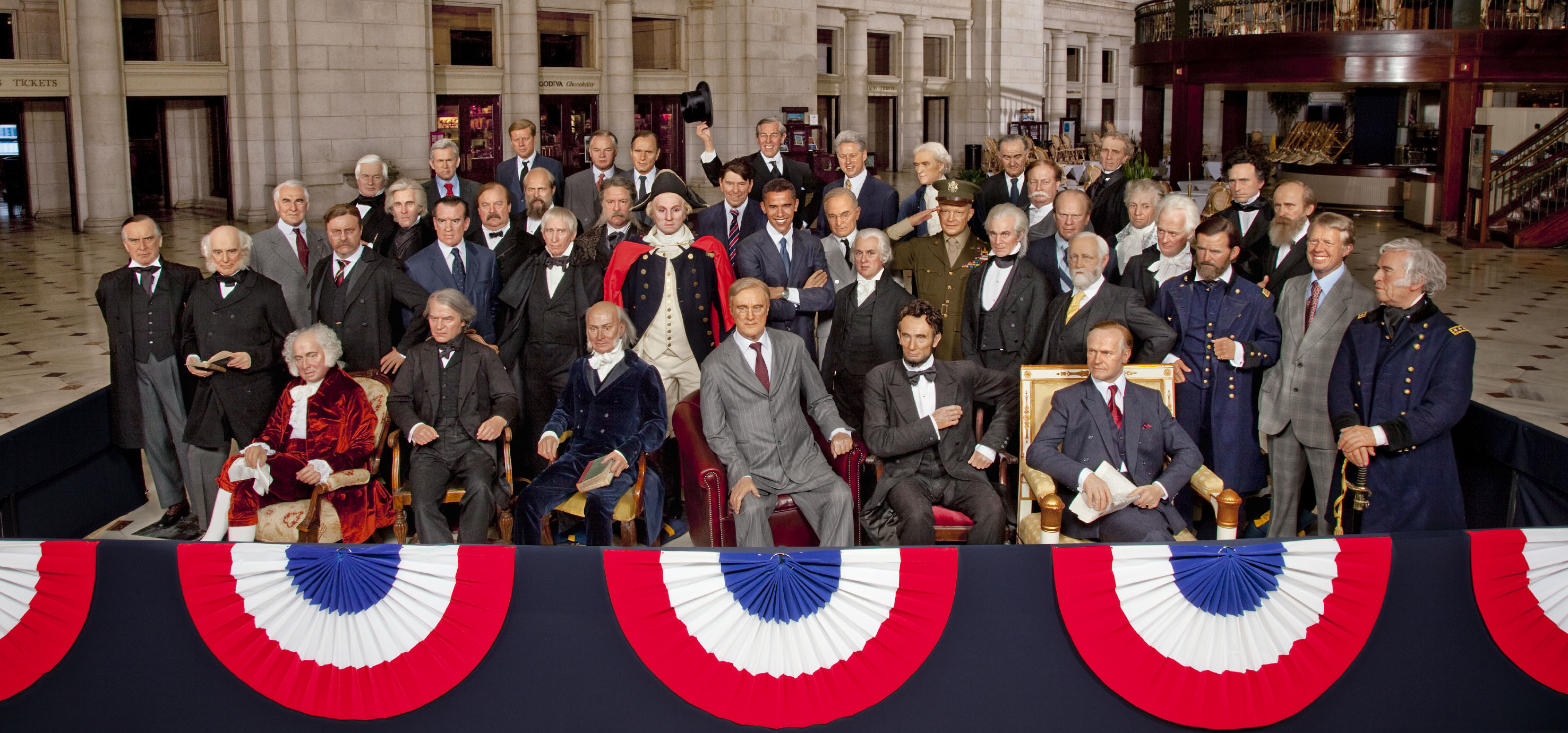
A Presidents Day Celebration (PART 3): When The Going Got Tough

 presidents.

The Presidents really get interesting now, as a political leadership culture in the U.S. matures, the stakes of failure become greater, and technology, labor upheaval, expanding big business and greater influence on world affairs transforms the Presidency into truly the toughest job on earth.

Grover Cleveland

grover

Another one of my favorites, Cleveland was known for telling the truth ( he as called “Grover the Good”), but he participated in one of the most elaborate deceptions in Presidential history.

As explained in historian Matthew Algeo’s 2011 book, “The President Is a Sick Man,”  President Cleveland noticed an odd bump on the roof of his mouth in the summer of 1893, shortly after he took office for the second time. (Cleveland is the only President with split terms, the hapless Republican Benjamin Harrison winning an electoral college victory that gave him four years as the bland filling in a Cleveland sandwich.) The bump was diagnosed as a life-threatening malignant tumor, and the remedy was removal. Cleveland believed that news of his diagnosis would send Wall Street and the country  into a panic at a time when the economy was sliding into a depression anyway, and agreed to an ambitious and dangerous plan to have the surgery done in secret. The plan was for the President to announce he was taking a friend’s yacht on a four-day fishing trip from New York to his summer home in Cape Cod. Unknown to the press and the public was that the yacht had been transformed into a floating operating room, and a team of six surgeons were assembled and waiting.

The 90 minute procedure employed ether as the anesthesia, and the doctors removed the tumor, five teeth and a large part of the President’s upper left jawbone, all at sea. They also managed to extract the tumor through the President’s mouth while leaving no visible scar and without altering Cleveland’s walrus mustache. Talking on NPR in 2011, historian said,

“I talked to a couple of oral surgeons researching the book, and they still marvel at this operation: that they were able to do this on a moving boat; that they did it very quickly. A similar operation today would take several hours; they did it in 90 minutes.”

But the operation was a success. An artificial partial upper jaw made of rubber was installed to replace the missing bone, and Cleveland, who had the constitution of a moose, reappeared after four days looking hardy and most incredible of all, able to speak as clearly as ever. How did he heal so fast? Why wasn’t his speech effected? He endures doctors cutting out a large chuck of his mouth using 19th century surgical techniques and is back on the job in less than a week? No wonder nobody suspected the truth.

Then, two months later, Philadelphia Press reporter E.J. Edwards published a story about the surgery, thanks to one of the doctors anonymously breaching doctor-patient confidentiality. Cleveland, who in his first campaign for the White House had dealt with Republican accusations that he had fathered an illegitimate child by publicly admitting it, flatly denied Edwards’ story, and his aides  launched a campaign to discredit the reporter. Grover the Good never lies, thought the public, so Edwards ended up where Brian Williams is now. His career and credibility were ruined.

Nobody outside of the participants knew about the operation and the President’s fake jaw until twenty-four years later, after all the other principals were dead except three witnesses.  One of the surgeons decided to  publish an article to prove that E.J. Edwards had been telling the truth after all.

This is a great ethics problem. Was it ethical for Cleveland to keep his health issues from the public? In this case, yes, I’d say so. Was it unethical for the doctor to break his ethical duty? Of course. Was Edwards ethical to report the story? Sure.

The tough question is: Was Cleveland ethical to deny the story and undermine the reporter’s credibility? I think it was a valid utilitarian move, and barely ethical: it was better for the nation to distrust one reporter than the President, especially when his secret was one he responsibly withheld, and his doctor unethically revealed. Continue reading

KABOOM! ARGHHH! How Can This Happen In The United States? How Can Any University Think This Is Legal, Fair, Ethical Or Rational? How Can A UNiversity That Acts This Way Be Trusted To Teach Anyone Anything, Other Than How To Be A Fascist?

Thank-you, University of Tulsa...

Thank-you, University of Tulsa…

I really didn’t need another KABOOM! so soon after the last one.

From The Foundation For Individual Rights in Education, with my brainless reactions in bold and brackets:

TU suspended student George “Trey” Barnett last October for three Facebook posts [ It’s unethical and probably illegal to punish Barnett for his own Facebook posts…] published by his husband that criticized another student and two TU faculty members. […but it is beyond belief for the school to punish him for what someone else, regardless of who, posts to his page.] None of the Facebook posts came from Barnett’s account; the statements were posted by his husband, who either tagged Barnett or posted them directly to Barnett’s Facebook page. Barnett’s husband later submitted a sworn affidavit attesting to his sole authorship of the posts. Nevertheless, shortly after TU professor Susan Barrett filed a complaint against Barnett arguing that Barnett could not “avoid responsibility” because someone else was responsible for the posts. [This is Kafaesque. Do these even people know how Facebook works? ] TU Senior Vice Provost Winona Tanaka imposed eight restrictive interim measures against Barnett. The sanctions included suspending his participation in certain courses and activities and even barring him from speaking about certain individuals. [University administrators can not bar whom a citizen may speak to; only judges can do things like that, and only rarely.]

Without affording him the hearing he was entitled to under TU’s University Student Conduct Policies & Procedures, and despite his husband’s affidavit, Tanaka found Barnett responsible for “harassment.” Tanaka also found Barnett guilty of retaliation and violating confidentiality requirements for speaking about the disciplinary charges with his husband—who was also his exculpatory witness. [ What??? WHAT??? Due Process? Rights of the accused? Procedures? Policies? ]

Less than two months before Barnett was set to graduate, Tanaka not only suspended him until at least 2016 but also permanently banned him from receiving a degree in his major even upon his re-enrollment. Barnett was forced to wait two months for TU to respond to his appeal, which the university summarily denied on January 9 without explanation—leaving Barnett unable to earn his theater degree as planned. [ All of this for what someone else wrote on the student’s Facebook page! My key question in ethics scenarios is “What’s going on here?” What’s going on here? I have no idea. An illicit relationship between the apparently fat faculty member Barrett and Tanaka? Insanity?]

…TU has also threatened … its independent student newspaper, The Collegian, which this week reported on Barnett’s suspension and criticized his treatment. The Collegian reports that after contacting TU administrators for comment, student reporters were told by TU’s director of marketing and communications that if “anything that the university deems to be confidential” is “published or shared, (that) could violate university policies.” The university refused to explain what might constitute “confidential” information and, come press time, the journalists were unsure what action the university might take against them. [ OK, let’s just stipulate that the University of Tulsa doesn’t accept the principles underlying the First Amendment. I will await its next abuse of power being aimed at impending worship requirements and a ban on assembly.]

Continue reading

Comment of the Day: “The President’s Irresponsible And Untrue ‘One in Five Women Are Raped’ Claim”

numbers_statistics_stats

Rich (in CT) adds a superb and learned enhancement to the day’s post about President Obama’s dubious rape claims during the Grammy Awards.  It raises a question I hadn’t considered before: is part of the problem that researchers are as clumsy in their understanding of language as liberal arts types are in their use of statistics and numbers? The word “rape” has meaning; this is no place for Humpty Dumpty’s habit of using words to mean whatever one pleases. [“When I use a word,’ Humpty Dumpty said in rather a scornful tone, ‘it means just what I choose it to mean — neither more nor less.’ ’The question is,’ said Alice, ‘whether you can make words mean so many different things.’’The question is,’ said Humpty Dumpty, ‘which is to be master — that’s all.”—― Lewis Carroll, “Through the Looking Glass” ] Rich writes, “This data is important, as mental health and sexual disease propagation is affected by such contact, even if the traditional criteria imaged for “rape” is not met. ” I’ll concede that the data is important, but shouldn’t important data be clearly and accurately described? The data isn’t about rape! It’s about a variety of conduct linked by the researchers that they chose to call “rape,” knowing, presumably, that people who never read the data will take the misleading “rape” description and use it to confuse, persuade, deceive, and engage in scaremongering for political gain.

Rich writes that “not enough evidence is given to suggest that either study is unethical in and of itself.” Isn’t using vague, overly broad and misleading terminology for a study that is going to be made public intrinsically unethical—irresponsible, incompetent, untrustworthy?

Here is Rich (in CT)’s enlightening Comment of the Day on the post “The President’s Irresponsible And Untrue ‘One in Five Women Are Raped’ Claim”: Continue reading

The President’s Irresponsible And Untrue “One in Five Women Are Raped” Claim

In a video that aired during the Grammy Awards on Feb. 8, President Obama stated, as President of the United States and a certifiable hero to the kind of citizens who watch the Grammy Awards, this:

“Right now, nearly one in five women in America has been a victim of rape or attempted rape.”

Let’s begin with the fact that this is false, or at least, there is no reason to believe it is true, or even close to true. (More about this in a minute.) Was the President’s statement a lie? We can’t tell. If the President believes that rape is so common that 20% of all women are raped, then what he said is not a lie (a false statement knowingly made by the speaker in order to deceive), which leads to some uncomplimentary conclusions:

a. He has a remarkably low opinion of his own nation and culture…but then we knew that, didn’t we?

b. He believes what he is told without challenging it or examining an assertions’ origin, methodology and assumptions. Really? This guy is supposed to be brilliant. I would think such a jaw-dropping and frightening statistic would mandate some examination, but see a.

c.  Why hasn’t this been a major focus of his administration? Isn’t the President alarmed about this? Why is the Attorney General running around the country holding the hands of parents of dead kids who attack police officers and fighting attempts to make voters prove who they are at the polls if women are being raped like The U.S. is the Congo? Why is the Presidentusing his time to make faces on videos to sell Obamacare? Isn’t this clearly a reason to make one of his “I will not rest” speeches, in this case not resting until the rape frequency in the Land of the Free is lower than that of a Columbia ghetto? He believes 20% of the women in the country under his stewardship  being raped in their lifetimes doesn’t rate mentioning in his “if wishes were horses” State of the Union, and relegates this horrendous health and crime emergency to…the Grammys?

If Obama doesn’t know if the stat is true, but said it anyway, then he was irresponsible. He’s President of the United States; people believe him, even after the shattered pledge of transparency and “If you like  your health care plan…” and the “red line” and all the rest. He can not fairly, honestly, ethically state that something is true when he doesn’t know whether it is true or not. That is a lie, then: not the statistic itself, but the implication that he believes it.

Or he knows the statement is false, and made it to deceive, because the ends justifies the means.

In the discussion following last week’s post about the persistence of the false narrative that Bush’s 2000 electoral vote victory was “stolen,” I briefly referenced the now mostly abandoned fake “1 in five” statistic  on campus rape, the one that prompted the 2014 Unethical Quote of the Year from Senator Claire McCaskill when it was debunked. This prompted blog warrior Liberal Dan to re-state the President’s proposition, since he is one of those people who continue to believe the President despite all evidence to the contrary. “One in 5 women are raped,” he wrote, unequivocally, linking to a 2011 New York Times study.

I wish I had the time and space to muse about what it says about an intelligent American when a stat like that one, whether it is used by the Times, the President, or Lena Dunham, doesn’t set off his or her ethics alarms, Fake-Stat-O-Meter and bullshit buzzer. This is what happens, though, when the President makes a factual assertion. I knew the stat was crap; I just don’t have the time to prove it’s crap to people who want to believe it. I assumed someone would pretty quickly, and sure enough, the Washington Post’s hard-working, liberal-biased but diligently trying to compensate Fact-checker Glenn Kessler came through.

In his Washington Post column today, Kessler gives us the results of his research into Obama’s lazy/irresponsible/dishonest claim. His findings? Continue reading

One More Time As A Child Finds A Gun And Kills: Prosecute the Parents

DSC_1306

This time the locale was Elmo, Missouri, and it was a five-year old pulling the trigger. The victim was a 9-month-old boy, but it’s basically the same tragic, stupid story….just like in the Idaho Walmart, where the two-year-old shot his mother, or the Albuquerque motel room where another toddler shot both of his parents, who were just lucky and lived. (They have been charged with child abuse. Good.) A gun owner negligently, recklessly, criminally leaves a firearm, loaded, where  young children are and a tragedy results.

Alexis Widerholt, the mother of the children, called 911, and when emergency crews arrived they found that her the baby had been shot in the skull with a .22-caliber magnum revolver.

Somebody has to go to jail for this, maybe several people. Authorities say the gun belongs to a relative, but not the mother. If she knew the gun was in the house, she’s accountable. Anyone responsible for putting the loaded gun where a kid might find it is accountable. Charge them with manslaughter, convict them, send them away. Unless the mother didn’t know about the gun (she originally told the police it was a paint gun, either out of panic, confusion, or ignorance), she needs to lose the right to parent them, at least for a while. Continue reading

“Hands Up! Don’t Shoot!” Ethics: The Public Defenders And The Rap Video

defenders30n-1-web

Kumar Rao and Ryan Napoli, two  lawyers who worked for the New York City-funded public defenders group called the Bronx Defenders, ran headlong into an ethics mess when they appeared in a video posted on YouTube the December day after the grand jury voted not to bring criminal charges in Eric Garner’s suspicious “choke-hold” death. In the video titled “Hands Up” (of course), Rao and Napoli comfort a grieving mother at the Bronx Defenders offices as they work on a case involving police brutality. The video also includes the image of a white man in a police uniform with pistols pointed in his face and the back of his head by black men, as rappers chant that it’s “time to start killing these coppers.”

Nice.

The video came under heavy criticism from Mayor de Blasio and others. City-paid public defenders should not be lending their positions and the prestige of their office to calls for retribution and violence. Lawyer Rao defended his appearance, arguing that the video supported the mission of the Bronx Defenders to zealously defend minority clients, and that a rap video was an ideal vehicle to make their services known. Gallant try, but no cigar. That message about killing cops is not part of the organization’s mission presumably, nor is it a responsible message for those in the justice system to appear to endorse. Continue reading

Now THIS Is An Unethical Principal…Ridiculous Too

The principal and her gym

The principal

Principal Jazmine Santiago heads PS 269 in Flatbush, New York, a troubled elementary school where last year only 16 percent of the students passed state English exams and only 12 percent passed math. Yet she used scarce school funds to install her own private gym on the third floor, complete with a bench press, pull-up bar, treadmill, elliptical machine and thigh exerciser.

Questioned about the gym by her staff, Santiago claimed she allowed older students to use the equipment. That would be the K through 5 school’s eleven-year-olds, most of whom are under five feet tall. The adult-sized exercise gear in the principal’s work-out palace would be almost impossible, not to mention dangerous, for children to use.

Santiago has had her job for four years and now makes $124,319 annually. Jonathan Turley notes that since the gym is technically a school improvement and not personal enrichment, she has avoided criminal liability. Well, that’s nice. She is still spectacularly unethical: selfish, irresponsible, incompetent, unfair, wasteful, untrustworthy.

State Department of Education spokesman Harry Hartfield said the matter of the principal and her private gym will be investigated. It shouldn’t take long: the photo above should tell them everything they need to know.

______________

Pointer: Res Ipsa Loquitur

Facts: New York Post

Advice Malpractice: Good Advice Columnist, Bad Advice Columnist

"Go jump in a lake!"

“Go jump in a lake!”

I cannot imagine being so bereft of wisdom, friends and mentors that I would ever be moved to ask a stranger to advise me regarding an important decision based solely on a letter describing my problem. Nevertheless, a lot of poor souls apparently do, and because they do, many of them probably act on the advice they get from Beth, Abby, The Ethicist and the rest. This means that anyone with the ego and chutzpah to hold themselves out as qualified to give such advice is ethically obligated to be able to do a competent job at it, and at very least to “do no harm.” Yes, unlike the law, advice columnist is one of the professions where the traditional ethical mission of medicine is not just appropriate, but essential.

Most advice columnists in the media are not competent, and some are dangerously reckless. The worst thing an advice columnist can do is to use the trusting and needy stranger as a potential recruit to steer toward the columnist’s ideologically-driven goals. The question being asked by desperate advice seekers, after all, is not “What would you do?” but rather “What should I do?” If the columnist answers the question presuming that the advice-seeker does or should see the world as the advice columnist does, then doing harm is the likely result.

Carolyn Hax ( Washington Post) is a wonderful advice columnist, and Emily Yoffe (“Dear Prudence”) is the other kind. Two recent responses by them illustrate the distinction between competent, skilled and ethical advice, and advice column malpractice. Continue reading