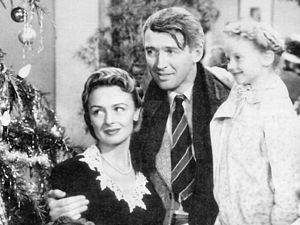
“It’s A Wonderful Life” Ethics, Part 3

Here is the final installment of the Ethics Alarms overview of the ethical issues raised in Frank Capra’s classic. Some of the comments on Parts 1 and 2 have suggested that my analysis is unduly critical. Nothing could be further from the truth. I love the movie, and have already said that I find it ethically inspiring. Noting that characters act unethically in a movie about ethics is no more criticism than pointing out that people in horror movies never just leave when things start getting weird (as I would). I know that their actions drive the plot and are necessary. This is, however, how an ethicist watches a movie with as many ethical choices as “It’s A Wonderful Life.” I can’t help it.

Now back to George, Mary, and Bedford Falls:

11. Uncle Billy screws up as we knew he would

11.  Christmas Eve arrives in Bedford Falls, and Uncle Billy manages to forget that he left the week’s deposits in the newspaper he gave to Mr. Potter. Thus more than $8,000 is missing on the same day that the bank examiner is in town. Why is Uncle Billy still working for the Savings and Loan? He’s working there because George, like his father, is putting family loyalty over fiduciary responsibility.  Potter, of course, is a thief; by keeping the lost money to trap George, he’s committing a felony, and an unnecessary one. As a board member on the Savings and Loan, Billy’s carelessness and George’s negligence in entrusting him with the bank’s funds would support charges of misfeasance. Mr. Potter, had he played fair, might have triumphed over George legitimately, and no Christmas miracle or guardian angel could have saved him. But this is the inherent weakness and fatal flaw of the habitually unethical: since they don’t shrink from using unethical devices, they often ignore ethical ways to achieve the same objectives that would be more effective.

12. George folds under pressure Continue reading
“It’s A Wonderful Life” Ethics, Part 2 (of 3)

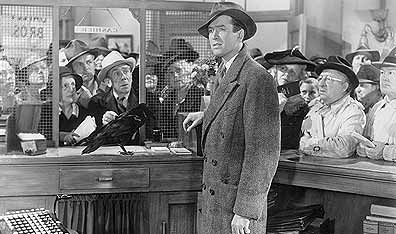
When we last saw George Bailey, he was defending his father’s dubious loan practices. In this, Part 2 of the three installments of  “It’s A Wonderful Life” Ethics, we take the saga up the fateful Christmas Eve when George Bailey meets his guardian angel.

6. George’s Fork in the Road

George Bailey’s decision to give up his plans to go to college to save the Savings and Loan is clearly not motivated by his personal dedication to the institution; he doesn’t like the place. He says so over and over again. He admires his father’s motivations for starting it. Had Potter not sparked his resentment with his nasty comments about George’s late father, George would have been out the door. But his passionate speech in rebuttal of Potter’s words put him on the spot: after those sentiments, turning down the Board’s appointment of him to be the new operating manager of the S&L would have made George a hypocrite in his own eyes, and rendered his passion  laughable. If George had integrity, then he had to accept the appointment.

It is one of the most interesting ethical moments in the film, because it represents a realistically complex ethical decision. George does what he does for selfish reasons as well as altruistic ones, and irrational reasons as well as considered ones. He wants to respect himself; he fears what might happen to his family and the community if Potter becomes the only financial power in town, and knows he will feel guilty if the consequences are bad. He feels like not staying will be taking Potter’s side over his father’s—completely irrational, since his father had given his blessing to George’s college plans, and wasn’t alive to be harmed by whatever he chose to do anyway. A large proportion of George’s decision seems to be motivated by non-ethical considerations, for he doesn’t like Potter—even hates him, perhaps—and wants to stick it to the old tycoon by foiling his victory. There are few ethical decisions in real life that are made purely on the basis of ethics, and Capra makes George’s decision wonderfully impure. Continue reading

Stacy Crim, Ethics Hero…and the Hardest Choice

Last week in Oklahoma, Ray Phillips fulfilled a promise to his sister Stacy, taking home from the hospital 5-pound Dottie Phillips, born prematurely in September, to become the newest member of his family.  Stacy died last month of brain cancer, just three days after holding her infant daughter for the first and only time. Dottie was able to come into the world only because Stacy, 41, had made the choice to reject chemotherapy for her rapidly spreading cancer that was diagnosed after she learned that she was pregnant.

When life places one of us in a “Sophie’s Choice” dilemma like Stacy’s, no one has standing to question or challenge whether the ultimate choice is “right.” There is no right choice. Stacy was faced with deciding whether to sacrifice the unborn child she had never met, a child whom many in America choose to regard as a neither a life or a being with any individual rights, but rather only as an ephemeral potentiality made of cells, similar to a pay-off at the races or a stock dividend. Even those who take the opposite view, that Dottie was a human life even at the earliest stages of her development in the womb, would never assert that a mother would be wrong to choose life-saving cancer treatments for herself at the risk of the unborn child. In such a case the right to choose is nearly unanimously accepted, and it is the hardest choice of all. Continue reading

An Ethics Question From Ethicist Peter Singer

Princeton University philosophy professor Peter Singer is that rarest of species, the ethicist whose name many people actually recognize. This is because of his knack for raising important ethical issues in provocative ways, making enough people upset to create productive and sometimes transformation debate.

In a recent interview with the Carnegie Council’s Julia Taylor Kennedy, Singer touched on many of his most publicized themes, including global poverty. Here he poses a thought exercise designed to raise a question of conscience:

“I ask you to imagine that you are walking across some park that you know quite well, and in this park there is a shallow ornamental pond. Let’s assume that you know that it’s shallow, because on summer days you see teenagers playing in it, and it’s only waist-deep. Continue reading

Ethics Hero: Jennifer McKendrick

My hero.

Jennifer McKendrick is my favorite Ethics Hero of 2011.

An Indiana County freelance photographer of sensitivity, courage and principle, McKendrick engaged in classic ethical behavior—seeing wrongful conduct that harms others, and taking affirmative action to address it. Her conduct is a template for all of us, and not merely regarding the specific problem she decided to confront: online bullying.

McKendrick had been hired to shoot the senior photos of several high school girls, then discovered that they had viciously denigrated other students on Facebook. She sent the girls’ parents this letter:
Continue reading

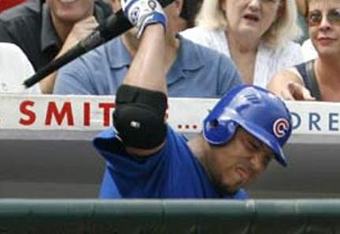
Welcome to Carlos Zambrano’s Ethics Fun House!

Carlos Zambrano, bludgeoning his career into submission

Carlos Zambrano is the supposed pitching ace of the Chicago Cubs, though after signing a monster multi-year contract for millions, he has shown himself to be inconsistent, over-rated, and nuts. Yesterday the flamboyant hurler gave up five home runs, seemingly attempted to bisect the Braves’ Chipper Jones with a fast ball, and got ejected from the game. Then the ethics fun started:

Ethics Fun #1: Carlos cleaned out his locker, told a Cubs trainer that he was retiring, and left the premises before the game was over. A Major League ethics whiff. Continue reading

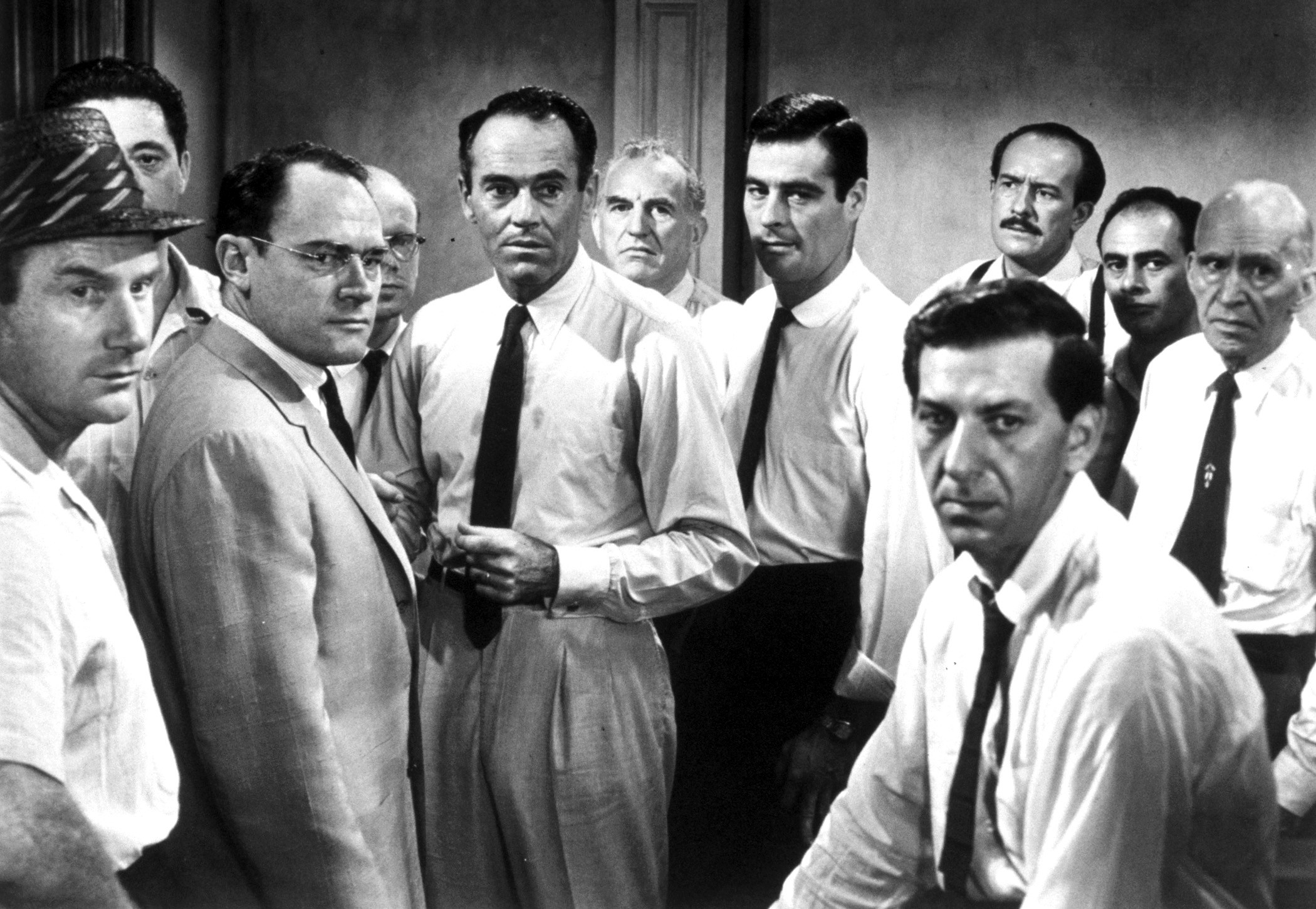
“Twelve Angry Men,” A Million Angry Fools, and the Jury System

Their defendant was probably guilty too.

Ethics Alarms All-Star Lianne Best sent me this link about a member of the Casey Anthony jury who is going into hiding because of all the hate and criticism being directed at jury members and their controversial verdict. Her plight, which must be shared by other members of the much-maligned jury, highlights the unethical, not to mention ignorant, reaction of the public to the Florida ex-mother’s narrow escape from a murder conviction she almost certainly deserved.

The problem begins with publicity. We may need to re-examine the logic behind broadcasting high-profile cases. The combination of live courtroom feeds and quasi-semi-competent commentary gives viewers the mistaken belief that they are qualified to second guess the jury, and they are not. They are not because the jury is in the courtroom, and the viewers aren’t. The jury and TV watchers see different things; individuals communicate different emotions and reactions in person than they do on camera. There is only one fair and sensible way to answer those on-line instant polls that ask, “Do you think Casey Anthony should be found guilty?”, and that is “I don’t know.”

Most of all, the viewers and pundits are not present in the jury room. Continue reading

Custer, Gettysburg, and the Seven Enabling Virtues

Sometimes the Enabling Virtues will save an army, and sometimes they’ll get you killed.

July 3, 1863 was the date of Pickett’s Charge, when Confederate General Robert E. Lee ordered a desperate Napoleonic advance against the Union line at Gettysburg in what has come to be a cautionary tale in human bravery and military hubris. The same day marked the zenith of the career of George Armstrong Custer, the head-strong, dashing cavalry officer who would later achieve both martyrdom and infamy as the unwitting architect of the massacre known as Custer’s Last Stand.

Custer’s heroics on the decisive final day of the Battle of Gettysburg teach their own lessons, historical and ethical. Since the East Calvary Field battle has been thoroughly overshadowed by the tragedy of Pickett’s Charge, it is little known and seldom mentioned. Yet the truth is that the battle, the war, and the United States as we know it may well have been saved that day by none other than undisciplined, reckless George Armstrong Custer. Continue reading

July 2: A Good Day to Thank Minnesota For Saving The Country

If you know anyone from Minnesota, today would be a good day to say “thank you.”

July 2 was the second day of the decisive Civil War battle at Gettysburg, Pennsylvania, and the most complicated and wide-ranging day in the conflict. So much was going on at Seminary Ridge and Cemetery Ridge, on Little Round Top, the Peach Orchard, Devil’s Den and a half dozen other key features on the battle field that whether an instance of heroism was recorded or forgotten is as much a matter of chance as anything else. Even determining what was the turning point in the day’s conflict, which ultimately was won by the forces of the North, is an exercise in searching for order in chaos.

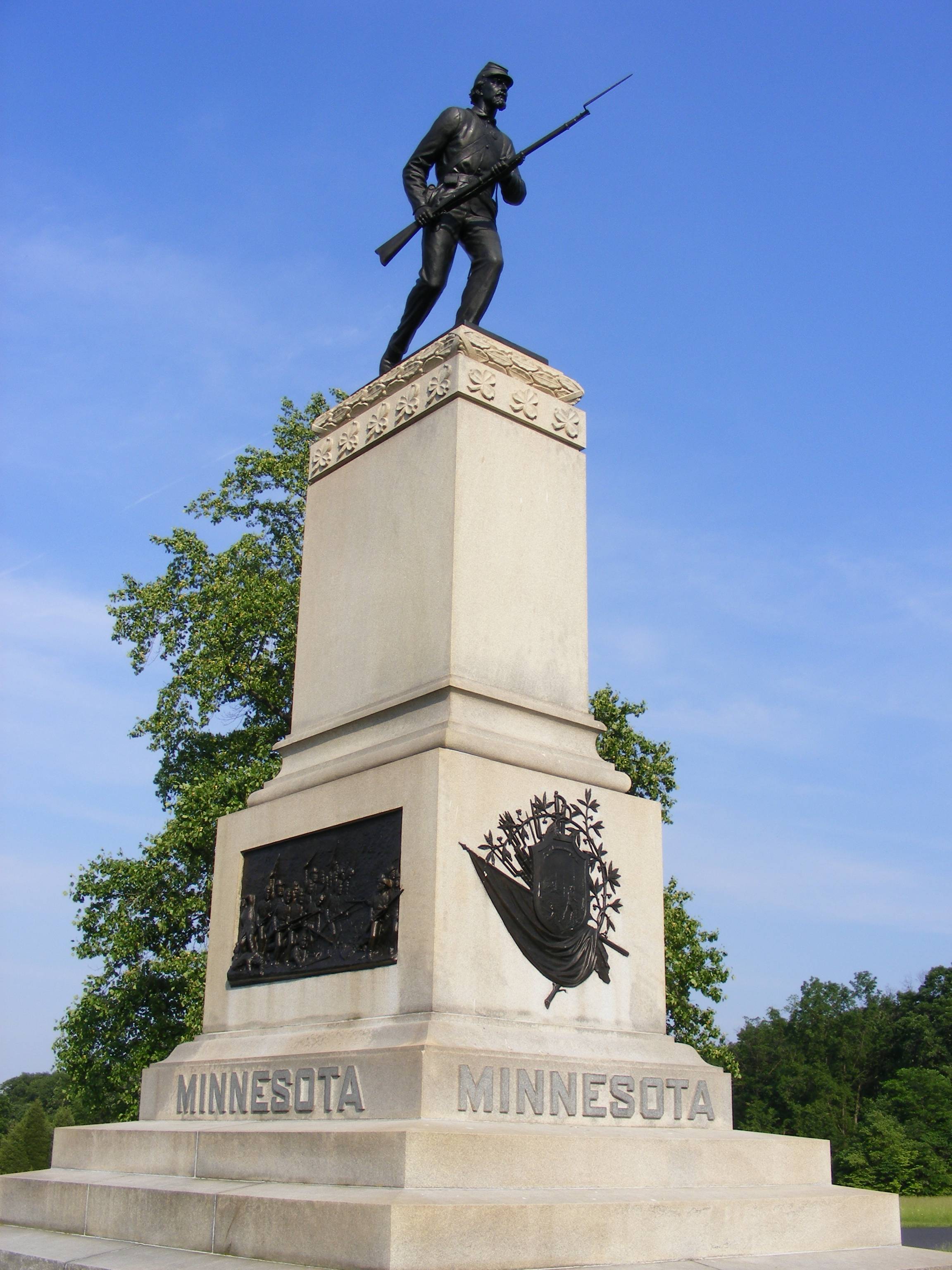
There is no question, however, that the First Minnesota Volunteer Regiment’s astonishing heroics stand out even among the many other examples of gallantry on that day. The battlefield monument to the First Minnesota is the one of the largest erected to any Union regiment, and yet it has not guaranteed our cultural memory of the epic sacrifice those soldiers made. Other second day exploits, due to sometimes arbitrary choices made by historians and film makers, have taken up the limited space available in the public’s attention to the details of the Civil War.

This is an injustice. As the battle raged for Cemetery Ridge, crucial high ground occupied by Union forces, General Winfield Hancock saw a serious breach in the Union line, and realized that Wilcox’s Alabama Brigade had to be opposed and stopped in their advance until he could round up reinforcements. He ordered the First Minnesota to charge the brigade and hold the position, even though its 262 men would be outnumbered by a force of more than 1200.  Continue reading

The Despicable Nadya Suleman and Ethics Estoppel

Nadya Suleman, a.k.a. Octomom, strikes a dignified pose

From the beginning, the only thing keeping Nadya Suleman from being unequivocally despicable has been the lingering suspicion that she was mentally ill. It might be more than a suspicion, to be fair: having octuplets by artificial insemination when one already has six young children and no viable means of support could be called “proof.”  Now even that malady is an insufficient defense: the issue is settled, and she is despicable beyond redemption. One cannot call her the worst mother on the world, sadly, because every day brings the story of another infant thrown down a laundry chute or left in the care of a six-year-old while mom goes partying or looking for drugs. She may be, however, the worst mother ever to become famous for being a mother.

In the latest issue of InTouch magazine—the rag is one full step down from Us magazine, and one half-step up from The National Enquirer—Suleman confesses that she now reviles her octo-brood. “I hate the babies, they disgust me,’ she says. “My older six are animals, getting more and more out of control, because I have no time to properly discipline them.” Elsewhere in the article she bellyaches about how hard it is being a single, unemployed, narcissistic, absurd, irresponsible mother of fourteen children. “The only way I can cope is to lock myself in the bathroom and cry. Sometimes I sit there for hours and even eat my lunch sitting on the toilet floor. Anything to get peace and quiet,” she laments. Yes, Octomom says she regrets having all the children. Continue reading