Ethics Quiz: Critic Ethics

How I love critics...

How I love critics…

This is a delicate one for me; the names have been omitted and details disguised to protect…well, for a lot of reasons.

Last week I posted about the mixed-gender version of “I Do! I Do!” I directed for The American Century Theater, which I co-founded and where I am the artistic director. The show met all my objectives and expectations, even surpassed them, and until today, all of the reviews have been raves.

Today, though, a non-rave came out on a local theater website. It is the kind of review I detest, where the standard of the critic is “why didn’t you do it this way? That’s what I would have done.” The answer to that is, bluntly, “Direct your own damn show, then.” Snap judgments from one-time viewers, even extremely sophisticated ones, about what they would do if they were the author, actor, director, or designer of a stage production—when if truth they never have been or could be—are inherently unfair, incompetent and also obnoxious. After considering and experimenting and testing various artistic approaches to any problem over months of preparation, meetings and  intense rehearsal with a large production and artistic team, any production deserves the respect of being assumed to have considered and rejected for cause other solutions, which for various reasons didn’t work.

This is not, of course, a professional reviewer, though a reader could only know that from the quality of the review. Among other tells, the critic misidentifies which performers sing what, and the whole concept of non-realistic sets seems to be alien to him: yes, dear, we could have afforded a four-poster bed; the director felt the show would be better without one, and in fact, it is. Okay, the reviewer is a boob: that’s fine; most theater reviewers are.  I would not make an issue about one sloppy and badly reasoned amateur review, because if I did, I’d be in a padded room.

However, after the review was published, I learned that our company had a prior experience with this reviewer: he had been on the crew of a show last year, and we had to fire him. In 17 years and over 80 productions, he is the only person to be fired from that particular job.

Your Ethics Alarms Ethics Quiz with a theatrical bent:

Does a critic who has a past relationship with a theater company whose production he or she is reviewing have an ethical obligation to disclose it as part of the published review? Continue reading

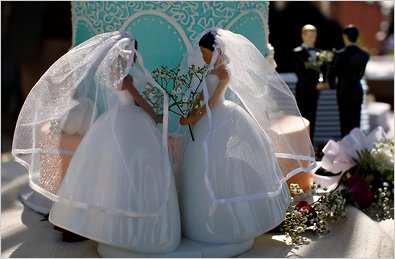
An Inclusive “I Do! I Do!” for A Post-DOMA U.S.

Cup

I wasn’t going to mention my current theater (at Arlington, Virginia’s American Century Theater) project here, until I dropped Ethics Alarms’ conservative warrior Steven Mark Pilling a note on Facebook that I had just posted on the topic he is most passionate about, preventing the abuse of child actors in Hollywood. Steven is not, to say the least, a fan of gay marriage (this might be the topic he is next most passionate about) , and I realized that my Facebook thumbnail, showing two same-sex couples in an intimate moment from my show, might put him off.

The show I just finished directing ( with the assistance of Quinn Anderson and my musical director Tom Fuller)  the old Harvey Schmidt-Tom Jones chestnut, “I Do! I Do!”, ( Remember “My Cup Runneth Over, Ed Ames fans? Hello? ) the tw0-actor Broadway musical based on the 1950 play “The Fourposter.” Back in 1966, when Robert Preston and Mary Martin starred in the musical, it was considered an affectionate and  perceptive look at the institution of marriage, and the show has attracted nostalgic, usually elderly married couples to regional and dinner theaters ever since. Productions of  “I Do! I Do!” are becoming rarer, however, because the societal developments have rendered the tale of the epic marriage of Agnes and Michael Snow increasingly alien to the current American scene. In particular, what was once a musical intended to speak to all married couples and candidates for future nuptials now appears to exclude the very group that comprises musical theater’s hardiest supporters: gays.

In marked abandonment of my theater’s usual principles (we don’t update shows, believing that it is more interesting and fair to the authors to let audiences reflect on what has changed since an original production, and what has not), I decided that for the benefit of audiences, the culture and the show itself, it was time to re-conceive “I Do! I Do!” so it would gain renewed relevance and vitality in a post DOMA age. My approach, courageously and generously approved by the authors, was to show the marriage of the show’s couple through a constantly rotating prism that alternately revealed them as a same-sex female couple, a same-sex male couple, and the traditional heterosexual couple of the 1966 version. This required four very versatile and gutsy actors who could pull off the illusion of showing one marriage three different ways without giving the audience whiplash or confusing them hopelessly. In Steve Lebens, Esther Covington, Chad Fournwalt and Mary Beth Luckenbaugh, I found the dream cast. Continue reading

Unethical Quote of the Week: Senate Majority Leader Harry Reid

“The idea that allowing two loving, committed people to marry would have a negative impact on anyone else, or on our nation as a whole, has always struck me as absurd.”

—Senate Majority Leader Harry Reid, after calling Wednesday’s Supreme Court ruling striking down the Defense of Marriage Act “a great, historic day for equality in America.” Reid voted for the law when it was overwhelmingly passed by the U.S. Senate, back when treating gays like second-class citizens was popular.

Harry Reid, embracing absurdity when it is politically expedient...

Harry Reid, embracing absurdity when it is politically expedient…

It’s hard to say which of the legislative lions prowling the cloak rooms of Capital Hill are more loathsome—Republican Mich McConnell, Nancy Pelosi, or Harry Reid. It’s easy to decide which is more shamelessly cynical and hypocritical, however. That would be Harry Reid.

If he “always” thought that DOMA was “absurd,” why did he vote for it? Are we to take from this that he not only is willing to vote for absurd measures (he has voted for many), but also votes for measures when he believes they are absurd? Or does he just say whatever he thinks will sound good to the low-information, knee-jerk progressives who have a memory of about two weeks (if that) regarding any issue, and possess the naïve belief, also absurd, that only Republicans lie to them? Continue reading

Supreme Court Justice Powell’s Ethical Dilemmas

Supreme Court Justice Lewis Powell

Supreme Court Justice Lewis Powell

The New York Times, anticipating next year’s Supreme Court consideration of the gay marriage problem, tells a fascinating story about the late Justice Lewis Powell, who was the swing vote in the 1986 case of  Bowers v. Hardwick, which was overturned in 2003, upholding a Georgia law outlawing sodomy.

During the consideration of the case, Powell told his colleagues that he had never met a homosexual, though in reality he had more than one gay law clerk during his tenure, and according to at least one of the former clerks, knew it.  (Powell even quizzed one of them about the mechanics of gay sex.) The reason he told his fellow Justices an untruth, the theory goes, is that he knew there was a stigma in the legal profession and in Washington connected to being gay, and he wanted to protect his law clerks.

Yet Powell, after flip-flopping on Bowers, finally came down on the side of a state’s right to make homosexual sex a crime. Continue reading

Comment of the Day: “Ethics Hero: David Blankenhorn, Former Same-Sex Marriage Opponent”

eeyore1

In many ways, I love this post. I love it because it is passionate and serious, and from the heart, and because I am certain that it reflects what many Americans, especially those of a certain age, feel with frustration and a little fear and anger.  I also agree with much of what it concerns, the lack of respect for accumulated wisdom in many aspects of the culture, and the rush to discard old standards not because they have failed us, but just because they are old. The comment comes from a regular commentator, Eeyoure (not his real name, you’ll be relieved to learn, and yes, we both know how to spell the A.A. Milne character he honors) who is educated, decent, smart and articulate.

But regarding his lament’s  applicability to the controversy at issue, gay marriage, he is absolutely, utterly, tragically wrong. The conventional wisdom is that we should just try to ignore Americans who feel similarly to Eeyoure, because demographics are relentlessly removing them from the scene. As the politically active public becomes younger, the support for equal rights for gays, trangendered and bi-sexual citizens will grow into an overwhelming majority.  I think that’s a lazy and obnoxious way to win an argument, even when you are right. Smart but misguided people, like Eeyoure in this matter, should be able to evolve, learn, and realize when what they once thought was right, isn’t.  Realizing that one aspect of entrenched belief was, upon knowledge and reflection, wrong does not mean the whole foundation of civilized society has to crumble—this is the classic, irrational, self-defeating fallacy of conservatism. Change in the presence of enlightenment and experience is the essence of ethics, which constantly evolves. We should be able to explain what is wrong with this post so that even the poster agrees.

Here is Eeyoure’s Comment of the Day, on the post (and comment thread t0) Ethics Hero: David Blankenhorn, Former Same-Sex Marriage Opponent: Continue reading

Ethics Hero: David Blankenhorn, Former Same-Sex Marriage Opponent

Same sex

In a well-reasoned and sharply written op-ed in the Los Angeles Times, former gay marriage opponent David Blankenship writes eloquently and persuasively about why he has reversed his position. He writes in part:

“In the end, I didn’t change my mind on gay marriage because I stopped believing in the importance of intact biological families. Nor was it because of new studies or additional facts. (Gay marriage still strains biological family bonds, although research also points to the potential stability of gay marriage and family structures.) And I didn’t change my mind because I got tired of being criticized. I changed my opposition to gay marriage because of personal relationships. In my case, it began with the writer Jonathan Rauch, who I’d been publicly debating on the gay marriage issue. But at some point we stopped debating and started talking about our lives, including about my wife, Raina, and his husband, Michael. Did Jonathan’s marriage threaten the idea of marriage? Perhaps in theory. But in real life, was I able to see it? No. In fact, quite the opposite. It may sound trite, but for me the key was the gradual breakthrough of empathy. I found that as friendships develop, empathy becomes at least possible, no longer kept at bay by a wall of fixed belief. Put simply, becoming friends with gay people who were married or wanted to get married led me to realize that I couldn’t in good conscience continue to oppose it.”

Bingo.

_______________________

Pointer: Advice Goddess

Sources: LA Times

The Florist, The Gay Wedding And The Slippery, Slippery Slope

OK, she's a jerk. But is it ethical to say she can't be a jerk? Isn't America about having the right to be a jerk?

OK, she’s a jerk. But is it ethical to say she can’t be a jerk? Isn’t America about having the right to be a jerk?

Arlene’s Flowers & Gifts proprietor Barronelle Stutzman had been selling flowers to Robert Ingersoll and his partner, Curt Freed, his partner, for a decade, but drew a line in the sand when they wanted her business to supply the floral arrangements for their same-sex marriage. She refused, citing her relationship with God. This week, Washington State Attorney General Bob Ferguson filed a consumer protection lawsuit against  Stutzman, drawing a line of his own.

There are legal and ethical issues mixed up here like gazpacho, and some of them are not difficult. For example, whether Stutzman should have the legal right to do so or not, her decision to reject and stigmatize long-time customers is indefensible ethically. It is cruel, unfair, ungrateful and disrespectful. They were good enough to profit from for ten years, but not good enough to accommodate at the most important time of their lives? Such conduct earns a massive ethics “Yechh.”  Continue reading

Ethics Dunce: National Journal Writer Matthew Cooper (And Boy, Am I Sick Of It!)

Matt Cooper apparently thinks Clarence represented murderers because he LIKED murderers. That's not how it works, Matt.

Matt Cooper apparently thinks Clarence represented murderers because he LIKED murderers. That’s not how it works, Matt.

Matthew Cooper, like so many before him who should know otherwise, confounds the role of an attorney with the views of the individual serving as an attorney. This is a disturbing chunk of ignorance for a prominent journalist to pass on to the public, and as I have before, I am honor bound to point it out, and also to say: Understand what you’re writing about, journalists!  That’s one of your ethical duties.

In a National Journal piece about Ted Olson, who argued against Proposition 8 and for same-sex marriage before the U.S. Supreme Court, Cooper writes,

“While most folks were surprised by his support of gay marriage, I wasn’t. Yes, he was a conservative. But he had also defended the press as the longtime lawyer for the Los Angeles Times and in other First Amendment cases. He’d agreed to represent Tim Phelps, a Newsday reporter, in the Anita Hill case even if Phelps’s work was damaging to the conservative Clarence Thomas. He was conservative, but not reflexively so.”

Why is this old, basic and simple principle so difficult to grasp: a lawyer does not adopt his or her client’s views by virtue of representing them or advocating for them in court or the public square! The lawyer’s views are presumed to be irrelevant to the position he or she takes for a client. As the ABA’s Model Rules of Professional Conduct state (and legal ethics has held for centuries),

“A lawyer’s representation of a client, including representation by appointment, does not constitute an endorsement of the client’s political, economic, social or moral views or activities.” Continue reading

Ethics Mess In Kansas: The Lesbians and the Sperm Donor

The parents in happier days

The parents in happier days

Auto mechanic William Marotta must rue the day he responded to a Craigslist ad placed by Angela Bauer and her life partner Jennifer Schreiner. They were seeking a sperm donor, for the obvious reasons, and he had sperm to donate. The trio then signed a contract in which all agreed that Marotta would have no rights to any child his sperm spawned, nor future responsibilities regarding the child’s care. Schreiner was artificially inseminated and conceived, making her the child’s mother, as Bauer stepped into the role of the child’s father. Exit Marotta forever, with thanks.

Or so he thought. Continue reading

The Assumption Church in Barnesville, Minn: Wrong On Belief, Right On Integrity

“Oh, what the hell. Sign him up.”

In Barnesville, Minnesota, the Catholic Church has denied the religious sacrament of confirmation to two students who posted their support for gay marriage on Facebook.

Good.

The Catholic Church has been barely holding on to a dwindling membership by adopting the strategy of becoming an organized religion for hypocrites. Being a member of any church should mean the full acceptance of its core teachings. The students involved publicly expressed their disagreement with the Catholic Church’s opposition to gay marriage, and the Church was right to deny them confirmation.

Is the Catholic Church dead wrong to oppose same sex marriage as a sin? Of course. The way to make the Church enter the 21st Century is for double-talkers like John Kerry, Joe Biden and Mario Cuomo to show some backbone and integrity, and reject the Church or their upbringing because it doesn’t accept same sex marriage and abortion, while they obviously do. Instead, these and other faux-Catholics absurdly claim in public that they support diametrically opposed positions simultaneously. All three have piously stated that as Catholics they believe that life begins at conception (ergo, abortion is the sinful taking of innocent human life), but that as elected officials they feel it is inappropriate to “impose their beliefs” on the public. Of course, what elected leaders do is to impose their beliefs on the public, wherever those beliefs come from. What Cuomo, Biden and Kerry, as well as many others, have done, is to aggressively and pro-actively support policies, like abortion-on-demand, that they and their Church say they believe are wrong. Liars or hypocrites, take your pick. Continue reading