Comment of the Day: “’Bang The Drum Slowly,’ My Old Friend, and Me”

Gus Grave

Extradimensional Cephalopod was kind enough to post this wise and evocative reflection prompted by my recent post following the sudden, but really not so sudden, death of an old friend over the weekend. His thoughts helped me a great deal, and I am grateful: here, without further comment, is EC’s Comment of the Day on the post, “’Bang The Drum Slowly,’ My Old Friend, and Me”: Continue reading

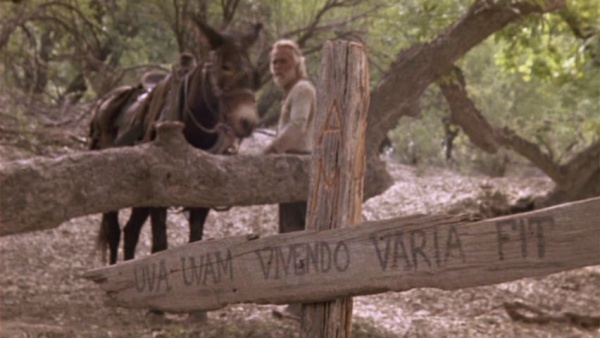
“Bang The Drum Slowly,” My Old Friend, and Me

The American Century Theater's "Bang the Drum Slowly"

The American Century Theater’s “Bang the Drum Slowly”

I haven’t mentioned it here, but we are ending the 20 year adventure of my intentionally out-of-fashion theater company, The American Century Theater, after next season. One of the things I will miss most about it is that working so closely with the great works of stage literature we produce causes their wisdom and life observations to stick with us. Since I tend to choose works that involve ethical dilemmas, this has had professional as well as personal benefits.

I was thinking about the Mark Harris play (and novel, and movie) “Bang The Drum Slowly” in May, when I wrote about the kindness shown to Pasco High School student Vanessa Garcia, who was dying of cancer, because we were performing it at the time.  The story involves a baseball team and how it responds to a third-string catcher who is dying of Hodgkin’s Disease. It is about kindness and the Golden Rule, and the ways the impending death of someone in our life often brings into sharper focus the importance of kindness and our shared obligations on this perplexing journey to oblivion we all must travel together. But I really wasn’t thinking about “Bang The Drum Slowly” yesterday. Yesterday, I was just having a wonderful time talking about baseball, politics and family with my old friend from law school, who happened to be in a hospice. Continue reading

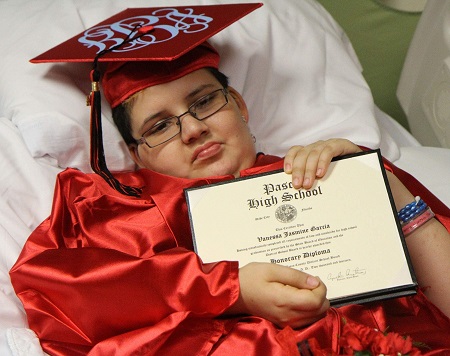
Ethics Hero: Pasco High School (Dade City, Fla.)

Graduate

I need this story to get the previous post out of my head.

In Mark Harris’s novel “Bang The Drum Slowly,” best known as the inspiration for the film that introduced Robert DeNiro to the movie-going public, a major league baseball team exhibits uncharacteristic kindness toward a third-string catcher who is dying of Hodgkin’s Disease. The book, like the film and the stage adaptation, is about kindness and the Golden Rule, an ethical value that seldom inspires literature or art. Kindness is not particularly exciting, but it may be the most ethical of all ethical virtues. The serious illness and impending death of someone in our life often brings the importance of kindness into sharp focus. “Everybody’d be nice to you if they knew you were dying,” says the doomed catcher, Bruce Pearson, to his room mate and champion, star pitcher Henry Wiggen.  “Everybody knows everybody is dying,” Wiggen replies. “That’s why people are as good as they are.”

Pasco High School student Vanessa Garcia  learned that she had an inoperable brain tumor when she was in elementary school. Until two years ago, treatment had kept the tumor  in remission, but the mass began growing again when she was 15. Undaunted, Garcia continued to go to school, work diligently, and keep a positive and uncomplaining outlook, earning the admiration of her classmates, teachers and school officials. Continue reading

Stacy Crim, Ethics Hero…and the Hardest Choice

Last week in Oklahoma, Ray Phillips fulfilled a promise to his sister Stacy, taking home from the hospital 5-pound Dottie Phillips, born prematurely in September, to become the newest member of his family.  Stacy died last month of brain cancer, just three days after holding her infant daughter for the first and only time. Dottie was able to come into the world only because Stacy, 41, had made the choice to reject chemotherapy for her rapidly spreading cancer that was diagnosed after she learned that she was pregnant.

When life places one of us in a “Sophie’s Choice” dilemma like Stacy’s, no one has standing to question or challenge whether the ultimate choice is “right.” There is no right choice. Stacy was faced with deciding whether to sacrifice the unborn child she had never met, a child whom many in America choose to regard as a neither a life or a being with any individual rights, but rather only as an ephemeral potentiality made of cells, similar to a pay-off at the races or a stock dividend. Even those who take the opposite view, that Dottie was a human life even at the earliest stages of her development in the womb, would never assert that a mother would be wrong to choose life-saving cancer treatments for herself at the risk of the unborn child. In such a case the right to choose is nearly unanimously accepted, and it is the hardest choice of all. Continue reading

Toronto: Religious Bullies Distort the Alcoholics Anonymous Mission

In Toronto, two Alcoholics Anonymous groups that specifically removed reference to God and religion in their version of the Twelve Steps have been de-listed by the central organization there, a straight exhibition of the abuse of power and a breach of integrity in the pursuit of selfish ends.

Alcoholics Anonymous, as anyone who has listened to Charlie Sheen’s anti-AA rants knows, employs repeated evocations of God and “a higher power” in its formula for treating alcoholism.  But while many have successfully turned to faith in their journeys to sobriety, most individual AA chapters neither insist on religious belief nor preach it, leaving it to each member to decide what his or “her higher power” is. To many, it is a God, and to many it is the fellowship of AA itself. The point of the higher power is to help an alcoholic discover the spiritual strength and resolve to conquer a pernicious and powerful disease with no known cure. the objective of AA, however, is not to seek to strengthen religion. Continue reading

Ethics Heroes: The Fukushima 50, Reminding Us What Real Heroism Is

We all throw around the words “hero” and “heroism” too readily, and it cheapens the real thing, which is rare, and awe-inspiring. Teachers are heroes, cancer patients are heroes, mothers and dads are heroes, legislators who ignore polls are heroes, quarterbacks are heroes. There is much heroism around us, certainly—those who do vital jobs and make courageous choices at personal sacrifice deserve praise and recognition, as do those who overcome tremendous personal challenges. We should appreciate these acts when we see them.

Still, this leaves us unable to muster the words to distinguish the rarest and most remarkable of heroes, like the fifty Japanese nuclear technicians who have remained behind to try to prevent a nuclear catastrophe at the Fukushima Dai-ichi nuclear plant damaged by Friday’s earthquake. They are not merely risking their lives, but quite probably trading them, for the well-being of their country and its citizens.

We should all aspire to such courage, selflessness, and character.

In the pantheon of ethical conduct, the Fukushima Fifty deserve the most honored place of all.

Alcoholics Anonymous and Ethics

With all the alcoholics in my life, and there are and have been many (some of whom I undoubtedly never knew qualified), today was the first time I ever actually attended a meeting of Alcoholics Anonymous. Indeed, before yesterday I didn’t know I could attend. Many groups have periodic “open” meetings, however, to which friends and family members of alcoholics as well as “anyone interested in learning about alcoholism” are invited. I know a lot about alcoholism, learned the hard way. Now I know more. More important than that, I realize that Alcoholics Anonymous has a great deal to teach everyone…not just about alcoholism, but about ethics. Continue reading

Christmas: the Ethical Holiday

Benjamin Franklin recognized the importance of regularly focusing one’s attention on ethical conduct rather than the usual non-ethical goals, needs, desires and impulses that occupy the thoughts of even the most virtuous among us. He suggested that every morning an individual should challenge himself to do good during the day. In the 21st century psychologists call this “priming,” a form of beneficial self-brain-washing that plants the seeds of future choices.

The Christmas season operates as an effective form of mass population priming, using tradition, lore, music, poetry, ritual, literature, art and entertainment to celebrate basic ethical virtues and exemplary conduct toward other human beings. Continue reading

Ethics Hero: Asra Nomani

Asra Q. Nomani is a Muslim. She is also is an American, an author, a women’s rights activist, and co-director of the Pearl Project. Today, in a column for the Daily Beast, she broke ranks with her religion and the absolutist foes of profiling as an anti-terrorist tool with a profoundly ethical act: she argued for new policies that may be against her own interests, but also may be in the best interest of her country and the public— because she believes it is the right thing to do.

The title of her essay: “Let’s Profile Muslims.”

Some excerpts… Continue reading

Bret Favre, Meet Derek, LeBron, and Tiger

Recent revelations about Joe DiMaggio’s conduct while doing PR work for the military during World War II shocked some people who had been humming “Mrs. Robinson” over the years. Joe, as insiders had long maintained, really was a selfish and anti-social guy, far from the knight in shining armor that the public took him to be. But he played his hero role well when he was in the public eye, and that is to his credit: DiMaggio met his obligation as a hero-for-hire. Athletic heroes are challenged to live up to their on-field character, and not surprisingly, few are equal to the task. One who was has been back in the news lately: Stan (the Man) Musial, the St. Louis baseball great who will soon be awarded the Medal of Freedom by President Obama.

In these anxious times when every institution and every champion seems to betray us eventually, sports heroes who can remain untarnished are especially valuable, which is one reason why they earn so much money. On the field, court, course, ring or track, they can exhibit courage, trustworthiness, selflessness, leadership, sacrifice, diligence, loyalty, fair play and sportsmanship to inspire us and serve as role models for our children. All they have to do is avoid showing that it is all an illusion after the games are over. It shouldn’t be difficult, yet it is.

Tiger Woods only needed to be a responsible and trustworthy husband and father. LeBron James only had to avoid revealing himself as a fame-obsessed child. Derek Jeter only had to resist the impulse to extort the team he symbolized for money he neither deserved or needed. Yet they couldn’t, or wouldn’t do it. They hurt their own images, reputation and legacy beyond repair, but more important, they robbed us of heroes that we sorely need.

The latest addition to the pantheon of fallen idols is Bret Favre, the star NFL quarterback now suffering through the humiliating final season that was more or less guaranteed by his inability to retire while he could still pick up a football. Continue reading