Comment Of The Day: “The Most Unethical Sentencing Fallacy Of All: Lavinia Woodward Gets “The King’s Pass”

I am almost caught up on my backlog of Comments of the Day!

This one, by multiple COTDs author Humble Talent, is really two; I’m taking the liberty of combining his later explication with the original comment, as they follow as the night follows day. The topic is bias and double standards in the criminal justice system, and hold on to your hat.

Here is Humble Talent’s 2-for 1 Comment of the Day on the post, “The Most Unethical Sentencing Fallacy Of All: Lavinia Woodward Gets “The King’s Pass”:

You know, every now and again when I’m feeling adventurous, I go to a place I think will have a whole lot of people that don’t think like me and poke at their sacred cows. You meet all kinds of people, and recently, I was given probably one of the better answers to a gender/race issue from the other side yet.

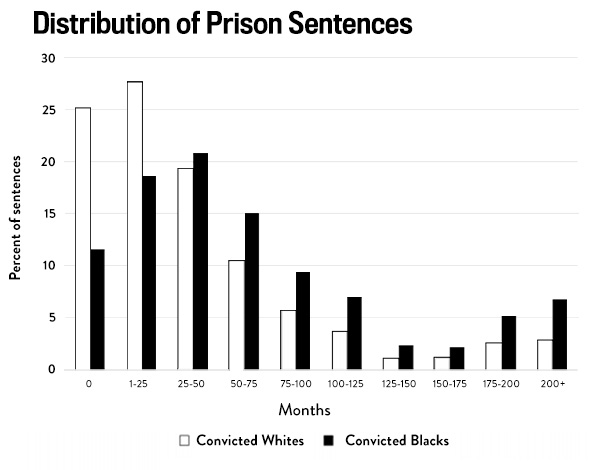
The original fact pattern is that racial activists will cite disparate impact as a problem at every stage of an interaction with the legal system. Black people are more likely to be pulled over, more likely to be arrested, more likely to be charged, more likely to be convicted, and more likely to receive harsher sentences… All for the same stimulus. All of this, by the way, is true. It doesn’t account for the five-fold disparity between the black and white prison population on a per capita basis, but it is a thumb on the scale.

The juxtaposition is that the disparity between men and women in the justice system is about six times that of the racial disparity I just described. Men are more likely to be pulled over, more likely to be arrested, more likely to be charged, more likely to be convicted, and more likely to receive harsher sentences… All for the same stimulus. Sonja Starr wrote extensively on this, and despite some of her methodology being questioned, there’s general consensus that she was on to something.

So the question is that if someone is deeply concerned about inequality, that they are genuinely interested in justice for everyone, why wouldn’t you be just as, if not more concerned with the gender disparity, than the racial one? Continue reading

Helpful Hint: When A Man Proposes Marriage This Unethically, The Right Answer Is NO

Wow. What a classy proposal!

In Ohio, romantic Kyle Stump, 23, painted: “Michelle Marry Me. I Love You” and a heart—Awwwww!—- in  red letters on the side of a building in the city-owned shopping mall at Lake Sheffield, Ohio. His proposal covered 30 feet of wall space.

His girl friend Michelle Astorino still missed it until Stump took her to the building one night with a flashlight.  She said “yes,” the fool. Then police arrested him based on a tip, and matched the handwriting on the wall to a form Stump had filled out in 2012.

Did you know they tried to catch Jack The Ripper the same way? But I digress.

Stump pleaded no contest to the misdemeanor charge of criminal mischief  and was sentenced to 60 days in jail with a $500 fine. The jail term was suspended as was most of the fine, but Romeo will have to pay $332 to sandblast the wall clean, and has to perform 80 hours of community service.

“They don’t have to be so hard on me,” Stump complained to the media. If I were the judge, that comment would be enough to make me reinstate the jail time and the full fine.

He says the legal setback means he’ll have to buy an engagement ring on an installment plan. Did I already say “Awwww!”?

“We’ve basically just brushed it off and are excited about our engagement,” Michelle told “Inside Edition.” “It’s still a crime, we understand that, but, I mean, it’s not that serious.”

No, you moron, in fact defacing public property or any property is very serious, and it doesn’t matter if you’re defacing it with “Hitler Rocks!” or “Give Peace A Chance.” It’s destruction of property, wastes scarce public funds,  shows disrespect to your neighbors and community, and proves your honey-bunny has the basic ethics comprehension of a terrier.

Well, at least it’s a good match..

Both of you are idiots.

Please don’t have kids.

________________________

Pointer: Fred

Ethics Quiz: Punishing The 12-Year-Old Killer

debrow

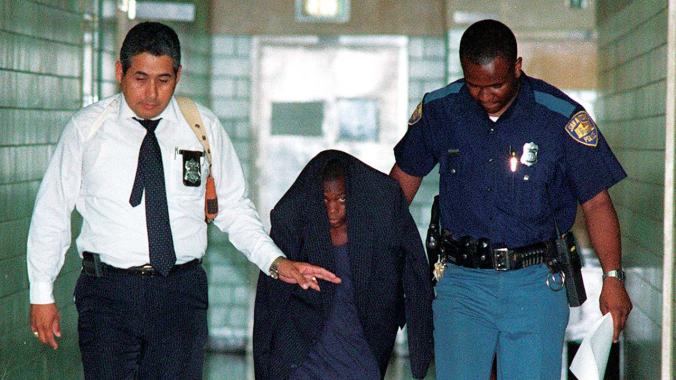
Texas Monthly this month has a troubling profile of Edwin Debrow, who is 37 years old,  has been behind bars since he was 12, and may have to stay there until he is 52. On September 21, 1991, Debrow shot a San Antonio school teacher named Curtis Edwards in the back of the head. Edwards’ body was found sprawled across the front seat of a taxi that he drove part-time at night. Edwin, police determined, had shot Edwards during an attempted robbery. Above is the photo of the 12-year-old in custody.

Texas law, you will not be surprised to learn, allows very harsh punishment for  juvenile offenders.Other states will sometimes try 12-year-olds as adults. Last year’s documentary “Beware the Slenderman” tells the strange story of Anissa Weier and Morgan Geyser, two 12-year-old Wisconsin girls who attempted to stab another 12-year old girl to death in 2014. Under Wisconsin law, Weier and Geyser will be tried as adults for attempted first-degree intentional homicide, and if convicted, they could be sentenced to up to 65 years in state prison.

Your Ethics Alarms Ethics Quiz of the Day is this:

Is it ethical for society to punish children with such long prison sentences, no matter how serious the crime?

Continue reading

From The Ethics Alarms Double Standard Files: A Brock Turner Sentence For A Predator Teacher, And Everyone Shrugs

The predator teacher, who is much more deserving of a light sentence than Brock Turner, who should be killed, and the judge too, come to think of it...

The predator teacher, who is much more deserving of a light sentence than Brock Turner, who should be killed, and that judge too, come to think of it…

The lenient sentence Judge Aaron Persky handed to Stanford student Brock Turner for raping a drunken co-ed  enraged the social media and the public conscience, resulting in thousands of op-eds, protests from feminists and rape-culture activists, petitions, a recall effort, and most devastating of all, an Ethics Alarms post.

Last week, a 33-year old high school teacher named Lindsay Himmelspach pleaded guilty to repeatedly having sex with two minor students at the high school, and received the almost the identical sentence, from another California judge, as Turner. Himmelspach recieved three years probation and four months in jail.

I’m listening, but I hear no screams of outrage.

Huh.

The judge, Butte County Superior Court Judge James Reilley, administered the equivalent rap on the wrist that her Santa Clara colleague did on Turner because Himmelspach had no prior criminal record, she expressed remorse, and somehow he concluded that she’d never do such a thing again. (I’m sure it had nothing to do with the fact the she is hot, and the judge was thinking, “Those lucky bastards!”) Indeed, the judge didn’t even require the predator teacher to register as a sex offender, at least not yet. He’s keeping an open mind, and will decide after a separate hearing.

Hello?

Social media?

Continue reading

Ethics Dunce: Santa Clara County Superior Court Judge Aaron Persky

Let’s see if this sentence generates a fraction of the national attention that the so-called “affluenza” sentence did. For this is much, much worse.

Star Stanford swimmer and Olympic swimming team candidate Brock Turner was arrested in the early morning hours of Jan. 18, 2015  when two Stanford graduate students  saw him on the ground, thrusting his hips atop an unconscious, partially clothed woman. They called police; Turner ran, and police chased him down Turner. In trial, Turner claimed that the woman had consented, though police found her unconscious.

The jury didn’t believe him, and convicted Turner of assault with intent to commit rape of an intoxicated woman, sexually penetrating an intoxicated person with a foreign object and sexually penetrating an unconscious person with a foreign object. The usual sentence for sexual assault is six years in state prison. Santa Clara County Superior Court Judge Aaron Persky, however,  sentenced Turner to six months in county jail and three years’ probation. Turner could get out of prison after just three months.

For rape.

I do not find the Judge’s reasoning persuasive. His arguments were.. Continue reading

Indeed He Deserved All Of It, But Denny Hastert’s Sentencing Hearing Was A Legal And Ethical Travesty

Hastert sentencing

“I am deeply ashamed to be standing here,” former Speaker of the House Dennis Hastert  told a judge yesterday at his sentencing hearing.  “I know why I am here … I mistreated some of the athletes that I coached.”

Wait…what? That’s not why Hastert was in court at all. He was before a judge for one reason: he violated banking laws and lied to the F.B.I.. The fact that he was a sexual predator and molested members of the wrestling team he coached many years ago is not the reason he was in court. It couldn’t be. The statute of limitations on all of those crimes, horrible crimes all, had expired. Hastert couldn’t be charged, tried or convicted of any of them.

I don’t understand why this hasn’t been the focus of the coverage of Hastert’s ordeal yesterday. Why did the judge think it was appropriate to “angrily” lecture him about his crimes that in the eyes of the law he must be considered innocent of by the legal system, because he cannot be found guilty of these crimes any more?

“‘If Denny Hastert could do it, anyone could do it,'” U.S. District Judge Thomas M. Durkin said. “Nothing is more stunning than to have the words ‘serial child molester’ and ‘speaker of the House’ in the same sentence.” Well, that’s very interesting, Judge. If  the late Ted Kennedy had been before you to be sentenced for, say, just a wild hypothetical, a drunk driving charge, would you lecture him about letting Mary Jo Kopechne drown in his car?

I may have missed it, but when O.J. Simpson was sentenced for burglary, I don’t recall the judge asking him to confess to murdering Nicole and Ron…did that happen?

Earlier this month, the judge and prosecutors allowed the trial to become a proxy trial for a crime that wasn’t on the docket, with prosecutors hammering at graphic details about the sex-abuse, describing how Hastert would sit in a recliner in the locker room with a direct view of the showers. The victims, prosecutors said, were boys between 14 and 17. Hastert was in his 20s and 30s. This is relevant to the charges against Hastert how, exactly? Answer: They aren’t. Continue reading

Law vs. Ethics: The Infuriating Big Branch Mine Disaster Sentence

UBBMemorial

We really have to change sentencing guidelines so that white-collar criminals get the sentences they deserve.

Twenty nine men were killed in West Virginia’s Upper Big Branch coal mine explosion six years ago, and former Massey Energy CEO Don Blankenship, who was  found guilty of conspiring to avoid safety regulations that could have prevented those deaths, received only a one-year prison sentence and a fine.

A federal jury convicted Blankenship last year of a misdemeanor conspiracy to violate mine safety standards at Upper Big Branch. The jury acquitted him of felonies that could have put him in jail for 30 years. The judge handed down the stiffest sentence allowed for his misdemeanor conviction, but U.S. Labor Secretary Thomas Perez, prosecutors and the family members said later that the punishment was far too lenient for the nature of the crime.

Indeed it was. Corporations play the odds in a risk-reward game. If violating rules, regulations and laws can save or make millions and the eventual penalty when and if the company is prosecuted is only a fine, many companies and executives think it’s a risk worth taking. . If the risk also includes significant prison sentences for decision-makers, the risk-reward ratio changes significantly.

Blankenship was CEO of a company that intentionally risked the lives of its employees, and 29 men died. One year in jail looks like a rap on the wrist. Forget about the “Affluenza” kid: this sentence is far more disturbing.

“This man has no remorse at all!” a family member of one of the victims said. “He never approached none of us [after the mine disaster], he never told us he was sorry for what happened, and he knows he could have done the right thing.”

“I miss my family. (Blankenship) hugged his,”  he continued. “And all he gets is a year. The judge has done great; she gave him what she can give him. But there need to be stricter, more harsh penalties for people like that who put greed and money over human life.”

Yes.

In Washington State, Not “Over-Incarceration,” Just Incompetent And Cruel Incarceration

African American in Prison

Since 2002, the Washington State Department of Corrections (DOC) has allowed a sentencing-calculation glitch in its computers to allow more than 3000 inmates to walk out of prison before their sentences were complete. Now the state is rounding-up  ex-prisoners, in many cases after they have built back their lives, settled down, found jobs, and done all of the things, difficult things, former felons are supposed to do once they have paid their debts to society.

Last month, Governor Jay Inslee and DOC Secretary Dan Pacholke  revealed that incorrectly programmed computer software  had been  miscalculating release dates Washington convicts sentenced to extra prison for violence related to their crimes. Although DOC employees have been aware of the problem since 2012,an assistant attorney general advised against an urgent review, allowing the error, and the early releases, to continue for three more years as a software fix was delayed repeatedly. (Yes, there is an investigation.) Finally, a fix is supposedly in the works.

None of this was the fault of the prisoners who were released early, but they are the ones being made to suffer for it. Most of those who have been out for long periods are being left alone, according to the standards for review, but for those deemed to need additional prison time, the trauma is significant. The Seattle Times interviewed Miranda Fontenot, whose fiancé, James Louis, was taken into custody last week when he checked in with his community corrections officer. Continue reading

Ethics Observations On My 2013 Ethics Observations On The “Affluenza” Sentence, Now That The Teen Sociopath Is On The Lam

Ethan Couch

Ethan Couch

You may recall the so-called “Affluenza” case of 2013, which I wrote about here.

Ethan Couch a Texas teenager from a rich family, killed four people in a drunken-driving crash (he also had no license) and crippled a friend riding with him. Instead of jail time, the 16-year-old was given probation mandating expensive counseling and treatment by a judge who found herself vilified far and wide. Now this, from his lawyers, Reagan Wynn and Scott Brown:

“We have recently learned that, for the last several days, the juvenile probation officer has been unable to make contact with Ethan or his mother with whom he has been residing.”

A video surfaced showing Couch playing beer pong, which is a violation of probation that could send him to prison. The assumption is that he had fled to avoid that result, and may have even left the country. The Washington Post reports that The FBI and U.S. Marshals Service have joined the search for Couch, who is now considered a fugitive.

So, I am asked, how do the Ethics Alarms observations on the original sentence stand now, since it is clear that the judge’s attempt to reform Ethan without locking him up has failed?

The answer is, having read what I wrote initially again, that I wouldn’t retract a word.

Here’s what I wrote, and my comments now: Continue reading

More “Blue Bloods” Ethics

Blue Bloods 2

Tom Selleck’s “Blue Bloods,” or “The Conflict of Interest Family” as we call it around our house, continues to explore difficult unethical dilemmas for an all-law enforcement family. Its latest episode’s message, however, was troubling.

Forget the secondary plot of Police Chief Frank Reagan’s staff squabbles. The meat of this installment was police detective Danny Reagan’s discovery that the well-oiled bank robbery he was on the scene to witness (it’s amazing how often the main characters in procedurals  just happen to be in banks when they are robbed) has been carried out by a group of three military combat veterans—just like Danny!. They have banded together to raise $100,000 so the female member of the trio can pay for expensive medical treatment for her wounded veteran husband. He lost his legs and sustained brain damage in Iraq.

Danny is seething at the injustice of the wounded hero being in an endless line writing for help from the Veterans Administration, and perplexed that the three perps who he has personally identified from his observations of them during the robbery—the loving spouse’s voice, one of the men’s scarred wrists, a neck tattoo on the other—are acting out love and loyalty, not greed. Continue reading