The Unethical Sentencing Of Dr. Lawrence Nassar

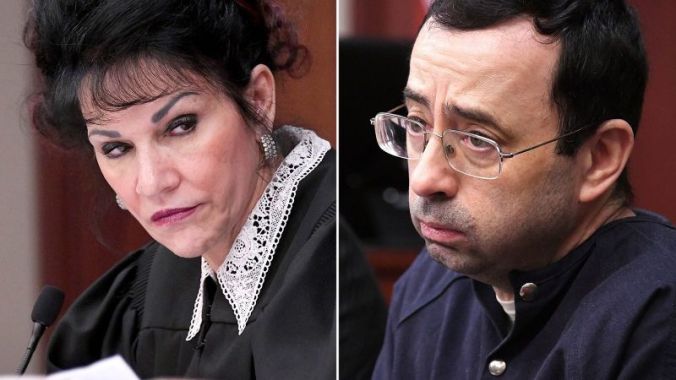
Non-lawyers and journalists mostly cheered Ingham County Court Judge Rosemarie Aquilina’s grandstanding, self-indulgent, unprofessional and unethical handling of Dr. Larry Nassars’s sentencing yesterday. Nobody bothered to seek the opinion of criminal lawyers and judges, much less ethicists. If they had, they would have heard a loud, collective, “Ugh.”

It was a disgrace. I object to victim impact statements in sentencing, a terrible idea pushed by victim’s rights advocates, because it misrepresents the purpose of the justice system. The objective is to punish citizens for violating laws, not to get revenge for victims or their families, not to get “closure,” and not to satisfy emotional needs. The process isn’t personal, or shouldn’t be. If it is personal, then it isn’t objective. Judge Aquila threw all of that out the window as she played to the cameras and the mob.

Criminal defense lawyer and blogger Scott Greenfield aptly explained what was unethical about the parade of victims:

Nassar’s sentencing hearing is a clear example of a judge straying from promoting the public’s trust in a fair and impartial judiciary. Let’s begin with Judge Aquilina’s decision allowing over one hundred and sixty victim impact statements across seven days. 

Victim impact statements are theoretically allowed as a means of giving a crime victim the chance to describe their experience to the court. Defense lawyers aren’t typically fans of them, and too many can arguably have a prejudicial effect against a defendant.

Contrast Nasssar’s hearing with that of Dylann Roof, the Charleston shooter responsible for the deaths of nine churchgoers. Judge Richard Gergel admonished the State’s list of thirty-eight statements, cautioning against a “spectacle”. David Bruck, the attorney assigned to advise Roof, claimed the proceeding violated “every principle restraining victim impact statements under the 8th Amendment.”

Strangely, no advocate stood to question admitting impact statements from over 160 victims, including gold medal Olympians, might prejudice a jurist’s decision. It’s hard to imagine Judge Aquilina even entertaining such an argument.

It is also hard to imagine Nassar’s sleepwalking defense attorney making such an objection. She was praised by the judge for taking on an unpopular client, but taking him on isn’t enough. She was supposed to protect his rights.

Then the judge delivered her sentence, turning her moment in the national spotlight into a self-aggrandizing, virtue-signalling, vainglorious soliloquy to the gallery. This was one more example of why televised court proceedings are a bad idea.

I’m going to give you the whole transcript of her remarks, bolding the sections before my comments. Cut to the bolded sections if you don’t care to experience the full measure of Judge Aquilina’s narcissism. One section,, however, was left out of all the published versions that I could find:

“Our Constitution does not allow for cruel and unusual punishment. If it did, I have to say, I might allow what he did to all of these beautiful souls—these young women in their childhood—I would allow someone or many people to do to him what he did to others.”

The judge apparently had this excised from the official transcript. No wonder. She is advocating prison rape and by doing so, endorsing it. Michigan’s judicial ethics standards require in part,

“A judge should respect and observe the law. At all times, the conduct and manner of a judge should promote public confidence in the integrity and impartiality of the judiciary. Without regard to a person’s race, gender, or other protected personal characteristic, a judge should treat every person fairly, with courtesy and respect.”

Needless to say—I hope—‘I wish I could have you gang raped’ does not meet this standard. It is also troubling that a judge would distort the record. She said what she said, and the public should know she is the kind of jurist would say something like that—an unethical one. The state’s judicial panel should also know.

Here is the rest: Continue reading

Morning Ethics Warm-Up, 1/25/2018: Special “Was That Wrong? Should I Have Not Done That? I Gotta Plead Ignorance On This Thing Because If Anyone Had Said Anything To Me At All When I First Started Here That That Sort Of Thing Was Frowned Upon…” Edition*

Good morning, all.

Let’s get warmed up…

1  Social media censorship. Tom Champlin, who owns the libertarian news aggregator The Liberty Review and runs its associated Facebook page was banned from Facebook for 30 days under its “community standards” for posting this:

Facebook prohibits posts that promote harmful conduct, eating disorders and suicide, but no one but an idiot–is the Facebook community made up of idiots?—would misinterpret the meaning of that meme. It’s a political statement, and if it really violates Facebook’s “community standards,” then Facebook is demanding ideological conformity in its already largely mindless left-wing echo chamber. Either enough Facebook users who believe in free speech make a stink over this kind of attempted regulation of public opinion to force Facebook (and Twitter, and Google) to cut it out, or the open expression of ideas in social media will be doomed.

I suggest every Facebook user post this meme, not to chide Obamacare, but to show support for freedom of expression, and contempt for Facebook’s attempt to strangle it. Of course Facebook, as a private business, can ban what it wants. That doesn’t mean abusing its power and influence is any less dangerous or despicable.

I just posted this item, with the meme, to my Facebook page. I’ll be interest to see a) if I get banned, even with the above preface, and 2) how many of my knee-jerk progressive friends have the integrity to post the meme themselves.

2.  Predators who don’t get it, Part 1. Like many others, I wondered if the NPR banishment of Garrison Keillor and the deposit of his iconic “Prairie Home Companion” radio show  in the Void of Shame was just witch hunt mania. Keillor dismissed it as the result of a single ex-employee making a late fuss over an accidental laying on of hands. Finally, after being attacked by Keillor fans for Frankening him unjustly, Minnesota Public Television, which was the NPR station that investigated the plummy humorist, decided that it had to go public with the real story. Yesterday it posted a statement that said in part…

When Minnesota Public Radio abruptly severed ties with Garrison Keillor in November, the sole explanation offered by the company was “inappropriate behavior” with a female colleague.

For his part, the creator and longtime host of A Prairie Home Companion described his offense as nothing more than having placed his hand on a woman’s back to console her. An investigation by MPR News, however, has learned of a years-long pattern of behavior that left several women who worked for Keillor feeling mistreated, sexualized or belittled. None of those incidents figure in the “inappropriate behavior” cited by MPR when it severed business ties. Nor do they have anything to do with Keillor’s story about putting a hand on a woman’s back:

  • In 2009, a subordinate who was romantically involved with Keillor received a check for $16,000 from his production company and was asked to sign a confidentiality agreement which, among other things, barred her from ever divulging personal or confidential details about him or his companies. She declined to sign the agreement, and never cashed the check.

• In 2012, Keillor wrote and publicly posted in his bookstore an off-color limerick about a young woman who worked there and the effect she had on his state of arousal.

• A producer fired from The Writer’s Almanac in 1998 sued MPR, alleging age and sex discrimination, saying Keillor habitually bullied and humiliated her and ultimately replaced her with a younger woman.

• A 21-year-old college student received an email in 2001 in which Keillor, then her writing instructor at the University of Minnesota, revealed his “intense attraction” to her.

MPR News has interviewed more than 60 people who worked with or crossed professional paths with Keillor. Most spoke on the condition of anonymity because they still work in the industry or feared repercussions from Keillor or his attorneys…

Is it possible that Keillor really believes that he never did anything wrong? Yes, it’s very possible, and this Ethics Alarms post from yesterday in all likelihood applies to Keillor, another weird, homely guy that learned early in life that show business was a great way to attract women. Continue reading

Here’s Something The News Media Hasn’t Explained Regarding The Weinstein Scandal: Those Victim Confidentiality Agreements Are Unethical, And Maybe Illegal

Rose McGowan, the new Sexual Harassment Fury on social media, says she was raped by Weinstein and had to accept a $100,000 settlement with a confidentiality agreement as a condition of the deal. That means that if she subsequently told her story and accused Weinstein, she would be liable for damages, and would have to return the money. Right?

Not exactly. Most of the accounts in this sordid series of events make it seem like confidentiality agreements are iron clad and enforceable. Often they are neither. McGowan’s almost certainly wasn’t.

Debra Katz, an attorney specializing in sexual harassment law suits, recently explained that if employees or former employees came forward with information about Weinstein participating in criminal misconduct, their non-disclosure agreements or confidentiality agreements would probably be unenforceable, saying,

“These kind of very broad NDAs or confidentiality agreements typically violate public policy. Employees have to have the legal ability to discuss any concerns about unlawful behavior in the workplace … These broad provisions that would effectively silo people, make them feel like they can’t speak about this, are simply an instrument to put fear in people.”

My position has always been that lawyers who construct such agreements, knowing that they are unenforceable, are committing sanctionable ethical misconduct. The lawyer for the employee being silenced, moreover, has an obligation to let the client know that the requirement is unconscionable. Of course, it’s the client’s decision whether she wants to take the money.  It is also unethical to make an agreement you have no intention of honoring. Continue reading

Morning Ethics Warm-Up, 10/13/17: All Aboard The Weinstein Ethics Train Wreck!

Good Morning, Hollywood!

I’m sorry to bombard you with this ugly topic again first thing, but I’d like to stop having to think about it as soon as possible.

1 My sister, a committed Democrat who naturally prefers that damning stories about her favorite politicians go down the memory hole as soon as possible, complained yesterday that she didn’t understand why Harvey’s demise was such a long-running story. He’s a pig, we’ve seen it before, he’s fired, big deal, she protested. There are more important things going on.

There are undoubtedly more important things going on, but from an ethics perspective, the importance of the Harvey Weinstein Ethics Train Wreck and who boards it (and who has been riding it for decades) is as significant and chock full of lessons as a story can get. The Penn State-Jerry Sandusky-Joe Paterno scandal was important for some of the same reasons. It exposed the tendency of organizations to become corrupted when non-ethical considerations, usually money, freeze the clappers on multiple ethics alarms. It showed how “virtuous” people with power and influence can betray their values, admirers and supporters in the pursuit of personal or organizational goals. It showed how even usually complacent and biased journalists will suddenly become responsible when the details are juicy enough…and how some won’t. The Sandusky saga also was one more clue to how inherently warped an entire industry’s culture—in that case, big time college football—was (and is).

The Weinstein Train Wreck is worse, however, and also more significant. Weinstein is typical—extreme, perhaps, but typical—of  a popular and glamorous industry that has abused power to debase and exploit women for a century. The trade-offs and incentives turned many of the abused women into accessories of future crimes against other women, while some women, too powerful to have to fear the consequences of doing the obviously right thing, chose to protect the community and the industry rather than human beings. That they, and complicit men in the industry as well, did this while spending the past six years making angry public speeches about the sexist and misogynist attitude of Republicans flagged the kind of hypocrisy that demands substantive consequences.

It also demands reform. Anyone who  thinks Hollywood is going to retire the casting couch because of one especially disgusting and prolific predator is kidding themselves. Sexual harassment and gender discrimination is rampant at every level of the performing arts, from high school theater up through Broadway, and on to Hollywood. I question whether that culture will ever change significantly. At least this episode might educate the public that if they take moral grandstanding from the likes of John Legend, Meryl Streep and Jimmy Kimmel seriously, they are asking to be betrayed and disillusioned.

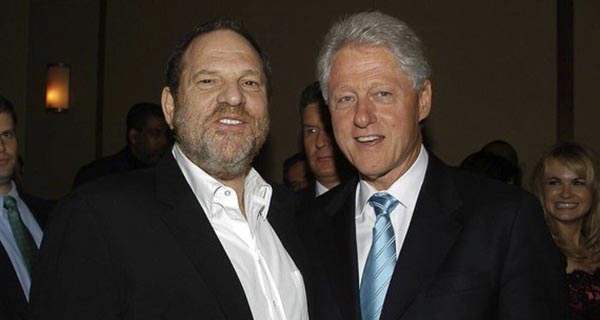
And that doesn’t even reach the political hypocrisy exhibited by the Democratic Party and progressives, which embraced and celebrated a sexual predator from Hollywood because he gave them money, just as they have been giving a sexual predator from Arkansas the King’s Pass on similar conduct because he gave them power. As long as the only voices calling attention to this are from the Right,  count on progressives to ignore or minimize the issue. After all, conservatives and Republicans accepted the devil’s bargain in allying themselves with Roger Ailes. Still, the criticism of the party and predator enablers like Hillary Clinton needs to come from the Left to do any lasting good. So far there has been some criticism from that direction, but not nearly enough.

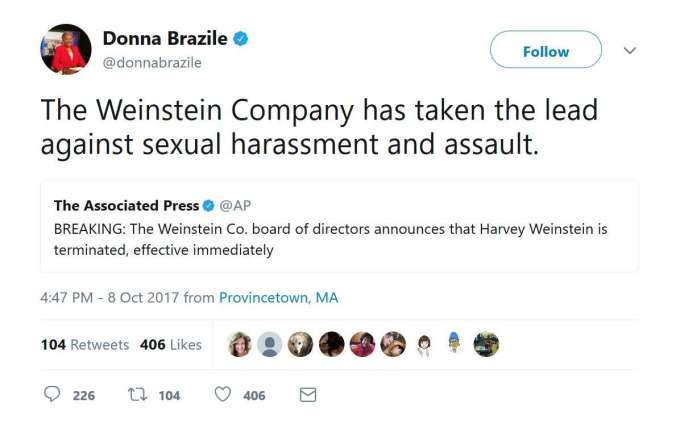
2. Weinstein’s contract with The Weinstein Company  included a clause that allowed  his sexual harassment as long as he paid the costs of settlements out of his own pocket, TMZ reported yesterday. So much for the sham posture that the company was shocked and disgusted at his conduct. Poor Donna Brazile, desperately trying to join the futile virtue signalling by hypocrites who have been cheering on Hillary and her husband for decades, tweeted her admiration for the TWC board thusly

…only to have to delete the tweet later. Did Donna really believe that the TWC board, including Harvey’s brother, didn’t know what Weinstein was doing? Is she that stupid?

3. A lot of contentious debate on this topic at Ethics Alarms has arisen regarding the complicity and obligations of various Hollywood actresses. There are different categories, and conflating them only leads to confusion. Here are the categories and subcategories:

A. The powerless victims of harassment These are the young, aspiring actresses who were propositioned or assaulted by Weinstein, and convinced, rightly or not, that they would never have a chance if they complained

These are the equivalents of Bill Cosby’s victims, who only came forward after their abuser was wounded and vulnerable.

A 1. Powerless victims who accepted cash settlements. This means that since other remedies were unavailable to them, they at least triggered some kind of punishment and compensation. This required, however, allowing future victims to go unwarned, since the pay-offs were accompanied by confidentiality agreements.

B. Victims who were not powerless, due to connections in the industry. I place actresses like Ashley Judd, Angelina Jolie and Gwyneth Paltrow in this category.

C. Victims who, over time, became powerful, wealthy, popular and influential enough that they could have exposed Weinstein, if they chose, but didn’t.

C 1 Victims who received cash settlements when powerless but whose careers  progressed to the point that they could forfeit the cash and accept any legal consequences of breaking the contractual agreements.

D. Rape victims. Sexual harassment is a civil offense; rape is a crime. Many rapes can be substantiated by medical examinations, and rapists are dangerous. Accepting a cash settlement for not reporting one’s rape when the rape could have been substantiated—this is what Rose McGowan did—is a breach of multiple civic duties.

E. Women in the industry who became aware of Weinstein’s conduct and did nothing about it.

F. Women in the industry who became aware of Weinstein’s conduct,  did nothing about it, and continued to praise him in public.

G. Actresses who accepted Weinstein’s proffered bargain, and exchanged sexual favors for roles and contracts, turning what is laughably regarded a a meritocracy into sexual commerce. We don’t know who these women are, but it strains credulity to think there were none.

Of course, many male Hollywood figures also fall into categories E and F.

Categories C, EF and G are the most unethical categories. D is problematic as well.

4. Jane Fonda revealed to Christiane Amanpour that she is in category E. She “found out about Harvey about a year ago,” said the certified Hollywood royalty, outspoken feminist and progressive champion.  “I’m ashamed that I didn’t say anything right then,” Fonda said. 

Well, that’s nice. As long as she is ashamed.

We can proclaim our principles and values all our lives, but if we don’t act according to them when the lives of others are at stake, all of what went before is meaningless. How many women suffered at Weinstein’s hands after Jane knew? Continue reading

Lessons And Notes From The Harvey Weinstein Fiasco

The latest development in the rapid fall of Hollywood independent film mogul and lionized Democratic donor Harvey Weinstein: The board of his own company, The Weinstein Company, just fired him.

You should read the New York Times’ damning story, following an investigation, about the extent of Weinstein’s long reign of misogynist terror in Hollywood. I don’t care to re-hash it. Note, as you read, that as disgusting as it is, more disgusting stories have come out since it was published. For example, a TV journalist now says that Weinstein once trapped her in the hallway of a restaurant that was closed to the public and masturbated in front of her until he ejaculated.  She says she told friends about the episode, but remained quiet because “she was in a long-term relationship” and was “fearful of the power that Weinstein wielded in the media.”

  • WHAT? She withheld this story for a decade because she was fearful, thus allowing Weinstein to abuse how many other women? Hundreds? I’d love to ask her if a powerful individual, in her opinion, could have done anything that would have caused her to make the effort to overcome her fear and self-interest. Someone who would act as she describes is pathological. What she endured was a criminal act. This is signature significance, is it not? Does a civilized, trustworthy, non-sociopath sicko ever do such a thing even once, on the worst day of his life? “I’m sorry I trapped you and masturbated in front of you; it wasn’t the best choice, and anyone can make a mistake.”

The man is and was dangerous. The woman had a citizen’s duty to report this to the police; I don’t care how powerful he was.

  • And, apparently, dozens of actresses had experiences, if not quite that horrifying, horrifying enough. In the Times report, we learn that Weinstein invited Angry Progressive Feminist Ashley Judd to the Peninsula Beverly Hills hotel 20 years ago for what she thought would be a breakfast meeting about her career. Weinstein had her sent to his hotel suite, where he greeted the actress in a bathrobe and asked if he could give her a massage. She told The Times that he then proposed that she watch him shower. Now she tells us this? Now, after she excoriated the President on the Mall, using obscene terms to cheer on  “resistance” “pussy- hat marchers  in January and speculate about the President’s Trump’s wet dreams about his own daughter?  Judd  said she kept quiet to avoid alienating Harvey Weinstein because she was just at the beginning of her career—you know, like all of those Cosby victims. What’s her excuse for the rest of the 20 years, allowing more young actresses to be extorted into sexual submission? Larry O’Connor has the (revolting) answer, I think. In a piece for Mediaite, he writes of Judd,

Has she channeled that anger and humiliation and fear at the industry that allowed it? Or at the man and his multi-million dollar corporation that enabled it? No. Her real enemies are Republicans. Don’t you get it?

So the not-so-hidden message in Weinstein’s non-apology statement was “Hey, remember, I supported Hillary and Obama and I raise millions for Democrats and I’ll help destroy the NRA and Trump. I may treat you like shit, but my heart is in the right place. Now get your knee pads on.”

In Hollywood, being liberal means never having to say you’re sorry.

Judd has been praised for having the courage to tell her story now…when Weinstein is elderly and his power is waning, knowing the he was about to be exposed. No, this is an example of Rationalization #22, “It’s not the worst thing.” Yes, Judd is not as bad as the many, many actresses who kept quiet about this sexual predator, endangering others, who still are mum. Whoopie! Continue reading

Morning Ethics Warm-Up, 10/6/17: Pigs And Hypocrites

Good Morning!

(and thank heaven THAT week is over with…)

1 There will be a full post on the Harvey Weinstein matter later today, but let’s get his vomit-inducing statement to the Times out of the way. If you are late to this party, Weinstein has been a powerful Hollywood producer and power-broker for decades, as well as a high profile supporter of the Democratic party, the Clintons, and Barack Obama. In a New York Times exposé yesterday, he was also revealed as a serial sexual abuser and harasser, whose conduct and cover-ups his industry and the politicians who received and accepted his checks were almost certainly aware of. More of that later; let’s look at the mogul’s response to the Times story. You can read the whole nauseating thing here. I’ll focus on these lowlights…

I came of age in the 60’s and 70’s, when all the rules about behavior and workplaces were different. That was the culture then. I have since learned it’s not an excuse, in the office – or out of it. To anyone.

Sexual harassment has been unambiguously condemned in our law and culture for more than 30 years.  This is a weak “Everybody used to do it” excuse. When did he “learn” it’s not an excuse? If he knows it’s not an excuse, why is he offering it as an excuse?

My journey now will be to learn about myself and conquer my demons. Over the last year I’ve asked Lisa Bloom to tutor me and she’s put together a team of people. I’ve brought on therapists and I plan to take a leave of absence from my company and to deal with this issue head on. I so respect all women and regret what happened. I hope that my actions will speak louder than words and that one day we will all be able to earn their trust and sit down together with Lisa to learn more.

I don’t even know how to describe this, except that more blatant BS I have seldom read in my life.  Who is supposed to be convinced by such transparent “Damn! I’m caught! How can I pretend I’m sorry?” blather?

Here’s the pièce de résistance, though: Continue reading

Morning Ethics Warm-Up: 7/28/17

Good Morning!

Thanks for dropping by.

1. Does anyone else wonder how John McCain would have voted last night if President Trump hadn’t gratuitously insulted his military service and suffering as a prisoner of war? I do. I know how much veterans care about their service and sacrifice on behalf of their country, and how deeply a public insult like Trump’s must have hurt. McCain has been seething all of this time. Maybe last night was a vote based on principle; probably McCain thinks it is. There is no doubt, however, that he hates Trump’s guts intensely, and that kind of bias is almost impossible to banish entirely. He is also probably more than a little angry that his colleagues and his party allowed someone who would treat him that way to be the nominee.

The astounding foolishness of Trump’s initial insult to McCain was framed as an insult to veterans, but the fee for his gratuitous nastiness was always going to come due in a setting like last night. Human nature can’t be taken out of politics; in fact, politics relies on human nature. These people aren’t automatons. It would be ethical to put grudges aside, but nobody should count on it.

The President reportedly called McCain to argue for a “yes” vote. I wonder if the Senator said, Scaramucci style, “Mr. President, this unheroic prisoner of war says, with all due respect, ‘Go fuck yourself.'”

I also wonder if Trump learned anything.

Nah. Continue reading

Ethics Quote Of The Month: Judge John Boccabella

“[These defendants are] good people who made a terrible mistake…Why no one made a phone call to police is beyond me.”

—-Dauphin County (Pennsylvania) Court of Common Pleas Judge John Boccabella,  as he sentenced three former Pennsylvania State University officials, including  former university president  Graham B. Spanier, to jail terms last week for doing nothing after they were informed that told in 2001 that a former assistant football coach, Jerry Sandusky, had been seen molesting a boy in a locker room shower. Sandusky was found guilty of subsequently molesting many other children.

Of course he’s good person—just look at the guy!

This is, of course, the last act of the Joe Paterno/Penn State/Jerry Sandusky tragedy, which burgeoned into an Ethics Train Wreck and occupied as much attention on Ethics Alarms as any other event in the blog’s history. You can review all of that here, if you have the interest or the time.

Right now I want to ponder the judge’s statement with a few questions and observations….

1. By what standard can the judge call this “a mistake’? This is like George Costanza in “Seinfeld” asking his boss if having sex on his desl with the office cleaning woman was wrong, as if the option posed a legitimate puzzle at the time he did it. Was it a mistake because Sandusky turned out to be a serial child predator rather than just trying it out that one time? Was it a mistake because for once the justice system held a university president and other administrators criminally responsible when they looked the other way to protect their precious institution while endangering innocent children? Did Spanier et al. make a “mistake” in calculating the odds? Was the  alleged “mistake” not understanding that “I saw Jerry a huge 50-year old man naked in a shower with a little boy” meant that something was amiss? Do you really believe that was how these men were thinking? Did the judge?

2. Why does the judge say these were good people? Because they had responsible, prestigious jobs? Because people trusted them? Because they are white, or wealthy, or have no criminal records? There are millions of prison inmats who have done less damage than Spanier, Peterno and the rest. Are the good too? Better than the Penn State enablers?

3. It your ethics alarm fails when it is most essential that it ring like crazy, what good is it?

_______________________

Sources: Washington Post, New York Times

“The Keepers,” The Catholic Church, And Bishop Fulton J. Sheen

I began watching Netflix’s new “true crime” series “The Keepers” last night. I may not last through all seven episodes. In addition to the documentary story-telling methodology, which moves at the pace of a slug-race, the story of how unsolved murder of a Baltimore nun might  be part of  (yet another) horrific cover-up by the Catholic Church made me so angry and frustrated that I quit in the middle of the third episode. The series makes the case that the nun, Sister Catherine “Cathy” Cesnik, was killed because she was about  to reveal ongoing sexual abuse of young teenage girls by the priest running the Archbishop Keough High School for girls.

The abuse and the extent of it is not speculation. As in so many other places, the Catholic Church in Baltimore eventually paid millions in damages to multiple victims of multiple predator priests who the Church moved around the  region—so they could molest and assault new victims—rather than handing them over to law enforcement. It is hard to imagine any priest worse than Father Joseph Maskell, however, if even some of the allegations against him are true. Victims say he used student files and illicit police connections to target teenage girls who were already being sexually abused. He manipulated them using a sick combination of religion, guilt, hypnotism and intimidation, sexually abused them, and even delivered some over to members of the Baltimore police department for more abuse.

The documentary focuses on the school’s Class of ’69, though there must have been equally abused girls before and after. The conspiracy of silence began to crack in 1992, when an especially  victimized member of the class suddenly realized that she had repressed memories of horrible experiences, and finally complained to the Baltimore Archdiocese, setting off the kind of despicable Church defensive strategies too familiar to anyone who has seen “Spotlight.”

This documentary isn’t good for my state of mind. It makes me wonder not only if all is lost, but also if all wasn’t lost long ago. I was raised in a largely Catholic community. I am not religious, but as an ethicist I recognize the important, civilizing role religion has played in teaching and enforcing moral principles for the majority of the public for whom ethical analysis is too challenging. Episodes like the Father Maskell scandal raise questions that I rebuke myself for asking, like “How can this be?” “Jane Doe,” the star witness in the documentary, is still a devout Catholic. Her immediate response to every dilemma is to pray. I don’t get it. She was savaged, threatened and abused by a priest that she knows the Church allowed to prey on the vulnerable students entrusted to him. Why would she still trust the Catholic Church?

Why would anyone? Continue reading

Pop Quiz: What Does U.S.A. Gymnastics Have In Common With The Roman Catholic Church?

Both are large, powerful organizations that facilitated the sexual abuse of children in order to protect their money and reputation.

Yes, you can add Penn state to that list too.

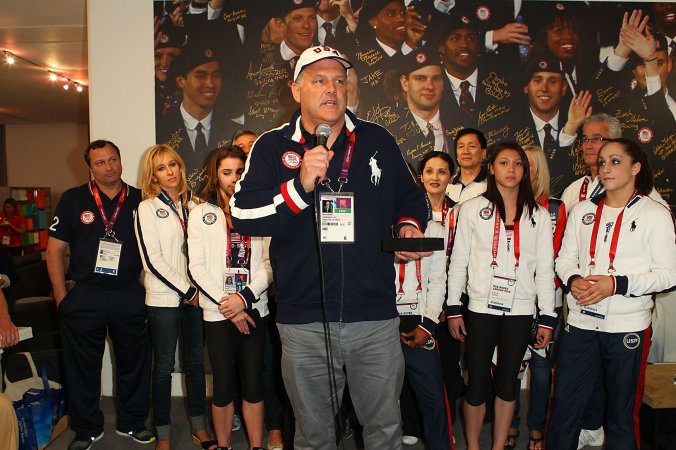
I’m really sick today, and it’s hard writing, thinking and especially typing, but maybe I don’t have to explicate this so much.  Larry Nassar, the national team doctor for USA Gymnastics, is accused of abusing dozens of female gymnasts. More than 80 victims have come forward to claim that he sexually assaulted them. Dr. Nassar was accused of 22 counts of first-degree criminal sexual conduct last month in Michigan. The scandal has also claimed Steve Penny (above), president of U.S.A. Gymnastics, who recently resigned after 12 years in the post.

A sport that has its priorities straight does not hire someone like Penny to lead it. He had been the director of media and public relations for U.S.A. Cycling in the early 1990s,promoting the sport and its superstar, Lance Armstrong. When he took the job at U.S.A. Gymnastics, one of his responsibilities there was to evaluate sexual assault accusations and determine if they warranted being reported to the police. Notes Juliet Macur in the New York Times,

“This is how the world of Olympic sports in the United States has operated for years: No one thought it strange that a sports marketer was in the role of sex crimes investigator.”

Is it any surprise that the culture of women’s gymnastics was poisoned with sexual predators? We had been told by Nadia Comenici that she had been abused, and the sport’s optics were, to use a technical term, oogie. All those tiny women-girls, their growth and maturation retarded by dieting and excessively rigorous training, being hugged repeatedly by bear-like coaches: I stopped finding the sport anything but disturbing years ago. (My feminist friends, who worshiped the little sprites—the ice-skaters too–told me I had a dirty mind.) Here is  a section of a recent column by former gymnastic champion Jessica Howard:

By the time I reached the World Championships in 1999, my hips hurt so badly that at times I could barely walk. That was the environment I trained in that I believe created an opening for Larry Nassar, the national team doctor for USA Gymnastics, to sexually abuse me…the first time I met “Larry” I immediately trusted him. He was the premier USA Gymnastics doctor with an international reputation, and I felt lucky to have been invited to the ranch to work with him.

For our first appointment, he asked me to wear loose shorts and no underwear. That seemed strange, but I obeyed. As in training, I wanted to be perfect. He began to massage my legs, and then quickly moved inwards on my thighs. He then massaged his way into me. I was rigid and uncomfortable, but I didn’t realize what was happening. I was confused, and thought that it must just be what had to happen. This scenario happened repeatedly over the course of my week at the ranch. At no time was there ever another adult in the room. Coming off of a difficult year of training, Dr. Nassar reached out as the good guy, supporting me emotionally and promising me relief from the pain. Now I know that in actuality he expertly abused me under the guise of “treatment.”

I trusted USA Gymnastics. But I was sexually abused, as were other elite athletes, including Jamie Dantzscher, a 2000 Olympian, and Jeannette Antolin, who was a U.S. national team member. And the abuse was not limited to Dr. Nassar. According to more than 5,600 pages of USA Gymnastics records released to the IndyStar on March 3 after a lengthy court battle, some of the 54 coaches with sexual abuse complaint files spanning 10 years weren’t banned from gymnastics until years after USA Gymnastics discovered they were convicted of crimes against children.

Other accounts tell how this was ingrained in the system: Continue reading