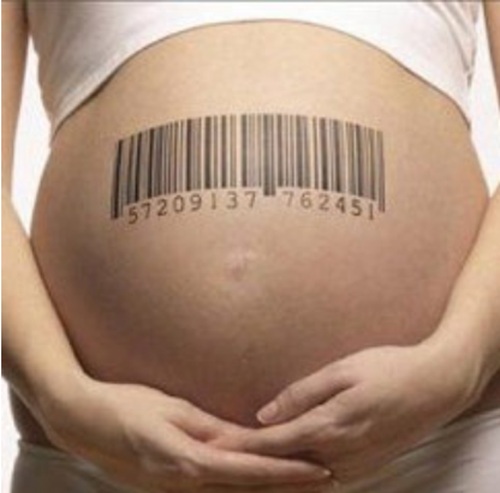
On The California-Texas Foiled Baby Murder Case, Part I: Prelude

Yesterday, an ugly abortion controversy was resolved by the birth of “Baby Gabriel.” Here the legal/ethical gray areas involving hired surrogate mothers and the legal/ethical not-quite-so-gray areas regarding legal abortion mated to create a monster.

Upon learning that the baby gestating in their surrogate’s womb was not perfect (the unborn boy had a congenital heart defect), a California couple decided to exercise a provision in the surrogacy contract and force the mother-by-proxy to undergo an abortion. Instead, the surrogate fled to Texas, where abortion is illegal. Thanks in part to the intervention of Texas AG Ken Paxton (who is running for governor), the baby in question was born. Now there is a dispute over who gets custody. The birth mother has decided she wants the child anti-abortion activists have named “Gabriel.” The couple that wanted to have him killed wants him too.

Guess which I would choose, were I the infant.

I’ll examine that mess in Part II, but ahead, from the EA archives, is the last post Ethics Alarms had regarding the generally messy ethics issue of surrogate motherhood, from 2016, Pre-Unethical Conditions: Surrogate Mother Contracts And Making Babies With Jerks…

Pre-Unethical Conditions: Surrogate Mother Contracts And Making Babies With Jerks

womb-for-rent2Most surrogate mother arrangements work out exactly as intended by the participants. A couple or a single parent gets the biologically linked baby they bargained for, and the mother gets what she wanted, cash. To many the contracts seem unethical because the idea, only recently beyond the realm of science fiction, of a woman bearing another couple’s child, or allowing a stranger’s seed to impregnate her,  appears strange, unnatural and  icky, which it is. No, it is not unethical, but it is what we call a pre-unethical condition, a situation that lays a foundation for unethical conduct and results if care isn’t taken and one or more participants lack functioning ethics alarms. Three recent episodes demonstrate how icky can turn to unethical, especially when the wrong kind of people are involved.

I. The Unwanted Triplet, continued.

Earlier this year, Ethics Alarms hosted a spirited debate regarding Melissa Cook, a surrogate who fought against the man who owned her three unborn triplets, having rented out her womb to gestate them. He wanted to have one of them aborted, because two babies were all he felt he could support. She refused, and challenged the surrogacy contract in court. I asked… Continue reading

Juan Williams, Revelations and the Phony NPR Ethics Code

We have learned a lot from the Juan Williams firing. For example,

  • We learned that at NPR, opinions that run counter to the officially sanctioned culturally-diverse cant are not merely regarded as mistaken, but crazy.  NPR’s CEO stated that Williams should have kept his opinions about Muslims “between himself and his psychiatrist.” This is how the Soviet Union used to treat anyone whose opinion varied from state Marxism, too, and the dissidents were sent to mental institutions. Does it bother anyone else that the head of a state-funded radio network treats dissent so disrespectfully? Yes, Vivian Schiller later apologized for her “thoughtless”—as in, “I don’t want people to know I think this way”—remark. It was telling nonetheless. Continue reading