PETA’s cretinous and offensive lawsuit equating Sea World’s whales with enslaved human beings—just the latest in the organization’s irresponsible “look at us!” tactics—was laughed out of court, as everybody but a breathless NPR interviewer knew it would be. This was yet another example of a lawsuit that any common sense-imbued layman would accurately call frivolous, but a bar association discipline committee would not. A lawyer can ethically take on a lawsuit he or she knows is stupid, foolish, silly, or a “hail Mary” shot, as long as there is a good faith belief that it might/could possibly/ gee, with a little luck and they don’t think about it too carefully prevail. And looking at some of the rulings that come down from various benches and verdicts that creep out of some jury boxes, that means almost no case is unethically frivolous in a legal sense. That doesn’t mean that it is responsible and right for lawyers to help plaintiffs like PETA bring such wasteful lawsuits, just that it isn’t a breach of professional ethics to do so. Continue reading

slavery
Comment of the Day: “Slaves, Whales, Humphrey the Hippo, and Captive Animal Ethics”
Marleen contributes a short and pointed comment to today’s post about PETA’s lawsuit alleging, absurdly, that Sea World’s performing whales are victims of slavery under the definition in the Thirteenth Amendment. Her commentary touches on a rich theme that has been explored on Ethics Alarms in the past: the obligation of issue advocates not to undermine the credibility of an important ethical argument by associating it with unfair, irresponsible or dishonest tactics.
Here is Marlene’s’ Comment of the Day, on “Slaves, Whales, Humphrey the Hippo, and Captive Animal Ethics”;
“It distresses me that the only strategy they can come up with is to bastardize the courts and the Constitution for some publicity. Shout from the rooftops that captive cetaceans don’t afford us a true ability for observation and study because of the massive (and documented!) ill effects on their health and that it debases us to sacrifice them for our amusement. Play videos of orcas turning on their handlers non-stop. Don’t pull out a cockamamie argument that’s deeply insulting to any peoples familiar with true subjugation.”
Slaves, Whales, Humphrey the Hippo, and Captive Animal Ethics

The beginning of the end for this barbaric practice began with the publication of "Uncle Shamu's Cabin"...
Whether or not it is excessively cruel to killer whales to keep them at Sea World and train them to do tricks is an interesting ethical issue that turns on utilitarian principles: are whales as a species better served by the public learning to appreciate them through close contact in zoos than by having them be accessible only in the wild, and does this result justify keeping some whales in captivity, performing like seals? Good question. What isn’t a good question is posed by People for the Ethical Treatment of Animal’s lawsuit against Sea World, suggesting that it violates the Thirteenth Amendment to keep performing whales, because the practice constitutes slavery.
It’s a stupid question. It’s a silly question. It’s an offensive question, equating aquatic mammals with African-Americans. Continue reading
Flying the Confederate Flag: Protected Speech? Of Course. Unethical? Absolutely.

Honor them for their valor if you must, but there was nothing honorable about their cause or their flag.
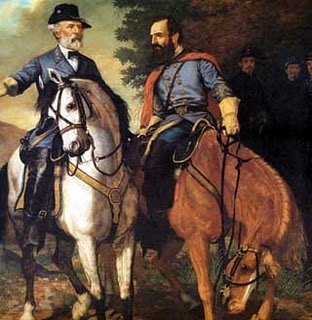
Once again, emerging from under-ground like a the seven-year locust, a controversy over the flying of the Confederate Flag is raging, this time in Lexington, Virginia, burial place of two Confederate heroes, Stonewall Jackson and Robert E. Lee. A proposed city ordinance would prohibit the flying of the Confederate banner on downtown poles, and some Southern heritage buffs as well as Jackson and Lee fans are upset. “By all means [Jackson and Lee] should be honored,” said Brandon Dorsey, commander of Camp 1296 of the Stonewall Brigade of the Confederate Veterans. “I look at the flag as honoring the veterans.”
The problem is, Brandon, that a large number of Americans look at that same flag as honoring slavery and racism, and for good and historical reasons. Continue reading
Memorial Ethics,Part I: Recalling The Martin Luther King Memorial Controversy
(For Memorial Ethics, Part Two, go here.)
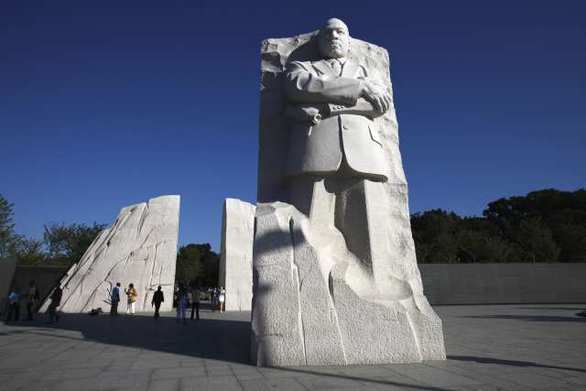
[It is almost forgotten now, but when the design of the new Martin Luther King Jr. Memorial was chosen back in 2007, there was much unhappiness in the black community. A Chinese artist was chosen to design the memorial, and this raised issues both ethical and ironic. Now that the memorial is completed (the planned dedication this week has been postponed due to Hurricane Irene), it seems clear that critics aimed their objections in the wrong direction: the problem wasn’t the designer, but the design, an imposing piece of classic Socialist-Worker art that would look at home in Red Square. But, hey, there’s lots of bad art in Washington, covering an abundance of styles: the large bust of JFK in the Kennedy Center makes it look like President Kennedy was made out of chewing gum. At least some bad Communist statuary is a change of pace.
The debate over the choice of artist was interesting, and is even more so in retrospect. It is worth pondering as the new monument joins the National Mall. Here is my article on the matter, slightly edited from the original published on The Ethics Scoreboard in 2007, followed by a response from the artist selection’s most vocal critic.]
An intense controversy surrounds the choice of a statue’s sculptor, specifically the Chinese artist whose design was selected by the Martin Luther King Jr. National Memorial Project Foundation to become a major monument to the martyred civil rights leader in Washington, D.C. Continue reading
Robert E. Lee and the Abuse of Principle
As both political parties and the President of the United States seem to be determined to subject the American people, economy and standing in the world to disaster in the defense of principles, it might be a good time to reflect on the fact that principles detached from reality have little value, and that rigidly adhering to principles to the detriment of the community and civilization is not a virtue.
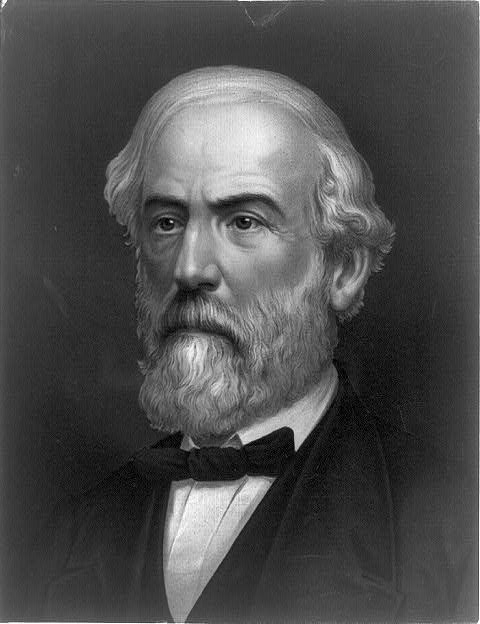
In the current issue of Humanities, historian James Cobb makes these points vividly, if tangentially, while reflecting on the odd reverence with which Americans, and not just Southerners, regard Robert E. Lee. I am proud to say that the lionization of Lee never made sense to me, not even when I was a small boy. But he is the epitome of someone who is revered as a role model and hero for his supposed character and values rather than what he actually did with them.*
Cobb begins his essay with this anecdote: Continue reading
More Than a Fool: Bachmann, John Quincy Adams, and Wikipedia
I will strive a bit longer to avoid concluding that Michele Bachmann is as irresponsible, dishonest and dangerous as I strongly suspect that she is, though my determination may not last the time it takes to write this post. I won’t wait any longer to conclude that she is a fool.
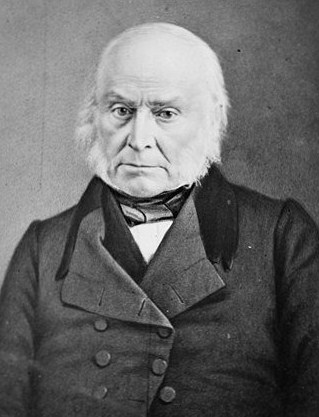
In one short week since the controversy erupted over Fox News anchor Chris Wallace daring to ask her on the air, “Are you a flake?” and her subsequent botching of both her answer and the question’s fevered aftermath, she has stumbled into two flaky episodes. One—her mixing up Western movie star icon John Wayne with serial child killer John Wayne Gacy—was at least funny. The other, far less forgivable—her claim that the Founding Fathers “worked tirelessly until slavery was no more in the United States”—has signature significance. Continue reading
Remember Gettysburg
Today is July 1, which is being treated across the United States as the gateway to a long weekend and the Fourth of July, and little more. July 1 is also, however, the anniversary of the first day of the Battle of Gettysburg, the most important and most deadly battle of the many important and deadly conflicts in the American Civil War. The two American armies that clashed in the Pennsylvania town sustained more than 50,000 casualties on the Gettysburg battlefield, which may be the saddest and noblest place in America.
If you have not made at least one pilgrimage to the battlefield, you owe it to yourself, and to the memory of the combatants, to go. Continue reading
“Grow Your Own Marrow Donor” Ethics and Consequentialism: The Ayala Family Saga
Once again, the fans of that ethically corrosive twin of “the ends justifies the means,” consequentialism, were holding court in the mass media, as the “Today Show” revisited a two-decade old ethical outrage to declare that it was all perfectly fine after all…because it worked.
Thus does television, itself dominated by ethically-dim writers, producers and stars, corrupt the public. So here we go again:
Does the fact (if it indeed is a fact) that Osama bin Laden capture and execution was facilitated by torture make torture less ethically wrong?
No.
Do the fortuitous results of any action that was unethical from its inception change the nature of that conduct from unethical to ethical.
Again, no.
Is conceiving a child solely to provide donor bone marrow to her cancer-stricken older sister ethically acceptable as long as the sister’s cancer is cured?
Absolutely not! But to listen to the “Today Show,” and revoltingly, the “Today Show’s” resident medical correspondent Dr. Nancy Snyderman, it is not only ethically acceptable but laudable. Because it worked.
Twenty years ago, Abe and Mary Ayala were desperate because Anissa, their 16-year-old daughter, had been diagnosed with leukemia. Chemotheraphy proved ineffective, and neither the Ayalas nor their son was a compatible bone marrow donor. The Ayalas had long before decided that two children were enough; Abe had a vasectomy. But then Mary came up with the idea of having another child in the hopes that it would be a bone marrow donor who could save Anissa’s life. Continue reading
Exceptionalism and the United States of America’s Grand Ethical Dilemma
Today’s morning headlines were full of violence in Syria, Bahrain, Libya, and the threat of new conflict in Egypt, as popular uprisings against entrenched dictatorships continue to grow. As the U.S. tries to somehow avoid a lead role in the international intervention in Libya, the question looms regarding its responsibility to other nations whose people yearn to be free—or at least freer. As important as what America ultimately decides to do will be for the futures of these nations, the U.S. economy, and foreign relations, something far more important is at stake. These difficult choices once again challenge the United States to affirm or reject its ideals, the very essence of what has made America what it is.
We have come to these crossroads four times before. Continue reading