The Wrenching Problem Of David Ortiz, The Human Slippery Slope

papi_fame

Ethics conflicts force us to choose when multiple ethical principles and values point to diametrically opposed resolutions.  Often, a solution can be found where the unethical aspects of the resolution can be mitigated, but not this one. It is a tale of an ethics conflict without a satisfactory resolution.

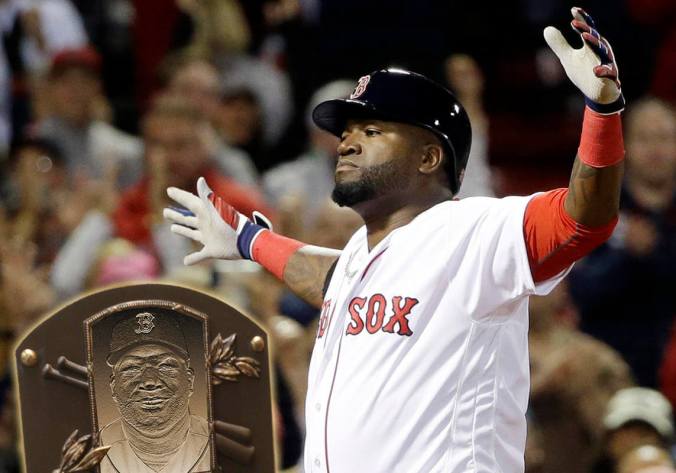
I didn’t want to write this post. I considered waiting five years to write it, when the issue will be unavoidable and a decision mandatory. Today, however, is the day on which all of Boston, New England, and most of baseball will be honoring Red Sox designated hitter David Ortiz, who will be playing his finale regular season game after a 20 years career.  His 2016 season is quite possibly the best year any professional baseball player has had as his final one; it is definitely the best season any batter has had at the age of 40 or more. Ortiz is an icon and a hero in Boston, for good reason. Ortiz was instrumental in breaking his team’s infamous 86-year long “curse” that saw it come close to winning the World Series again and again, only to fail in various dramatic or humiliating ways. He was a leader and an offensive centerpiece of three World Champion teams in 2004, 2007, and 2013. Most notably, his record as a clutch hitter, both in the regular season and the post season is unmatched. You can bring yourself up to speed on Ortiz’s career and his importance to the Red Sox, which means his importance to the city and its culture, for nowhere in America takes baseball as seriously as Beantown, here.

That’s only half the story for Ortiz. Much of his impact on the team, the town and the game has come from his remarkable personality, a unique mixture of intensity, charm, intelligence, generosity, pride and charisma. After the 2013 terrorist bombing of the Boston Marathon, which shook the city as much as any event since the Boston Massacre, Ortiz made himself the symbol of Boston’s anger and defiance with an emotional speech at Fenway Park. Then he put an exclamation point on his defiance by leading the Red Sox, a last place team the year before, to another World Series title.

Performance-based arguments against electing Ortiz to baseball’s Hall of Fame are, at this point, untenable. Entering his final game, Ortiz had 541 home runs, (17th all-time), 1,768 RBI, (22nd), and 632 doubles, (10th).  He is only the third player in history to have more than 500 home runs and 600 doubles.  He ranks among the greatest post season hitters in baseball history with 17 home runs, 60 RBI and 21 doubles. His postseason average is .295 with an on base percentage of .409, a slugging percentage of .553 and a .962 OPS (the sum of the two.) Most great players did worse in the post season than during the regular season, for the obvious reason: the competition was better. Ortiz was better, which informs regarding his character and dedication.

The one lingering argument against admitting Ortiz to the ranks of Ruth, Williams, Aaron, Mays, Cobb, Hornsby, Griffey and the rest is that he has spent most of his career as a designated hitter, the American League’s 1973 invention, much reviled by National League fans and baseball traditionalists, designed to allow real batters relive fans from watching pitchers make fools of themselves at the plate. This makes him “half a player,” the argument goes. No designated hitter has ever been elected to the Hall, so that argument has prevailed so far. It was always a weak one—how did being lousy fielders like so many Hall of Fame sluggers make them greater players than one who never hurt his team at all with his glove? Now that a designated hitter has shown himself to be in the elite ranks of all the greatest batters, the argument sounds more like hysterical anti-DH bias than ever.

I should also note, before getting to the main point of this post, that I love Ortiz. I am a lifetime Red Sox fan, Boston born, bred and marinated, and Big Papi is special. He is one of the most interesting and admirable sports figures of my lifetime, and what he has meant to my city and my favorite sport is beyond quantifying. Few great athletes demonstrate persuasively that they are also great and admirable human beings. Ortiz is one of them.

Nonetheless, it is crucial that David Ortiz not be elected to the Hall of Fame when he becomes eligible five years from now, and that he never be admitted. On the matter of assessing the fitness for baseball honors of those who defiled the game by inflating their statistics, changing the outcome of games and harming players who abided by the rules, David Ortiz is a human slippery slope. Ortiz deserves to be in the Hall based on all admission criteria, including character and sportsmanship, but his admission will open the doors wide for players who are unfit, polluting the Hall of Fame and baseball’s values forever.

It’s not worth the trade off. This is the ethics conflict: one cannot be fair and just to “Big Papi” without doing widespread harm to the sport, and I would argue, the entire culture. Continue reading

Four Supreme Court Decisions: Abortion, Guns, Affirmative Action, Corruption…And Ethics. Part 4: Voisine v. United States

"Aw, come on, that was a love tap! Now put some ice on that while I go out and buy a Glock...."

“Aw, come on, that was a love tap! Now put some ice on that while I go out and buy a Glock….”

Be honest, now: you thought I’d never finish this series, did you? (Part 1 was posted June 28.)

In Voisine v. United States, a 6-2 U.S. Supreme Court holding issued on June 27 approved extending a federal statute banning firearms possession by anyone convicted of a “misdemeanor crime of domestic violence” to include individuals who have “misdemeanor assault convictions for reckless (as contrasted to knowing or intentional) conduct.”

Justice Elena Kagan, writing for the majority, said that “the federal ban on firearms possession applies to any person with a prior misdemeanor conviction for the ‘use…of physical force’ against a domestic relation. That language, naturally read, encompasses acts of force undertaken recklessly—i.e., with conscious disregard of a substantial risk of harm.”

The opinion isn’t remarkable, nor is it a significant attack on gun rights. The case is really about language, as so many Supreme Court cases are. From the opinion:

“Congress’s definition of a “misdemeanor crime of violence” contains no exclusion for convictions based on reckless behavior. A person who assaults another recklessly “use[s]” force, no less than one who carries out that same action knowingly or intentionally. The relevant text thus supports prohibiting petitioners, and others with similar criminal records, from possessing firearms.”

The real question, from an ethical standpoint, is whether Congress can and should remove a citizen’s Second Amendment right based on a misdemeanor conviction for domestic abuse. Is that fair? Sure it is. It is already settled law that it is Constitutional to prevent convicted felons from owning  guns, even if it was a non-violent felony. From an ethical public policy standpoint, why would it be overly restrictive to ban gun ownership from those who engage in a violent misdemeanor?

Writing in dissent, Justice Clarence Thomas, joined by Justice Sonia Sotomayor (of all people), rejected the majority’s “overly broad conception of a use of force.” In the view of the two dissenters, “the majority blurs the distinction between recklessness and intentional wrongdoing” and thereby does a grave injustice to criminal defendants. Continue reading

Donald Trump Candidacy Ethics Train Wreck Passenger List Update: Georgetown Law Prof. Paul Butler Scores A Perfect Rationalization #28

We're real sorry about this, but these are not ordinary times...

We’re really sorry about this, but these are not ordinary times…

The human ethics train wreck named Donald Trump is now in the process of exposing how thin the veneer of professionalism is for many alleged intellectuals, scholars and lawyers. On an e-mail list of most of the legal ethicists in the country, one of them posted this in reaction to Justice Ginsberg’s unethical and unjudicial shots at Donald Trump:

“I love RBG way too much to be critical of her in any way . Long may she live!”

This opne expression of willful denial, from not merely a lawyer, but an ethics specialist! It is the epitome of one of my father’s favorite quotes, “My mind’s made up, don’t confuse me with facts.” I responded to the list that it was the most depressing statement I had ever read from any of the list’s participants.

Paul Butler’s op-ed in the New York Times isn’t much better. The Georgetown Law Center professor defended Ginsberg’s indefensible comments by arguing that these times are special, and thus suspend the ethics principles that must govern judges if the judiciary is to engender any respect or trust at all. He writes:

“Normally Supreme Court justices should refrain from commenting on partisan politics. But these are not normal times. The question is whether a Supreme Court justice – in this case, the second woman on the court, a civil rights icon and pioneering feminist — has an obligation to remain silent when the country is at risk of being ruled by a man who has repeatedly demonstrated that he is a sexist and racist demagogue. The answer must be no.”

No, Professor, the answer must be “yes.” Continue reading

Calling Balls And Strikes

Robot Umpire

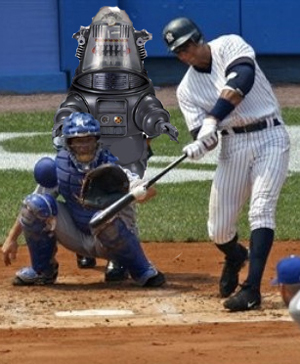
Calling balls and strikes in major league baseball has to be mechanized. This is obvious and beyond argument, and the only question is what will finally make the bitter-enders abandon their rationalizations and capitulate to reality.

I last wrote about this in 2012 in a post titled “Umpire Accountability, As the Day Of The Robot Approaches,” following a 1-0 game in which a batter in a position to tie the game was called out on strikes by an umpire named Larry Vanover, who rang him up with three balls out of the strike zone for the final 9th inning out. This particular contest was between two teams that had finished the previous season with one of them edging out the other for the play-offs by a single game, on the last day of the schedule. The pitches called strikes in this particular at bat weren’t even close to being over the plate. You could see that all three were wide with the naked eye as they arrived in the catcher’s mitt; you could see it in the computer graphic on the screen, and after the game, the pitches’ locations were charted to show that they were, in fact, balls. I wrote…

Baseball fans invest too much time and emotion into following the games and their teams to just shrug off results warped by obvious incompetence. The kind of atrocious umpiring demonstrated by Vanover…poses a direct challenge to baseball’s integrity. What will baseball’s leaders do about it?

They have only three choices:

1.They can, for the first time, take public and punitive action against umpires whose poor performance exceeds a missed call or a human mistake, and demonstrates inexcusable incompetence or a lack of professionalism. First time: a stiff fine. Second time: a suspension without pay. Third time: dismissal.I know that the umpires union in Major League Baseball protects its incompetents as zealously as the teachers unions, but baseball has its product to protect.

2. Baseball’s leaders can make a commitment to automated strike and out calling, and cut back on crews to one field umpire to keep order and one booth umpire to read the printouts, watch the TV screen, and study the replays.

3. Baseball can reject integrity and credibility, and continue to let the Vanovers on the field wreck the games and alienate fans.

So far, disgracefully, the sport has chosen #3, but the clock is ticking. Continue reading

Ethics Alarms Ringing: A Judge Orders Citizens to Undergo “De-Radicalization”

"You WILL feel differently about guns!"

In Minnesota, Zacharia Yusuf Abdurahman, Abdirizak Mohamed Warsame, Abdullahi Mohamud Yusuf, and Hanad Mustafe Musse  pleaded guilty to federal charges of conspiracy to provide material support to ISIS. The defendants  charged last April following an investigation into a network of young Somali-Americans  involved in  ISIS recruitment  in Minnesota. ordered the four to undergo an evaluation by a visiting German scholar, Daniel Koehler, director of the German Institute on Radicalization and Deradicalization Studies in Stuttgart. His  evaluation of the men will factor into Davis’ sentencing decisions, and will  form the basis of a “de-radicalization program” to rid the men of  their radical ideology.

The Star Tribune reports that the program will be the first of its kind in the United States. (Well that’s a relief.) Apparently such deprogramming treatments are used to “cure” radical recruits  in Europe, as hundreds of young people have left to join Middle Eastern militants.

Wait, are anyone else’s ethics alarms ringing like crazy? Mine just busted an ear drum. Continue reading

From The “Ethics Isn’t Easy” Files: The FBI, Child Porn, And “Playpen”

key-computerIn order to probe “the dark web” and to apprehend those partaking of the pleasures of child pornography, the FBI emulated the illegal conduct of hackers, using a warrant to surreptitiously place malware on all computers that logged into a site called Playpen. When a user connected, the malware forced his computer to reveal its  Internet protocol address. Next a subpoena to the ISP  yielded his real name and address, and a another warrant allowed a subsequent search of the user’s home. Incriminating evidence, indictments and trials followed.

The problem of tracking computer related crime is far ahead of the law, and in the vacuum, ethical principles are being nicked, mashed, or ignored. Ahmed Ghappour, a professor at the University of California’s Hastings College of the Law, says, “It’s imperative that Congress step in to regulate exactly who and how law enforcement may hack.” If hacking is illegal, and wrong as an uncontested intrusion on privacy, when is it ethical, and thus legal, for law enforcement to do it? Continue reading

Two Stories To Look Back Upon Ruefully When The Nation Has Gone To Pot And It’s Too Late To Reverse Course

Once heroin is legal, there will be no more heroin problem...

Once heroin is legal, there will be no more heroin problem...

One of the horrible results of the coming election—not as horrible as the possibility of electing Ben Carson, Hillary Clinton, Bernie Sanders or Donald Trump President, perhaps, but horrible still—will be the nation’s final capitulation to the movement started in the 1960’s to keep the country, the culture and the poor stoned. Cognitive dissonance will ensure it on the Republican side, as opponents to legal pot will be the same old fogeys who proclaim that gay marriage will destroy the earth, causing a valid and correct argument to be destroyed by a senseless one. Others in the party, caring about staying in power more than our society’s welfare, will just give in, citing the usual ethically inert rationalizations that legalizing drugs is the lesser of two evils and that we need to use treatment, not punishment. Meanwhile, Democrats will pander to its pot-loving base, while also stumping for state governments legalizing the crap to close budget deficits created by their fiscally irresponsible policies. Heck, even I would rather see the pot industry taxed instead of me.

And we will be bombarded by the pairing of pot legalization with the allegedly racist “mass incarceration problem,” which is really and truly the “too many African Americans break laws and expect to get away with it because their parents and culture don’t send the message that its a big deal” problem. The big deal they, and we, are now being told is that they get punished for breaking laws, which is racist because Black Lives Matter.

I was in court watching sentencings a couple months back in Northern Virginia. While the crimes the defendants being sentenced for were not drug related, every single one of those sentenced–-every one—had either  a pot charge dropped in favor of a guilty plea for a more serious crime, had record of drug arrests, or had tested positive for pot during while awaiting sentence or on parole. Bernie and Hillary and the gang (the gang including journalists, who like their weed) would have us believe that the prisons are just teeming with otherwise law-abiding black citizens who are there because they engaged in harmless recreational drug use and nothing else. The new paradigm, pushed by the President (of course), is that prison should only be for violent felons, not habitual scoff-laws who often dabble in violence too.

Ah, yes, this is all going to work out so well.

I  encountered two stories on the web that show the path we are on as well as the muddled thinking and dishonesty that got us there. Continue reading

Comment of the Day: “Ethics Dunces: Ten Prominent Doctors, Surgeons and Med School Professors Who Want Columbia To Kick Dr. Oz Off Its Faculty”

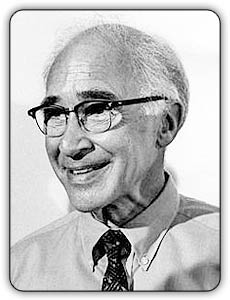
The late Prof. George Wald, the best teacher I ever had. In biology, not political science. George did not acknowledge the distinction.

The late Prof. George Wald, the best teacher I ever had. In biology, not political science. George did not acknowledge the distinction.

Commenter Alexander Cheezem, who has quite a bit of expertise (also passion) on such matters, weighed in on the current controversy over the “quackery” of daytime TV star “Dr. Oz.” This time I’ll hold my comments until the end; here is Alex’s excellent Comment of the Day on the post, Ethics Dunces: Ten Prominent Doctors, Surgeons and Med School Professors Who Want Columbia To Kick “Dr. Oz” Off Its Faculty:

I’m going to have to both agree and disagree with you here. First off, I applaud Columbia University’s response and agree that the principle of academic freedom is applicable here… to a point.

Secondly, however, I’m going to have to disagree with you regarding the parallels. Linus Pauling was an embarrassment to medicine, not chemistry. Wald was overly passionate about politics, not biology. Nagel’s views on biology are an embarrassment, not his views on what he’s supposed to be actually teaching. Chomsky’s forays into political science may be an embarrassment (personally, I regard them as something of a mixed bag), but that’s not what he was the professor of, is it?

Kass, McKinnon, Harper, and Singer are closer parallels, of course, but there’s still one rather huge difference: Dr. Oz is a doctor… and runs his show as one. It is, as the comedian John Oliver put it, the Dr. Oz Show, not “Check This Shit Out With Some Guy Named Mehmet”. This is quite relevant for a number of reasons, not the least of which is that offering medical advice is within the scope of what doctors do. Offering that advice while invoking his medical license as a relevant qualification, simply put, can be considered part of the actual practice of medicine. Continue reading

Ethics Dunces: Ten Prominent Doctors, Surgeons and Med School Professors Who Want Columbia To Kick “Dr. Oz” Off Its Faculty

Dr Oz

Perhaps they tried this because Columbia has been having a bad ethics year so far… that could be it, I guess.

For the record, here are are the ten prominent individuals in the field of medicine who called on Columbia University to kick Dr. Mehmet Oz, better known to Oprah fans and junk TV addicts as “Dr.Oz,” off its medical school’s faculty:

Henry I. Miller, M.D.
Robert Wesson Fellow in Scientific Philosophy
& Public Policy
Hoover Institution
Stanford University
Stanford, CA

Scott W. Atlas, M.D.
David and Joan Traitel Senior Fellow
Hoover Institution
Stanford University
Stanford, CA

Jack Fisher, M.D.
Professor of Surgery (emeritus)
University of California, San Diego
La Jolla, CA

Shelley Fleet, M.D.
Anesthesiologist
Longwood, FL

Gordon N. Gill, M.D.
Dean (emeritus) of Translational Medicine
University of California, San Diego
La Jolla, CA

Michael H. Mellon, M.D.
Pediatric Allergist
San Diego, CA

Gilbert Ross, M.D.
President (Acting) and Executive Director
American Council on Science and Health
New York, NY

Samuel Schneider, M.D.
Psychiatrist
Princeton, NJ

Glenn Swogger Jr. M.D.
Director of the Will Menninger Center for Applied Behavioral Sciences (retired)The Menninger Foundation
Topeka, KS

Joel E. Tepper, M.D.
Hector MacLean Distinguished Professor of Cancer Research
Dept of Radiation Oncology
University of North Carolina School of Medicine
Chapel Hill, NC

And here is their letter. They are troubled because “Dr. Oz” has embraced dubious products and health promotion techniques on his TV show. Indeed he has. On TV, Dr. Oz is a quack. He uses his medical credentials to, as the letter says, show “disdain for science and for evidence-based medicine” and to display  “baseless and relentless opposition to the genetic engineering of food crops.”  And no one can deny that  “he has manifested an egregious lack of integrity by promoting quack treatments and cures in the interest of personal financial gain.”

None of which is justification for taking him off the faculty, where his teaching duties are unrelated to his lucrative TV persona, and are the direct result of his recognized expertise in cardiothoracic surgery.

Could it be that all of these doctors—including Professors Tepper and Fisher, and Dean Gill— have never encountered the sacred educational principle of  academic freedom? Continue reading

Sliding UP The Slippery Slope: NO To Forced Sterilization, And A Belated NO To Forced Vasectomies Too

"OK, now this is entirely your free choice..."

“OK, now this is entirely your free choice…”

This has turned into Revisiting Old Posts Day on Ethics Alarms.

Last July, I posted an Ethics Quiz regarding a Virginia judge’s sentence offering a profligate and irresponsible serial father to choice between an extra four years in jail and a vasectomy at his own expense. After asking readers whether they thought the sentence was ethical, especially in light of the state’s ugly history of forced sterilizations, I demurred, writing,

I am not ready to make a call on this one. Since neglected children often become the responsibility of taxpayers, the argument that the state has no legitimate interest in regulating profligate reproduction by irresponsible parents falls flat. Is taking away someone’s ability to have more children (after seven) really a greater intrusion on his freedom than locking him up? Yet this sentence seems to cross lines that government should cross with caution, if at all. I’m not sorry that Herald won’t be inflicting more of his line on us. I am uneasy, however, with the way this result came about.

I am now ready to make an ethics call in the quiz in light of this news report: Continue reading