Comment Of The Day: “THAT’S The Concept I Was Looking For—’Cultural Vandalism’!”

Another perspective on the question  of how the personal and professional misconduct of artists should affect our regard for their art comes from Curmie, a drama teacher, director and blogger who has as deep credentials for this topic as anyone.

Here is his Comment of the Day on the post, THAT’S The Concept I Was Looking For—“Cultural Vandalism”!…

Back in graduate school, I worked as a teaching assistant to a brilliant professor, Ron Willis, in his Introduction to Theatre class. Seitz’s commentary intersects with two of the concepts Ron highlighted in his course. The first of those is what Ron called para-aesthetics: those elements which affect an audience’s reception of an aesthetic event without being the aesthetic event.

These can be entirely coincidental (it’s pouring rain) or created specifically by the production company (the poster). The company many have had some, but not complete, control over the influence (there’s insufficient parking, in part because of another event in the area). The para-aesthetic influence could apply to the entire audience (the leading actor is a big star, the auditorium is freezing) or to an individual (the leading actor is your best friend, the person next to you thinks that showers are for other people, you’ve had a couple glasses of wine before the show).

The fact that a Bill Cosby’s off-camera life has been considerably short of exemplary matters in a para-aesthetic way. But each individual spectator will respond differently to each impulse. That leading actor—my best friend—is someone else’s ex. Facebook tells me that a year and a day ago I saw a play in London with a young movie star in the title role. His presence mattered to me not a bit, but there were dozens if not hundreds of his fans in the house: people who were there specifically to see him. That play was an adaptation of a script I adore and indeed directed a few years ago. The fact that the play as presented bore little if any resemblance to the original bothered me a lot; those who didn’t know the 19th-century version were far more able to accept the 21st-century revision on its own terms. Continue reading

THAT’S The Concept I Was Looking For—“Cultural Vandalism”!

Does he still seem like God to you?

“Cultural vandalism”!

Perfect! That’s the ideal description of what artists, especially performing artists, do when they engage in such revolting conduct that it becomes difficult or impossible for us to enjoy their work the way we could before we knew they were disgusting human beings.

We owe Vulture writer a debt of gratitude, not only for identifying the conduct as cultural vandalism (a term usually reserved for acts like stealing the Elgin Marbles), but also for explaining, in his article The Cultural Vandalism of Jeffrey Tambor, clearly and powerfully, why it is a serious ethical breach beyond the misconduct itself.

He writes in part,

Once I know something like this, it makes it impossible for me to look at the actor and not think of the horrible things they’ve allegedly done. I don’t care to argue whether this is rational or not (I think it is), or whether I hold inconsistent opinions of works that are problematic for whatever reason (everyone does). The repulsed feeling is still there, and it makes a difference in how I react as a spectator…This sort of thing seems categorically different from, say, watching a film starring an actor whose political beliefs are different from yours (though there, too, a line could be irrevocably crossed). Once you believe that a particular actor or filmmaker or screenwriter is a predator or abuser, you’re aware that the environment that produced your entertainment — the film set — was engaged in a conscious or reflexive cover-up, in the name of protecting an investment. You can still be passionately interested in the thing as a historical or aesthetic document — seeing it through the eyes of, say, an art historian who can contextualize Paul Gauguin within the totality of 19th-century painting, or an African-American studies professor who’s fascinated by Gone With the Wind — but you can’t lose yourself in it anymore. You can’t be in love with it. You can’t really enjoy it in the most basic sense, not without playing dumb.

You didn’t do that to the artist. The artist did that to himself…

And it’s awful. People’s lives get ruined, their careers get interrupted or destroyed. The emotional, physical, and financial damage that problematic artists inflict on people in their orbit should always be the first and main subject of discussion…On top of all that, we also have the collateral damage of cultural vandalism. Fun, meaningful, even great works that dozens or hundreds of people labored over, that built careers and fortunes and whole industries, become emotionally contaminated to the point where you can’t watch them anymore…. in recent years, an entire wing of African-American cultural history has been vaporized by the Bill Cosby allegations and his recent felony sexual-assault trial, including the most popular sitcom of the ’80s (The Cosby Show), some of the top-selling comedy albums of all time, the precursor to the R-rated buddy comedy genre (Uptown Saturday Night and its sequels), and the first Saturday morning cartoon with a predominantly black cast (Fat Albert and the Cosby Kids). Predators’ careers are getting raptured, as well they should be. But unfortunately — perhaps inevitably — their work is getting raptured along with it, imploding into dust as the culture moves on to things that aren’t as problematic (or that might have skeezy stuff going on behind the scenes that we don’t know about yet)….

…Nobody is stopping anyone from watching these works (though they’re no longer as easy to find, and you probably have to own a DVD player). We can still talk about them, study them, write about them, contextualize them. But the emotional connection has been severed. The work becomes archival. It loses its present-tense potency, something that significant or great works have always had the privilege of claiming in the past.

That’s all on the predators. It’s not on you. None of us asked for this.

Continue reading

Closing The Book On An Ethics Villain

Lance Armstrong is the worst sports ethics villain of all time, I believe—cycling’s Barry Bonds, but in a sport far more vulnerable to betrayal than baseball. Like Bonds, he cheated, many times and over a long period, taking victories away from more deserving athletes while enriching himself. While Bonds never had his public “I did not have sex with that woman” moment of brazen denial, Armstrong had many, all the while insulting and condemning his accusers. Bonds also never was a revered hero of children—Barry appeared to care about no one but Barry—while Armstrong deliberately made them part of his scam. When Armstrong’s elaborate schemes, lies and cover-ups were revealed, he made lifetime cynics of hundreds of thousands of young fans, and maybe more.

Armstrong, like Bonds, left his sport in disgrace but took with him great wealth, and, like Bonds, has never shown a smidgen of sincere regret or contrition—sociopaths are like that. Yesterday it was announced that Armstrong will pay $5 million to the federal government in settlement of a fraud lawsuit. The U.S. said that he owed $100 million to taxpayers for accepting sponsorship funds for his cycling team from the U.S. Postal Service while he was doping. Armstrong also agreed to pay $1.65 million to cover the legal costs of Floyd Landis, a former Armstrong teammate and the whistleblower in the case.

Eh, whatever. Lance can afford it. Despite various fines and settlements, he managed to escape his exposure with most of his ill-gotten gains safely salted away, spent or invested. Continue reading

Unethical Quote Of The Week: Nashville Mayor Megan Barry’s Resignation Statement

Nice whitewashing job!

“While my time as your mayor concludes today, my unwavering love and sincere affection for this wonderful city and its great people shall never come to an end. No one is as excited about this city, and its bright and limitless future, than I am. Nashville, with its boundless energy, its infectious optimism, its never- encountered-an-obstacle-it-couldn’t-overcome attitude, will, in the years ahead, continue its steady march toward the very top of the list of great American cities. It’s a continued climb that I will watch, but I will watch as a private citizen, and I will be tremendously proud nonetheless.

While today is primarily about the smooth transition from my administration to that of Vice Mayor Briley, I would be remiss if I didn’t acknowledge and thank the thousands and thousands of people who have reached out to me, written me, encouraged me, comforted me, worried endlessly about me, and most importantly prayed for me during these many difficult and trying months.In two and a half short years, we have made great strides and progress on affordable housing, transit, public education, youth opportunity, quality of life, and our economy.

None of this would have been possible without my incredible staff, our talented department heads, and all of the dedicated men and women of the Metropolitan Government who have worked hard to make the lives of Nashvillians a little better each day.They got up yesterday, they got up today, and they will get up again tomorrow devoted to making sure our city sings.

And I sincerely hope and believe that my own actions will not tarnish or otherwise detract from all of their great work. It has been the honor and it has been the privilege of my entire professional life to have had the blessing of this opportunity to be your mayor.Thank you in advance for the support that I am sure you will give to Mayor Briley in the days and weeks ahead.

God bless this wonderful city.

I love you, Nashville.”

Megan Barry, now ex-Mayor of Nashville, following her resignation after pleading guilty to theft of public funds.

Ethics Alarms has previously covered the exploits of Barry, who had a romantic relationship with the chief of her security detail, a married man, and who refused to resign when it came to light, saying that God would forgive her. Finally, after various revelations that suggested illicit and excessive compensation somehow made their way to her huggy-bug, both Barry and paramour Robert Forrest had to plead guilty to theft of property over $10,000 — a Class C Felony. She will pay $11,000 to the city in restitution and serve three years’ probation, as will Forest, though he will have to pay back $45,000 to the city. Continue reading

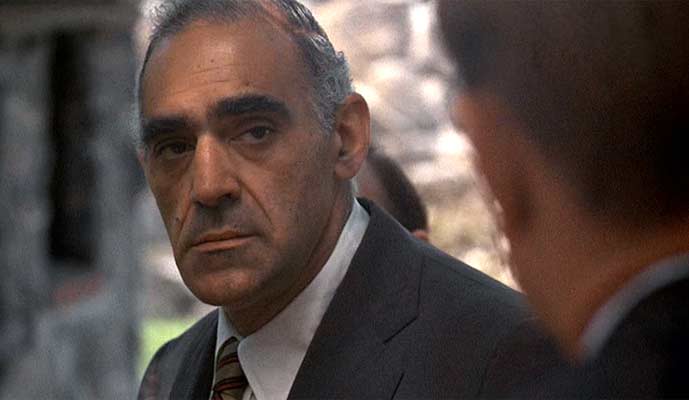
The 61st Rationalization, #52 Tessio’s Excuse (“It’s Just Business”)

Salvatore_Tessio

I realized, in reading the rationalizations being given by defenders of the decision of the New Jersey aunt of recent controversy to sue her young nephew for accidentally injuring her wrist when the boy was eight all boil down to a familiar rationalization repeated often in a classic film and its sequel. Somehow that rationalization missed inclusion on the Ethics Alarms Rationalizations list. (There are 60 rationalizations now, with some labeled as sub-categories.) After today, that will no longer be the case. Presenting…

#52 Tessio’s Excuse, or “It’s Just Business”

Near the end of “The Godfather,” longtime Don Corleone loyalist Sal Tessio (played by the immortal Abe Vigoda) is caught attempting to ally with a rival family in an attempt to kill the new Don, Michael Corleone. As he is taken to the car for his final ride, Tessio turns to consiglieri Tom Hagen and says…

“Tell Mike it was only business. I always liked him.”

Ah. It wasn’t personal, you see, this attempted assassination. That makes it all right.

Continue reading

Hail Trump, King Of Signature Significance!

Because Senator Lindsey Graham properly said that Donald Trump needed to stop acting like a jackass and should get out of the Presidential race, Trump gave out the Senator’s cell-phone number.

Of course he did.

I almost wrote a post yesterday about how some right-wing pundits apparently have no concept of right and wrong, crippling them in matters like the Donald Trump campaign. I listened in amazement–I actually had to pull off the road, so as not to crash—as Sean Hannity and another right-wing fool (I didn’t catch his name) went on and on about how if only Trump could avoid “mistakes” and “self-inflicted wounds” what a great candidate he would be, and how impugning the courage of a war hero like John McCain was such bad strategy, because it distracted from his message. These people really understand nothing, not ethics, not common sense, not character, and certainly not signature significance, even though Donald Trump is the living embodiment of the term.

Signature significance, which is used often here, means that a single instance of conduct can be so remarkable that it allows an accurate assessment of the character of the individual engaging in it. It comes from the world of baseball statistical analysis, and the example is a starting pitcher allowing no runs, striking out 15, not walking a batter and giving up less than five hits in a complete game, 9 inning performance. Doing this just once is enough evidence to conclude, decisively and validly, that the pitcher involved is a superior one. Why? The reason is that the history of baseball shows that literally no pitcher who isn’t great can pitch even one game that good.

In ethics, signature significance refers to an act so blatantly wrong and yet intentional that no ethical individual would ever do it, even once, or a statement showing such complete ethics ignorance that it alone justifies withholding trust from anyone who would say it, even once. Ethics dolts like Sean Hannity really think that public figures who have shown beyond all doubt that they don’t know what ethical behavior is will suddenly be able to act ethical if they just try a little harder.  Donald Trump is the perfect example of why that is ridiculous, yet here Hannity was, yesterday, applying that logic to Donald Trump.

Trump is the epitome of signature significance. Again and again he has done and said things that if they were the only thing we had ever heard about the man, it would be sufficient to conclude with near 100% confidence that this guy is 1) untrustworthy and/or 2) dumb as a brick. Continue reading

Yes, Aaron Schock Is Untrustworthy. Why Wasn’t that Obvious From The Start?

SchlockRep. Aaron Schock (R-Ill) resigned from Congress this week, effective March 31, after it was revealed that he charged more driving miles of travel to taxpayers than he had mileage on his car. This was just the latest indication that Schock was infected with a fatal sense of entitlement, which you can read about here and  here. I’m not going to waste time declaring the Congressman unethical: obviously he is unethical. What concerns me is that he was elected to Congress three times despite being such a textbook example of a Narcissistic Personality Disorder victim that everyone should have been running away. This was a stunning instance of voters, journalists and pundits being naive, ignorant and incompetent. Continue reading

Wanetta Gibson, The Limits Of Forgiveness, And The Most Unethical Facebook Friend Request Ever

"Come on. Let's hang out. I'm more mature now."

“Come on. Let’s hang out. I’m more mature now.”

Brian Banks, the once-promising high school athlete whose life was upended by a classmate’s false rape accusation that sent him to prison for five years, is now  back on his feet, working for the National Football League, and, by the evidence of his recent profile in the New York Daily News, impressively beyond anger and bitterness. He does tell a stunning story, however, of a day in 2011 when he received an unexpected Facebook friend request from Wanetta Gibson, the woman who, for no apparent reason, did this terrible thing to him. Banks says that she wrote…

“I was hoping we could let bygones be bygones. I was immature back in the day, but I’m much more mature now. Let’s hang out. I’d love to see you. I’ve seen your picture on Facebook. You look real good. I would love to hook up.”

I’ve been trying to think up a fanciful equivalent for this “I know I tried to wreck your life, now will you please let me back into it?” request. Would it be John Hinckley Jr. asking President Ronald Reagan for a job? Edward Snowden replying to an NSA RFP? Maybe V. Stiviano asking Donald Sterling for a job recommendation? I’m not sure any of them would be as bad. “Let bygones be bygones.” Among other things, what an insult this is. How stupid does Gibson think her victim is?

Then there is this chilling statement: I was immature back in the day, but I’m much more mature now.” Translation:  “Yes, now I’m a fully mature vicious sociopath. Don’t you want to renew our relationship?”

These are the situations where someone inevitably argues that Americans believe in redemption, and when I inevitably respond, “You are out of your friggin’ mind.” Some people, not many, but some, are bad to the bone, and the social pressure to forgive the worst of the worst—Did you read the words “I’m sorry” anywhere in that request?—is a trap, set up by those who won’t have to live with the consequences of another betrayal of trust.

Banks, of course, rejected Gibson’s overtures.

Two years later, she recanted her withdrawal of her rape accusation.

Marion Barry and The Julie Principle

Poor Julie. Luckily for her, she didn't exist. Washington, D.C. does.

Poor Julie. Luckily for her, she didn’t exist. Washington, D.C. does.

The Washington Post just discovered that D.C. Councilman Marion Barry is unethical, and boy, is it steamed!

Well, that’s not quite fair. The Post editors authored an editorial about Barry’s latest example of his complete rejection of ethical principles other than his guiding star, which is “If it’s good for Marion Barry, it’s good for everyone else.” Barry recently published a self-congratulatory, delusional autobiography (I nearly wrote about it, but I was afraid doing so would make me nauseous), “Mayor for Life,” and right in the acknowledgments, he announces that one of his council aides, LaToya Foster, spent “nights, weekends, and many long hours of assistance” working on book at taxpayer expense.  Using D.C. government employees as his personal staff was standard operating procedure for Barry during his various pre- and post-crack terms as mayor, so there is little chance that he played it straight this time. No chance, really. A Washington City Paper investigation of calendar entries and emails showed that Foster’s work on Barry’s book “stretched far beyond her off-hours and into the D.C. Council workday, an arrangement that appears to violate D.C. Council ethics rules.”

The Post should stop editorializing about Barry’s ethics and instead focus attention where it might do some good: the D.C. voters and citizens he has thoroughly exploited and corrupted. Barry is a prime example of what I have dubbed The Julie Principle, evoking the famous lyrics of Julie’s lament in “Show Boat,” “Fish gotta swim, birds gotta fly…”   If Oscar Hammerstein was writing those lyrics today about Barry, the song, sung by voters of D.C.’s Ward 8, would go,

Fish gotta swim, birds gotta fly”

Marion Barry will cheat, steal and lie..

Can’t help loving that man of mine. Continue reading

Comment of The Day (Public Service Message Division): “Wanetta Gibson Is Even Worse Than We Thought”

Wait a second...I'm getting my rifle...

Wait a second…I’m getting my rifle…

We haven’t had one of these in a while, and I’m feeling like having a good fish-shoot in the ol’ barrel, so here we go….

Apparently there has been another development in the Wanetta Gibson saga—I know this because the last post about this horrible woman is suddenly getting traffic again—and this has moved one Terrance Skerrette—I sure hope there’s just one— to enter one of those periodic comments I receive here that serves as a public service announcement for the ethically-challenged. You know the kind—Saturday Night Live parodies of such spots used to be a staple:

“Hello. I’m Jack Marshall, and this is Terrance. Terrance was raised in an environment that left him with an inability to understand ethics. That’s right–he will go through life justifying horrendous conduct by using rationalizations, hideous logic, and warped values. Will you help Terrance? No, he can’t be helped by treatment, but perhaps, if you give generously, we can provide him with a comfortable shack in the forest and plenty of food, so he can live comfortably without infecting anyone else with his hopeless ethical ignorance and dangerous excuses for terrible conduct. Please send your generous contributions to “Help Terrance,” care of Ethics Alarms. Thank you. Terrance would thank you too, but he probably thinks you are evil.”

Continue reading