“Psychology Today” (Again) Shows Why “Experts” Cannot Be Trusted

Why is a standard issue anti-gun screed with moldy “common sense gun control” talking points being featured in “Psychology Today” under the guise of a “How to prevent suicides” article? Oh, lots of reasons, such as..

  • Anti-gun fanatics will use every opportunity imaginable to repeat their cant;
  • The fact that their objective, to somehow void the Second Amendment, is impossible doesn’t dissuade them from wasting our time;
  • Like most of the print media in the sciences, “Psychology Today” has been captured by the doctrinaire Left and allowed what should be a non-partisan topic be polluted by progressive activism;
  • Too many academics, scholars and experts today have no regard for integrity, and believe that they must accomplish their ideological goals by any means necessary, and
  • To someone whose only tool is a hammer, everything looks like a nail.

“Reducing Gun Violence, Particularly Gun Suicides: What we can learn from other countries when it comes to reducing gun deaths” announces its bias and how that bias has made its “expert” author stupid right in the headline. Other countries have nothing to offer us as far as gun policies are concerned. They do not have the same culture as the United States, nor do other nations enshrine individual liberty as securely as the United States. Other nations did not rely on guns and self-determination to the extent that the U.S. population has throughout its history, and other nations are far more submissive to government interference with their rights than Americans are.

Continue reading

But Why Did They Have To Kill the Dog? [Updated]

[Skip to the end for more details released after the post first went up.]

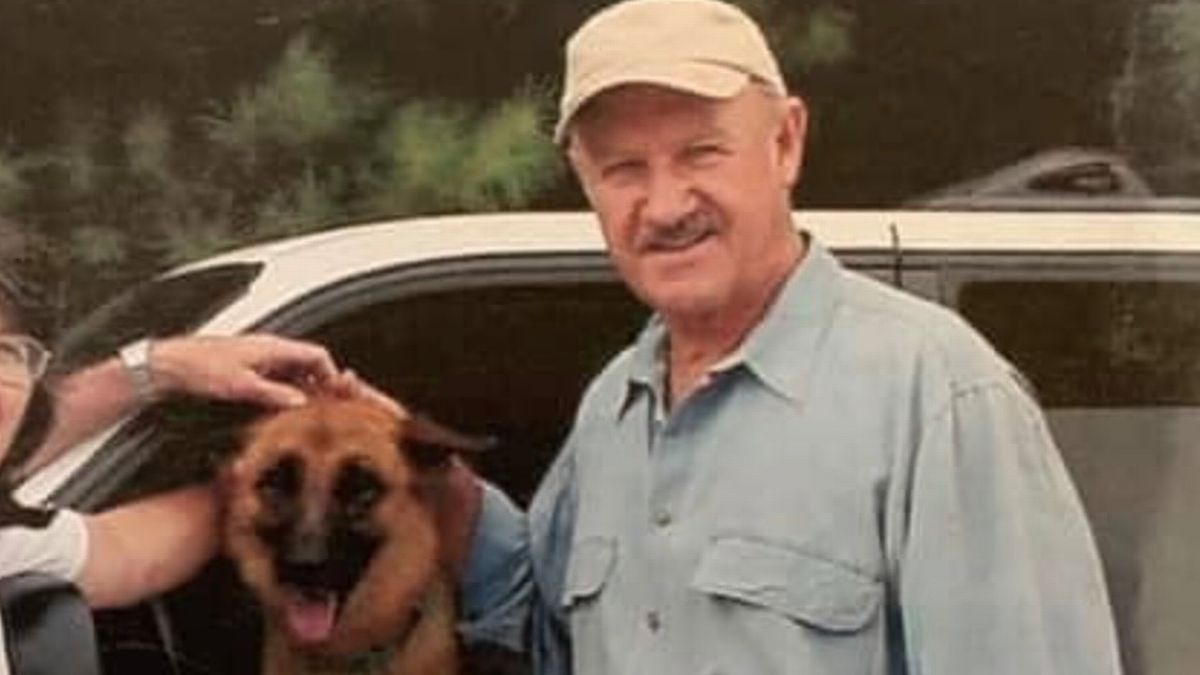
I woke up this morning to the disheartening news that one of my all-time favorite screen actors, Gene Hackman, had died. He was 95 and had been retired for twenty years, so the news was not exactly shocking. However, the details of what police found in Hackman’s Santa Fe, N.M., home indicate a larger tragedy: along with the actor, police found he wife, Betsy Arakawa and a German Shepherd.

Since the police have stated that there were no signs of “foul play,” meaning that the group did not appear to have been murdered, and that there was no immediate evidence of a murder-suicide scenario, as when actor Gig Young was found dead after murdering his young wife, the scene still strongly hints of a suicide pact. Elderly couples do this here and there; some even think that it is romantic. (James Stewart’s last movie, made-for-TV, was co-starring with Bette Davis as an elderly couple who decide to kill themselves in the interests of avoiding pain, misery and expense.) Mrs. Hackman, Betsy Arakawa, was only 64, but who knows? Maybe she had just been diagnosed with dementia or some other dread disease. Maybe the duel suicides were her idea.

But why kill the dog?

Continue reading

The Self-Terrorism of the Late Aaron Bushnell

I decided that we don’t need to see Bushnell’s last act, setting himself on fire in front of the Israeli Embassy in D.C. You can find the video if you look. Publicizing that pointless suicide only gives some small purpose to a deranged stunt that doesn’t deserve the attention.

The 25-year-old a cyberdefense operations specialist with the 531st Intelligence Support Squadron at Joint Base San Antonio-Lackland in Texas self-immolated Buddhist-style two days ago, dousing himself with gasoline and saying on the scene, “I am an active duty member of the US Air Force and I will no longer be complicit in genocide.”

” I am about to engage in an extreme act of protest,” he continued, “but compared to what people in Palestine have been experiencing at the hands of their colonizers, it’s not extreme at all.”

“This is what our ruling class has decided will be normal,” he added, and shouted “Free Palestine!” in flames as his last words.

Whatever. Ram-a-lam-a-ding dong.

Continue reading

Is The George Floyd Freakout Finally Waning?

Oh, probably not, but there are some hopeful signs.

After the death by ambiguous causes of an African American petty hood resisting arrest at the hands, well, the knee, of a habitually brutal cop who should have been kicked off the force long before, absent any evidence whatsoever that the death was intentional or that it was motivated by race, police officers across the nation have been vilified, fired, prosecuted and generally abused virtually every time an African-American, and sometimes even a white citizen, died or was wounded in a police-involved shooting. This insanity, hysteria, freakout, deliberate exploitation, what ever you choose to call it, resulted in law enforcement around the nation being weakened, black communities being made more vulnerable to crime, a mass exodus of police officers, and an unprecedented spike in murders nation-wide. There were other horrible effects too, like the sudden acceptance of anti-white racism and discrimination as “restorative justice,” and the ascent of Kamala Harris to the office of Vice-President, but this is just an introduction.

Last week, however, two decisions in police-involved deaths showed that sanity might be creeping back.

Continue reading

Comment Of The Day: “Comment Of The Day: ‘….Suicide Ethics’”

Head in the oven

Let’s get away from metaphorical national suicide for the nonce and back to more pleasant topics, like actual suicide. Rich in CT posted an excellent comment last week in the discussion, sometimes heated, of the appropriate societal attitude toward suicide and those who indulge in it.

I ended up banning a particularly obnoxious new commenter in the threads on this topic, and this is as good a place as any to point out some things. First, as is almost always the case, I should have seen what kind of participant I was letting into the fray when I let his first comment out of moderation. This is the kind of mistake you make when you are obsessing over getting more diverse commenters, and it was all my fault. Second, it was clear from the beginning that the commenter never bothered to read the comment guidelines. That’s a bad sign. Third, like so many who are moved to comment on a single issue, never to be heard from again, this commenter was ignorant of basic ethical principles and analysis, and, as with the comment guidelines, didn’t feel it necessary to educate himself on the topic of the blog before issuing his opinion in emphatic terms. Finally, his string of comments were all about how the feelings of suicidal people justified their destructive actions. That statement is signature significance for an ethics dolt. Feelings are based on emotions, and emotions don’t factor in to ethical decision-making. In Reciprocity analysis, the feelings of others may need to be considered, but the process of being ethical requires rational and objective reasoning, and this requires recognizes feelings as impediments to the process. Maybe I haven’t been sufficiently clear on this: one of the mains reasons public discourse on so many topics spins away from ethics is that ascendant view that feelings justify conduct.

But I digress! Here is Rich in CT’s Comment of the Day on David C’s Comment of the Day on the post, Sunday Ethics Picnic, 8/15/2021: Afghanistan Accountability And Suicide.

***

“And yes, as far as I know there is research that suggests that if people are fixated for whatever reason on a certain means of suicide, they will not turn to another method if access to that method is removed.”

It took me a few days to get around to addressing this point for the original post. I’ll include the comment here instead.

“Or is the goal to just make sure they give up and go home to swallow sleeping pills?”

Studies have shown this is not the case. Rather, suicide is an impulsive choice at the intersection of desperation and a particular opportunity. The ideation is often linked to a particular method (jump off bridge, pills, etc). Suicidal individuals don’t systematically engage in various methods until they are successful; rather they fixate, as David C says, on a particular method as the solution; they are at most danger when they are at a low point and their preferred method is readily available.

A famous example occurred in England, the trope of sticking one’s head into the oven to suffocate. Prior to the 1970’s, the island used primarily “town gas” for ovens (as opposed to natural gas or propane). Town gas was extracted from coal in a gasworks plant at the edge of town (hence town gas), and piped to each house. As a byproduct of the extraction process, carbon monoxide was produced, and piped directly to each home along with the hydrocarbons.

Carbon monoxide produces a painless death; one loses conscious quickly prior to suffocation. Carbon monoxide is also nearly 100% effective at causing death. Plugging up the vents in the kitchen, blowing out the pilot light, and turning up the gas became an extremely popular method of suicide between the 1800’s and 1970’s, accounting for about half of all successful suicide deaths in England (I believe these statistics hold up elsewhere, too).

Continue reading

Comment Of The Day: “Sunday Ethics Picnic, 8/15/2021: Afghanistan Accountability And Suicide Ethics”

This Comment of the Day, by new commenter David C, is more emotional than most EA COTDs, but the topic is an emotional one: suicide. Checking the web on the topic, there are so many essays and articles about why suicide is not a “selfish act” that I sense a politically correct mandate at work. Depression is a serious illness that is stigmatized, depressed people commit suicide in large numbers, ergo criticizing suicide is a cruel attack on victims who deserve only sympathy and empathy.

I will accept a rebuke for writing in the post that “suicide has been accurately called the most selfish human act of all.” I should not have written “accurately,” and I apologize and retract it. It is an act the is often selfish, unless we want to absolved suicides from all responsibility for their actions, which seems to be David’s orientation.

I am not entire inexperienced in the area of depression and suicide. I served on an NIH task force on the former, and have had a roommate and three first cousins kill themselves. One cousin threw himself from an overpass and fell through the window of a passing truck. Selfish? The truck driver could not continue driving after experiencing that trauma. His brother deliberately drown himself in front of his former fiancee as she watched helplessly. Selfish? Often…not always…suicide is an intentional act of aggression and hostility toward society. The harm these acts do to family and others is extreme: I’ve seen it. Do note that the post comment upon was about grandstanding suicides for effect, involving people hurling themselves off a prominent public attraction. David’s argument seems to be “they are sick,” so they can’t be blamed—none of them.

I also believe that sanctifying suicide makes it more common by making it more acceptable. Once, when it was considered a crime and a sin, society looked on suicide as a shameful act. As with addiction, sex outside of marriage and unwed pregnancy, removing the element of shame also increased conduct that has serious societal drawbacks.I think its fair to say that killing oneself has serious societal drawbacks, and that if potential suicides were encouraged to give serious thought to how their deaths would affect others, they might seek less violent solutions to their very real problems. Or should be take the position that the depressed are not capable of being ethical, and we should not expect them to be?

Here is David C’s Comment of the Day on the post, Sunday Ethics Picnic, 8/15/2021: Afghanistan Accountability And Suicide.

***

I have avidly followed your blog for well over 2 years now. Occasionally I feel let down by some of your remarks on mental health, but perhaps my expectations are unreasonable as it is not your wheelhouse. The pandemic has shown us many things but chief among them is that every person’s mental health can be vulnerable in the right circumstances. I know this is very complicated issue but I feel equipped to make some points.

Yes it is a myth that talking about suicide will plant and germinate the idea in a person’s head. Hotlines are more accessible than ever with smartphones. Whether people avail themselves of hotlines is one question, and whether they help is another, but it is always better to be aware of the existence of the resources that are out there. And yes, as far as I know there is research that suggests that if people are fixated for whatever reason on a certain means of suicide, they will not turn to another method if access to that method is removed.

To tar the act wholesale as selfish in my eyes tends to be a facile dismissal of what is a profoundly complex matter. And if that accusation is launched one could certainly charge those who demand the person in pain remain alive as equally “selfish” at least. After all, isn’t it easy to ask other people to endure pain that you don’t experience? Not to mention when it comes to such an issue of such great sensitivity I don’t find such language to be helpful and conducive to anything positive. We need to be talk openly, and in many cases it is just dead inaccurate. And as someone with a mountain of experience in crisis intervention, I can tell you why: in many cases these people are convinced, literally convinced that their families, friends, society, the WORLD is better off without their presence. Selfish…what a word to describe them! And whether you think their thinking is misguided or distorted or whatever doesn’t matter (even if it may be) because what matters is what they believe at the time of their action. I have no doubt you can appreciate that.

Continue reading

Sunday Ethics Picnic, 8/15/2021: Afghanistan Accountability And Suicide Ethics [Corrected!]

Vessel I

1. Giving credit where credit is due, at least some of the mainstream media isn’t avoiding calling attention to the Biden Administration’s epic debacle in Afghanistan. This is only a half IIPTDXTTNMIAFB: if Trump had done something even close to this incompetent, the news media would have been in full-fledged meltdown. In fact, there are enough harsh assessments coming from places that are not conservative mouthpieces that maybe Biden will face actual accountability for a change. (Nah, what am I saying?) CNN’s Jake Tapper, who occasionally has flashbacks to his pre-CNN days when he was a fairand trustworthy journalist, grilled Secretary of State Antony Blinken regarding Biden’s comments from last month, when he declared that it was “highly unlikely” the Taliban would overrun Afghanistan. That’s some intelligence work there, Joe! After some awkward huminahumina-ing, Blinken, kept trying to change the subject, defaulting to how everything was Trump’s fault. Amazingly, Tapper wouldn’t let him get away with it.

“You keep changing the subject to whether or not we should be there forever. And I’m not talking about that,” Tapper told Blinken. “I’m talking about whether or not this exit was done properly, taking out all the service members before those Americans and those Afghan translators could get out. That’s what I’m talking about. And then you have to send people back in. That’s the definition of, ‘Oh, we shouldn’t have taken those troops out, because now we have to send twice as many back in.'”

On Medium, political analyst John Ellis was on fire, writing in part,

“Handing over Afghanistan to the Taliban is President Biden’s idea, if that’s the right word, and his alone. It is terrible policy, on any number of levels. “Worse than a crime, a mistake” (Talleyrand’s phrase) describes it best. Axios reports that the Administration “derives comfort from the fact that the American public is behind them — an overwhelming majority support withdrawal from Afghanistan — and they bet they won’t be punished politically for executing a withdrawal.” Given events and the likely consequences, the fact that the Administration “derives comfort” from anything regarding its decision to hand over Afghanistan to the Taliban is nauseous. That they’re “betting” they will escape political punishment is perhaps more so….”

But that’s the routine, now. The Democrats count on the news media to minimize or hide their worst botches, so the public won’t know what’s going on and will keep on voting like good littel lambs. Other notes from Ellis:

  • “Abandoning the Kurds under Trump was bad enough. But this makes that look like home leave. This is an epic betrayal and strategically foolish to boot….
  • “…If you’re President Xi, you see Afghanistan, clearly, for what it is: a humiliating defeat for the United States. He might call it “flexible humiliation.” And what he knows from history is that defeated nations have little appetite for war in the immediate aftermath of losing one. Taiwan is there for the taking….
  • “When President Biden first announced that the US would be “leaving” Afghanistan, he set September 11, 2021 as the date when every last one of our people would be out. The announcement was greeted with astonished disbelief around the world. Could it really be possible that the US would officially hand over Afghanistan to the people who made it possible for Al Qaeda to attack it 20 years ago………on the very day of that attack? The answer was “yes,” although the Administration subsequently tried to walk it back without bringing attention to the fact that they were trying to walk it back.”

Ellis concludes, “Remarkably, the American press gave the president a pass on this, which seems to be its default setting when it comes to the Biden administration. “Trump was so much worse,” is the always-applicable rationale. Not in this case. Not by a long shot.”

Continue reading

The Suicide Of Officer Smith And Ethics Zugzwang

Officer Smith

Ethics zugzwang is a term used on Ethics Alarms to describe situations where there are no ethical options, only unethical ones The origin is the world of chess, which uses the German word zugzwang to indicate a game position in which a player is safe from checkmate as long as he or she doesn’t move. But of course, a player has to do something; time cannot be stopped in place. In ethics zugzwang, and resolution is a bad one.

The current controversy over the suicide of Jeffrey Smith, a D. C. Metropolitan Police Department police officer who confronted the mob in the Capitol on January 6 and shot himself nine days later, is a perfect example of ethics zugzwang in our ugly political environment. Smith’s widow Erin is convinced that his death was caused by the riot, she says, and will petition the Police and Firefighters’ Retirement and Relief Board to designate her husband’s suicide as a death in the line of duty. “When my husband left for work that day, he was the Jeff that I knew,” Ms. Smith said in an interview. “When he returned after experiencing the event, being hit in the head, he was a completely different person. I do believe if he did not go to work that day, he would be here and we would not be having this conversation.” Of course, she is welcome to believe whatever she chooses. Having her husband’s death ruled as occurring in the line of duty also carries with it substantial financial benefits. Confirmation bias is unavoidable.

Continue reading

Afternoon Ethics Refresher, 1/15/2020: Firing, Tweeting, Protesting, Talking Friends Into Suicide…

Hello?

Traffic here inexplicably dead yesterday and today. Is there a secret ethics convention nobody told me about? There is, isn’t there? I’m hurt…

1. It’s too bad so many readers don’t pay attention to the baseball posts, because a lot of fascinating ethics issues with general applications arise…like right now. Yesterday, as already mentioned in an update to yesterday’s post and a couple of comments, the Boston Red Sox “parted ways with Manager Alex Cora by mutual agreement.” (He was fired.) In a press conference I just watched, the Red Sox brass said that Cora, who was both successful and popular in Boston, was let go solely because of the MLB investigation report regarding his involvement in cheating while serving as a coach for the Houston Astros in 2017, and the allegations of cheating  while managing the Sox in 2018, still under investigation, played no part in the decision. What they meant is that the Astros cheating was going to result in a long suspension for Cora anyway, so the team didn’t need to wait for the bad news regarding his cheating in Boston.

The weirdest thing about the press conference is that none of the four Sox officials would do anything but praise Cora, his character, his judgment, his dedication to the team, his devotion to baseball. Gee, why did they fire this saint, then? Alex Cora’s character is obviously flawed, or he wouldn’t have masterminded major cheating schemes that cost the Astros 5 million dollars and four key draft choices while losing the jobs of two men who advanced his career. Cora’s judgement also stinks, because his actions have now cast a shadow over two teams, their championships, and the records of the players his schemes benefited.

If he was so dedicated to the team, why is  it now facing a public relations and competitive disaster because of his actions? If he was devoted to baseball, how did he end up at the center of a scandal that undermines the perceived integrity of the game? Continue reading

Another Leap Down A Slippery Slope: Massachusetts Repeats The Michelle Carter Debacle

The Suffolk County (Mass.) District Attorney has charged Inyoung You, a 21-year-old South Korean native and former Boston College student,  with involuntary manslaughter in the suicide of 22-year-old Alexander Urtula, who jumped to his death on May 20, 2019, the day he was going to graduate.  You was in cellphone contact with her boyfriend that day, and was at the scene when he plunged to his death.

While Urtula struggled with mental health issues throughout the pair’s 18-month relationship,  You was “physically, verbally, and psychologically abusive, and was so “wanton and reckless” that it  “resulted in overwhelming Mr. Urtula’s will to live,” the DA told reporters. “She was aware of his spiraling depression and suicidal thoughts brought on by her abuse, yet she persisted, continuing to encourage him to take his own life.”  Among the over 47,000 text messages sent by You in the two months leading up to Urtula’s suicide, here were hundreds “where (You) instructed him” to take his own life, as well as “claims that she, his family and the world would be better off without him.”

Nice.

But is it criminal?

There are differences in the two cases, but this is redolent of the 2017 prosecution and conviction Michelle Carter, who was convicted in the Bay State of involuntary manslaughter for urging her 18-year-old boyfriend, Conrad Roy III, to kill himself, which he did. The conviction was upheld by an appeals court this past February, so Carter will apparently serve out her entire 15 month sentence—for the content of her text messages. Continue reading