Good for them. If only more Americans had similar courage….but having a guaranteed lifetime position definitely helps.
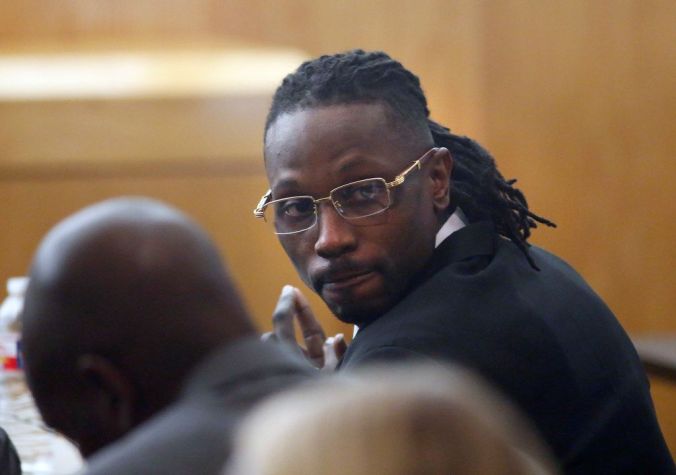
The Supreme Court last week silently rejected an appeal by a death row inmate in Texas arguing that his conviction was unjust because a juror had admitted to racial bias. Kristopher Love (above) is black, and his lawyer had been forced to accept a juror whose answer to a potential juror questionnaire query, “Do you believe that some races and/or ethnic groups tend to be more violent than others?” was “Yes.” Asked about that answer, the white juror said, “Statistics show more violent crimes are committed by certain races. I believe in statistics.”
The prospective juror in question, who is white, said yes. Pressed by defense lawyers, he said he based his views on “news reports and criminology classes” rather than his “personal feelings toward one race or another,” and that he did not “think because of somebody’s race they’re more likely to commit a crime than somebody of a different race.” He insisted that he did not feel animosity or suspicions toward Love “because he’s an African American.”
“Does (a decision) read like something that was purely results driven and designed to impose the policy preferences of the majority, or does this read like it actually is an honest effort and persuasive effort, even if one you ultimately don’t agree with, to determine what the Constitution and precedent requires?”
She predicated that advice with the recommendation, “Read the opinion.” Of course, most Supreme Court critics, even those writing op-ed critiques, often don’t bother to read SCOTUS opinions. The public almost never does, and the vast majority of the public is inadequately educated to understand the opinions if they did read them. Its so much easier to treat holdings that clash with one’s politic preferences as politically-driven positions rather than carefully worked out exercises in law, history and balancing of rights and interests.
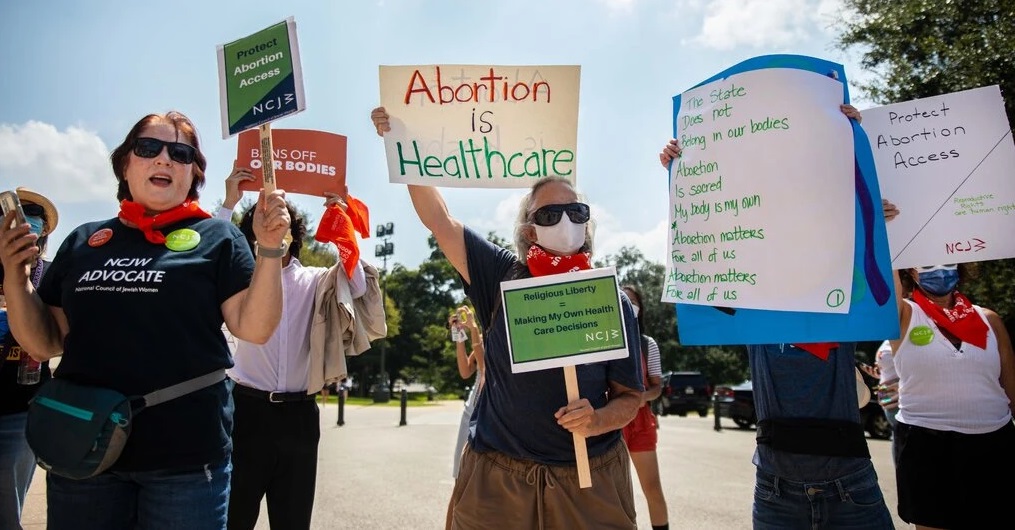
The Texas law, which went into effect yesterday when the U.S. Supreme Court declined to block it on a 5-4 vote. (Guess which justices were on each side. Next question: Who is buried in Grant’s Tomb?) The law bans abortions after a fetal heartbeat can be detected, which is after about six weeks of pregnancy. Roe v. Wade, the 1973 Supreme Court decision that established a constitutional right to abortion until a fetus was viable (by the medical standards of 50 years ago), would seem to preclude such laws, which other states ( Georgia, Mississippi, Kentucky and Ohio) have passed only to have them held in limbo by the courts The Texas law is the first to be implemented, in part because it approaches the issue from a clever (some might say diabolical) perspective.
The law does not make exceptions for rape or incest, as it should not: if the objective is to protect the human life of the unborn child, how that life came into being is irrelevant. It does permit abortions for health reasons, allowing a termination only if the pregnancy endangers the mother’s life or might lead to “substantial and irreversible impairment of a major bodily function.” The clever part is this: the Texas law doesn’t require state officials to enforce it, meaning that abortions won’t he halted by government action. The Texas law deputizes private citizens to sue anyone who performs an abortion or “aids and abets” a procedure. Any citizen has standing, regardless of connection to the patient, the abortion doctor or the clinic and may sue and recover legal fees along with $10,000 if they win.
This means that the Supreme Court will have to consider not only whether the Texas law in unconstitutional, but whether it can even be challenged in court, what the SCOTUS majority called “complex and novel” procedural questions. Predictably, while the majority opinion was relatively restrained, the dissenters freaked out.
I have come to detest April Fool’s Day, and cultural developments have shown me that, as William Saroyan liked to say, “I’m right and everyone else is wrong.” Early in the history of Ethics Alarms, more than ten years ago, I dared to criticize—indeed, called unethical—a blogging criminal defense lawyer who falsely announced that he had taken on a new prestigious job (as I recall: it’s not worth checking what his exact lie was), and it was then reported as fact by the New York Times’ crack reporters. The announcement was an April Fool’s joke, you see, so my assertion that lawyers shouldn’t deliberately misrepresent facts, even on blogs, even in jest, even unrelated to cases and even on April First was set upon by the lawyer’s angry defense lawyer allies, who pummeled me here from all sides. I had, in fact, over-stated my complaint (Can you imagine ME doing THAT?), and I duly apologized to the lawyer. But his pals remained insulting and vicious, and I wasn’t wrong in the principle I was asserting. Professionals shouldn’t lie, ever. Even on April Fool’s Day.
1. Hart concedes. The rest of the story: Iowa Democrat Rita Hartannounced late yesterday that she is withdrawing her demand that her loss in Iowa’s 2nd congressional district be overturned, so the House Committee on Administration will no longer be seeking a justification to do so. I wrote about the Democratic Party’s attempt to de-certify an election result after it proclaimed Republican efforts to decertify the Presidential election as “an insurrection” here. Apparently internal polls were showing that there are still some levels of perceived hypocrisy that the Democratic faithful won’t cheer on. That’s encouraging…
2. The concept at play here is “deceit.” I guess after having three straight Republican Presidents who couldn’t speak clearly, it shouldn’t be a shock that the GOP has allowed Democrats to get away with flagrantly dishonest language games. Still, the transformation of the term “voting restrictions” into something sinister is quite an accomplishment for the Blue team, as well as cynical and dishonest. Unless a nation is going to allow anyone alive on the planet to cast votes in its elections, “voting restrictions” are natural, logical and necessary. It’s the “restrictions” part that the pro-voting manipulation side has weaponized. “Restrictions” are baaaad. But the right, informative and descriptive word is voting qualifications. You have to be alive and living in the district where you vote: this is why voter rolls have to be purged of dead people and those who have moved away. You have to be a citizen, and who you say you are, which is why voting IDs are necessary. You have to register before elections, because otherwise vote harvesters will just pay large groups of poor, confused, bored or drunk passive citizens to the polls to vote as they have been instructed. You should have to vote in person, because all mail-in ballots, including early voting and absentee voting, create verification problems, and increase the chances of fraud.
I have neither the time nor functioning brain cells to delve into this issue competently here and now, but I would not find the imposition of other voting qualifications odious or unethical, including requirements of the minimal civic literacy we would expect of, say, a 12-year-old.
“Never on a Sunday” was a surprise international hit film in 1960, a romantic comedy starring Melina Mercuri as a choosy Greek prostitute. The actress also recorded the film’s title song, which had a, er, slightly different meaning in Greek, as my mother, who spoke Greek, delicately explained to me at the time. “Kiss,” mom said, doesn’t exactly mean kiss. Nevertheless the song was covered by lots of singers. including the pre-“Downtown” Petula Clark, and was ubiquitous for months. It was also the first song I ever wrote a parody of, #1of hundreds.
1. It’s comforting to know that the conservative media is trying to be just as unfair to President Biden as the progressive news media (also known as “the media”) was to President Trump. Yesterday i read many stories about how Biden had a complete meltdown during a speech, didn’t know where he was and asked, “What am I doing here?” As you can see for yourself, that’s a false representation. Joe looks vague and unwell, but he merely got lost momentarily reading a list of names. I have said out loud, “What am I doing?” on more than one occasion while speaking.
2. And this is why it’s important to have a conservative Supreme Court: The Supreme Court ruled on February 26 that Santa Clara County may not enforce a complete ban on indoor religious services as part of California’s draconian pandemic measures. (Wait, I’m confused: who are the fascists again?) Earlier, the Court told California that indoor church services could not be banned because of the pandemic, but allowed the state to cap attendance at 25% capacity and to prohibit singing and chanting.
Santa Clara argued that its ban and limitations on any indoor gatherings should be allowed to stand because its restrictions for churches were the same as those imposed on other establishments where people can visit but not gather in groups. The Justices’ unsigned order last week said that the earlier order “clearly dictated” that Santa Clara’s ban could not stand. Chief Justice John Roberts had written at the time,
“The state has concluded, for example, that singing indoors poses a heightened risk of transmitting COVID-19. I see no basis in this record for overriding that aspect of the state public health framework. At the same time, the state’s present determination—that the maximum number of adherents who can safely worship in the most cavernous cathedral is zero—appears to reflect not expertise or discretion, but instead insufficient appreciation or consideration of the interests at stake.”
Showing their insufficient appreciation of the interest at stake—the right to worship—were the three liberal Justices, Kagan, Sotomayor, and Breyer.
3. I was going to post a follow-up to this post about the film “Denial” (hence the “Part I” in the headline) and other issues intervened. (Sorry). To summarize briefly, Part 2 was going to recount my own run-in with Prof. Lipstadt at the time of her defamation trial when she was sued for defamation by a Holocaust-denying British historian in 2005. In my previous ethics website, the suddenly returned Ethics Scoreboard, I gave C-Span an Ethics Dunce award based on Prof. Lipstadt’s account that it had insisted that the Holacuast denier’s arguments be presented on video as a condition of her appearance on its broadcast. I wrote in part,
“It is time—past time—to make plain that, while the pandemic poses many grave challenges, there is no world in which the Constitution tolerates color-coded executive edicts that reopen liquor stores and bike shops but shutter churches, synagogues, and mosques.”
That is the final line of Justice Gorsuch’s concurring opinion to the SCOTUS majority’s per curiam ruling, released last night, in favor of New York Roman Catholic and Orthodox Jewish groups that sued over the state’s limited religious service attendance rules in response to the Wuhan virus.
The majority’s ruling concludes in part,
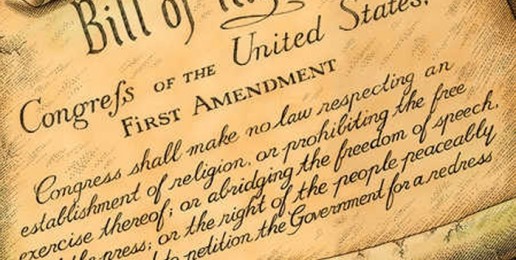
Members of this Court are not public health experts, and we should respect the judgment of those with special expertise and responsibility in this area. But even in a pandemic,the Constitution cannot be put away and forgotten. The restrictions at issue here, by effectively barring many from attending religious services, strike at the very heart of the First Amendment’s guarantee of religious liberty.
The emerging new Left no longer regards religious liberty as a big deal—ironic, since today we celebrate the group of religious expatriates who helped found our nation to escape religious persecution. The entire opinion, the concurring opinions of Justices Kavanaugh and Gorsuch, and the dissenting opinions of Chief Justice Roberts, Sotomayor and Breyer (Roberts argues that the case is moot) can be read here.
There can no longer be any reasonable doubt that President Trump’s Supreme Court nominations have provided the nation and its citizens with crucial protection from a furious assault on its core rights by the suddenly “ends justify the means” obsessed Left. State and city government resorting to arbitrary edicts during the pandemic is but a preface to what is coming over the next four years.
If for nothing else, Americans who cherish the liberty that makes the nation unique and the hope of the world should give thanks this day for President Trump, and the Supreme Court he has left as his legacy.
I will stipulate that the newest Supreme Court Justice does not have to recuse, and that even the judicial ethics rules applying to other Federal judges (no judicial ethics rules are controlling for Supreme Court justices) would not require recusal in Justice Barrett’s circumstances.
I will also concede that the arguments that she should not recuse are significant and important:
1. Were she to recuse, it would be interpreted by many as an acknowledgment that her Senate critics and others were correct to suspect that she was nominated to assist the President if necessary in any Supreme Court challenges to the election results.
2. Her recusal would suggest a precedent holding that a Justice being nominated by a President creates a rebuttable presumption that such a Justice has a conflict of interest that would interfere with the Justice’s ability to exercise independent and objective judgment in any case directly affecting that President’s interests.
3. Her recusal would leave the Court with a potential 4-4 split on a case that would have major impact on the nation.
4. Democratic officials’ demands that she recuse herself are driven purely by partisanship, and are hypocritical. Justice Kagan, appointed by President Obama, did not recuse herself in cases involving the Affordable Care Act, for example.
This is annually the last day before everything goes bananas in Marshall World. From now until New Years, its like the Nantucket Sleigh ride, not quite as dangerous, but not as much fun either. November 22 is the anniversary of Kennedy’s assassination, my generation’s 9-11. It changed everything. The 23rd is my anniversary, #40, which my son is sure to forget and my wife, for various reasons, doesn’t like to celebrate. Next is Thanksgiving, always depressing now because what was once a vibrant table of 7-15 relatives and friends is now at most four and a lot of wistfulness. My birthday comes on December 1, forever tainted because my perverse father chose the date to die on, and fate chose me to find his body. Then it’s the anxious run-up to the Christmas holidays, which always follows in the deadest period for ProEthics, meaning that we are counting pennies at the one time of the year we don’t want to be. (There is also the annual tree drama, since both my family and Grace’s were addicted to real, meticulously decorated trees, and we have a 20 foot ceiling which makes any tree less than 8 feet look silly. The thing takes about 2500 lights, which I have the responsibility of hanging, and then over a hundred mostly unique ornaments, beginning with the yarn Santa my mother made for Jack Sr. and Eleanor’s first scraggly tree in their new Cape Cod-style home in Arlington, Massachusetts. It was 1948. Getting our tree up and decorated to family standards takes about twelve hours and multiple First Degree prickle wounds. I can’t wait.
1. No, I’m not surprised that the Catholic Church sexual abuse cover-up went straight to the top. Are you? I’m not even disappointed. This is what organizations and institutions do: they protect themselves, and sacrifice the victims of their misconduct.
The Vatican this month released a report that showed Pope John Paul’s role blame in allowing the disgraced former prelate Theodore E. McCarrick to continue in the Church’s hierarchy.
The investigation, commissioned by Pope Francis, who canonized John Paul in 2014, reveals how the Pope ignored a wave of accusations of sexual abuse and pedophilia against McCarrick. Three popes participated in the cover-up, but one of them, John Paul, has been canonized. So Catholic saints are now accessories to rape.
A reversal of the canonization, which may never have happened, is unlikely, but it may slow the rush to canonize future popes.
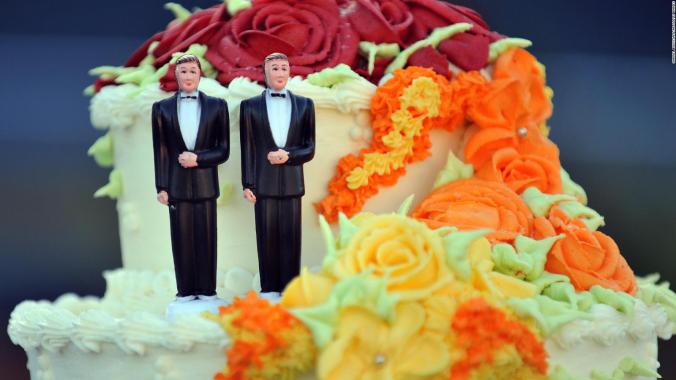
In Fulton v. City of Philadelphia the U.S. Supreme Court will decide yet another legal controversy that should not have occurred at all. Like the various cake-designing law suits, two parties that easily could have come to a mutually agreeable compromise decided, as the old saw goes, “to make a federal case of it.” Now, with the decision bound to abridge somebody’s constitutional right, we will have yet another example of how “Hard cases make bad law.”
This week the Justices heard arguments testing its 2015 decision establishing a right to same-sex marriage with Philadelphia’s decision to bar a Catholic agency that it had hired to screen potential foster parents because the agency refused to screen same-sex couples and approve them, since the position of the Church is that same-sex marriage is a sin. Hence the question: Is Philadelphia discriminating on the basis of religion by refusing to continue using the agency based on its religious mandates? The Church’s lawyer, Lori Windham, says that the agency only wants to continue work that it has been doing for centuries. Besides, she argued, gay couple had ever applied to the agency. If one had, she said, the couple would have been referred to another agency.
What’s the beef, then? Justice Alito says that like the bakery cases (my comparison, not his), LBGT activists want to bend the Church to its will, resulting in Philadelphia acting based on hostility to the Catholic agency’s views.
Today in election history, Harry Truman celebrated pulling off one of the greatest upsets in American history, defeating Republican Thomas Dewey and turning the two-time Presidential loser’s name into an eternal punchline, thanks to the Chicago Tribune’s over-eager headline based on early returns the night before. With Truman’s popularity at historic lows and all of the experts declaring the President defeated before that race began, Dewey campaigned at a leisurely pace, though not exactly a Joe Biden pace. Truman, in contrast, campaigned furiously as the underdog. Truman defeated Dewey by 114 electoral votes, creating the all-time template for surprise Presidential victories, and embedding the photograph above in American lore.
Even this couldn’t displace it…
1. Althouse gets defensive about “abstaining.” One of the bloggers most quoted at Ethics Alarms became triggered by a critical comment about her abstaining from voting and defended herself today, though not too well. Althouse addressed the commenter, named Slothrop, as well as the general attack on 2020 non-voters like her by Instapundit firebrand Sarah Hoyt. Ann countered in part,
[T]his method of using insults to push people to vote is ugly. Are they doing it because they think it’s effective? I don’t yield to bullies. …Slothrop appeals to my vanity as he insists that I be a good person — not cowardly and neglectful of duty. Hoyt denounces vanity and insists that I not get involved in any sense of my personal goodness… she portrays the abstainer as snooty — with her nose in the air, acting like she’s “too good for this.”
Slothrop is distinctly wrong when he says voting is a duty. No. It is not. Like speaking, like religion, like getting married, like having sexual relations, voting is a right, and a right entails the power to decline to exercise it. It is horrible to be forced to speak, forced to take on a religion, forced to get married, forced to have sex — these are loathsome impositions.
Hoyt is wrong — in my case at least — to attribute a refusal to vote for Trump to taking offense at his personal style — his manners, his crassness. I happen to enjoy his personal style…
Trump has his style and I have mine. If it makes you want to stomp your foot, go ahead. You can keep “stomping your foot about” how cruelly neutral I am. You’re free. You’ve got your right and I’ve got mine.
Verdict:Lame. Voting is a duty of citizenship, as long as the citizen is informed, as Althouse certainly is. Yes, there is a right not to do your duty, unless a law makes it mandatory. I’m shocked, or perhaps enlightened, that Althouse would excuse her refusal to make a tough choice to “style.” Let’s see, how many rationalizations on the list does that rattle, along with the rest of her self-defense? I’ve got at least eleven:





 Ethics Alarms