Comment Of The Day: “It’s Time To Play The Exciting New Broadcast Media Ethics Game…”

pop-gun

Steve-O-in NJ, commenting on the post about President Obama’s weak response to the invasion of the Ukraine by an emboldened Russia. raises the broader ethical point of America’s duty to be militarily strong, one of the persistent areas of disagreement between liberals and conservatives, and one area where the right has it right, and the left is out in left field. It should be noted, however, that this problem is a direct consequence of the even greater one hanging over us: the relentlessly expanding National Debt, and the irresponsible lack of political courage and resolve to do anything about it other than let it get worse. This was most recently demonstrated by what we have learned about the President’s new budget proposal, which raised the ethical question, “Did Obama ever mean what he said about entitlement reform and serious debt reduction?”

Wrote Washington Post editorial chief Fred Hiatt—a liberal Democrat, like virtually all of his colleagues— last week:

It’s a relatively small thing, really, a fix to the calculation of cost-of-living benefits that would have helped save Social Security. But President Obama’s decision to drop the reform from his proposed budget hints at a bigger question: What does he believe in enough to really fight for?

To hear him in 2009, you would have thought that safeguarding Social Security was one such goal. “To preserve our long-term fiscal health, we must also address the growing costs in Medicare and Social Security,” he said. In 2010, he was even more determined: “Now, even after paying for what we spent on my watch, we’ll still face the massive deficit we had when I took office. More importantly, the cost of Medicare, Medicaid and Social Security will continue to skyrocket. . . . I refuse to pass this problem on to another generation of Americans.” Now the winds have shifted — his party wants to woo older voters by promising richer benefits, not reform — and Obama has moved on, too. Someone else will have to fix Social Security.

His turnabout on foreign policy has been even more dizzying. Three years ago, he was promising to support democracy movements throughout the Middle East and protect their advocates from government violence.

Hiatt, whom I generally respect, seems to be uncharacteristically slow on the uptake here. Many of us figured out way back in 2008 that Obama was a politician who would use whatever soaring rhetoric he thought would please the maximum number of voters, and that he had no idea how or whether to make his words reality….and does not yet.  Meanwhile, the Post’s fairest and most astute conservative pundit, Robert Samuelson, explained why Obama’s inaction on entitlements guarantees weakness in the world:

We are spending more and getting less, and — unless present trends are reversed — this will continue for years. It threatens the end of government as we know it.

The cause is no mystery. An aging population and higher health spending automatically increase budget outlays, which induce the president and Congress to curb spending on almost everything else, from defense to food stamps. Over the next decade, all the government’s projected program growth stems from Social Security and health care, including the Affordable Care Act. By 2024, everything else will represent only 7.4 percent of national income (gross domestic product), the lowest share since at least 1940, says Douglas Elmendorf, head of the Congressional Budget Office.

This is the central budget story, and it’s largely missed — or ignored — by political leaders, the media, political scientists and the public. The welfare state is taking over government. It’s strangling government’s ability to respond to other national problems and priorities, because the constituencies for welfare benefits, led by Social Security’s 57 million, are more numerous and powerful than their competitors for federal support. Politicians of both parties are loath to challenge these large, expectant and generally sympathetic groups.

With this as the depressing backdrop, here is Steve O’s excellent Comment of the Day on the post, It’s Time To Play The Exciting New Broadcast Media Ethics Game, “Biased, Lazy, or Incompetent!”: Continue reading
It’s Time To Play The Exciting New Broadcast Media Ethics Game, “Biased, Lazy, or Incompetent!”

Time to play

Ready to play, contestants?

All right! For your first test, consider President Obama’s recent statement in response to signs that Russia is preparing to invade Crimea in the Ukraine as an opportunistic territory grab made possible by the collapse of the Ukrainian government. He said in part…

” …we are now deeply concerned by reports of military movements taken by the Russian Federation inside of the Ukraine. Any violation of Ukraine’s sovereignty and territorial integrity would be deeply destabilizing, which is not in the interests of Ukraine, Russia, or Europe… The United States will stand with the international community in affirming that there will be costs for any military intervention in Ukraine.”

For background in answering this question, President Obama has often made sweeping threats regarding foreign oppression and military adventurism, but has established a pattern of doing little or nothing when the actions he warned other governments against taking occurred anyway. His “red line” warning about Syria was the most egregious example, but there have been others. Reporting on the most recent “warning” by the President, CBS stated that his credibility in such situations was “somewhat shaken” by the Syria debacle. [LAUGH SIGN FLASHES] I know, that’s a good one, isn’t it? “Somewhat” shaken! Elsewhere, conservative columnist Charles Krauthammer pronounced Obama’s statement as flagrantly weak: Continue reading

Unethical Quote Of The Week: President Barack Obama

mars3

“The government should know that if it crosses the line, there will be consequences.”

President Obama, in Mexico, in the course of  extemporaneous remarks condemning the Ukrianian government’s harsh and violent response to protesters.

Oh, god.

I am embarrassed; our country is embarrassed; I hope you’re embarrassed—why isn’t the President embarrassed to use this rhetoric, which has been proven again and again to be absolutely meaningless when it issues from his lips? This sham is worse than “the check is in the mail” or “I’ll still love you in the morning,” as Syrian casualties rise and the United States’ credibility as a nation that really gives a damn about anything but its own entitlements has crumbled into dust. Remember the Syrian “red line”? Here are two recent columns from the right and the left on how well Obama’s empty threats of “consequences” have worked in Syria, but nobody needs persuading at this point, do they? President Obama is willing to give insincere lip service to the tradition of the United States still being the champion of democracy and the foe of oppression, but people under attack from their own governments can’t defend themselves with his lips. In Afghanistan, in Iran, in Egypt, in Syria, President Obama has made it abundantly clear that he is under the mistaken impression that Teddy Roosevelt said “Speak incessantly but never actually do what your words imply you’re going to do.”

That’s not exactly what Roosevelt said. Continue reading

The Fifth Annual Ethics Alarms Awards: The Worst of Ethics 2013 (Part Two of Three)

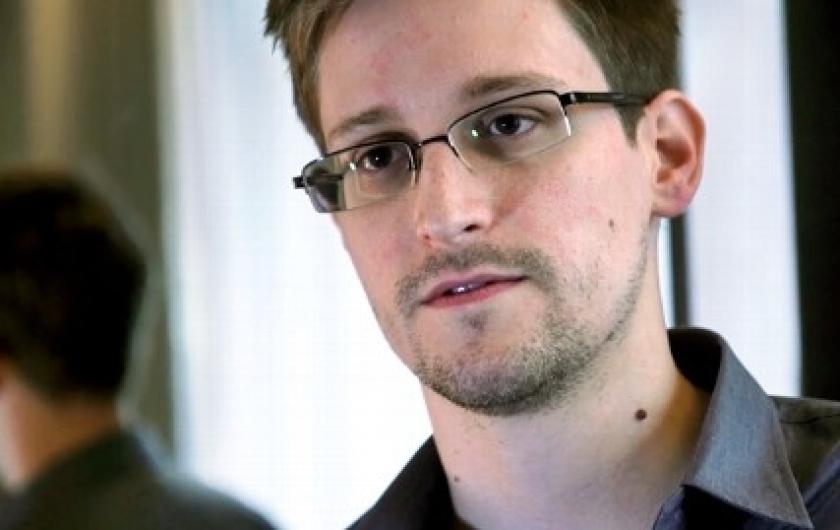
Snowden

The Ethics Alarms review of a truly disheartening year in ethics continues with fallen heroes, ficks, fools and follies with Part Two of the 2013 Worst of Ethics awards….and there’s one last section to come. Be afraid..be very afraid:

Fallen Hero of the Year

Edward Snowden, whose claim to civil disobedience was marred by his unwillingness to accept the consequences of his actions, whose pose as a whistle-blower was ruined by the disclosure that he took his job with the intention of exposing national secrets, and whose status as a freedom-defending patriot lies in ruins as he seeks harbor with not only America’s enemy, but a human rights-crushing enemy at that. The NSA’s over-reach and mismanagement is a scandal, but Snowden proved that he is no hero.

Unmitigated Gall of  The Year

Minnesota divorce lawyer Thomas P. Lowes not only violated the bar’s ethics rules by having sex with his female  client…he also billed her his hourly fee for the time they spent having sex , a breach of the legal profession’s rule against “unreasonable fees.” Yes, he was suspended. But for not long enough…

Jumbo Of The Year

(Awarded To The Most Futile And Obvious Lie)

Jumbo film

“Now, if you had one of these plans before the Affordable Care Act came into law and you really liked that plan, what we said was you can keep it if it hasn’t changed since the law passed.”

—–President Obama

2013 Conflicts of Interest of the Year Continue reading

“Walking Dead” Leadership And Israel’s Iran Nightmare

You call this "escapist entertainment?"

You call this “escapist entertainment?”

For some reason, last night’s “mid-season finale” (an oxymoron if I ever heard one) of AMC’s “The Walking Dead” caused me to think about what lies ahead in Iran-US-Israel relations. Can’t imagine what that reason is….

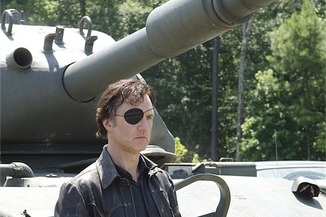
In this cataclysmic episode of the zombie apocalypse drama, the psychopathic character called “the Governor,” full of bloodlust and vengefulness and determined to press his conviction that the group of competing survivors “led” by Rick Grimes has no legal right to exist, confronted the alleged good guys’ leader in the abandoned prison they call home with an army, a tank and a demand that they surrender their shelter or die. Rick, who has repeatedly shown a flat learning curve in basic leadership skills and has already gotten many people killed by trusting the Governor rather than taking him out, despite ample evidence that the Guv is exactly as trustworthy as Vlad the Impaler or, say, Iran, engaged this murderous madman in a full-bore, Rodney King, “Can’t we all get along?” plea.

It was futile, of course, and only some lucky turns (an unlikely escape by the one individual who could turn the tide here, a well-aimed hand grenade there, and an unexpected rescue by sure-shot, gun-toting little girls elsewhere) prevented a bloody slaughter with the Governor’s objectives fully realized. Our feckless hero Rick, however, was obviously not willing to do what he had to do to prevent the carnage of an attack, and was going to depend on hope, passiveness and a refusal to be proactive to keep a proven predator at bay. Yet his approval percentage with his core constituency inexplicably still hovers in the 90s.

Ironically, Washington Post editor Fred Hiatt chose today to assemble his time-line of President Obama’s Rick-like handling of Syria, which you can read here. (Hiatt is a card-carrying liberal Democrat, like the rest of the Post’s editorial board.)

I wonder if they show “The Walking Dead” in Israel? It’s scary enough here, but I bet, given our President’s leadership similarities to Rick Grimes, it would be absolutely terrifying there.


Update: “Ethics Quiz: Photojournalism And The President’s Meaningful, Meaningless Bowed Head”


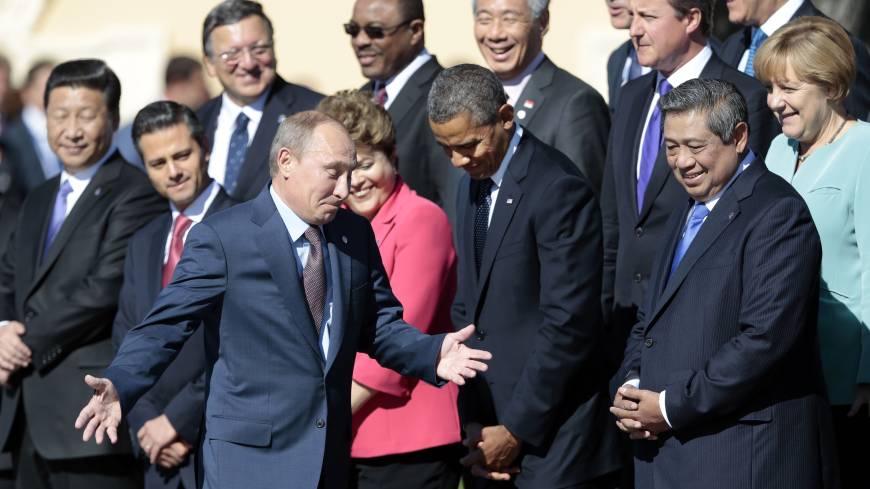
Putin and obama2

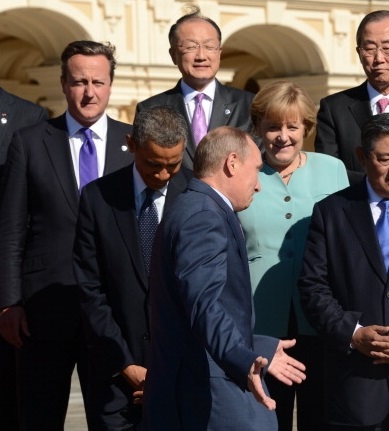
Last weekend’s Ethics Quiz involving the photojournalism ethics of publishing a photo appearing to show President Obama in a submissive or shamed posture as Vladmir Putin passed was handicapped by the mysterious unavailability of the photo in question, which the Washington Post published at least twice but has not made available on-line, even to accompany letters criticizing it. Well, the Post published the photo, in its print edition, yet again today and still I cannot track it down on the Post website. One reason appears to be that it comes from a Russian news agency.

I have found the version above, however, taken by the same photographer a split second after the one in question. In this one, Putin has just passed the President; in the photo the Post used, he was just about to pass him. The expression and postures of everyone in the two photos are the same.

You may want to reconsider the post “Ethics Quiz: Photojournalism And The President’s Meaningful, Meaningless Bowed Head”with it, rather than what I used last week, in mind.

(And why didn’t anyone tell me that the “a” and the “l” in “photojournalism” were transposed in the headline?)


The Authority Trap: Elizabeth O’Bagey’s Three Ethics Strikes

Woman-pulling-off-a-mask

It is not, you see, enough to have a good idea, an original argument, or a brilliant solution.There must be reason for important people, people who make decisions that affect lives, to pay any more attention to you than they do anyone else who claims to have such things, because its is often difficult for even intelligent and experienced individuals to distinguish genius from well-expressed garbage. There must be something that elevates that unique and valuable perspective you bring to a problem above the swirling mess and noise generated by the blabbering and shouting competition, and the thing is, if you really have a valuable perspective to contribute, you owe it to not just yourself, but to your country, even humanity.

There is one asset, if you are otherwise unknown, that will provide that elevation besides the inherent virtues of your brilliant idea, and that is authority...a book, a connection everybody knows and respects, or, perhaps most of all, academic credentials. And there are two things that will make it impossible to raise your special contribution above the throng, and they are a conflict of interest, and a reputation for hiding the truth. These are the murderers of trust.

This brings us to the strange case of Elizabeth O’Bagy, a senior analyst at the Institute for the Study of War, who managed to get the Wall Street Journal to publish her analysis of the civil war in Syria, and her conclusions, based, we were to assume, on her study, analysis and time in the country, regarding the benefits of U.S. employment of military force in the region. Continue reading

Ethics Quiz: Photojournalism And The President’s Meaningful, Meaningless Bowed Head

Putin and Obama

I am looking at a black and white AP photograph re-published from the Washington Post’s front page on September 7. It is similar to the one above, taken seconds before it, and from straight on rather than an angle. That photo, like the one above, shows Vladamir Putin, joining the other attendees at last week’s Group of 20 summit for their formal group photo, but in the one I am looking at Putin is striding across the group to the end of the line, eyes forward, as the rest look on. President Obama alone is standing head bowed as Putin passed, while the other leaders look forward. Unlike the photo above, Obama’s bowed head appears to be in reaction to Putin, but not an effort to listen to something the Russian leader is saying or has said, which is how I would interpret the photo above. The photo above seems relaxed and collegial; the one I am looking at depicts tension. [UPDATE 9/21: A much closer version of the photo is question can be seen here.]

That photograph prompted these criticisms from two Post readers over the weekend.

Mary-Anne Enoch wrote in part…

“I was upset by the photo chosen for the Sept. 7 front page, showing the assembly of the Group of 20 leaders for their traditional “family photograph.”
In that photo, Russian President Vladimir Putin is confidently striding across a stage while others are smiling and probably paying no attention to him. Except for President Obama: In sharp contrast to the rest, he appears to be subservient, shrunken and diminished. His stance reminded me of Forest Whitaker’s portrayal of a long-serving White House butler in a recent movie….it is outrageous that The Post should have selected [ the photo] to accompany an article on the very important and delicate negotiations involving the United States, Russia and Syria.”

Reader Charlotte Stokes had a similar reaction:

“Surely, the wire-service photographer took dozens of pictures, including at least one when the Group of 20 leaders formally posed. So why did The Post choose this one to grace the front page? The photo presented our president in a less-than-honorable light. Given the challenges he faces internationally, why cast doubt on his abilities by sending subliminal messages of this kind?”

[I recognize that it would be better if you could see the actual photo rather than read my description of it accompanied by one that is similar but not quite the same. Interestingly, the Post appears to have purged the picture I am writing about from its website: it does not even use it to accompany the letters about the photo, which it normally would, and which good practice would demand. The photo above, which was widely used by other sources, is the closest I could find, other than the print version that was in my Post on Saturday. If someone can find the actual photo and send me the link, I’d be very grateful.]

Here is your Ethics Alarms Ethics Quiz to kick off what promises to be an ethically alarming week, on the always tricky topic of photojournalism:

Was it unethical for the Post have prominently run a photograph that presented President Obama in an unfavorable, arguably subservient or weak posture? Continue reading

Secretary Of State John Kerry, Pants On Fire

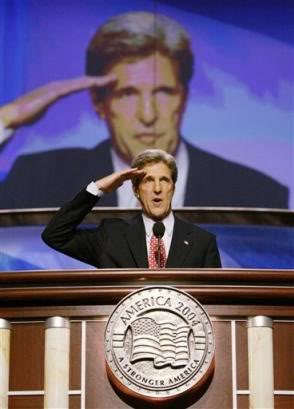
Kerry SaluteWashington Post Fact-checker Glenn Kessler finally couldn’t stand it anymore regarding Secretary of State John Kerry’s favorite lie, only trailing me by about nine years.  As he was participating as a stooge in President Obama’s improvised vaudeville act regarding his “red line” and Syrian chemical weapons (but then, as Americans, so are we all), Kerry said this in an interview on MSNBC, where he knows any transparent and self-serving lie by a Democrat will be accepted as revealed truth:

“You know, Senator Chuck Hagel, when he was senator, Senator Chuck Hagel, now secretary of defense, and when I was a senator, we opposed the president’s decision to go into Iraq, but we know full well how that evidence was used to persuade all of us that authority ought to be given.”

Now I, for one, am thankful when Kerry, who is not Irish (his heritage is  primarily Jewish) * and was elected Senator in Massachusetts using campaign posters with green shamrocks on them, reminds us all why he never became President. This was yet another re-phrasing of the deception he kept hammering during his 2004 campaign—you remember, the one with John Edwards as his running mate, because Kerry is also a magnificent judge of character?—he didn’t support President Bush’s invasion of Iraq.

Of course, he did, and emphatically too. Kessler, who is inclined to go easy on Democrats for the same kinds of deceptions he slams Republicans for (I measure the discrepancy at just short of two “Pinocchios”) decided to give Kerry a full blast with both barrels: Continue reading

Ethics Quote of the Week: Eliot Cohen

captain-america

“Above all, a president has no business confessing to war-weariness. Sending soldiers to war is a hard business. But President Obama knew he was going to be a war president; if that duty was too trying for him, he should not have run for reelection, because, as he has discovered, he might have to fight new wars and not merely end old ones.

“For a president to confess to war-weariness is to confess weakness.

“It is the business of the commander in chief to inspire, either with tempered optimism or grim determination. He fails in his duty if he tells his subordinates, his people and the world that he is weary of the burden that he assiduously sought. In their dark moments, Abraham Lincoln and Franklin Delano Roosevelt, who presided over infinitely more consequential and bloodier wars than Barack Obama, were undoubtedly war-weary. Can anyone imagine them proclaiming it to the world? “

—–Eliot Cohen, a teacher at the Johns Hopkins School of Advanced International Studies, concluding a Washington Post op-ed titled (in the paper’s print version), “We have not earned war-weariness.”

If there is a silver lining to the President’s Syrian Ethics Train Wreck, other than convincing those still capable of independent thought that we who saw the weakness of President Obama’s leadership skills were the ones whose eyes were open all along, it is that it has provoked some perceptive writing and debate on the topics of leadership, character, and America’s role in the world. Continue reading