Ethics Dunce: San Antonio District Attorney Nico LaHood, The FUN Prosecutor!

my_cousin_vinny_9

Casual Friday was always a blight on the professional workplace landscape,and, predictably, it has come to this.

There is a cultural battle going on in San Antonio, Texas, where in the 187th District Court, District Judge Steven Hilbig  announced that he would not allow prosecutors in his courtroom if they were dressed like a local version of Joe Pesci’s Vinnie in “My Cousin Vinnie,” garbed in jeans and guayaberas rather than Vinnie’s leather jacket and leather pants. This wouldn’t be a problem for any sane DA’s office, since almost everywhere else no self-respecting (judge-respecting, court-respecting, law-respecting, respect-respecting…) lawyer would dream of appearing in the halls of justice dressed like an Acapulco tourist, or Cousin Vinnie, for that matter. It is a problem in Bexar County, however, because there District Attorney Nico LaHood thinks that local tradition trumps the legitimate needs of the justice system.

It is Fiesta time, you see, in Bexar county, a ten-day celebration that migrated legally from Mexico to parts of Texas, and previous judges foolishly allowed it to be recognized in their courthouses by permitting prosecutors to “dress down.”  The rough, and equally stupid, equivalent farther from the border would be allowing prosecutors to dress like elves during the Christmas shopping season or Minnie Mouse on Halloween.

Judge Hilbig, an adult, finally decided to put a stop to this nonsense by declaring, as did Judge Fred Gwynne, old Herman Munster himself in “My Cousin Vinnie,” that no lawyer was going to make a mockery of justice in his courtroom by setting foot in it dressed unprofessionally.

I love this guy! Continue reading

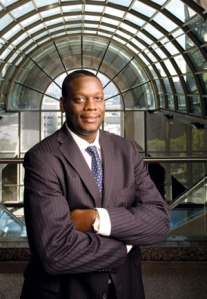
Ethics Hero: Dallas District Attorney Craig Watkins

Craig Watkins, a D.A. who understands his ethical priorities.

Craig Watkins, a D.A. who understands his ethical priorities.

In Law School, I had the honor of being instructed in the superb Georgetown Law Center Criminal Justice Clinic, by far the single best course of any kind I participated in at any level of my formal education. Our mentor in prosecutor ethics was Seymour Glanzer, the man who, as an Assistant U.S. Attorney, cut the deal with Nixon’s White House Counsel John Dean that cracked open the Watergate scandal.

Sy had one mantra he repeated to the clinic students often, trying the beat it into our heads forever: the prosecutor must be the center of justice and ethics for the criminal system. Defense attorneys have to defend the accused whether they are guilty or not, but prosecutors are charged with achieving justice, not convictions. “If you don’t have sufficient legal and reliable evidence to convict a defendant of a crime, or have any doubts about that client’s guilt, drop the case,” he told us.

His principles do not hold sway among many, perhaps even most prosecutors, to the shame of the criminal justice system. Too many see their duty as convicting as many accused as possible, putting the law-abiding public at ease by closing cases and filling prisons. Over-zealousness, sometimes to the extremes of withholding exculpatory evidence from defense attorneys while placing questionable eye-witnesses and unreliable experts on the stand under oath, is rampant in district attorney offices across the country.

The worst of the worst may have been Dallas. Vanessa Potkin, chief counsel of The Innocence Project at Cardozo Law School, argues that “no other county in the country beats Dallas. It’s a county that beats out most states in the country.”

It’s an indication of a system that needs reform, she says, with  “staggering numbers of the innocent put in prison.” That is why the recent steps taken by new Dallas District Attorney Craig Watkins are so important, and so necessary. Continue reading

The First Thing We Do, Let’s Slime All The Lawyers…

the-blob-88

In election years I tell all my legal ethics seminar classes to start teaching their non-lawyer neighbors and relatives ABA Model Rule 1.2 b, which reads,

(b) A lawyer’s representation of a client, including representation by appointment, does not constitute an endorsement of the client’s political, economic, social or moral views or activities.

This, combined with the principle of zealous representation of one’s client, as expressed, for example, in D.C. Rule of Professional Conduct Rule 1.3…

(a) A lawyer shall represent a client zealously and diligently within the bounds of the law.
(b) A lawyer shall not intentionally:

(1) Fail to seek the lawful objectives of a client through reasonably available means permitted by law and the disciplinary rules; or
(2) Prejudice or damage a client during the course of the professional relationship….

…means that lawyers represent clients, and are bound to seek those clients’ objectives when those objectives are legal whether the lawyer likes or agrees with those objectives or not.

It means that it is ignorant, wrong and dangerous to the rule of law as well as the right of citizens to be the beneficiaries of laws in a democracy and not the servants of them, for unscrupulous political opponents to attack lawyers for the positions, objectives and needs of the clients they represented. It means that it is disgusting for maleducated journalists to misinform the already disturbingly confused public by using a matter that a lawyer-turned-candidate’s client needed legal advocacy for as an excuse to impugn the candidate’s character.

Lawyers do not have to agree with or like their clients’ positions, objectives or character, is that clear? Everybody? Lawyers are not to be held accountable for their client’s motives, conduct or legal objectives. Bill Cosby’s lawyers do not approve of rapists. Johnnie Cochran did not support the hobby of ex-wife knifing.

Yet this happens every election cycle, without fail: cheap shots directed at candidates who are lawyers based on one or more of their unsavory clients.  There are two lawyers left in the current primary competition, and guess what?

You guessed it.

Hillary’s ancient defense of a rapist was used to slime her all the way back in 2014. The unfair attack raised its misshapen and empty head last week on CNN, when a Trump supporter brought it up. What we know about Clinton is that she defended a child rapist she was appointed to represent pro bono in 1975, and did an excellent job. She used all the tactics that she was allowed to use. She attacked the credibility of the twelve-year-old victim, and threw sufficient doubt on the the chain of evidence that Clinton got an advantageous  plea bargain for her client, who served just ten months in prison. Sure, he was guilty, and Hillary knew it.  It was her job to make the prosecution prove its case with sufficient evidence, and they failed. The victim, we are told, has had a hard life because of the experience. That is not in any way Clinton’s fault or responsibility.

Now it’s on to Ted Cruz. Here is Slate’s click-bait, misleading, deceitful headline to further the “Ted Cruz is a some kind of sexually repressed weirdo” trope the left-biased media is peddling: Continue reading

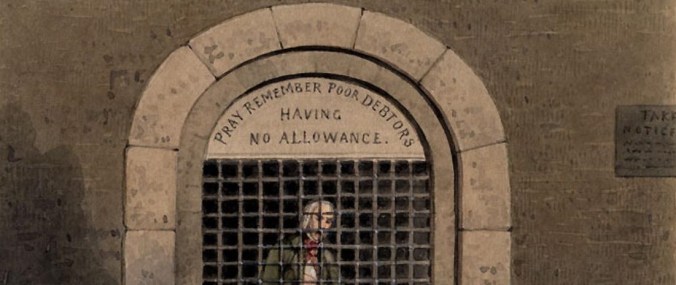
The Great Texas Warrant Roundup

debtors prisons

If the news media did their job, somebody would have asked Ted Cruz about this by now.Something like, “Senator, what is your position on the growing use of debtors prisons in your state and other states around the U.S.?”

On March 5th, Texas commenced what is known as the Great Texas Warrant Roundup, an annual statewide collaboration of courts and law enforcement agencies to squeeze payment of overdue fines and fees from Texans. The Texans targeted are overwhelmingly poor citizens who have outstanding warrants for unpaid traffic tickets, many of which were dubious, the product of aggressive policing to meet budget quotas. The carrot is an amnesty period that precedes the “roundup;” the stick is the threat of arrest and jail for those who can’t pay.

In Texas, a ticket for failing to signal a lane change—a favorite way to start the process of bleeding vulnerable citizens to cover city and county budget shortfalls— will cost about $66. That’s just the beginning, though.  Texas adds $103 in court costs, a public defender fee,  a fee to put you on a payment plan if you can’t pay,  and the always versatile “administrative fee.” Writes the ACLU: “For people who are too poor to pay their tickets, that $66 fine can grow to over $500.”

Once the victim can’t pay the collective fines,Texas will suspend renewal of the driver’s license, adding the License Renewal Suspension Fee, another $30.  Now it’s illegal to drive to the work, and without work, it will be impossible to support a family and pay bills. Faced with that dilemma, many citizens drive anyway, and get eventually get pulled over, leading to more tickets, fines, fees…and more debt. Continue reading

Abortion, Ethics, and Whole Woman’s Health v. Hellerstedt

protest SCOTUS

The Supreme Court heard arguments yesterday in a major abortion case, Whole Woman’s Health v. Hellerstedt. The case was brought by several Texas abortion clinics and three doctors who perform abortions in the state. They seek to strike down two restrictions in a law enacted by the Texas Legislature in 2013 that requires all abortion clinics to meet the standards for “ambulatory surgical centers,” including regulations concerning buildings, equipment and staffing, and also requires doctors performing abortions to have admitting privileges at a hospital.

Abortion rights groups argue that the restrictions are expensive, unnecessary and specifically designed to put many of the clinics out of business. In fact, the law has already caused many clinics to close. The number of abortion clinics in Texas has dropped  to about 20 from more than 40.

The Supreme Court will measure the law against the court’s 1992 decision in Planned Parenthood v. Casey, which held that states were not permitted to place undue burdens on the constitutional right to an abortion before the fetus was viable. Undue burdens, include “unnecessary health regulations that have the purpose or effect of presenting a substantial obstacle to a woman seeking an abortion.”

Legally, it’s a tough case, like all SCOTUS cases. Ethically, it’s pretty repugnant. All of the supporters of the bill, including the drafters, are adamantly anti-abortion, though the law is ostensibly aimed a making abortions safer. While the briefs to the court argue that the restrictions were put in place to foster safety, it’s a sham argument, crafted to meet the Casey test. Make no mistake about it: the purpose of the law is to make abortions as difficult to get performed in Texas as possible. There are literally no lawmakers behind the law nor supporters of the law who don’t want abortion banned. What a coincidence! Yesterday, at the huge demonstrations in front of the Court, the groups weren’t divided into  “Safer abortions” and “More accessible abortions.” The armies were pro- and anti-abortion, and intensely so. Thus the Supreme Court is going to decide if a law designed to interfere with a Constitutional right should be upheld because it can be justified on legitimate medical safety grounds.
Continue reading

KABOOM! The School System “Applauds The Efforts Of Students Who Act In Good Faith To Assist Others In Times Of Need” And Is Therefore Exacting Punishment So They Know Never To Do It Again

HeadExplode3

I swear, I didn’t believe I heard this right. There was an earlier story about a student who was punished for letting an asthmatic classmate use her inhaler, and I thought this was the same one. But no. Now my head is all over the place, and I am once again rejoicing at our decision to pull our son out of those dens of incompetence, abuse, indoctrination and confusion known as “the public schools.”

Anthony Ruelas, an eighth-grade student at Gateway Middle School in Killeen, Texas, watched as a classmate announced that she was having trouble breathing, gasped for about three minutes, and fell to the floor. The teacher emailed the school nurse, which is apparently the policy now. At least she didn’t sent a fax. Or a carrier pigeon.

Be still, my ticking head…

She ordered students to remain calm and stay in their seats, as they watched the girl struggle to breath like a goldfish out of its bowl.

Anthony, however, decided that his classmate needed immediate help, so he picked her up and carried her to the nurse’s office.

And was suspended from school for two days.  School district superintendent John Craft did say in a statement that the district “applauds the efforts of students who act in good faith to assist others in times of need.” Continue reading

David Brooks’ Dirty Hit On Ted Cruz: How Pundits Lose Credibility

That's some role model you've chosen there, David

That’s some role model you’ve chosen there, David

…or at least deserve to.

Here is how New York Times columnist David Brooks begins his character evisceration of Ted Cruz:

“In 1997, Michael Wayne Haley was arrested after stealing a calculator from Walmart. This was a crime that merited a maximum two-year prison term. But prosecutors incorrectly applied a habitual offender law. Neither the judge nor the defense lawyer caught the error and Haley was sentenced to 16 years.

Eventually, the mistake came to light and Haley tried to fix it. Ted Cruz was solicitor general of Texas at the time. Instead of just letting Haley go for time served, Cruz took the case to the Supreme Court to keep Haley in prison for the full 16 years.

Some justices were skeptical. “Is there some rule that you can’t confess error in your state?” Justice Anthony Kennedy asked. The court system did finally let Haley out of prison, after six years.”

From this, Brooks goes on to conclude…

…Cruz’s behavior in the Haley case is almost the dictionary definition of pharisaism: an overzealous application of the letter of the law in a way that violates the spirit of the law, as well as fairness and mercy….Cruz’s speeches are marked by what you might call pagan brutalism. There is not a hint of compassion, gentleness and mercy. Instead, his speeches are marked by a long list of enemies, and vows to crush, shred, destroy, bomb them.

Cruz’s behavior in the Haley case [Dretke v. Haley] does nothing of the sort. The columnist intentionally—I’m assuming that he read the case, now—misrepresented what the case was about, how the court reacted, and what Cruz’s ethical duties were regarding it. As it happens, I share much of Brooks’ dislike of Cruz’s rhetoric. This case, however, tells us nothing about Cruz’s character. It tells us that that as Solicitor General of Texas, Cruz did his job, which was to represent his client’s position.

James Taranto, the pretty damn brilliant Wall Street Journal blogger, wit and conservative pundit, nails Brooks to the wall. He writes in part… Continue reading

Ethics Perspective: All Leaders Do Awful Things, And Many Are Awful People: All We Can Do Is Identify Leaders Who We Can Trust To Try Be Ethical, While Having The Ability To Lead

Roosevelts

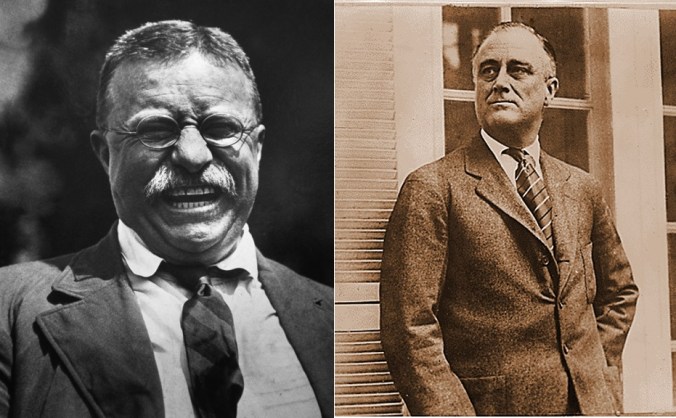
Case Study I: Theodore Roosevelt.

Teddy’s easily my favorite President, both as a personality, a leader, and a human being. Almost all of his flaws, and he had plenty—the excessive animal-killing, the imperialism, the love of war, his sexism and intrinsic belief in white supremacy—are directly attributable to his times and class. He learned, because he was brilliant and intellectually curious. Like George Washington, TR was capable of evolving. He wanted to do good, and like all of us, was on a lifetime journey to find out what good was. Like most leaders who are capable of leading, he thought he had a pretty good idea of what was right, and one that was better than those of almost everyone else.

In at least one instance, however, Roosevelt personality and leadership style led to a terrible injustice.

On August 13, 1906, there was a race-related fight in Brownsville,Texas. It got out of control, turned into a full-scale riot, and one white police officer was wounded while another man, a bartender, was killed. The town blamed the black soldiers of the 25th Infantry stationed at nearby Fort Brown; tensions between the soldiers and the all-white town had been growing since the blacks arrived.  The town produced spent shells from army rifles as evidence of the soldiers’ guilt, and investigators accepted them as incriminating, though they probably were planted.

All the soldiers protested that they were innocent. Their white officers backed up their claims that the soldiers had been in their barracks at the time of the melee.  No military trial was ever held, but a Texas court cleared the black soldiers of wrongdoing. Nevertheless, President Roosevelt discharged  the entire regiment without honor anyway: 167 men, but only the blacks; the white officers were not disciplined.  The alleged cause for the harsh punishment was that the blacks had engaged in a “conspiracy of silence” to protect the guilty member of their regiment. Some of the men dismissed had over twenty years of  honorable service; one had fought alongside Roosevelt during the Spanish American War. Many were only a short time away from retirement and vested  pensions. The 168 lost their careers, reputations, and retirement income. Continue reading

The Seventh Annual Ethics Alarms Awards: The Best of Ethics 2015, Part I

Sweet Briar montage

Welcome to the Seventh Annual Ethics Alarms Awards, our blog’s retrospective of the best and worst in ethics over the past year, 2015.

It was a rotten year in ethics again, it’s fair to say, and Ethics Alarms, which by its nature and mission must concentrate on episodes that have lessons to convey and cautionary tales to consider probably made it seem even more rotten that it was. Even with that admission, I didn’t come close to covering the field. My scouts, who I will honor anon, sent me many more wonderfully disturbing news stories than I could post on, and there were many more beyond them. I did not write about the drug company CEO, for example, who suddenly raised the price of an anti-AIDS drug to obscene levels, in part, it seems, to keep an investment fraud scheme afloat. (He’ll get his prize anyway.)

What was really best about 2o15 on Ethics Alarms was the commentary. I always envisioned the site as a cyber-symposium where interested, articulate and analytical readers could discuss current events and issues in an ethics context. Every year since the blog was launched has brought us closer to that goal. Commenters come and go, unfortunately (I take it personally when they go, which is silly), but the quality of commentary continues to be outstanding. It is also gratifying to check posts from 2010 and see such stalwarts who check in still, like Tim Levier, Neil Dorr, Julian Hung, Michael R, and King Kool.  There are a few blogs that have as consistently substantive, passionate and informative commenters as Ethics Alarms, but not many. Very frequently the comments materially enhance and expand on the original post. That was my hope and objective. Thank you.

The Best of Ethics 2015 is going to be a bit more self-congratulatory this year, beginning with the very first category. Among other virtues, this approach has the advantage of closing the gap in volume between the Best and the Worst, which last year was depressing. I’m also going to post the awards in more installments, to help me get them out faster. With that said….

Here are the 2015 Ethics Alarms Awards

For the Best in Ethics:

Most Encouraging Sign That Enough People Pay Attention For Ethics Alarms To Occasionally Have Some Impact…

The Sweet Briar College Rescue. In March, I read the shocking story of how Sweet Briar College, a remarkable and storied all-women’s college in Virginia, had been closed by a craven and duplicitous board that never informed alums or students that such action was imminent. I responded with a tough post titled “The Sweet Briar Betrayal,” and some passionate alumnae determined to fight for the school’s survival used it to inform others about the issues involved and to build support. Through the ensuing months before the school’s ultimate reversal of the closing and the triumph of its supporters, I was honored to exchange many e-mails with Sweet Briar grads, and gratified by their insistence that Ethics Alarms played a significant role in turning the tide. You can follow the saga in my posts, here.

Ethics Heroes Of The Year

Dog Train

Eugene and Corky Bostick, Dog Train Proprietors. OK, maybe this is just my favorite Ethics Hero story of the year, about two retired seniors who decided to adopt old  dogs abandoned on their property to die, and came up with the wacky idea of giving them regular rides on a ‘dog train” of their own design.

Ethical Mayor Of The Year

Thomas F. Williams. When the Ferguson-driven attacks on police as racist killers was at its peak (though it’s not far from that peak now) the mayor of Norwood, Ohio, Thomas F. Williams, did exactly the opposite of New York Mayor Bill de Blasio in response to activist attacks on the integrity of his police department. He released a letter supporting his police department without qualification. At the time, I criticized him for his simultaneously attacking activists as “race-baiters.” In the perspective of the year past, I hereby withdraw that criticism.

Most Ethical Celebrity

Actor Tom Selleck. In a terrible year for this category, Selleck wins for bravely pushing his TV show “Blue Bloods” into politically incorrect territory, examining issues like racial profiling and police shootings with surprising even-handedness. The show also has maintained its openly Catholic, pro-religion perspective. Yes, this is a redundant award, as “Blue Bloods” is also a winner, but the alternative in this horrific year when an unethical celebrity is threatening to be a major party’s nominee for the presidency is not to give the award at all.

Most Ethical Talk Show Host

Stephen Colbert, who, while maintaining most of his progressive bias from his previous Comedy Central show as the successor to David Letterman, set a high standard of fairness and civility, notably when he admonished his knee-jerk liberal audience for booing  Senator Ted Cruz

Sportsman of the Year

CC Sabathia

New York Yankee pitcher C.C. Sabathia, who courageously checked himself into rehab for alcohol abuse just as baseball’s play-offs were beginning, saying in part,

“Being an adult means being accountable. Being a baseball player means that others look up to you. I want my kids — and others who may have become fans of mine over the years — to know that I am not too big of a man to ask for help. I want to hold my head up high, have a full heart and be the type of person again that I can be proud of. And that’s exactly what I am going to do.”

Runner-up: MLB Commissioner Rob Manfred, who dismissed the ethically-addled arguments of Pete Rose fans to reject his appeal to be have his lifetime ban for gambling lifted.  For those who wonder why football never seems to figure in this category: You’ve got to be kidding.

Ethics Movie of the Year

SpotlightTIFF2015

“Spotlight”

Runner-up: “Concussion”

Most Ethical Corporation

Tesla Motors, the anti-GM, which recalled all of its models with a particular seatbelt because one belt had failed and they couldn’t determine why. Continue reading

Ethics Observations On My 2013 Ethics Observations On The “Affluenza” Sentence, Now That The Teen Sociopath Is On The Lam

Ethan Couch

Ethan Couch

You may recall the so-called “Affluenza” case of 2013, which I wrote about here.

Ethan Couch a Texas teenager from a rich family, killed four people in a drunken-driving crash (he also had no license) and crippled a friend riding with him. Instead of jail time, the 16-year-old was given probation mandating expensive counseling and treatment by a judge who found herself vilified far and wide. Now this, from his lawyers, Reagan Wynn and Scott Brown:

“We have recently learned that, for the last several days, the juvenile probation officer has been unable to make contact with Ethan or his mother with whom he has been residing.”

A video surfaced showing Couch playing beer pong, which is a violation of probation that could send him to prison. The assumption is that he had fled to avoid that result, and may have even left the country. The Washington Post reports that The FBI and U.S. Marshals Service have joined the search for Couch, who is now considered a fugitive.

So, I am asked, how do the Ethics Alarms observations on the original sentence stand now, since it is clear that the judge’s attempt to reform Ethan without locking him up has failed?

The answer is, having read what I wrote initially again, that I wouldn’t retract a word.

Here’s what I wrote, and my comments now: Continue reading