Ethics Dunce: NBA Coach Jason Kidd

"Clean up on Court One!"

“Clean up on Court One!”

Needing a time out with his team trailing in a close NBA game with the L.A. Lakers, Brooklyn Nets coach Jason Kidd used a trick he had apparently learned as a player at the knee of another cheating coach. Kidd “accidentally on purpose” spilled his cup of Coke on the basketball court. Naturally, play had to be halted so the mess could be mopped up, giving Kidd that time-out he needed to set up the next play. (His Nets lost anyway. Good.)

Later, Kidd insisted that his spill was accidental.  “Cup slipped out of my hand I was getting Ty,” Kidd told reporters. “Sweaty palms. I was never good with the ball. In the heat of the battle, you’re trying to get guys in and out of the game, and the cup fell out of my hand.” Then video showed Kidd telling a player, “Hit me!” to force the spill. That sparked a $50,000 fine from the NBA, but no acknowledgment of wrongdoing by the coach. Later he admitted that he “probably” shouldn’t have done it, “it” being “cheating,” but that he was just trying to win the game. “It’s about trying to win and those guys in that locker room, and I tried to put those guys in a position to get a basket, a good look and we did,” he said. Continue reading

“Would You Rather”: An Ethics-Horror-Health Care-Dinner Party In Hell Movie You May Have Missed

“Would You Rather” is an odd 2012 film that sets up a film-long set of unlikely ethical dilemmas for its characters to solve. Desperate to save her dying brother with expensive medical treatment she can’t afford, the heroine (played by Brittany Snow) finds herself at a dinner party with seven other desperate strangers, hosted by a wacko family of millionaires who will help one of them after the others have been “eliminated” during the course of the evening. As what is described as a game progresses, each contestant is put through escalating rounds of risk, pain and torture in which they must make various Sophie’s Choices, such as…

  • Would you rather administer a painful shock to yourself with high-voltage electricity, or the person next to you? What if that person has been weakened by a previous shock? What if she is in a wheelchair?

Being Fair To Harry Reid: This Began With A Borking

Blame the first domino, not the last one..

Blame the first domino, not the last one..

I generally revile Senate Majority Leader Harry Reid for his hyper-partisan leadership of the Senate, his unethical statements and his manner of conducting himself.  Still, I am bound to take this rare opportunity to defend Sen. Reid, who is taking the brunt of  criticism from both Democrats and Republicans for weakening the filibuster last week. True: he didn’t have to take this course, and I think it will probably, as the talking head shows Sunday seemed to agree, make the toxic and dysfunctional politics in Washington worse, not better. Reid, however, is not the primary one at fault. He was doing his job as he saw it, dealing with circumstances that are now beyond his control.

What led to the so-called “nuclear option” becoming reality was an unplanned convergence of Machiavellian politics, breaches of professional duty, dishonesty, irresponsible legislating, lack of statesmanship, unfairness, disrespect, bad luck, incompetent leadership, and most of all, a cycle of revenge that is now only likely to continue. Most of this was out of Harry Reid’s hands.

History shows that U.S. Presidents were once virtually always given the benefit of the doubt regarding judicial appointments to the federal courts, except in the rare cases of serious ethical questions or dubious qualifications. It was a good system, and the right system, and both parties followed it, realizing that the ideological mix in the courts was fluid and cyclical, and that today’s new conservative judge would eventually be offset by the appointee of the next liberal President, and vice versa. Democrats destroyed that tradition and accord on judicial appointments when in 1987, the Senate Democrats blocked President Reagan’s nomination of Robert Bork, who had been selected by President Reagan to fill a vacancy on the U.S. Supreme Court. Continue reading

Is It Ethical To Take, Display and Publish Photos Of Sleeping Sunbathers Without Their Permission?

That’s what Tadao Cern did for his his art project, entitled Comfort Zone, to “explore how different surroundings can affect people’s behavior and inhibitions.”

When someone takes a photo of you in such circumstances, you suddenly find yourself in a gallery in front of  a giant photo of this, while your husband busts a gut:

Sunbather art

Of course it’s not ethical!

If you need some more hints as to why, read the tags below.

________________________

Pointer: Althouse

Source: The Guardian

NOW Do You Agree That Congress Should Read Bills Before It Passes Them?

runaway-train

The Obamacare meltdown should not be cause for joy anywhere, although I can understand why the Republicans are giddy and conservative pundits are searching for ways to say “Didn’t I tell you?” in unobnoxious ways. There are no obnoxious ways. There is no worse feeling than knowing that a leader, a movement or a cause that you fervently believed in and defended against doubts and criticism was not worthy of your trust. For the politically and socially committed, comparing this experience to losing a loved one is no exaggeration. Are you in the habit of pointing at your neighbor and shouting, “Haha, your mother died! I told you she looked sick!”? Mocking and razzing the Democrats or progressives in your life is not much better.

We all, however, share responsibility for running this republic, and lessons must be learned. Back in 2010, I wrote of the process whereby the Affordable Care Act was passed…

“…Once the bills began to emerge, though, things got worse. They were far too long and convoluted to read and understand; this was incompetent and irresponsible. None of the Senators or Representatives (or the President himself) who advocated the bills in the most emphatic terms had read them, which is a breach of diligence, and many frequently made statements in public that misstated the provisions of the bill, sometimes egregiously. Not reading a technical bill on a well-understood or narrow matter and still voting for it may be common (though, I would argue, outrageous), but doing so with a massively expensive and complex bill affecting the life of every American is irresponsible and an abuse of power. This has continued. Politicians who the public should be able to trust are still making assertions of fact that are not facts they have independently confirmed, and they are insufficiently familiar with the details to either make fair arguments or inform the public.

“Since nobody could read the bill, this allowed the President and his allies to make general arguments that were often half-truths devised to mislead the public or avoid raising sensitive subjects. President made many “promises” about what would and would not be in the bill, knowing that they were promises he might well not be able or willing to keep. Indeed, the bill now being voted on fails to fulfill many of those pledges.  Important policy trade-offs that might erode support were not discussed, or misrepresented.”

This isn’t a partisan point, you know. I am sure that Republicans don’t read bills before voting for them either, but the practice is unconscionable, professional negligence and reckless, and if nothing else good comes out of this miserable blot on democracy, if the public finally demand that its law-makers read, understand and be candid about the laws they make, then something of value may lie beneath the rubble. Continue reading

Ethics Conundrums From “The Fick Of the Month’s” Fake Black Campaign Strategy

Big deal. Bill and Hillary ran as a faithful and loving married couple...

Big deal. Bill and Hillary ran as a faithful and loving married couple…

It’s not the seat of great power, true, but the strategy Republican Dave Wilson employed to win on the Houston Community College Board of Trustees is ethically indefensible. Wilson, who is a prominent conservative politician who once ran for mayor and who has made a name for himself with anti-gay rhetoric,  won a seat  on the board by 26 votes after deceiving some less attentive voters in his predominantly African-American district that he was “one of them.

His election materials contained photographs of smiling black faces, lifted off the web, captioned “Please vote for our friend and neighbor Dave Wilson.” One particularly deceitful mailer said he had been “Endorsed by Ron Wilson,” invoking the name of former African-American state representative. But just like the ads and TV commercials for weight loss products, Dave Wilson’s flier contained fine print that made the misrepresentation “honest.” Instead of “Results not typical,” the campaign flier’s tiny disclaimer said, “Ron Wilson and Dave Wilson are cousins,” a reference to one of Wilson’s relatives living in Iowa who is also named “Ron.”

Wilson can be safely accorded status as a fick*—he is openly amused by the fact that his lie assisted in his election, and shows no remorse at all. He also invokes the “everybody does it” rationalization, saying, “Every time a politician talks, he’s out there deceiving voters.”  The news media and the blogosphere is joyfully flogging Wilson for his stunt, and he deserves every lash. The episode, however raises some uncomfortable ethical issues that require objective thought and consideration: Continue reading

“Walking Dead” Ethics: Hypocrisy, Substance Abuse And Survival

"The Walking Dead"...as always, providing abundant ethical dilemmas to chew on...

“The Walking Dead”…as always, providing abundant ethical dilemmas to chew on…

If you can stand the periodic spectacle of shambling, rotting flesh and heads being lopped off or split down the middle, AMC’s “The Walking Dead” still provides the most daring and interesting ethics storylines available on television.

The latest episode, titled “Indifference,” raised two gutsy issues that are unpopular in today’s culture to the point of taboo. It was revealed that Carol, previously the simpering and tragic mother of the now dead, zombified and executed little girl Sophia, has morphed into a stone-cold pragmatic survivalist who advocates killing on instinct when the threat is sufficiently severe. In addition to teaching methods of mayhem to the children entrusted to her instruction in the grim, abandoned penitentiary where our heroes have fortified themselves against the roaming zombie hoards, Carol summarily executed two members of the community who were fatally ill with a pernicious virus on the grounds that they threatened the safety of the rest. For this, Rick, the sheriff-turned farmer alleged leader of the non-zombies, orders her out of the prison.

Strange. In a world without doctors, medicine and hospitals, where the objective is simply to survive long enough for some remote miracle to rescue humanity, a runaway virus is as much of a threat as a maniac with a hatchet. Rick and the rest have long ago accepted the necessity of killing members of their group who are bitten by zombies, since they are certain to “turn”after death and start indiscriminately eating people. True, the preferred method is to withhold execution until the second after the living become undead after becoming unliving, but this is a distinction without a difference. Carol is quite right that a breathing, doomed, virus-carrier is as much of a threat to the group—perhaps more—as a newly-minted brain-muncher. Why is her strong action in defense of the group, a defensible utilitarian act, reason for exile? Continue reading

More Integrity Test Results: The Bad, The Cynical, The Desperate, The Ugly And The Mind-Blowingly Stupid

denial1The last couple of days have added more embarrassing examples of desperate supporters of the Democrats, President Obama and/or the Affordable Care Act thoroughly disgracing themselves by adopting rationalizations, distortions, denial, tortured reasoning and worse to avoid holding President Obama accountable for intentionally misleading the American people for more than three years regarding whether they could keep their healths plan if they liked them, “period.”

Two aspects of this disgusting spectacle are remarkable. One is that there is such a wide and creative variation among the integrity-defying tactics taken by this distinguished assortment of pols, elected officials, hacks, flacks, pundits and journalists. The other is that after this is all over, nearly half the American public will still loyally insist on trusting the promises and pronouncements of this very same group, though they proved themselves, in this episode, untrustworthy beyond a reasonable doubt. The first of these developments is surprising. The second extinguishes all hope.

Now the latest additions to the list of shame:

  •  David Axelrod, Obama political advisor. Today on “Meet the Press, ” Axelrod chose as his truthbuster the rationalization that since the President wasn’t lying to all of the Americans he was addressing, he wasn’t lying at all. Continue reading

New York’s Stop And Frisk Ethics Train Wreck

Free speech, Brown University style.

Free speech, Brown University style.

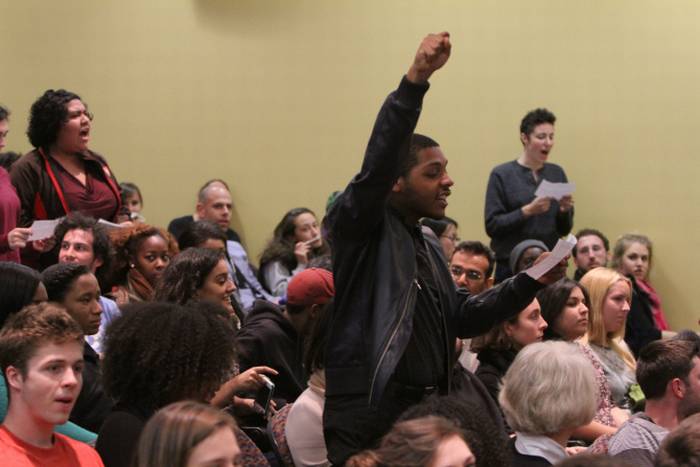
On the CBS Tom Selleck drama “Blue Bloods,” fictional New York police commissioner Ryan (Selleck) must deal with a court-mandated monitor to prevent police abuse of the city’s stop-and-frisk tactics. The show might as well just sketch out its season following parallel developments in the real stop-and-frisk drama in the city, which has already taken some strange twists and turns and is bound to take others. It is now officially an Ethics Train Wreck, involving questionable ethical conduct by police, the city government, a former mayor, Fox News, a judge, college students, and an Ivy League college: Continue reading

Ethics Quote Of The Week: Sportswriter Joe Posnanski

Picked off first, Kolton Wong curses the fates...

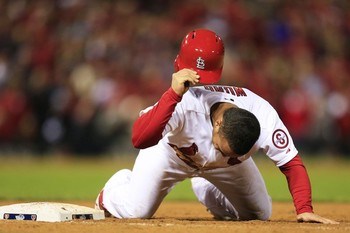
Picked off first, Kolten Wong curses the fates…

Just as baseball’s post season was starting, I wrote a post about how U.S. society’s flawed use of consequentialism to judge merit, wisdom and ethics is encouraged by our sporting events. The example I used was an old one, from the 1968 World Series, which I consider to be a classic and extreme example. This morning, the great sports essayist Joe Posnanski addressed the same issue, focusing on an event in last night’s weird World Series game, which ended like none other in post season history. With two outs and the potential tying run at the plate, Boston relief pitcher Koji Uehara picked off St.Louis pinch-runner Kolten Wong to end the game and stop the Cardinals’ most dangerous sluggers from batting with a chance to tie or win the game. Posnanski marvels at how what he considers a foolish decision to station the first baseman near the base for a pick-off throw had good results, and how hard it is for us to focus on process rather than results. He is, of course, talking about the appeal of consequentialism, and the way baseball encourages it. I beat him to it by almost a month, but Posnanski amplifies the point nicely. Here’s Joe: Continue reading