And Here’s Why The Supreme Court Majority Was Right In Shelby v. Holder…

Ok, if you don't buy the theory that they hurt the public schools, how about this: they're racist!

Ok, if you don’t buy the theory that they hurt the public schools, how about this: they’re racist!

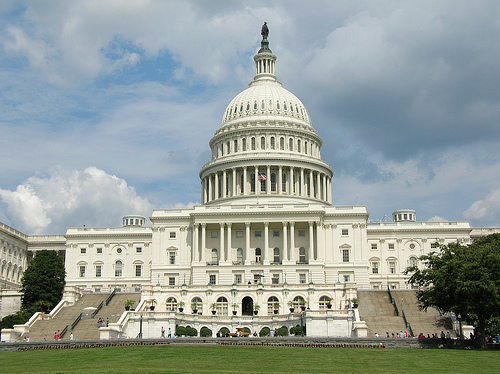
In its much maligned decision in Shelby v. Holder, the Supreme Court declared that the Justice Department could not interfere with state legislative decisions affecting voting rights based on 60 year old data about racist practices prior to the 1965 Voting Rights Act. The Federal government should not be able to over-ride the will of the people and its elected legislatures without a compelling and overwhelming interest, and allowing the large list of states designated as subject to the Act invited abuse of power. What kind of abuse? This kind:

The U.S. Justice Department has filed a lawsuit to stop the Louisiana from distributing school vouchers to poor black families in any district that remains under a desegregation court order. Over 600 public schools are affected. The argument of Holder’s Justice Department  is just as ridiculous as it reads: it is that “many of those vouchers impeded the desegregation process.” You see, if black children are able to go to better, private schools thanks to the vouchers, the percentage of whites to blacks in failing but desegregated public schools will go up, “impeding” desegregation. Can’t have that! What citizens would want politicized, absurd bureaucrats who reason like this second-guessing their legislature?

As the Washington Post noted in an incredulous editorial it called, pulling no punches, Justice Department bids to trap poor, black children in ineffective schools: Continue reading

A Handbook For Manipulation and Deceit, Rationalizations Included

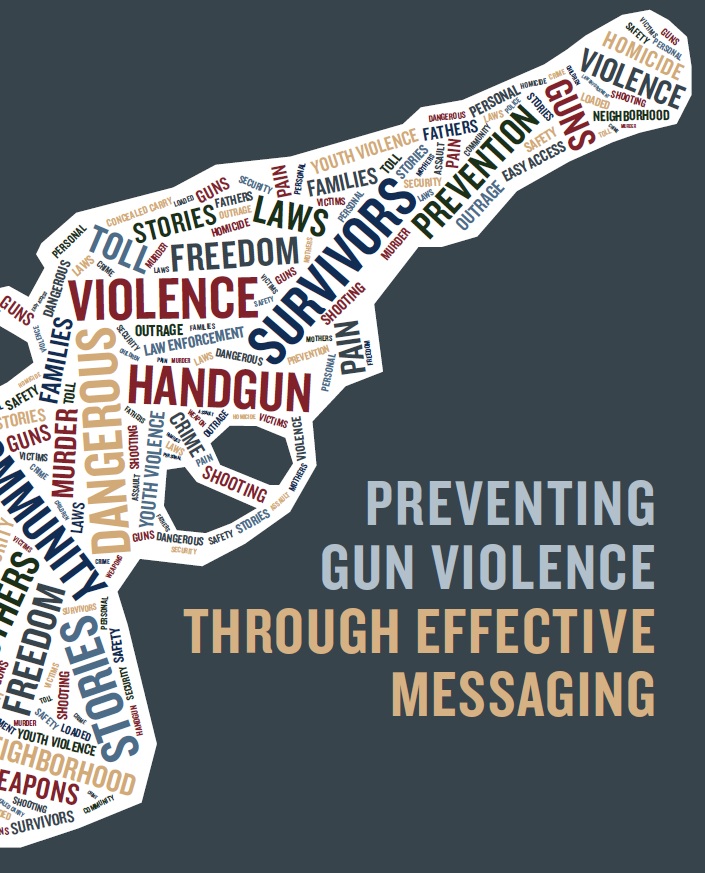
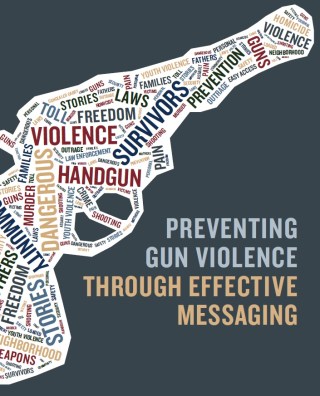
PreventingGunViolence

This wasn’t considered newsworthy by the mainstream media, and that alone is worthy of some pondering: a 70-plus page how-to guide titled “Preventing Gun Violence Through Effective Messaging” has surfaced, produced last year by the Washington, D.C.-based firm of Greenberg Quinlan Rosner.* The guide is a political strategy lesson for anti-gun advocacy, and its favored tactics involve emphasizing emotional hot-buttons over rational discourse and informative debate. The manual was produced, it appears, for the Seattle-based Washington Alliance for Gun Responsibility (WAGR) before the Sandy Hook tragedy, but its advice tracks in every way with the approach employed by Democrats, including President Obama, during the disgraceful rush to exploit public horror over the shooting in an effort to pass strong anti-gun measures in the states and nationally.

Of course this is newsworthy. The public is the target of manipulation, deception and persuasion tactics that are designed to provoke half-baked opinions and positions based on emotion rather than rational analysis. If the public recognizes such tactics as the cynical ploys they are, such tactics will not be as effective. Such tactics shouldn’t be effective, and should be employed by honest, ethical advocates on any side of any issue. The mainstream media chose not to publicize the manual because 1) most reporters agree with the manual’s objective, and 2) the mainstream media eagerly facilitated the unethical methods recommended, and will probably continue to do so.

“The debate over gun violence in America is periodically punctuated by high-profile gun violence incidents including Columbine, Virginia Tech, Tucson, the Trayvon Martin killing, Aurora, and Oak Creek,” the guide points out. “When an incident such as these attracts sustained media attention, it creates a unique climate for our communications efforts.”  Early on, the document it makes it clear that the “communication efforts” must always concentrate on stirring up emotions, not relying on facts or engaging in substantive debate. “A high-profile gun violence incident temporarily draws more people into the conversation about gun violence. We should rely on emotionally powerful language, feelings and images to bring home the terrible impact of gun violence.”

For example,  the guide addresses Stand Your Ground laws and advises substituting pejorative (and misleading) descriptions like  “Shoot First” and “Kill at Will,” asserting that these terms are “more accurate and persuasive.” At every turn, the guide cautions against getting bogged down in potentially nuanced statistics and facts, and urges anti-gun advocates to overwhelm any efforts at balancing or considering pros and cons with talking points based on  emotion salted with one-sided, group-tested statistics and generalities...”The core frame should be personal and emotional—centered on ‘people’ and not on facts, laws, or legislation.”  The top things to remember, cautions the guide,

#1: ALWAYS START WITH THE PAIN AND ANGUISH THAT GUN VIOLENCE BRINGS INTO PEOPLE’S LIVES

#2: USE STATISTICS TO REINFORCE AN EMOTIONAL ARGUMENT, NOT TO REPLACE IT.

Recommended phrases to use in forums and interviews include,

  • “It breaks my heart that every day in our country (state or city) children wake up worried and frightened about getting shot.”
  • “Just imagine the pain that a mother or father feels when their young child is gunned down.”
  • ” The real outrage – the thing that makes this violence so unforgivable – is that we know how to stop it and we’re not getting it done”

To the authors of the guide, effective persuasion “means emphasizing emotion over policy prescriptions, keeping our facts and our case simple and direct, and avoiding arguments that leave people thinking they don’t know enough about the topic to weigh in.”

That’s right, keep them ignorant and thinking that they aren’t. It’s the American way.

The guide is professional and well-thought out. It is certainly a useful document for any advocate to study before going on a talk show, or before drafting remarks at a rally, and it is obvious that this is exactly what such advocates do, if not with this document, then with similar ones. It is creepy to read line after line that is immediately recognizable as an endlessly repeated “talking point” during the Trayvon Martin uproar and the Sandy Hook aftermath. The manual also could grow cynicism on a rock. There is nothing honest or genuine about the political and policy-making process that the guide presupposes and attempts to control. There is nothing productive either. The objective is only to win—to get a desired policy initiative past the stage where public support is important and into the back rooms where the deals can be cut . You know that there was an equivalent document during the Affordable Health Care Act. These are blueprints for rushing policies into law, not for educating the public or fairly exploring complex issues before taking giant leaps of faith. They are, in short, instruction books on how to exploit the ignorance of the American people and distort the democratic process.

This is a bi-partisan practice, of course. The only difference between this guide and those produced by conservative consultants is that if one of those was found, the mainstream media would have reported it, Media Matters would have announced that it was a smoking gun document showing how evil Republicans corrupt America with their lies, and on MSNBC, Lawrence O’Donnell would have smirked over it for a week.

The number of rationalizations at the ready, therefore, begin powerfully with “Everybody does it” (#1 on the Rationalizations list). So is, as a direct result, #2, “They’re just as bad” and #7, “Tit for tat,” Such a document and the politics behind it also invokes #3, Consequentialism, and #4, Marion Barry’s favorite, “If it’s legal, it’s ethical.”  It employs # 11, the Dissonance Drag, since the reason it will be deemed acceptable by anti-gun types is because they happen to like the people using the strategy; if the same document outlined the NRA’s approach, they would sincerely and passionately feel it was despicable.

It is the very embodiment of The Saint’s Excuse (#12), otherwise known as “It’s for a good cause,” as well as #13, Self-Validating Virtue. #17,  Hamm’s Excuse or “It wasn’t my fault,” is one of the predictable responses to criticism: “Hey, this is how the game is played. We didn’t make these rules; this has been going on for decades. Don’t blame us!”  My least favorite rationalization of all, #22, Comparative Virtue,  “There are worse things,” is also in play; so is “We have no choice” (because the evil NRA keeps buying legislators and rational debate doesn’t work!), # 24#27, “These are not ordinary times!” is a natural, of course.  So is #30, The Troublesome Luxury, usually expressed as “Ethics is a luxury we can’t afford right now!”

Politics being politics, it’s perfect for #31, The Unethical Role Model, as in “Thomas Jefferson/Abe Lincoln/ Jack Kennedy would have done the same thing.” Heck…A new book suggests Jesus might have done the same thing!

Fourteen out of thirty-two possible rationalizations is an impressive arsenal, all right, but they are still rationalizations for what is a Machiavellian, “the ends justifies the means,” “by any means necessary,” unethical strategy that intentionally aims at the weaknesses of democracy and exploits them through the cynical use of psychology, manipulation, and deceit. Yeah, I know, it works, just as so many methods used by governments and interest groups to deceive the public and warp their perceptions have worked and work still.

That’s not really working, though, is it now? Causing a system designed to involve an informed and rational citizenry  to malfunction by exploiting laziness, ignorance and hysteria isn’t working, just because it succeeds. In fact, such tactics result in the kind of politics and government we have right now.

That is called, not working, but failing.

* According to the guide, Quinlan was part of “a team of communicators” with “decades of experience advising organizations on message development and strategic communications.” Other members of this team were Frank O’Brien, creative director and founder of OMP, another Washington, D.C.-based firm, and Jeff Neffinger and Matthew Kohut at KNP Communications, also headquartered in Washington, D.C. Among GQR’s clients are the Mayors Against Illegal Guns, the Joyce Foundation, several state education associations, Defenders of Wildlife, National Public Radio and the Sierra Club. Among OMP’s clients are Planned Parenthood of America and the Natural Resources Defense Council.

_______________________________________

Sources: WSJ, Washington Examiner, Examiner

Comment of the Day: “Ethics Dunce: Photographer Jill Greenberg”

Tornado ruin

A home in Tanner, Alabama, after the events of April 3, 1974…

Here are the always thoughtful and often profound Fattymoon’s reflections, in the Comment of the Day, inspired by the post, Ethics Dunce: Photographer Jill Greenberg:

“This reminds me of the time I made a critical decision, on the spot, while covering the aftermath of a killing F5 tornado at Tanner, Alabama the night of April 3, 1974.


“Walter McGlocklin was walking away from me, carrying one of his two surviving daughters. He was cradling this little girl, her upper body and tear streaked face peeking just above her father’s right shoulder. The look of utter horror on her face! The lighting was perfect, an eerie cross hatch of flashlights and spotlights – I KNEW I had the picture of the year. I raised my Minolta 35 mm and focused in. And that’s when it happened. Something inside me said, Do NOT violate this little girl’s privacy. Do NOT allow this little girl’s unbearable pain to act as fodder to sell newspapers across the country. I slowly lowered my camera. It’s a decision, one of only a very few, of which I will forever be proud of.”

_______________


Ethics Dunce: Photographer Jill Greenberg


"No emoticons were upset in the writing of this post."

“No emoticons were upset in the writing of this post.”

In Slate, renowned photographer Jill Greenberg returns to the topic that gained her unwanted notoriety in May: her exhibition of photographs of children crying their little eyes out. Greenberg revealed at the time that she captured the powerful photographs by giving the very young children lollipops or something else they liked or wanted and then having family members ask the kids to return the item. Strangely,  as Drew Curtis’Fark, one of my favorite web  sources for stories is wont to say, some people had a problem with this.

Greenberg revisits the issue because she has a book of the weepy photographs coming out. Seldom does one read a more casual, “What is the matter with people?”, utterly clueless display of invalid rationalizations for unethical conduct as Greenberg belches out. Unfortunately, another tendency illustrated by the article is far more common: a news sources examination of an ethics issue without any apparent sensitivity or understanding of the ethics issues involved.

Here are Greenberg’s rationalizations, or at least the ones she gave to Slate. I’m sure she has many more.

  • The Trivial Trap, or “Don’t sweat the small stuff.” “I have two children of my own. Crying is not evidence of pain or any real suffering. It’s really just the way children communicate.” Ah. Not real suffering. Then it’s all right, then. The bottom line is that Greenberg is intentionally upsetting the children, who, it can be fairly said, are less anxious and happier when they are not crying. Children who are teased, frightened or otherwise made uncomfortable can also be said not to be in pain or “real” suffering. It’s still cruel, and an abuse of power, to treat them this way. Come to think of it, Greenberg could make the same argument about some of the models in child pornography. Would she, I wonder?
  • “Everybody does it” and the “They’re Just as Bad” Excuse. “Making children cry for a photographer can be considered mean. But I would say that making children laugh and show off their jeans for an apparel ad is just as exploitative and less natural.” And, I suppose, making a Bangladesh child cry by taking food from her to make her cry is just as exploitative  and more natural than giving her food to make her smile, because, after all, she’s usually starving anyway.
  • The Saint’s Excuse or “It’s for a good cause” a.k.a “The ends justify the means.” Slate:  “The still image continues to have a ton of strength. An image taken out of context from one fraction of a second to the next can tell a story, and if photographers are looking to tell a certain story, they can curate those slices of time to their advantage. What’s weird about the images is they seemingly can be applied to all these random disparate causes. My husband was saying they’re like emoticons.” True, Jill, but those little smiley faces don’t have to be tortured to get them to frown or cry, because, unlike babies, they aren’t real human beings.

The bottom line is that Greenberg made money and got a lot of ink by making children unhappy, so she can’t see why anyone would argue that the conduct wasn’t justified, and based on the article, neither does Slate or its writer, Jordan G. Teicher. The photographer’s methods are, of course, obviously and indisputably unethical:

  • She exploited the children for her own agendas and benefit.
  • She abused her superior power over the children to get the reaction she wants.
  • She induced anxiety in another, causing needless harm.
  • She created a product, the photo, which memorializes a form of child abuse.
  • She recruited the children’s parents into assisting in the exploitation for the artist’s purposes, rather that doing their job as parents, thus inducing a breach of loyalty and a betrayal of parental duty.
  • She created and profited from a materialization of an unethical abuse of a child, which is identical to what child pornography does.
  • She encouraged others to create similar photographs, which will be created, in some cases, with even less humane methods.

Of course her methods were unethical. She deserves every bit of criticism and hate mail that she has received. But the sophisticates, like Slate and others, just shrug off the concern as foolishness, much ado about nothing. So she made kids cry! They cry all the time! What matters is that she got some great pictures!

Many of society’s problems arise from the fact that our media can’t recognize, and thus encourages, unethical behavior, even obvious examples like making little children cry for fame and fortune.

__________________________

Pointer: Alexander Cheezem

Sources: Bored Panda, Slate, Fully M


When The Incompetent Meet The Corrupt: The U.S. Postal Service vs Lance Armstrong

Left to right: Lance Armstrong's lawyers, the U.S. Postal Service, Lance.

Left to right: Lance Armstrong’s lawyers, the U.S. Postal Service, Lance.

The U.S. Postal Service, virtually insolvent and incapable of doing anything about it, wasted $31 million in 2000 on a four-year contract sponsoring Lance Armstrong and his cycling team. Why? Search me. Still, it was , the Service says, paying to endorse champions, not cheaters, which is what Armstrong and his team were. Now Postal Service is joining a false claims lawsuit, claiming that Armstrong and the team defrauded the government and violated their sponsorship contract by using performance-enhancing drugs. The Postal Service filed the suit shortly after Armstrong finally admitted that what had been alleged for over a decade, what he had denied and sued over and attacked and protested and postured indignantly in pained and defiant terms was, in fact true. He had used illegal and banned substances and methods on the way to his epic success, hero status and world fame.

Armstrong is also a crook, taking millions from the Post Office and other sponsors who believed he was a real champion rather than a phony one. It would be nice, inspiring even, if just one lying, cheating miscreant voluntarily returned the millions he acquired through dishonest means, rather than using those millions to hire super-lawyers to allow him to keep the ill-gotten gains. Lance, however, bottom of the ethics barrel-scum feeder that he is, would not be my most likely candidate for such a noble display. Indeed, he is living up to my low expectations. Continue reading

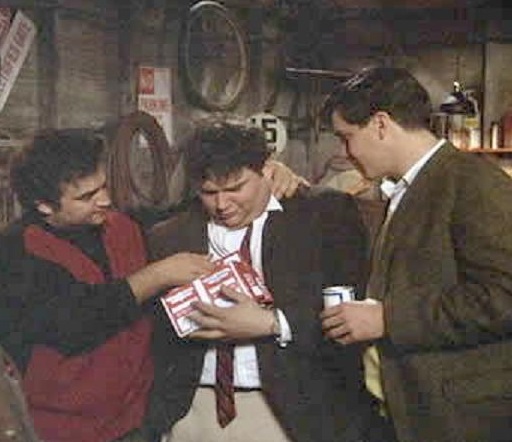
Confections And Consequentialism

Busted!!!!

Busted!!!!

From across the pond comes a stupid story rich with buried ethics treasures.

Eleven-year-old Holli McCann was sent home from a week long school trip to the Isle of Wight (where Paul McCartney started vacationing  when he turned 64) because she violated one of the rules of the trip: no chocolate. The Bromet (in Watford, Herts) Primary School’s headmistress, Yvonne Graves, discovered the infraction by surreptitiously reading a private letter that Holly had written to her mother. After perusing the incriminating missive,Graves ordered teachers to search Holli’s room, which they did with the diligence and thoroughness of the FBI looking for forensic evidence of a serial killing, even emptying her toiletry bag into the sink and pulling out the lining of her suitcase. It was all worthwhile, however, because they discovered the yummy but incriminating substance they sought.

After the smoking chocolate was discovered, the headmistress contacted Holly’s mother and told her to pick up her daughter immediately—she had been voted off the Isle. The mother begged  Graves to reconsider, but was refused. She had to borrow money to make the 160-mile trip to pick up her daughter.

What have we learned? Continue reading

A Prosecutor Lies, But It’s For A Good Cause…

Yes, Jack McCoy would probably be disbarred in the real world...

Yes, Jack McCoy would probably be disbarred in the real world…

Aaron Brockler, an assistant Cuyahoga County (Ohio, including Cleveland) prosecutor, was fired last month for  using a false identity on Facebook  to try to influence the testimony of  defense witnesses in a homicide case.

He initiated Facebook discussions with two women listed by the defense as alibi witnesses in a murder prosecution. Brockler pretended to be a former girlfriend of the defendant who had a child fathered by him, and urged the witnesses not to “lie for him.”  County Prosecutor Timothy J. McGinty fired Brockler, who by my count violated at least Ohio legal ethics rules 3.4, 3.7, 3.8, 4.1, 4.2 and 8.4, (tampering with evidence, suborning perjury, becoming a necessary witness, prosecutorial misconduct, misrepresentation of facts, contact with a person represented by counsel and dishonesty) and perhaps some others. Prosecutors are not allowed to tamper with defense witnesses, or try to influence any witness testimony. They are not permitted to contact represented parties in connection with a prosecution, unless the lawyers are involved. They are not permitted to lie or pose as someone they are not over the internet. They are not permitted to make themselves witnesses in their own cases. Brockler wasn’t just fired for cause, he was fired for multiple causes, any one of which would have justified kicking him out the door. Continue reading

“How Not To Be A Hero” by Edward Snowden

“If his motives are as he has represented them-–“I understand that I will be made to suffer for my actions,” but “I will be satisfied if the federation of secret law, unequal pardon and irresistible executive powers that rule the world that I love are revealed even for an instant,” he wrote in a note accompanying his first set of leaked documents—-then he acted courageously and selflessly.”

—- Ethics Alarms, June 10, 2013, referring to the conduct and statements of Edward Snowden, NSA “whistleblower.”

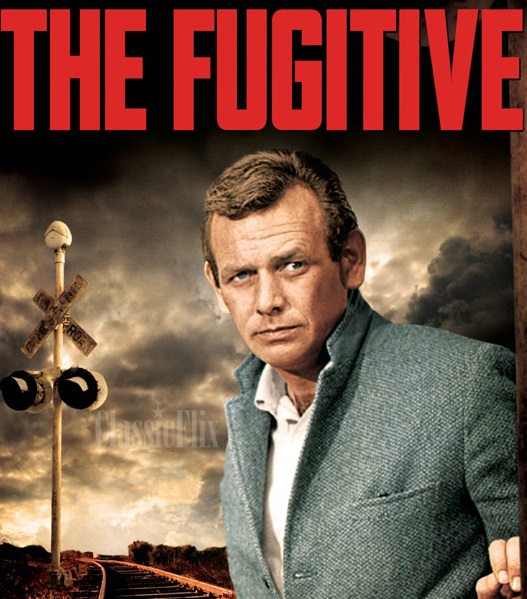
That's outrageous! They are collecting our phone records and our...hey, "The Fugitive!" I LOVED that show!!

That’s outrageous! They are collecting our phone records and our…hey, “The Fugitive!” I LOVED that show!!

Now we know that his motives are not as he represented them. From his statement that I quoted, I assumed that Snowden’s intent was to make himself available to U.S. authorities, and to prompt debate regarding the government’s widespread intrusions into the private communications of presumed-to-be-innocent citizens, as well as to ensure that the issue did not get drowned out, superseded and swept aside by distractions, as so many vital issues are. This was an indispensable second step, though I did not begrudge him some time to prepare for it. It would be the action of a one engaged in classic civil disobedience; it would demonstrate sincerity, public-mindedness and courage, and it would avoid his exploitation by the many around the world, and domestically, who wish the U.S. ill.

Instead, Snowden decided to run. Continue reading

The Progressives’ Attacks On Shelby County v. Holder: Unethical and Ominous

How DARE the Supreme Court not defer to Congressional judgment when it knows Congress is incapable of competent decision-making!

How DARE the Supreme Court not defer to Congressional judgment when it knows Congress is incapable of competent decision-making!

After reading more of the hysterical, sneering attacks on the Supreme Court’s decision in Shelby County v. Holder, I have concluded that I initially neglected to recognize the deep bias and contempt for basic rights that underlie them. The critics have no legitimate arguments to support allowing the current formula set out in the Voting Rights Act to continue, except that they believe trampling on innocent citizens’ rights is acceptable government practice if it makes the civil rights establishment happy, and allows the myth to be perpetuated that Republicans sit up late at night trying to figure out ways of stopping blacks from voting. “It may be unconstitutional, but it works!” is the best of their claims, a pure embrace of that hallmark of corrupted ethics, the ends justify the means. Note that this is also the justification being offered by the Obama Administration for drone strikes, PRISM, and tapping the phones of reporters. This isn’t an argument but a philosophy, and one that is offensive to core American values.

The Times, no longer the premiere news source in the country but certainly the premiere Democratic Party ally masquerading as a news source, clinched it for me. In its scathing editorial condemning the decision, the only arguments it could come up with were… Continue reading

Ethics Observations On The NSA Surveillance Revelations….

NSA

My current ethics observations on the unfolding NSA story:

  • I do not have enough facts to conclude that what NSA whistleblower Edward Snowden did was truly heroic, but if one is going to be a whistleblower, Snowden did it the ethical way. Snowden decided not to hide his identity, and accepted responsibility for his actions. If his motives are as he has represented them-“I understand that I will be made to suffer for my actions,” but “I will be satisfied if the federation of secret law, unequal pardon and irresistible executive powers that rule the world that I love are revealed even for an instant,” he wrote in a note accompanying his first set of leaked documents—-then he acted courageously and selflessly. Whether or not he also acted responsibly depends on whether he correctly weighed the possible harm of his leak against its benefits. Since its benefits include exposing what may well be ruled to be an unconstitutional and overly broad violation of citizens’ rights, I’m not certain any harm would sufficiently outweigh them in ethical balancing.
  • If it is true, as he says, that Snowden himself had the power to examine private communications of citizens who were not suspected of any crime, then the representations of Sen. Feinstein, the President and others that the NSA program was reasonable and not an abuse of power is not only untrue, but a lie. Snowden is a high school dropout, a consultant, about whose judgment, reliability and trustworthiness the NSA knew next to nothing, and what they thought they knew was obviously wrong, since he betrayed the agency. If such massive power to invade private communications and thoughts is casually placed in the hands of such an individual by a security agency, what other faceless future power-abusers have been similarly armed? Continue reading