A Damning Role Model For Wisconsin’s Public Union Protests

Fair game for Wisconsin's public unions

The ethical line between Fred Phelps’ anti-gay protesters who disrupt the funerals of  soldiers killed in action, and the self-righteous union protesters opposing Wisconsin’s governor Scott Walker’s budget balancing efforts has thinned to the vanishing point.

On Friday, Walker visited the Messmer Catholic Preparatory School in Milwaukee’s Riverwest neighborhood, to read to third-graders. The third-graders have no political agenda, but 100 protesters felt it was appropriate to disrupt a special day for school children to show their hatred for the governor.
Just as the Westboro Baptist Church feels that its homophobic crusade justifies interfering with military families’ private grief, Wisconsin’s ethically tone-deaf unions feel that innocent student are appropriate collateral damage in their quest to hold on to their privileged status among Wisconsin workers, and elections, laws, deficits and common sense be damned. How especially cynical of the teachers unions, to disrupt the experience of Catholic school students, who, apparently, don’t count. Tell us again, you dedicated teachers, how it’s “all for the children.” Continue reading

“Grow Your Own Marrow Donor” Ethics and Consequentialism: The Ayala Family Saga

Anissa Ayala and her custom-made bone marrow donor

Once again, the fans of that ethically corrosive twin of  “the ends justifies the means,” consequentialism, were holding court in the mass media, as the “Today Show” revisited a two-decade old ethical outrage to declare that it was all perfectly fine after all…because it worked.

Thus does television, itself dominated by ethically-dim writers, producers and stars, corrupt the public. So here we go again:

Does the fact (if it indeed is a fact) that Osama bin Laden capture and execution was facilitated by torture make torture less ethically wrong?

No.

Do the fortuitous results of any action that was unethical from its inception change the nature of that conduct from unethical to ethical.

Again, no.

Is conceiving a child solely to provide donor bone marrow to her cancer-stricken older sister ethically acceptable as long as the sister’s cancer is cured?

Absolutely not!  But to listen to the “Today Show,” and revoltingly, the “Today Show’s” resident medical correspondent Dr. Nancy Snyderman, it is not only ethically acceptable but laudable. Because it worked.

Twenty years ago, Abe and Mary Ayala were desperate because Anissa, their 16-year-old daughter, had been diagnosed with leukemia. Chemotheraphy proved ineffective, and neither the Ayalas nor their son was a compatible bone marrow donor. The Ayalas had long before decided that two children were enough; Abe had a vasectomy. But then Mary came up with the idea of having another child in the hopes that it would be a bone marrow donor who could save Anissa’s life. Continue reading

Ethics Quote of the Week: The Washington Post Editors

Clear out, everybody! Ann Miller wants to honor Thomas Jefferson!

“Aggrandizing what amounts to a stunt based on misinformed views of the First Amendment cheapens the real and courageous achievements of those who advance the causes of civil rights by refusing to comply with immoral laws”

—–The Washington Post, in an editorial entitled “Dancing at a National Memorial Isn’t Civil Disobedience”

The Post is talking about the escalating and pointless battle by self-indulgent, publicity-seeking, First Amendment grand-standers —a description that I shortened to the crude but sufficiently explanatory “assholes” in my post on the same topic-–to demonstrate for the endangered ‘right” to dance inside government memorial structures(Next up: frog races, strip shows, and Mummer parades). The editorial makes the true content of this noble exercise plain: it is 100% nonsense: Continue reading

Dancing With Thomas Jefferson: How Assholes Make the Law Spoil Life For Everyone

Coming to a place of honor and reflection near you.

On Saturday, the U.S. Park Police forcefully arrested five “Code Pink” protesters under the dome of the Jefferson Memorial for defying a recent Federal Appeals Court ruling that dancing at federal monuments was not constitutionally protected expression.

Perhaps you missed that ruling earlier this month, which was, I presume, made necessary by the realization that a flash mob could break out at any moment at the Lincoln Memorial or the Alamo. That was not the threat in 2008, however, when Mary Oberwetter was arrested, also at the Thomas Jefferson Memorial, for hoofing to celebrate Thomas Jefferson’s birthday.

She sued the National Park Service for violating her First Amendment rights, and on May 17 the U.S. Court of Appeals for the D.C. Circuit held that the Jefferson Memorial should have a “solemn atmosphere” and that dancing, silent or otherwise, was an inappropriate form of expression there. The appellate judges concurred with the lower court that the memorial is “not a public forum,” and thus demonstrators must first obtain a  permit. Demonstrations that require permits in the Park Service’s National Capital region are defined as

“…picketing, speechmaking, marching, holding vigils or religious services and all other like forms of conduct which involve the communication or expression of views or grievances, engaged in by one or more persons, the conduct of which has the effect, intent or propensity to draw a crowd or onlookers. [The] term does not include casual park use by visitors or tourists which does not have an intent or propensity to attract a crowd or onlookers.”

The Appellate Court wrote: Continue reading

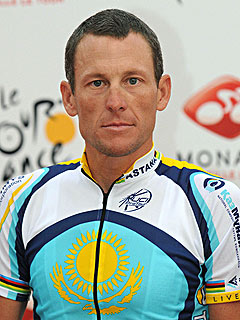
No Excuses and No Mercy For Lance Armstrong

Sorry, Lance…good guys don’t cheat.

Back when Barry Bonds was still playing baseball, a sportswriter mused about why it was that everyone assumed  Bonds was a performance-enhancing drug cheater despite his protestations to the contrary, while most Americans and sports journalists brushed away similar allegations regarding Lance Armstrong. Both competed in sports with acknowledged steroid abuse problems; indeed, the problem in bicycle racing was presumed to be more pervasive than in baseball. (A few years later, with the banning of multiple Tour winners, the presumption became a certainty.) Both athletes had improbable late career improvements in their performance to reach previously unimaginable dominance in their respective sports. Both had to explain or deflect multiple credible accusations of cheating and circumstantial evidence that suggested that they were doping. Both claimed they had never failed drug tests, and there were good reasons to doubt the denials.

So why was Bonds a villain by consensus and Lance an untouchable hero? The sportswriter explored many theories (Apologies: I cannot locate the article. If someone can, please send it), among them the greater popularity of baseball over cycling, Bond’s startling physical transformation into a behemoth while Armstrong remained cyclist-sinewy,  Armstrong’s inspiring story as a cancer survivor, Armstrong’s philanthropic work,and the fact that Bonds, unlike Armstrong, was black. The biggest difference, however, and to the writer the key one, was that Armstrong acted the role of a hero, while Bonds refused to. Armstrong was friendly and accommodating, while Bonds was angry, intimidating and antagonistic. Armstrong seemed like someone who played by the rules, and who lived his ethical values. Bonds seemed like a rebel, one who wouldn’t hesitate to break the rules for his own benefit. In short, the public wanted Armstrong to be the hero he seemed to be, so they ignored the evidence linking him to performance-enhancing drugs.

After last Sunday, the disparate public perception of Bonds and Armstrong, always illogical, became unsustainable. Continue reading

“The Mentalist” Ethics: Patrick Jane Osamas “Red John”

Red John's bloody calling-card will be found at serial killing scenes no more.

Tonight marked the season finale of “The Mentalist” on CBS, and by happy coincidence, Bruno Heller’s odd-ball murder mystery drama ended with its hero, Patrick Jane (played with brio by the excellent Simon Baker) executing his nemesis, the serial killer “Red John,” in a crowded food court…a Osama bin Laden style killing that, like the death of the Al Qaida mastermind, was both technically illegal and completely ethical.

Bravo.

Red John, for those of you who do not follow “The Mentalist,” is the self-chosen monicker of a brilliant maniac with financial resources, who slaughtered California Bureau of Investigation consultant Jane’s family as well as untold others. Jane has spent the three years of the series in an Ahab-like quest for revenge, wittily solving other murders along the way. In the final episode, Red John plotted the death of Jane’s boss and maybe love interest, Theresa Lisbon, played by Robin Tunney. Red John’s henchman managed to kill two officers and wound Lisbon before he was foiled, leading to a dramatic confrontation between the serial killer himself and the hero. Continue reading

Comment of the Day: “The Jaundiced Eye of Noam Chomsky”

You can find the original post here, and under it, my response to this comment by reader Trafford Gazsik. I’d say that Christopher Hitchens’ rebuttal to Chomsky, linked in the post, and my post about the ethics of bin Laden’s execution address the issues raised, make up your own mind.

“I like Chomsky and as a non-American, I can assure you that rather than filling my head with anti-American sentiments, his writings have reassured me that America remains a country populated with mostly decent people and that the world at large should not give up on the place just yet.

“I’m interested to know which part of Chomsky’s analysis you do not agree with:

– Do you disagree with the assertion that the Bin Laden ‘takedown’ was an assassination?

– Do you reject the assertion that the assassination took place within the territory of another sovereign state without the knowledge or permission of the government of that state, in clear contravention of international law and customs?

– Do you deny that Bin Laden had not been tried in any court, and was for legal purposes, an innocent civilian of Non-US nationality residing in Non-US territory? Continue reading

Comment of the Day: “Osama’s Assassination: The Ethics Elephant in the Room”

First time commenter Margo Schulter delivers a powerful, passionate and eloquent absolutist rebuttal to my post asserting an ethical defense of Osama bin Laden’s targeted killing/assassination/execution by U.S. military personnel. My immediate response to her can be found in the comments to the original post here; I don’t want to re-post it with this post because Margo’s thoughtful comment should be read and thought about prior to considering my rebuttal. Ethics Alarms is blessed with many sharp and persuasive comments, and this is one of the finest. In the grand tradition of absolutism, her answer to my question about firing the bullet that would kill an unarmed and submissive Osama  is “I wouldn’t fire that bullet to save the whole universe.” And she explains why:

“Please let me try to put my best foot forward, and keep a spirit of civility and friendly inquiry, as I say that my whole being — my guts, heart, intuition, and intellect –cry out, “No exceptions! Executions, extrajudicial or legal, are _wrong_!” I wonder what an MRI might show, and what neuroethics might say, about how people in the U.S.A. and elsewhere have such different reactions to what I would call a consummately evil and dehumanizing act.

“Please let me also apologize for the length of this comment, nevertheless just the starting point for a dialogue with lots of ramifications. How do pacifists like me see the scale of moral evils in different kinds of violence, and when might we consider using certain forms of nonlethal force? Also, there’s a way that President Obama might have modified his strategy a bit to fit Frances Kamm’s Doctrine of Triple Effect (DTE), illustrating what I see as the dangers of this intellectually intriguing concept. I’d love to join a dialogue going in any or all of these directions.

“It’s curious. You write, “I assume you shoot him dead.” And my whole being cries out, “You assume wrong!” While I’m not a physicalist, I do recognize that while we’re in this world experience and behavior are mediated through the brain, so I wonder what an MRI or the like would show for
people who have these radically different intuitions. Continue reading

Osama’s Assassination: The Ethics Elephant in the Room

You are one of the Navy Seals raiding Osama bin Laden’s Pakistan compound. Bin Laden rushes out, with a white flag, shouting “Mercy!”, “I surrender!” and “I’m so, so sorry!” He throws his flag down, puts his hands up, and falls to his knees, pleading for his life. What do you do?

I assume that you shoot him dead. I would. Is this ethically defensible? Continue reading

From First Amendment Outrage to Ethics Hypothetical: The Westboro Baptist Church vs. Brandon, Miss. Hoax

"Never mind!"

Bulletin: The story about how citizens and law enforcement personnel in Brandon, Miss. foiled the efforts of Fred Phelps’ homophobic Westboro Baptist Church to disrupt the funeral of a serviceman killed in Afghanistan never happened. The source of the hoax is unclear, but an enterprising Stars and Stripes blogger investigated and has determined that it never happened. The Church was never even in Brandon.

I detest fake web stories and the people who create them, as you probably know. The public is  confused enough by reality without having falsehoods, fabrications and hoaxes added to its database. Luckily, this is not a news site, but an ethics site, and my commentary about those who applauded this tale of a community conspiring to rob a group of their U.S. Supreme Court confirmed constitutional rights is as valid as when it was widely assumed that the story was real.

The foiling of Fred Phelps’ gang by “Mississippi Burning” tactics is not only an ethics hypothetical that most people flunked, but also an effective trap to lure the self-righteous into agreeing  that ends justify unethical means as long as the victims of those ends are sufficiently despicable.   This group includes one of the most quoted commentators on the story, who approved of the fictional response by the town and wrote,

“This is a template for how to handle the Westboro people. If lawsuits don’t work, other means will. Whatever it takes to keep them from harassing bereaved military families on the day their fallen loved ones are laid to rest.”

He was wrong then, and he’s wrong now.