Osama’s Assassination: The Ethics Elephant in the Room

You are one of the Navy Seals raiding Osama bin Laden’s Pakistan compound. Bin Laden rushes out, with a white flag, shouting “Mercy!”, “I surrender!” and “I’m so, so sorry!” He throws his flag down, puts his hands up, and falls to his knees, pleading for his life. What do you do?


I assume that you shoot him dead. I would. Is this ethically defensible? Continue reading

From First Amendment Outrage to Ethics Hypothetical: The Westboro Baptist Church vs. Brandon, Miss. Hoax

"Never mind!"

Bulletin: The story about how citizens and law enforcement personnel in Brandon, Miss. foiled the efforts of Fred Phelps’ homophobic Westboro Baptist Church to disrupt the funeral of a serviceman killed in Afghanistan never happened. The source of the hoax is unclear, but an enterprising Stars and Stripes blogger investigated and has determined that it never happened. The Church was never even in Brandon.

I detest fake web stories and the people who create them, as you probably know. The public is  confused enough by reality without having falsehoods, fabrications and hoaxes added to its database. Luckily, this is not a news site, but an ethics site, and my commentary about those who applauded this tale of a community conspiring to rob a group of their U.S. Supreme Court confirmed constitutional rights is as valid as when it was widely assumed that the story was real.

The foiling of Fred Phelps’ gang by “Mississippi Burning” tactics is not only an ethics hypothetical that most people flunked, but also an effective trap to lure the self-righteous into agreeing  that ends justify unethical means as long as the victims of those ends are sufficiently despicable.   This group includes one of the most quoted commentators on the story, who approved of the fictional response by the town and wrote,

“This is a template for how to handle the Westboro people. If lawsuits don’t work, other means will. Whatever it takes to keep them from harassing bereaved military families on the day their fallen loved ones are laid to rest.”

He was wrong then, and he’s wrong now.

No, It Still Doesn’t Justify Torture

No.

The news of how Osama bin Laden was finally tracked down and killed has caused a predictable outbreak of consequentialism. It appears that Khalid Sheikh Mohammed provided some of the key intelligence that led to the successful operation in Pakistan while he was undergoing “enhanced interrogation” in CIA prisons in Rumania and Poland. “See?” Dick Cheney’s fans are saying today. “Rendition and torture work. We wouldn’t have killed Bin Laden without them. So what do you think of those tactics now?” The opponents of torture who foolishly argued against it based on pragmatic considerations—“Torture doesn’t work!”—rather than ethical ones–-“It is absolutely wrong!“—set themselves up for this.  Now what should they say? Continue reading

Should It be Illegal to Buy Counterfeit Designer Goods?

The ethics of this issue are clear, I think. The mystery is: Why did it take so long, and why isn’t there a national law?

New York City councilwoman Margaret S. Chin, whose district includes Chinatown, has introduced a bill would make it a misdemeanor  to  buy fake designer merchandise on the street or anywhere else. Violators would face a $1,000 fine, a year in jail, or both.

The New York Times interviewed a tourist who articulated the argument against Chin’s bill.
“I come down here, I will continue coming down here, and I will follow the Chinese people wherever they take me,” the New Jersey resident told the Times reporter “as she stood amid the purse and sunglass vendors on Canal Street.” “I don’t believe in child labor and I don’t believe in supporting terrorists, but if I want to buy a knockoff, that’s my business.” Continue reading

Don’t Cheer Mississippi’s Westboro Baptist Tactics Too Loudly: You Never Know Who Might Hear You

"Demonstrators? Just leave them to us."

Sgt. Jason Rogers, who was killed in action in Afghanistan, was buried two weeks ago in Brandon, Mississippi. As is its custom, the Westboro Baptist Church, fresh from U.S. Supreme Court-confirmed constitutional protection, was prepared to sully Sgt. Rogers’ funeral with its usual hateful chants about how God kills our soldiers to punish our sinful, homosexual-loving ways. Its plans were foiled, however, by a little bit of traditional Mississippi social control ingenuity.

A couple of days before the funeral, one of Fred Phelps’ vile cultists boasted about the upcoming protest while visiting a Brandon gas station, and the good citizenry on the scene gave him the sound beating they felt his sentiments warranted. Continue reading

To Wisconsin Unions, a Depressed Woman’s Suicide Is Just Another PR Weapon

"Oh, no. Poor ..hey, wait a minute! We just might be able to use this!"

“The ends justify the means,” for better or worse, has always been the modus operandi of the American union movement. Back at the beginning of the 20th Century, this often translated into violence, as union leaders used bombs and murder to counter equally vile tactics—or worse—by their industry foes. Union violence is more common today in the threatening than in the actual execution, but the public unions battling Governor Scott Walker in Wisconsin have made it increasingly clear that ethics, fairness and truth are not going to stand in the way of their objectives, particularly the objective of winning the battle for public support.

A new low may have been reached with the effort to blame Walker for the suicide of Jeri-Lyn Betts, a 57-year-old teacher suffering from chronic depression, who apparently committed suicide last week.  Continue reading

Comment of the Day: “Why NPR’s Wrongs Don’t Make James O’Keefe Right”

Rick comments on my ethics verdict regarding the most recent James O’Keefe “sting,” this one exposing a biased NPR exec and an ethically-weak NPR fundraiser: Continue reading

Why NPR’s Wrongs Don’t Make James O’Keefe Right

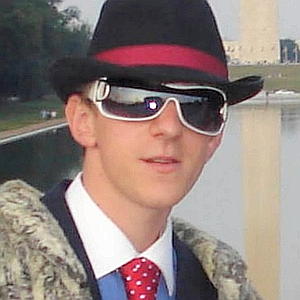
James O'Keefe, Ethics Corrupter

And the NPR Ethics Train Wreck continues

Between union hysteria in Wisconsin, carnage in Libya, and tsunamis, the fact that James O’Keefe’s fake Muslim billionaire act exposed more NPR integrity issues was drowned out by shouting, gun shots and water. In fact, the second victim of O’Keefe’s sting may have taught us more about NPR than the first.

In the surreptitious audiotape of  NPR’s continued encounters with the fake potential big bucks donor, NPR’s director of institutional giving, Betsy Liley, is heard advising the supposedly wealthy Muslim donor how the network could help “shield” his group from a government audit if it accepted the $5 million he was offering. It seems pretty clear from the tape that this was not what the sting was set up to prove: what the “Muslim donor” really wants is to get a promise from NPR that it will slant the news content the his way if the gift is big enough. Liley stood her ground on this core journalistic principle admirably—so much for the claim that George Soros bought NPR’s advocacy with his recent gift—but fell into another trap of her own making.

NPR spokeswoman Dana Davis Rehm said in a statement that Liley’s comments on the tape “regarding the possibility of making an anonymous gift that would remain invisible to tax authorities is factually inaccurate and not reflective of NPR’s gift practices. All donations—anonymous and named—are fully reported to the IRS. NPR complies with all financial, tax, and disclosure regulations.” That’s undoubtedly correct; Liley was not merely ethically wrong but also literally wrong, for what she was suggesting almost certainly couldn’t happen. However, the fact that she would say such a thing believing it could happen, or think it was acceptable if it did happen, or try to acquire a large donation by persuading a donor to believe it could happen, all point to the one conclusion: NPR’s culture is ethically compromised, and the organization’s leadership has failed to meet its obligations to create an ethical culture  there. The sting is more disturbing than the earlier one that caught an outgoing NPR executive taking extreme partisan positions that belied NPR’s position that it is objective and unbiased. The comments of Ron Schiller just confirmed what many, including me, thought was already apparent in the tone of NPR’s work. I had also always assumed, however, that the place was professionally and ethically run (excepting the tendency to fire employees for expressing politically incorrect opinions on Fox News).

So this settles it, right? O’Keefe is a hero?

No, he’s not. James O’Keefe, in fact, is an ethics corrupter, an individual who weakens the public’s ethics by encouraging it to accept his dubious values. Continue reading

Quiz: Who is More Unethical, Jayson Blair or Dan Rather?

Yes, it's time for another ETHICS QUIZ!!!

Be careful! This one is tricky.

Jayson Blair, as most of you will remember, was a spectacular fraud in the New York Times newsroom, a star reporter who was sacked in 2003 after it was discovered that he had fabricated numerous stories

Dan Rather, in contrast, was a distinguished and respected reporter and CBS anchorman who  earned his accolades, but who was felled by a disgraceful episode in 2004 in which he conspired with a “60 Minutes” producer named Mary Mapes to use forged documents in support of a critical story about President Bush avoiding his duties when he was in the National Guard, which Rather presented on the air two months before the 2004 election. Continue reading

Home-Grown Mengeles, And What We Must Learn From Them

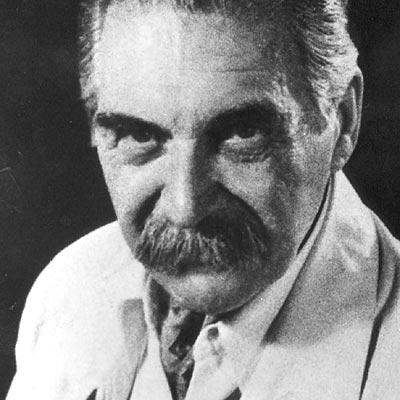
Josef Mengele: researcher, utilitarian, monster

We knew, or should have known, that this extremely ugly shoe was bound to drop eventually.

Last autumn, when the U.S. apologized for federal doctors infecting prisoners and mental patients in Guatemala with syphilis 65 years ago, it put us on notice that a vile and unethical cultural standard had taken hold of the American medical and scientific communities in the 20th century, one that held  it was “right” for the weakest, most powerless and most disposable of human beings to be tricked, coerced or bribed into serving as subjects for experiments that could lead to miraculous cures and treatments for the rest of the population. This–depriving human beings of their rights and lives in the interest of science—is “the ends justify the means” at its worst. But the Guatemala experiments proved that this was once flourishing and respectable in the U.S. scientific and medical research communities, so it would have been surprising if there weren’t more stories of home-grown Mengeles, and sure enough, there were. The U.S. acknowledged as much when it apologized for the Guatemalan tests. Now we have details. Continue reading