Rush’s Apology, His Power, and His Responsibility

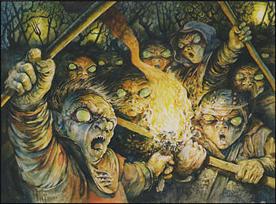
They're coming, Rush!

The Sunday morning talk shows had a real Rush Limbaugh bash-fest this morning, and that’s fine: he earned it, with his ill-considered and vicious attack on Sandra Fluke for stating her opinion. This is a real career crisis for Limbaugh, I think, and he knows it. His initial reaction to the furious criticism of his offensive comments about the Georgetown Law student was to refuse to back down, as has been his response to controversies his entire remarkable career, and it has served him well. Then he realized that this controversy was different. He had crossed a line of decency, fairness and civility that the culture as a whole, not just political adversaries, would not tolerate. He apologized, saying.

“For over 20 years, I have illustrated the absurd with absurdity, three hours a day, five days a week. In this instance, I chose the wrong words in my analogy of the situation. I did not mean a personal attack on Ms. Fluke.

“I think it is absolutely absurd that during these very serious political times, we are discussing personal sexual recreational activities before members of Congress. I personally do not agree that American citizens should pay for these social activities. What happened to personal responsibility and accountability? Where do we draw the line? If this is accepted as the norm, what will follow? Will we be debating if taxpayers should pay for new sneakers for all students that are interested in running to keep fit? In my monologue, I posited that it is not our business whatsoever to know what is going on in anyone’s bedroom nor do I think it is a topic that should reach a Presidential level.

“My choice of words was not the best, and in the attempt to be humorous, I created a national stir. I sincerely apologize to Ms. Fluke for the insulting word choices.”

Was it a “real” apology? I’m going to discuss the issue of apology ethics in the next post, but yes, it was as real as most apologies. If one’s definition of apology is ” a statement of contrition and regret freely and sincerely given,” the answer is no. Very few apologies meet that high standard, if only for the reason that few of us will apologize unless an apology benefits us in some way or is unavoidable. Rush’s reputation is based on daring, outrageousness and his refusal to back down from the ‘truth” despite assaults from the “drive-by” media and the politically correct; he, of all people, would never apologize for anything he said on his show if he had any choice in the matter. In this case, I assume that Limbaugh was hearing from his affiliates, his sponsors, other talk show hosts, and political figures that he was courting disaster if he didn’t back down. Continue reading

Kind and Exploitive: SNL Performs A Rare Ethical Unethical Act

Lindsay Lohan, when everything was possible, and the future was bright.

Tomorrow, Saturday Night Live is bringing back Lindsay Lohan as Guest Host. This a decision that defies ethical analysis. On one hand, it is certain to be a ratings winner, as the curious will tune in to see if Lohan has a meltdown, look prematurely aged by her various addictions, or does or says something that continues her five year-run of self-destructive behavior. Lindsay is almost finished with her court-ordered rehab and community service, but her status in show business could hardly be much lower. She is widely regarded as uninsurable, and a candidate for a relapse at any time. Since the lapsed child star last hosted SNL, she has stood trial for grand theft, been held in contempt of court, been sentenced to jail twice, and made the classic desperation career move of posing nude for Playboy, a last ditch tactic that 1) almost never works, and 2) is usually reserved for fading pop stars and marginal TV actresses in  their thirties, not a 25-year-olds.who should be in her career prime. If there ever was a ratings-motivated “let’s give the people a train wreck to gawk at” call, this was it. Continue reading

Ethics Quote of the Week: George Clooney

“I think it’s a stupid thing. I think it’s stupid for anyone, whether they’re celebrated or not, I don’t believe their 911 calls should be broadcast around the world.” 

"Poor Demi! The public has a right to hear us humiliate her."

—-Actor George Clooney, speaking during Sunday night’s Screen Actors Guild Awards.  He was referring to the release and subsequent airing of a 911 call from a woman summoning rescue workers for actress Demi Moore, who, the caller said, was convulsing and had lapsed into semi-conscious.

Good call, George.

911 calls are considered public, but that doesn’t mean that the public needs or has to hear them, or that sleaze-factories like TMZ should put them online when their only purpose is titillation and to embarrass celebrities. There may be special circumstances that justify making a recording of a 911 call, rather than a  transcript, available to the public, but those should be exceptions. In cases like Moore’s, playing them is unfair and unkind, a clear Golden Rule violation, not that TMZ, or most journalists for that matter, would know about that.

If the media can’t control itself when it comes into possession of a 911 call that will embarrass someone who already has enough problems to deal with, then we need laws to keep 911 calls out of irresponsible hands…in other words, the news media’s hands.
.


Comment of the Day: “Unethical Quote of the Week: Roxanne Dunbar Ortiz”

I found Michael’s personal and heart-felt reflections on the fact that Democratic Senate candidate Elizabeth Warren has been distinguishing herself so-called “1%” thought-provoking on many levels. Its relevance to the Golden Rule is especially interesting. How can we treat others as we would want to be treated if we were them, when we don’t have sufficient common experiences to know what those others want and need? When a politician claims to be “one of us” and really is not, it is more than a misrepresentation. It is an appeal to trust based on false information.

Here is Michael’s Comment of the Day, on the post Unethical Quote of the Week: Roxanne Dunbar Ortiz:

Continue reading

Celebrity Encounter Ethics

You're welcome. But now I'll never know what Eddie Murphy is really like!

I run into a lot of celebrities when I travel. I assume everybody does who travels very often; I know that I am better at recognizing them than the average person because my celebrity knowledge spans multiple generations, I have a good memory for faces, and I have always watched way, way too much television. And it happened again today: I was having my usual battles with an airport self-service check-in kiosk, this one in Atlanta, when I realized that the traveler enduring similar annoyances (“We have no record of your itinerary. Please enter the code that we call something other than what it is called on your ticket receipt before you get frustrated and have to wait in line to speak with an agent, because you know that’s what is going to happen.”) was the young actress-singer, Raven-Symone.

She was traveling alone, and it seemed clear that nobody around us had any idea who she was. Strange: doesn’t everyone watch “The Cheetah Girls,” “Dr. Doolittle 2” and re-runs of “That’s So Raven” on the Disney Channel? The encounter immediately sent me into Marshall Celebrity Recognition decision mode: what is the ethical way to treat the rich and famous if you are insignificant and lowly, and close enough to assassinate them? Continue reading

“Ask Amy” Tackles A Classic—And Misses

Advice columnist Amy (of the syndicated column “Ask Amy”), was just asked one of those questions that every advice maven has to have in their files, with the perfect answer ready to go. If Amy had her answer prepared, it was  the wrong one.

The question was the deathless classic, “I just found out my husband has been having an affair with a married co-worker. Should I tell the other spouse?”

Amy gets it half right: she tells the reader that the other spouse has a right to know; that this is not a case of meddling because the reader is directly involved in the betrayal; and that not to make sure the other spouse learns the truth would now be abetting the deception. All true. BUT…

…Amy forgets the Golden Rule as it applies to the reader’s husband’s adulterous lover (yes, the rule still applies to busted wrongdoers) and the whistleblowers obligation to minimize needless harm. She tells the victimized wife to spill the beans to the victimized husband.

Wrong.

The adulterous wife deserves the opportunity to tell her husband herself. That would allow her to reveal the affair to her spouse with the least damage to the marriage, and providing that opportunity to her is kind and fair. Amy should have told her reader to contact her husband’s paramour and say this: “I will be calling your husband and telling him about your relationship with my husband in three days. You should tell him the truth yourself, and then all he needs to say to me when I call is, ‘Yes, she told me.’ But if you haven’t told him, he’ll hear it all from me.

File it away, Amy, and get it right the next time.

Poll: 84% Don’t Have a Clue What “Ethical” Means

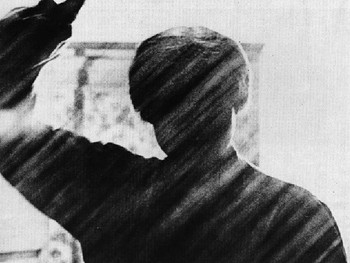
Was Norman Bates unethical or sentimental? Well..wait, WHAT?

OK, that was a somewhat misleading headline. According to a poll run by ABC News, 84% of the public thinks that cloning dead pets is unethical. But since there is absolutely nothing unethical about cloning dead pets, I think the headline above is accurate. Well, maybe 84% accurate.

The story is over at Sodahead, which is dedicated to dumb polls. The analysis of the poll, if one can call it analysis, is almost totally bereft of anything remotely connected with ethics or ethical theory. In a previous poll on the subject, Sodahead asked those polled to choose whether the practice was “unethical” or “sentimental”, which is a choice akin to, “Do you like baseball, or can you swim?” Of course cloning a pet is sentimental—why else would someone do it? Who came up with the boneheaded idea that sentimental and unethical were mutually exclusive? Norman Bates dressing up as his beloved mother and killing people was sentimental, but I’d also say it was less than ethical. Continue reading

Comment of the Day on “The NAACP’s ‘Gotcha!’ Games”

"GOTCHA!"

An exchange between a spirited newcomer to Ethics Alarms, Roger, and me led to this Comment of the Day by Proam [ whom I keep meaning to ask whether his screen name is pronounced “Proam, ” and in “foam,” or “Pro-Am” } Here is his complex take: I’ll have a response at the end. Proam’s Comment of the Day on “The NAACP’s “Gotcha!” Games” :

“My $.02: the NAACP’s and Roger’s objections to what Santorum said are valid “gotchas.”

“It matters neither what Santorum really meant, nor what is the sum of Santorum’s character and values (call that his “heart”). What he uttered (“blacks”), insofar as how it matters to certain recipients, is off-putting and alarming, regardless of its timing, place, vehemence, or other quality, and therefore must matter to all recipients. It was worse than “lazy;” it betrayed a lack of sensitivity that others have (and are justified and deserving in having) about a matter of justice. It only takes one word – even part of one word; even no words at all but some other fleeting sound or sight, like a raised eyebrow – for one to make oneself clear, even clearer than ever had been intended, or than ever could be communicated with many words. Continue reading

Penn State Primer: 15 Ethics Alarms on the Duty to Rescue and the Bystander Problem

Tiring of the smug and remarkably vicious Paterno defenders who have designated Mike McQueary for infamy because he failed to stop the Penn State child rapist in action, and who have accused me of supporting such inaction in rescue situations when my position, record, writings, belief and life experience proves the opposite, I offer these previous Ethics Alarms posts on the topics of rescue and bystander inaction. It is a useful, if sometimes disturbing review of various aspects in a complex issue. I don’t really expect the commenters previously referenced to allow rational thought to interfere with their certitude and vendetta, but most visitors here are not so wired.

A new post, focusing especially on McQueary, will be along soon, but today is Veterans Day, and I have my own duty to attend to: honoring Maj. Jack Marshall, Sr., 1920-2009, WWII veteran, Silver Star, Bronze Star and Purple Heart veteran, a true hero his entire life, in every way imaginable.

I am quite confident that he would not only have stopped Jerry Sandusky from molesting the boy, he might well have shot him.

Here are the 15 selected essays: Continue reading

An Ethics Lesson Missed, a Life Lost

Jayna Murray, victim of a murderer and ignorance of the the Golden Rule.

The grisly Lululemon Athletica murder trial in Montgomery County, Maryland, concluded with Brittany Norwood being quickly found guilty of the March beating and stabbing death of co-worker Jayna Murray in the yoga-wear store where they both were employed. Among the key testimony at the trial was that of Jana Svrzo, the manager of the Apple store adjacent to the murder scene, who said she heard banging, screaming, grunts and other someone-is-getting-attacked sounds, along with a frantic woman screaming things like, “God help me! Please help me!” and “Talk to me! Don’t do this!” Svrzo said she called another Apple employee over to the wall to confirm her suspicions, and they heard the voice say,”Stop! Stop! Stop!” and then, “Oh, God! Stop!”

The two Apple employees did nothing. Continue reading