Comment of the Day on “The NAACP’s ‘Gotcha!’ Games”

"GOTCHA!"

An exchange between a spirited newcomer to Ethics Alarms, Roger, and me led to this Comment of the Day by Proam [ whom I keep meaning to ask whether his screen name is pronounced “Proam, ” and in “foam,” or “Pro-Am” } Here is his complex take: I’ll have a response at the end. Proam’s Comment of the Day on “The NAACP’s “Gotcha!” Games” :

“My $.02: the NAACP’s and Roger’s objections to what Santorum said are valid “gotchas.”

“It matters neither what Santorum really meant, nor what is the sum of Santorum’s character and values (call that his “heart”). What he uttered (“blacks”), insofar as how it matters to certain recipients, is off-putting and alarming, regardless of its timing, place, vehemence, or other quality, and therefore must matter to all recipients. It was worse than “lazy;” it betrayed a lack of sensitivity that others have (and are justified and deserving in having) about a matter of justice. It only takes one word – even part of one word; even no words at all but some other fleeting sound or sight, like a raised eyebrow – for one to make oneself clear, even clearer than ever had been intended, or than ever could be communicated with many words. Continue reading
Penn State Primer: 15 Ethics Alarms on the Duty to Rescue and the Bystander Problem

Tiring of the smug and remarkably vicious Paterno defenders who have designated Mike McQueary for infamy because he failed to stop the Penn State child rapist in action, and who have accused me of supporting such inaction in rescue situations when my position, record, writings, belief and life experience proves the opposite, I offer these previous Ethics Alarms posts on the topics of rescue and bystander inaction. It is a useful, if sometimes disturbing review of various aspects in a complex issue. I don’t really expect the commenters previously referenced to allow rational thought to interfere with their certitude and vendetta, but most visitors here are not so wired.

A new post, focusing especially on McQueary, will be along soon, but today is Veterans Day, and I have my own duty to attend to: honoring Maj. Jack Marshall, Sr., 1920-2009, WWII veteran, Silver Star, Bronze Star and Purple Heart veteran, a true hero his entire life, in every way imaginable.

I am quite confident that he would not only have stopped Jerry Sandusky from molesting the boy, he might well have shot him.

Here are the 15 selected essays: Continue reading

An Ethics Lesson Missed, a Life Lost

Jayna Murray, victim of a murderer and ignorance of the the Golden Rule.

The grisly Lululemon Athletica murder trial in Montgomery County, Maryland, concluded with Brittany Norwood being quickly found guilty of the March beating and stabbing death of co-worker Jayna Murray in the yoga-wear store where they both were employed. Among the key testimony at the trial was that of Jana Svrzo, the manager of the Apple store adjacent to the murder scene, who said she heard banging, screaming, grunts and other someone-is-getting-attacked sounds, along with a frantic woman screaming things like, “God help me! Please help me!” and “Talk to me! Don’t do this!” Svrzo said she called another Apple employee over to the wall to confirm her suspicions, and they heard the voice say,”Stop! Stop! Stop!” and then, “Oh, God! Stop!”

The two Apple employees did nothing. Continue reading

Genome Sequences, Consent, and Scientist Ethics

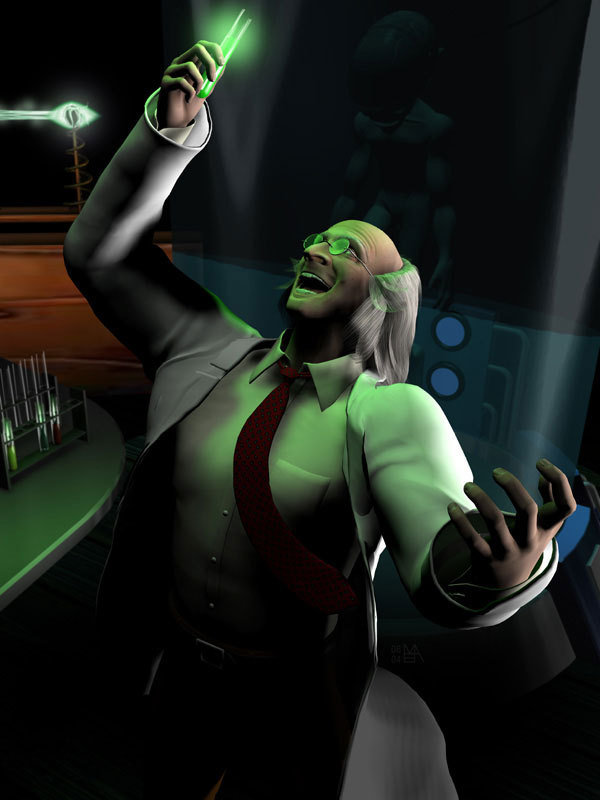
What...you don't trust this guy???

Few things are scarier than when scientists start debating ethics.

A current debate in the scientific community involves whether it is ethical to publish your genome sequence without asking permission from family members. It is increasingly common for people to pay to have their genome scanned for the presence of traits, including genetic diseases. Scientists agree that releasing this information without the permission of the individual whose genes are described would be a clear ethical breach. The controversy involves whether an individual is ethically obligated to get consent from family members before publishing his or her own genome sequence, since to some extent that means publishing theirs as well.

The argument proceeds from the unauthorized release of someone’s genome sequence by a third party to the plight of an identical twin whose sibling wants to publish his own sequence, which, of course, also describes his twin’s.  This is ethically clear too: it would be wrong not to seek permission. But what about the rest of the family? Continue reading

The 9-11 Photo And A Columnist’s Character

One thing I have learned about personal ethics: they are imposible to hide. Ethical individuals eventually show their values in grand style, and those without ethics, or whose ethical values are corroded, frayed and rotting, show their true colors as well. Thus it was no surprise to me when Frank Rich, once one of America’s most unfair drama critics who turned into one of the media’s most vicious opinion columnists, exposed the content of his character in grand style with a New York Time column last month about 9-11. Continue reading

Non-Douche Neil Patrick Harris Almost Gets It Right

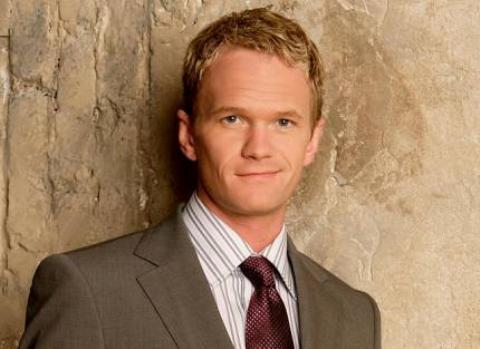
Neil Patrick Harris...no douche he! But is it for the right reasons?

In a cover feature story for Entertainment Weekly, Neil Patrick Harris (or whoever ghost-wrote for him) lays out his Hollywood Survival Guide. Secret of Hollywood Survival #6 for the star of “How I Met Your Mother” and ubiquitous awards show host is “Don’t Be A Douche”:

“Hollywood affords many opportunities to be a douche of epic proportions,” writes the grown-up “Doogie Howser,” “Avoid the temptation.”  He continues:

“Being a pleasant person has got to count for something….Actors sometimes take themselves far too seriously and put themselves on a different level [from the crew.] But everyone’s working really hard and should be afforded the same level of respect.”

For that, Neil gets an Ethics Alarms salute. Unfortunately, he scars his achievement by going on to explain how the make-up people, the film editor and the transportation department can really nail you if you don’t treat them well.

Given the breezy tone of the article, Harris was probably joking, but the joke reinforces the misconception many people have about ethics, which is that ethical conduct is a quid pro quo. It’s not. The Golden Rule isn’t “Do nicely unto others do they won’t screw you over,” and someone’s less than nice behavior  toward you doesn’t justify your being a douche to him. One isn’t respectful to the waiter because he’s liable to spit in your soup if you’re not, but because it’s the right way to treat other human beings.

Neil Patrick Harris certainly seems like a decent guy, and he probably is. I just wish, in the pursuit of a pretty stale joke about how the make-up people will get even by making you look like a troll, he hadn’t reinforced one of the most persistent of unethical rationalizations.

The Indignant Starbucks Squatter and the Compliance Mindset

OK...NOW it's selfish to squat at tables for hours.

I owe thanks to a blogger named JJ (and to Ken at Popehat, whose post brought him to my attention) for giving me one of the best illustrations of what I call “The Compliance Mindset” I have ever seen.

I’m sure it would horrify JJ to learn this, but he is ethically aligned with all the financial wheeler-dealers and unscrupulous mortgage lenders who crashed the U.S. economy. They also thrived in the Compliance Mindset, as do corrupt politicians, deceptive advertisers, dishonest journalists, sleazy lawyers, and millions of others in our culture who make life miserable for the rest of us for their own benefit. All of these people adopt the convenient belief that something must have a formal rule or law prohibiting it before it becomes wrong. This is, in fact, the opposite of the truth: if people were completely ethical, we would need very few rules. The Compliance Mindset is really an unethical rationalization that allows people to be rude, selfish, irresponsible, unfair, or worse because their conduct is technically legal and there isn’t a rule against it yet. Usually the rule or law arrives after a lot of needless harm has been done. Continue reading

Perry, Insomnia, Leadership, and the Death Penalty

When should a leader lose sleep over a decision?

A lot of ink has been spilled over NBC’s Brian Williams’ question to Rick Perry regarding the death penalty, the Republican candidates debate audience’s strange reaction to it, and Perry’s response. Conservatives see Williams’ question—“Your state has executed 234 death row inmates, more than any other governor in modern times. Have you struggled to sleep at night with the idea that any one of those might have been innocent?”—as a loaded query by a biased questioner who is pressing the progressive anti-death penalty agenda. Liberals see Perry’s answer as proof-positive that he is an unthinking, unfeeling, blood-thirsty monster. Continue reading

Comment of the Day: “The Provocative T-Shirt Problem:

"Oh yeah? Well, your good manners and dignity offend ME!"

Sometimes I receive terrific comments to posts via e-mail, and sometimes I decide to make them Comments of the Day. And sometimes I decide to do that and forget, like I did with this comment, from Neil Penny, in response to my July 26 post about Dollywood forcing a patron to cover the mild political message on her T-shirt that “might offend some.” Neil’s comment was about the anecdote included in my post, relating how the dress code at my college was brought down by a concerted effort to comply with its letter rather than its spirit, and how the subsequent loss of decorum in the dining hall was regarded my many students, including me, as a diminishment of the experience.  Here is that lost “Comment of the Day”—my apologies to Neil for the delay: Continue reading

The Ethics of Interviewing Kids on Camera


Art Linkletter was right: "Kids say the darndest things!"

When I initially learned about  Chicago TV station WBBM editing  an interview with a 4-year-old boy last month to make him sound like an aspiring gang-member when he actually said that he wanted to be a policeman, I decided to pass. I try to avoid making obvious observations, and nobody could defend the conduct of the station’s editors, who intentionally truncated the child’s remarks to the interviewer to make them sound chilling. The larger question of whether the child should have been interviewed at all, however, is more challenging. We see kids being interviewed on TV all the time, and it is far from certain that reporters are doing so ethically.

In the wake of  the WBBM incident, journalistic ethics expert Al Thompkins reprinted his guidelines for interviewing juveniles on the Poynter site. I’m an admirer of Thompkins, but I found his guidelines almost as chilling as the distorted interview itself. Here is his guidance on the issue of interviewing kids, with my reactions: Continue reading