Genome Sequences, Consent, and Scientist Ethics

What...you don't trust this guy???

Few things are scarier than when scientists start debating ethics.

A current debate in the scientific community involves whether it is ethical to publish your genome sequence without asking permission from family members. It is increasingly common for people to pay to have their genome scanned for the presence of traits, including genetic diseases. Scientists agree that releasing this information without the permission of the individual whose genes are described would be a clear ethical breach. The controversy involves whether an individual is ethically obligated to get consent from family members before publishing his or her own genome sequence, since to some extent that means publishing theirs as well.

The argument proceeds from the unauthorized release of someone’s genome sequence by a third party to the plight of an identical twin whose sibling wants to publish his own sequence, which, of course, also describes his twin’s.  This is ethically clear too: it would be wrong not to seek permission. But what about the rest of the family? Continue reading

The 9-11 Photo And A Columnist’s Character

One thing I have learned about personal ethics: they are imposible to hide. Ethical individuals eventually show their values in grand style, and those without ethics, or whose ethical values are corroded, frayed and rotting, show their true colors as well. Thus it was no surprise to me when Frank Rich, once one of America’s most unfair drama critics who turned into one of the media’s most vicious opinion columnists, exposed the content of his character in grand style with a New York Time column last month about 9-11. Continue reading

Non-Douche Neil Patrick Harris Almost Gets It Right

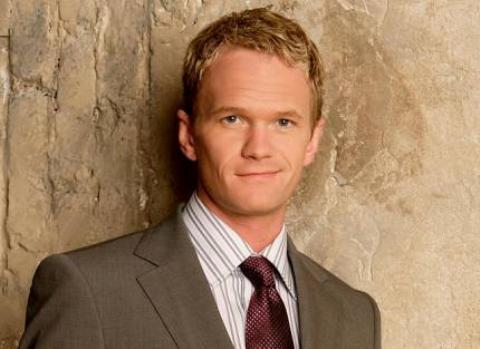
Neil Patrick Harris...no douche he! But is it for the right reasons?

In a cover feature story for Entertainment Weekly, Neil Patrick Harris (or whoever ghost-wrote for him) lays out his Hollywood Survival Guide. Secret of Hollywood Survival #6 for the star of “How I Met Your Mother” and ubiquitous awards show host is “Don’t Be A Douche”:

“Hollywood affords many opportunities to be a douche of epic proportions,” writes the grown-up “Doogie Howser,” “Avoid the temptation.”  He continues:

“Being a pleasant person has got to count for something….Actors sometimes take themselves far too seriously and put themselves on a different level [from the crew.] But everyone’s working really hard and should be afforded the same level of respect.”

For that, Neil gets an Ethics Alarms salute. Unfortunately, he scars his achievement by going on to explain how the make-up people, the film editor and the transportation department can really nail you if you don’t treat them well.

Given the breezy tone of the article, Harris was probably joking, but the joke reinforces the misconception many people have about ethics, which is that ethical conduct is a quid pro quo. It’s not. The Golden Rule isn’t “Do nicely unto others do they won’t screw you over,” and someone’s less than nice behavior  toward you doesn’t justify your being a douche to him. One isn’t respectful to the waiter because he’s liable to spit in your soup if you’re not, but because it’s the right way to treat other human beings.

Neil Patrick Harris certainly seems like a decent guy, and he probably is. I just wish, in the pursuit of a pretty stale joke about how the make-up people will get even by making you look like a troll, he hadn’t reinforced one of the most persistent of unethical rationalizations.

The Indignant Starbucks Squatter and the Compliance Mindset

OK...NOW it's selfish to squat at tables for hours.

I owe thanks to a blogger named JJ (and to Ken at Popehat, whose post brought him to my attention) for giving me one of the best illustrations of what I call “The Compliance Mindset” I have ever seen.

I’m sure it would horrify JJ to learn this, but he is ethically aligned with all the financial wheeler-dealers and unscrupulous mortgage lenders who crashed the U.S. economy. They also thrived in the Compliance Mindset, as do corrupt politicians, deceptive advertisers, dishonest journalists, sleazy lawyers, and millions of others in our culture who make life miserable for the rest of us for their own benefit. All of these people adopt the convenient belief that something must have a formal rule or law prohibiting it before it becomes wrong. This is, in fact, the opposite of the truth: if people were completely ethical, we would need very few rules. The Compliance Mindset is really an unethical rationalization that allows people to be rude, selfish, irresponsible, unfair, or worse because their conduct is technically legal and there isn’t a rule against it yet. Usually the rule or law arrives after a lot of needless harm has been done. Continue reading

Perry, Insomnia, Leadership, and the Death Penalty

When should a leader lose sleep over a decision?

A lot of ink has been spilled over NBC’s Brian Williams’ question to Rick Perry regarding the death penalty, the Republican candidates debate audience’s strange reaction to it, and Perry’s response. Conservatives see Williams’ question—“Your state has executed 234 death row inmates, more than any other governor in modern times. Have you struggled to sleep at night with the idea that any one of those might have been innocent?”—as a loaded query by a biased questioner who is pressing the progressive anti-death penalty agenda. Liberals see Perry’s answer as proof-positive that he is an unthinking, unfeeling, blood-thirsty monster. Continue reading

Comment of the Day: “The Provocative T-Shirt Problem:

"Oh yeah? Well, your good manners and dignity offend ME!"

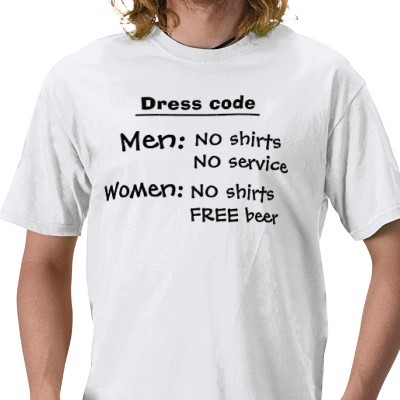
Sometimes I receive terrific comments to posts via e-mail, and sometimes I decide to make them Comments of the Day. And sometimes I decide to do that and forget, like I did with this comment, from Neil Penny, in response to my July 26 post about Dollywood forcing a patron to cover the mild political message on her T-shirt that “might offend some.” Neil’s comment was about the anecdote included in my post, relating how the dress code at my college was brought down by a concerted effort to comply with its letter rather than its spirit, and how the subsequent loss of decorum in the dining hall was regarded my many students, including me, as a diminishment of the experience.  Here is that lost “Comment of the Day”—my apologies to Neil for the delay: Continue reading

The Ethics of Interviewing Kids on Camera


Art Linkletter was right: "Kids say the darndest things!"

When I initially learned about  Chicago TV station WBBM editing  an interview with a 4-year-old boy last month to make him sound like an aspiring gang-member when he actually said that he wanted to be a policeman, I decided to pass. I try to avoid making obvious observations, and nobody could defend the conduct of the station’s editors, who intentionally truncated the child’s remarks to the interviewer to make them sound chilling. The larger question of whether the child should have been interviewed at all, however, is more challenging. We see kids being interviewed on TV all the time, and it is far from certain that reporters are doing so ethically.

In the wake of  the WBBM incident, journalistic ethics expert Al Thompkins reprinted his guidelines for interviewing juveniles on the Poynter site. I’m an admirer of Thompkins, but I found his guidelines almost as chilling as the distorted interview itself. Here is his guidance on the issue of interviewing kids, with my reactions: Continue reading

Casey Anthony’s Lawyer is Pronounced Unethical By an Expert

Jack Thompson knows incivility

Ah, the Casey Anthony trial continues to be the legal equivalent of “Jersey Shore,” or some other annoying TV reality show. In today’s episode: Hypocrisy! Revenge!  Irony! Abuse of process! Incivility!  And a special guest!

Cheney Mason, one of Casey Anthony’s defense attorneys, gave a raised middle finger (the international symbol of “I have nothing but contempt and utter disdain for you and your untoward words and conduct, so please have some form of unpleasant sexual intercourse with yourself!”) to a spectator who was verbally harassing Mason and others celebrating Anthony’s July 5 acquittal at a restaurant immediately after the trial.  Such public conduct by a lawyer is rude, undignified and inappropriate, but it is also rude, undignified and inappropriate for sea captains, puppeteers and plumbers, too. Incivility by a lawyer has to be especially egregious and must in some way threaten to undermine the administration of justice to raise the possibility of bar discipline, and flipping the bird to a jerk in a restaurant just plain doesn’t qualify. Now, a lawyer running all over town giving the finger to everyone for weeks on end, or a lawyer making the gesture to judges, opposing counsel or jury members in court would be very different matters. Such conduct would call into legitimate question a lawyer’s fitness to practice law. One such incident? No. I won’t speculate on what percentage of lawyers have given the upturned finger to someone during their careers, but you can.

Nevertheless, a Florida citizen decided to file an ethics complaint against Mason, which is his right. But this wasn’t just any Florida citizen; the complainant was Jack Thompson, a once nationally prominent attorney who managed the nearly impossible: he got himself disbarred for life in Florida for incivility, along with other ethical misconduct. Continue reading

The Provocative T-Shirt Problem

Dress codes+grievance-mongers+freedom to be rude...oh, it's hopeless.

An ethical dilemma occurs when a clear ethical principle clashes with a strong non-ethical consideration. An ethical conflict occurs when multiple ethical principles suggest diametrically opposed results. The question of what is ethical conduct when it comes to wearing apparel bearing controversial messages has the elements of both a dilemma and a conflict.

                                                                                Welcome to Dollywood!

A same-sex couple visiting Dollywood Splash Country with friends and their children was told by a park gatekeeper that one of the women had to wear her T-shirt inside-out because its message—“Marriage is so gay”— “might be objectionable” to some visitors at the “family-friendly” park.

   <Sigh.> Continue reading

Comment of the Day: “Ethics Hero and Dunce: A Tale of Two Windfalls”

In a classic example of  “Be careful what you wish for,” I had been thinking about how none of the recent comments, excellent though many were, quite struck the “Comment of the Day” gong for me, and then, like the answer granted by a perverse genie, this turns up. A reader named Lawrence Reliford argues that Stephen McDow had every right to spend the money erroneously deposited in his bank account, and in the process evokes—let’s see—six rationalizations, three misconceptions, two bad analogies, one wonderful Malaprop and a partridge in a pear tree.  (I may have miscounted; this can also be an ethics quiz.) On a more depressing note, I am quite certain that a larger portion of the population than any of us would be comfortable admitting agree with Lawrence. You can find my response to his comment with the original post, here...but please feel free to write your own. Lawrence needs all the guidance he can get. Here is The Comment of the Day: Continue reading