Tales of “The King’s Pass”: Pete Rose and Jeremy Clarkson

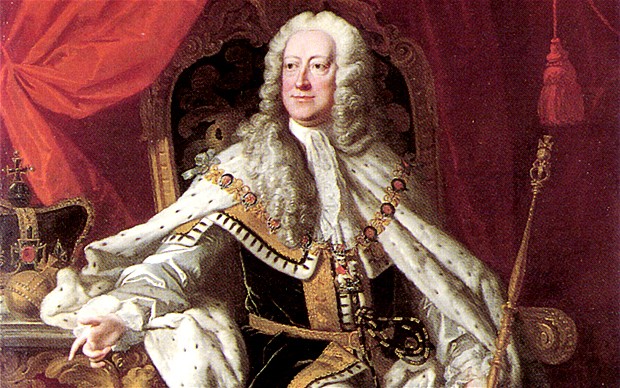
King

The King’s Pass has been much in the ethics news of late—Brian Williams, Bill O’Reilly, David Petraeus, Hillary. Let’s review, shall we?

11. The King’s Pass, The Star Syndrome, or “What Will We Do Without Him?”

One will often hear unethical behavior excused because the person involved is so important, so accomplished, and has done such great things for so many people that we should look the other way, just this once. This is a terribly dangerous mindset, because celebrities and powerful public figures come to depend on it. Their achievements, in their own minds and those of their supporters and fans, have earned them a more lenient ethical standard. This pass for bad behavior is as insidious as it is pervasive, and should be recognized and rejected whenever it raises its slimy head.  In fact, the more respectable and accomplished an individual is, the more damage he or she can do through unethical conduct, because such individuals engender great trust. Thus the corrupting influence on the individual of The King’s Pass leads to the corruption of others…

1. The BBC just demonstrated how the King’s Pass should be rejected—with courage and gusto.

Jeremy Clarkson, the main host of the popular BBC auto show “Top Gear,” spent March misbehaving. He got in a shoving match with a producer, verbally abused staff and was recorded trashing the network. When Clarkson topped it off with a physical altercation with a show staffer, the BBC decided not to renew his contract. BBC head Tony Hall said in a statement:

It is with great regret that I have told Jeremy Clarkson today that the BBC will not be renewing his contract. It is not a decision I have taken lightly. I have done so only after a very careful consideration of the facts…I take no pleasure in doing so. I am only making [the facts] public so people can better understand the background. I know how popular the programme is and I know that this decision will divide opinion. The main facts are not disputed by those involved.

The BBC is a broad church…We need distinctive and different voices but they cannot come at any price. Common to all at the BBC have to be standards of decency and respect. I cannot condone what has happened on this occasion. A member of staff – who is a completely innocent party – took himself to Accident and Emergency after a physical altercation accompanied by sustained and prolonged verbal abuse of an extreme nature. For me a line has been crossed. There cannot be one rule for one and one rule for another dictated by either rank, or public relations and commercial considerations… Obviously none of us wanted to find ourselves in this position. This decision should in no way detract from the extraordinary contribution that Jeremy Clarkson has made to the BBC. I have always personally been a great fan of his work and “Top Gear”…The BBC must now look to renew Top Gear for 2016. This will be a big challenge and there is no point in pretending otherwise. I have asked Kim Shillinglaw [Controller of BBC Two] to look at how best we might take this forward over the coming months. I have also asked her to look at how we put out the last programmes in the current series.

The show, without Clarkson, is toast, and Hall knows it. Nonetheless, he had the guts to do the necessary and ethical act: not allowing its indispensable star to abuse his power and popularity . Once Clarkson did that, “Top Gear” was doomed anyway; firing him now just minimizes the carnage. Although Hall has no responsibility to other networks and organizations, his decisive handling of the episode has saved other programs even as it destroys his own. It is a precedent and a role model for employers refusing to allow themselves to be turned into enablers  by stars assuming the King’s Pass works. When they say, “You can’t fire me, I’m irreplaceable! There’s no show without me!”, the response now can be, per the BBC: “If there’s no show without a jerk like you, then there’s no show. Bye!”

2. Once again, Pete Rose is sucking the ethics right out of people’s brains.

Ah, Pete Rose. He was the topic of the first ethics post I ever wrote, way back in 2004. Then, in 2007, he became my first and only Ethics Dunce Emeritus.

The Pete Rose case is simple. Baseball has an absolute, no exceptions rule that demands a lifetime ban of any player, coach or manager who gambles on major league baseball games. Such banned players can’t be hired by major league teams for any purpose, and cannot be considered for Hall of Fame membership., ever, even after they are dead. Everyone in baseball knows why this rule exists—baseball was nearly destroyed in 1919 when gamblers bribed the Chicago White Sox to throw the World Series—and the rule is posted in every clubhouse. Rose bet on baseball while a major league manager, and also bet on his own team. Thus he is banned.

The significance of the fact that he is, as a player, the all-time hits leader and was the face of the game is that it led Rose to believe that the game would never ban him, and that if caught, he would be treated with special leniency. His excellence on the playing field doesn’t mitigate his conduct, or justify minimizing the ban it earned, at all.

The New York Times published a story about Rose’s efforts to get baseball to lift the ban, now that a new Commissioner, Rob Manfred, is in office. You can read the article here, which is remarkable for the many jaw-droppingly unethical arguments put forth by the baseball people the article quotes, contrasted with the occasional quote that shows that a speaker comprehends the concepts of consequences, accountability, and why letting stars break the rules is suicidal to any culture. It would be an excellent ethics exam.

Here are the quotes; my comments follow in bold. Continue reading →
The Brian Williams Affair Is Now Officially An Ethics Train Wreck

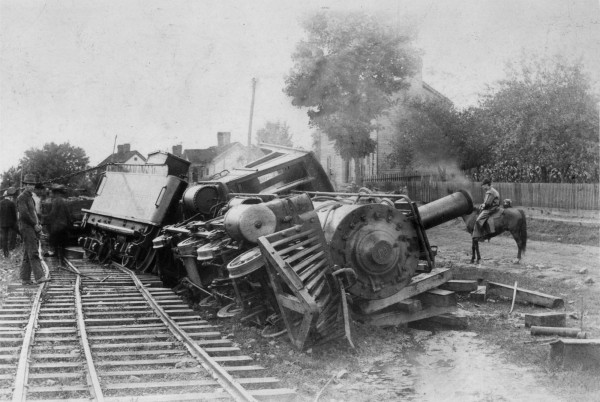
trainwreck6

…and almost all the passengers so far are journalists.

An Ethics Train Wreck is an episode involving unethical conduct that rapidly exposes ethical flaws, if not an outright lack of ethics, in a steadily widening group of participants, commentators and stake-holders and even victims. The Brian Williams Ethics Train Wreck, like most of them, could have been averted early in the  journey, if, for example, NBC had immediately acted responsibly and suspended Williams when the facts of his 13-year-long fable about being in a wounded helicopter over Iraq were exposed by Stars and Stripes. It did not however, and now NBC executives have First Class seats after apparently knowing about Williams’ lies and doing nothing. It is Williams’ colleagues and compatriots in journalism, however, who are rapidly filling up Coach. In doing so, they are demonstrating that even some of the most famous names in the field have the under-developed ethical instincts of an 11-year-old, and that when substantive ethical analysis is required, they resort to rationalizations. This is discouraging, if not surprising. For example:

Bill Moyers.

Here is liberal lion and lengendary PBS commentator Bill Moyers  on Twitter:

Moyers-RS

That’s the depth of analysis we get from Moyers: flat out Rationalization #22, Comparative Virtue, #2, The “They’re Just as Bad” Excuse, and  “Everybody does it.” So what counts most in “journalism excellence” to this multiple Peabody Award winner isn’t that a journalist tells the truth, but that he doesn’t lie about the things Moyers cares about.

Piers Morgan

The ex-CNN talk-show host, whose credentials as an ethical and trustworthy journalist are, well, non-existent, penned a sarcastic attack on Williams’s critics called “Do we want to tar and feather Brian Williams or let him be the BETTER journalist this ‘scandal’ will make him? And trust me, I’ve been there.” As you can see, his argument begins with a straw man, and a cheaply made one at that: No, we don’t want to tar and feather Brian Williams, we just don’t think liars should be paid millions to tell the nation what happened in the world when he can’t be trusted to be truthful about what happened to him. It goes on to mass a pile of juvenile rationalizations, all of the Biblical rationalizations for example, which is a terrific example of someone projecting his own highly dubious career onto every other journalist. Yes, Piers, we get that someone with your dubious past would have trouble being taken seriously “throwing stones” at another journalist’s ethics, but not everyone is you. Then Morgan repeatedly says that Williams is being pilloried because he isn’t perfect [ #19 “Nobody’s Perfect!” and #20. The “Just one mistake!” Fantasy], and this is so unfair because he’s wonderful and should be given a break [ a classic #11. The King’s Pass, The Star Syndrome, or “What Will We Do Without Him?” and #38. The Miscreant’s Mulligan or “Give him/her/them/me a break!”] Continue reading →

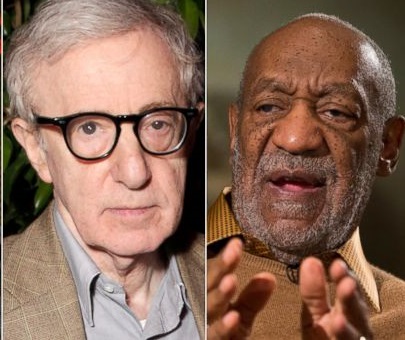
No, There’s No Comparison Between Bill Cosby And Woody Allen And No “Double Standard”

One of these things is not like the other....

One of these things is not like the other….

Newspapers should make us more informed and smarter, not less informed and dumber. Thus a Washington Post feature this morning qualifies as journalism malpractice, incompetence exemplified. Its theme: “Gee, why is Woody Allen signing a new deal to do a streaming comedy series for Amazon, while Bill Cosby lost his deal with NBC?” The print edition sub-heads: “Crisis responses may explain…”

No, they don’t. This is a false comparison based on superficial similarities: two comics who initially peaked in the same era, both in their seventies, shadowed now by sex scandals. The effort to use one to question the treatment of the other is either intellectually dishonest or so analytically unsound that it should forfeit the authors’ privileges of being assigned to write anything for mass consumption (the Post piece is by Stephanie Merry and Amy Argetsinger, and shame on them). The question of why Allen and Cosby are being treated differently in the court of public opinion isn’t worth asking, but since they asked, here are the obvious answers:

1. Woody Allen’s art, comedy, and persona have never had anything to do with virtue, stable families or being any kind of a role model. As a performer, he has presented himself as perpetually horny, neurotic, obsessed with sex and masturbation, prone to lying, and open to adultery, betrayal, stealing friends’ lovers; in “Manhattan,” he happily romanced a virtual child. In real life, he says things like “The heart wants what the heart wants,” which is a  rationalization for any act unethical or illegal, involving sexual or romantic desire. If you were ever a fan of Woody Allen after the age of 13, you were so because he was funny, accepting the fact that he is at best a sexually obsessed, maladjusted creep.

None of this is true of Cosby, who has always aimed his comedy at innocence, functional families and traditional virtues, and represented his own values as consistent with these when speaking for himself. Sex was not any part of Cosby’s art or image. He was an iconic good guy. Continue reading →

The Michel Martin Question I Didn’t Answer This Morning, and More On The Bill Cosby Scandal

On pointIn the segment on “Beverly Johnson And The Bill Cosby Scandal” I just completed for NPR’s “On Point” program, out of Boston with the magnificent Michel Martin hosting, I emulated the Sunday morning talk show guests I so revile for answering questions by making their own points that have little or no relevance to what was asked. Michel asked me, as the time left in the hour-long program was ticking down, what ethical obligations consumers—that is, the audience for his concerts, TV shows and albums—have regarding Cosby, in light of the rape allegations against him.

I was still stunned by the comments made by three callers, encompassing several ethically confused assertions that you know I would find annoying:

  • That the victims should not be coming forward so late;
  • That Cosby is “innocent until proven guilty” (GRRRRR…);
  • That it’s “easy” for women to make unsubstantiated allegations against celebrities, and
  • That there is a parallel between the allegations against Cosby and the Rolling Stone campus rape story.

That last one especially had my head threatening to explode, which would not be good for my relationship with NPR, so I think I can be forgiven for missing Michel’s query. Yes, the UVA rape allegation is exactly like the Cosby scandal, other than the fact that the accusers in Cosby’s case have come forward publicly while “Jackie” has not; that its two dozen (so far) alleged victims for Cosby and one in the UVA case; that one situation is a classic example of abuse of power, wealth and influence and the other is not; that Cosby settled one claim rather than air the allegations in a court of law; and that virtually every part of “Jackie” claim has failed to hold  up under scrutiny and investigation, whereas Cosby, the one individual who could offer evidence to counter the allegations against him, has done nothing but have spokesmen and lawyers issue blanket protests and denials.

Yup. Identical.

My answer to Michel should have been this:

“It’s up to Cosby fans, If they still can still laugh and cheer at Cosby’s nice guy schtick and “America’s Dad” persona knowing that he’s a serial rapist, fine: laughter is good, get it where you can. Personally, I can’t laugh at someone whom I know has engaged in horrific acts, hurt women who admired and trusted them, and by his own conduct left another cultural hero lying face-down in the mud. I can’t forgive it, I can’t get past it, and I’m certainly not going to keep laughing. this is no different from the NFL fans who keep wearing Ray Rice jerseys, or for that matter, Democratic women who continue to swoon over Bill Clinton. If they do, they either:

  • Can’t get over their cognitive dissonance, and at some level refuse to believe what cannot be rationally denied, or…
  • Don’t think the conduct involved—punching women, exploiting women, raping women—is worth getting upset about, or…
  • Buy the absurd personal/public dichotomy, and can still cheer wife-beatering athletes, star-struck intern-exploiting leaders, and raping comedians.

All of these are sad and impossible to justify, but they are common. Does the continued support of a Cosby ratify his conduct? Not in the eyes of his undeterred fans, but in the culture? Of course it does. If Bill Cosby’s career escapes relatively unscathed by this, and he is not held accountable by society, the verdict of the culture will be a particularly extreme version of The King’s Pass: if you are rich enough, powerful enough and seen as contributing enough to society, then you will be held to a lower standard, and can get away with, if not murder, serial rape.”

Continue reading →

Musings On The Clarence Thomas Affair and Insideous, Unavoidable, Rationalization Eleven

If you are good enough and valuable enough, do you deserve one of these?

If you are good enough and valuable enough, do you deserve one of these?

A recent—and off-topic—comment caused me to begin thinking about “The King’s Pass,” #11 on the Ethics Alarms Rationalization hit parade,and perhaps the most perplexing of them all. The commenter referenced the 2010 discovery that Supreme Court Justice Clarence Thomas had inexplicably neglected to mention his activist wife’s annual income on his annual financial disclosure filings, meaning that he had filed a false affidavit and violated the law. Thomas claimed that he had made a careless mistake—for five years—and the matter was allowed to drop except for the angry agitating of the Anti-Clarence Thomas Furies, who are constantly searching for any way to get a conservative black justice off the Supreme Court short of assassination.

The episode had left a bad taste in my mouth, and I was happy to be reminded of it, bad mouth tastes being essential to triggering ethics alarms. I went back to read my post on the matter, and sure enough, I had followed the principle of rejecting The King’s Pass, and asserted that Thomas should be punished appropriately and formally…but that really ducked the question. Lawyers have lost their licenses to practice for single episodes of swearing to false information when it was far more obvious that a mistake had been made than in Thomas’s case, as when a hapless Maryland lawyer carelessly signed a legal document that had misrecorded  his address. The logic of this no-tolerance ruling was that a lawyer, above all people, should never swear to a falsehood, and that doing so, even once, was a serious breach of duty calling into question his fitness to practice law. I think the penalty for this particular act was excessive—it is cited locally as a cautionary tale—but I agree with its underlying principle, which should apply with even more vigor when the lawyer in question is a judge, and not merely a judge, but a Supreme Court Justice.
Continue reading →

Two and a Half More Rationalizations: “The Hillary Inoculation,” “The Unethical Tree in the Forest,” and a Sub-Category of “The King’s Pass”

42-hitchhikers-guide-to-the-galaxy-5139489-1024-768

“There are more rationalizations in heaven and earth, Horatio, than are dreamt of in your philosophy.”

It certainly seems so, Hamlet.

And stop calling me “Horatio”!

While writing about the McDonnells, I found myself citing some obvious and common rationalizations that I discovered (to me shame and embarrassment)  had never been added to the Ethics Alarms Rationalizations List, which two days ago stood at an even 40. I wrote them up and added then, placing “The Unethical Tree in the Forest” at #10, since it is so common, and designating the other, “I deserve this,” as a sub-category under “The King’s Pass,”at #11 (a). Then, in today’s comments to yesterday’s post about the perfect Naked Teacher (if only all those who clicked on that post were just slightly interested in ethics!), came a ridiculous argument that I immediately recognized as particularly infuriating rationalization I had heard before, too often, in the days when Democrats were churning out rationalizations like the chocolates on Lucy’s conveyor belt. I have dubbed it “The Hillary Inoculation.” These put the current count of rationalizations at forty-two, and a half. Here are the new additions.

Learn to recognize them, but don’t use them.

10. The Unethical Tree in the Forest, or “What they don’t know won’t hurt them.” Continue reading →

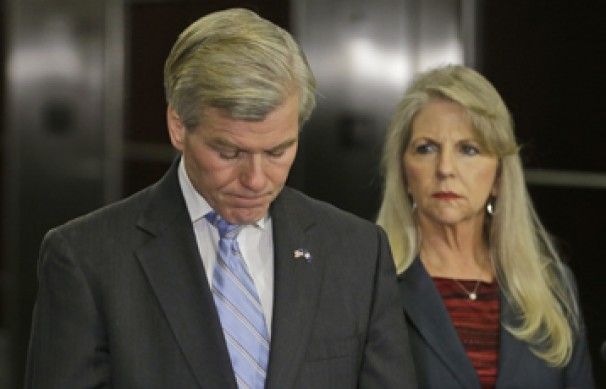
Virginia’s McDonnells, Masters Of Rationalization

Former_Governor_Indicted

The only question regarding the multiple count federal corruption indictment of Virginia’s most recent ex-Governor Bob McDonnell (R) and his wife is whether or not the relevant laws are so porous that they can’t be convicted on the evidence. Did they use McDonnell’s high office for personal enrichment? Yes. Did they go to great lengths to disguise the fact? Yes. Did the Governor betray the public trust? Yes. Were the gifts, loans and cash, totaling at least $165,000, received from a dietary supplements company CEO essentially bribes? Of course they were. This is another excellent example of why the admonition that the accused are innocent until proven guilty is often technical rather than true. Based on irrefutable facts, the Virginia’s former First Couple is guilty as hell—of dishonesty, greed, corruption, obstruction of justice, bribery, betrayal of trust, the appearance of impropriety and outrageously unethical conduct. They just may not have broken any of the laws regulating those actions.

The legal case will ultimately rest on whether there was a specific, provable quid pro quo, which is to say, were the gifts and loans from Jonnie Williams Sr., former CEO of Star Scientific, expressly made in exchange for the governor’s assistance in helping his company in the state? Williams, who has made a deal, will testify that this was his understanding; why else would he allow himself to be used as a piggy bank by McDonnell and his wife? But in politics, as we all know, the myth is otherwise. Big companies give lawmakers big campaign contributions out of the goodness of their hearts and patriotic fervor, and it’s just a coincidence that those same lawmakers subsequently support laws that make those same companies millions, or block laws that would get in their way. It’s a coincidence! The Feds are going to have to show that what McDonnell did was significantly more sleazy than what virtually the entire population of Congress does by reflex, and also a clear violation of law. Continue reading →

Two New Rationalizations Added To The List: “Success Immunity” and “The Tortoise’s Pass”

The Ethics Alarms Rationalizations List keeps growing, and proof that it will eventually be much, much longer is in the fact that the most recent additions are old, common, and popular. Human beings are so talented at concocting lies that make them feel better about doing the wrong thing, or continuing to support friends, family members, colleagues or personal heroes who do the wrong thing. I have been meaning to include The Tortoise’s Pass for quite a while, and then a commenter on the post about the charter school that banned dreadlocks used “They must be doing something right!” as a cornerstone of her comment defending the rule. I realized that I had neglected a classic. Well, “Better late than never!”

The whole list, now 34 strong, is here. Here are the new entries:

33.  Success Immunity, or “They must be doing something right!” Continue reading →

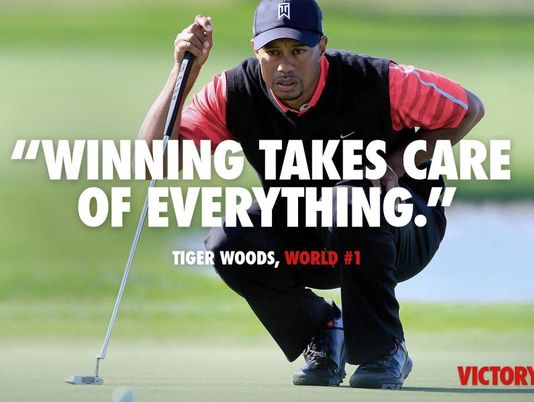
Ethics Poison From Nike and Tiger Woods

Woods AdWoods Ad2

…and not for the first time, in either case.

But Woods’ new ad for Nike in the wake of his resurgence in his sport, is audaciously unethical, braying a dangerous, corrupting message into the cultural atmosphere, endorsing, in five simple-minded words, consequentialism, the Star Syndrome, the King’s Pass, non-ethical considerations over ethical ones, and “the ends justify the means.” That’s a pretty impressive load of ethics offal in so few words: congratulations to the soulless ignoramus who devised it.

The assorted miscreants, past and present, who would have gladly stood in for Tiger in his damning ad include dictators, despots, mass murderers, gangsters and corrupt politicians like Richard Daley, Marion Barry, Charley Rangel and Tom DeLay, corporate bandits, assassins, robber barons, Wall Street criminals, athletic cheaters like Lance Armstrong and Barry Bonds, serial fathers like the NBA’s priapic stars, arrogant social misfits like Charley Sheen, con artists and liars in all walks of life, and of course, our most popular politician, the man whose entire career is based on Nike’s new motto, William Jefferson Clinton.

I almost forgot the terrorists. Continue reading →

Ethics Dunce: Justice Clarence Thomas

Will Supreme Court Justice Clarence Thomas be impeached because he failed to disclose his wife’s income, as required by Federal law, for at least five years? No.

Should he be? Probably not, though if it was proven that he intentionally used incorrect information, he could be found guilty of perjury. More likely is a civil penalty. In any event, his wife’s income isn’t a crucial piece of information in Thomas’s case, though his ideological enemies will argue otherwise. Such an omission is virtually never a cause for judicial discipline.

Is it a serious breach of his duties nonetheless? Yes. Continue reading →