Comment of the Day: “The Worst President Ever? Part 6: The Final Field”

Steve-O-in NJ contributed a well-reasoned and researched resolution of the Ethics Alarms series “The Worst President Ever?” after the penultimate installment, which I posted last month. At the time, I still wasn’t certain how the Wilson-Biden contest would come out, and since (spoiler!) his analysis came down to the same final two, I resolved to hold this obvious Comment of the Day until I had finished my final installment, which went up (finally!) last night. Steve’ alternate analysis is excellent, as all of Steve-O’s historical epics are.

Here is Steve-O-in NJ’s Comment of the Day on “The Worst President Ever? Part 6: The Final Field.”

An interesting list, certainly. I believe that if you asked 100 people who the worst presidents were and why, you’d probably get 100 answers that would all differ at least slightly, although some common threads would run through them, and you’d get one group from conservative folks and another from liberal folks. I’m not sure I 100% agree with this list, but it’s the list you’ve given us to work with, so here are my thoughts:

Franklin Pierce – Had a life-long problem with alcohol, to the point where other military officers (yes, believe it or not he is one of the ten presidents who was a general) called him the “hero of many a well-fought bottle.” Tragic family history, and let grief and drink paralyze his single term in office.

James Buchanan – Took almost no steps to stop the Civil War from happening. Started to dislike the office to the point where he told Lincoln that if Lincoln was as happy upon assuming the presidency as he was upon leaving it, he was a happy man indeed.

Andrew Johnson – Never meant to be president, put on the ticket because he was a Democrat and a southerner. Couldn’t control the radical Republicans. Was impeached (probably unfairly) and came the closest any president ever came to removal from office. Also had the hardest act of all to follow.

Woodrow Wilson – Biggest racist ever to sit in the White House. Also probably one of the 3 or 4 most arrogant presidents. Led us into WW1 when we might not have needed to go, then alienated the world with his attempt to impose his own morality. Also alienated most of his political allies back home and was a willing participant in hiding that he had had a debilitating stroke from the country.

Richard Nixon – Popular president who didn’t trust his own popularity to take him past the finish line and overreached, then tried to cover it up.
Continue reading

The Worst President Ever? Part 6: The Final Field

The last installment of the series and inquiry was posted over a year ago, on the anniversary of President Kennedy’s assassination. At the end of Part 5, the field for consideration as the Worst President Ever stood at six: the field is now Franklin Pierce, James Buchanan, Andrew Johnson, Woodrow Wilson, Richard Nixon, and Jimmy Carter.

I am glad, as it turns out, that I delayed posting the last chapter until now. A year ago, it would have been unfair and unwise to rank the current President (sort of) in the competition. Now, it is fair to say, a verdict on Joe Biden will not be premature.

Part 5 ended with Ronald Reagan, leaving #41, George H.W. Bush as the next contestant. Bush I, as I like to call him, is a member of a couple of Presidential clubs, none of them complimentary or prestigious.

Bush is in the small group of Presidents who never would have been elected to the top job if their predecessor had not ostentatiously designated them as a anointed successors to continue their policies. Only extremely popular and successful Chief Executives can do this. Before Bush, who was anointed as a worthy successor by Ronald Reagan, Andrew Jackson had pushed his protege and Vice-President, Martin Van Buren, into the White House, and nearly a century later Teddy Roosevelt did the same with his best friend, William Howard Taft. Franklin Roosevelt could have also done it, but he just kept running for office himself instead. Arguably President Eisenhower could have declared Richard Nixon as the one to carry out a third Eisenhower term, but he didn’t: his support for Nixon was tepid at best, and Ike’s popularity at the end of his administration was not in the Jackson-Teddy range. Like Van Buren and Taft, Papa Bush was a mediocre leader at best, and also like them, was a one-term President.

Bush is also a member of the “Vice-Presidents elected President without first becoming President upon the death of a President” club. It is not an impressive group: John Adams, Thomas Jefferson, Van Buren, Nixon, Bush I and Biden. If we were playing the “Sesame Street” game “One of these things is not like the other,” Jefferson would be the obvious answer.

The third club Bush belongs to is the “President by Default” club whose only other member is #15, James Buchanan. Like Buchanan, George H.W. Bush was a career government bureaucrat who jumped from one position to another, until he had nowhere to go but up. Call them Peter Principle Presidents: with the top job, both Bush and Buchanan reached their level of incompetence. Neither had any feel for leadership, in a job that requires that above all.

I don’t think anyone would argue that Bush I was the Worst President Ever, or even the worst President Bush, but he is one of my least favorite Presidents. After the successful first Iraq War, Bush’s popularity was nearly in the 90% range. In the American Presidency popularity is power: Bush had an opportunity to accomplish something grand and good that under normal political conditions would be unachievable. He could have addressed the national debt, the fiscal mess in Social Security, healthcare, immigration…the list is long. Instead, he did nothing. Bush just frittered away his moment of power, at one point even saying through his Chief of Staff, John Sununu, that everything was hunky-dory and no major initiatives were needed. This is the antithesis of leadership, also imagination, stewardship, and responsibility.

The present inquiry isn’t seeking to find the President who most spectacularly squandered his opportunities, or this Bush would be a leading contender. He was a weak President, but his lack of ambition or initiative stopped him from being a bad one just as it prevented him from being a good one.

Verdict: DISQUALIFIED.

Continue reading

Perplexing Ethics Quote of the Week: Ann Althouse

“I have never trusted the people who want to be President, and I have despaired over the structural problem that we’re always stuck having to vote for somebody who has strongly desired the presidency.”

—-Ann Althousein a very strange blog post in which she sympathizes with Kamala Harris for what Althouse sees as a weariness and dislike of campaigning.

I suppose it is good to know that Althouse doesn’t comprehend the nature of leadership, leaders and the people who aspire to be leaders, but as someone who has studied leadership for a long, long time as well as having done my share of leading (and leadership is one of the major topics of this blog), I must say that her comment is perplexing to say the least.

Leadership is a special role that requires special traits, talents and abilities, and one of those traits is believing oneself to be a leader while being willing to accept the responsibility leadership requires. The greater the responsibilities a leadership position entails, the more essential it is that a leader be confident in his or her ability to meet those responsibilities, and seek the burden they confer.

Stating that one does not trust people who want to be President to be President is like saying you only trust a doctor who never wanted to be a doctor. It makes no sense. Every one of our best and most acclaimed Presidents demonstrated their leadership abilities at a young age and actively sought leadership, proceeding to the next stage after demonstrated success. We have had a few reluctant Presidents, all Vice-Presidents thrust into a job they didn’t expect, and some, notably Chester A. Arthur, managed to overcome their lack of an appetite for leadership to do a workmanlike job. Other so-called “accidental Presidents,” notably Teddy Roosevelt and Lyndon Johnson, were natural leaders and thrilled to become President.

There are plenty of reasons to distrust the so-called “leader type.” Most, if not all are narcissists. Power does corrupt, and many who seek power and who are skilled in using it are also often drawn to the abuse of power for to less than admirable motives. Nevertheless, leadership requires confidence, a willingness to accept accountability, the courage to take risks, and a belief in the likelihood of success based on a history of success. Not wanting to lead strongly suggests an absence of these essential leadership traits.

Yes Indeed, Most Presidents Have Had Emotional, Mental or Serious Physical Problems, But That Doesn’t Make Joe Biden Fit to Be One

I’ve been holding on to this post for a while now, waiting for Presidents Day. An old “Psychology Today” article has been dredged up lately by various pundits desperately seeking a way to deny what is now undeniable. President Biden is in the throes of serious mental decline, and allowing him to run again, at an advanced age and when his memory, stamina, and cognitive health are rapidly receding into the fog, is irresponsible—which doesn’t mean that the Axis won’t do it anyway. The argument being mounted to justify such a desperate and stupid course is a version of the #1 rationalization on the list, “Everybody does it!” Joe’s problems are no big deal, you see, because, as Dr. Guy Winch wrote in 2016: “a study by Jonathan Davidson of the Duke University Medical Center and colleagues, who reviewed biographical sources for the first 37 presidents (1776-1974), half of those men had been afflicted by mental illness—and 27% met those criteria while in office, something that could have clearly affected their ability to perform their jobs.”

Whew! Well, that’s a relief!

I hadn’t seen the study, but it was heartwarming, since its findings echoed those of my American Government honors thesis, now deep in the stacks of Widener Library. I hypothesized that being outside the norm emotionally, mentally and physically was among the factors that selected out the extraordinary individuals who become Presidents of the United States. Leaders, to give an even shorter version, are not normal by definition.

Continue reading

The Worst President Ever? Part 5.

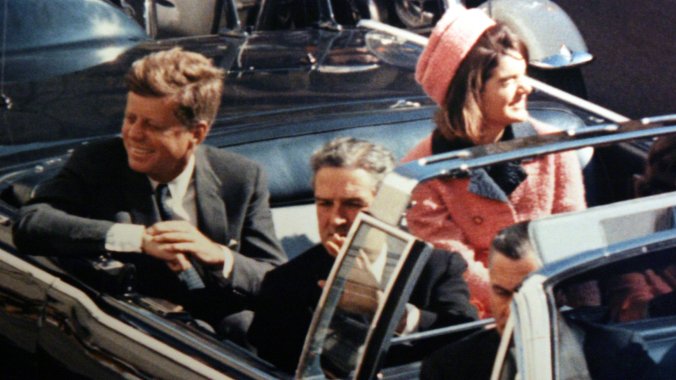
One might view posting this today, on the anniversary of President Kennedy’s assassination in Dallas, as being in questionable taste. I would argue that it is the perfect day to consider the legacy of President #35, John Fitzgerald Kennedy (1961-1963).

For JFK was saved from historical infamy by moral luck, once for certain, and maybe twice. The first was during the Cuban Missile Crisis, a culmination of blunders that could have started World War III and would have, if a less rational Soviet leader had been Kennedy’s adversary. The second was the assassination, recalling snide comments by various wags that the early deaths of Elvis and Truman Capote were “good career moves.” Kennedy’s death transformed him into an icon, frozen in youth and vitality, a brilliant leader whose death caused darkness to fall. In truth, Kennedy’s three years in office were marked by few successes and serious mistakes that outlived him, like his continuing U.S. involvement in the Vietnam War. In an era in which the news media were less inclined to keep secrets for a President, JFK might have been impeached. His obsessive adulterous escapades endangered national security: among his many conquests were a Mob moll and an Israeli spy.

Kennedy cannot be fairly judged one of the worst Presidents, however, because he filled the crucial role of President as Symbol of America and the living flag as well or batter than all but a few modern Presidents, in a small group that includes FDR, Eisenhower, Reagan, and Obama. This, plus the fact that he had less than three years to add something positive beyond the Peace Corps and the space program to his legacy, takes him out of the Worst President race.

Verdict: DISQUALIFIED.

#36, Lyndon Baines Johnson (1963-1969), also doesn’t make the cut. For all the pain and national scarring the Vietnam War inflicted, Johnson didn’t start it (or end it), and few Presidents, maybe none, would have been able to successfully negotiate the cultural A-Bomb of the Sixties.

Anyone who doubts LBJ’s effectiveness should listen to the archived phone tapes of his personal maneuvering, cajoling and threatening former Congressional associates to get his Civil Rights bill passed. For some reason historians like to say that Kennedy, if he lived, would have signed a similar law; that’s a dubious assumption. Kennedy probably wouldn’t have won in 1964 by a landslide: Nelson Rockefeller might have been the next President, and it was the Southern Democrats, Johnson’s cronies, who were the main obstacles to civil rights. You don’t have to agree, with the benefit of hindsight, with all of “The Great Society” to agree that Johnson was one of our most skilled Presidents, though a flawed and unlucky one.

Verdict: DISQUALIFIED.

Now, at last, we come to a genuine contender for Worst President Ever: Richard Milhous Nixon, #37 (1968-1974). Even he’s problematic: although he is the only President so far who would have been legitimately impeached and convicted, Nixon was, before the Watergate conspiracy, another very skilled and effective President. He was one of our smartest White House residents (but then so was Wilson), and understood the office from the start as few have. Nixon had many important policy achievements as well, and those accomplishments came in the teeth of strong opposition and bias from the news media (though nothing as extreme as Republican Presidents have faced in this century), and almost unanimous hate from an entire generation.

Continue reading

Joe Biden, The Human Lawn Chair

“Ladies and Gentlemen, the President of the United States…”

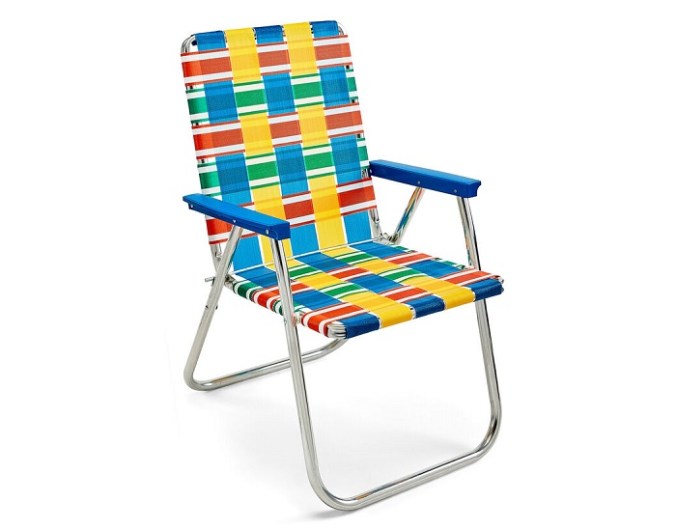
I’ve been thinking about what would be the fair and expository Ethics Alarms nickname for Joe Biden, and I’ve settled on “The Lawn Chair,” or TLC for short.

In 2016, I wrote repeatedly in posts and comments that I would vote for a lawn chair over Donald Trump, using the same standard that I had applied in the past to first term Presidents who I had found unacceptably incompetent or untrustworthy (Nixon, Carter, Bush I, and Bill Clinton). Joe Biden, in his drastically diminished 2020 model, is the closest thing a U.S. Presidential contest has had to an actual lawn chair, and it is clear that those preparing to vote for him to lead the nation at this critical time would literally vote for a lawn chair over President Trump. In this there is epic hypocrisy.

Feminists who once proclaimed that sexual harassment and sexual assault, determined on the basis of unsubstantiated accusations, were sufficient to disqualify a man for high public office are supporting Biden, who has been photographed numerous times engaging in sexual harassment as Vice-President, and has been accused “credibly” (as they said about Brett Kavanaugh’s less than credible accuser) of sexual assault. Heck, one such feminist is his running mate. Soft coup proponents who have argued that President Trump is sufficiently cognitively handicapped that the 25th Amendment should be employed to remove him are supporting Biden, who is obviously more mentally impaired now than Trump has ever been even in the fever dreams of progressives.

Then there is the lying. Continue reading

Unethical Quote Of The Month: Joe Biden

“We’ve had racists, and they’ve existed, they’ve tried to get elected president. He’s the first one that has.”

—-Joe Biden at a virtual town meeting yesterday, giving a novel version of American history.

Where to begin? I suppose it’s obligatory to point out, again, that the now routine assertion that President Trump is a racist is based on distortions, innuendo and outright lies. The Democratic Party/”resistance”/mainstream media axis doesn’t even bother to try to support the claim any more, because, I explained here, this is a  a Big Lie strategy, pure Hitler/Goebbels, from the same source, ironically, of the Big Lie (it’s #3 on the list) that the President is like Hitler. Joe’s Big Lie yesterday is #4. It probably should be #1, since it was formulated from the moment Trump, in announcing his candidacy, said, very clearly, that a lot of illegal immigrants from Mexico were dangerous criminals. That is undeniably true, but it was reported, and has come to be believed, that he said all Mexicans were dangerous criminals.

I’m not going to rehash why Big Lie #4 is  a lie; in you haven’t figured it out, please go to the link. However, it is amazing what happens when you ask anyone, even the most articulate and intelligent Trump basher, how they conclude Trump is a racist. They just can’t do it without resorting to misrepresentations and distortions, then bubble over with rage when you point them out.

Joe Biden, as we all know, isn’t articulate or intelligent, and never has been. Now, sadly, he is existing in the twilight world of some kind of mental deterioration. As an aside, I wonder how the news media and those who would vote against President Trump if whoever was running against him “shot somebody in the middle of Fifth Avenue” are going to rationalize Joe’s increasingly garbled pronouncements. “Be fair. That’s just Joe being Joe. You know, he’s senile!”? “OK, he’s lost it, but at least he’s not a racist”? Incidentally, Joe’s statement describing Barack Obama as “clean” back when Biden had all of his marbles, which were never abundant to begin with, was a more reliable marker of racism than anything Donald Trump has said in public in his long career. Continue reading

Comment Of The Day: “The Big Lies Of The “Resistance”: #8 ‘Trump Only Cares About Himself, Not The Country'”

Jeffrey Valentine has given us a perfect send-off into Presidents Day weekend with an epic post ranking the 44 men who have led our nation.

When I was a lad, Presidential ranking lists were common and popular. Jeffrey’s version is better and fairer than most of them. Then as now, the historian cabal was overtly political, overwhelmingly liberal, and successfully misleading the public with false narratives gilded into accepted truth. Worst of all was Kennedy’s house historian, Arthur M. Schlesinger, Jr.  who was routinely treated by the news media of the time as an objective authority, which he most certainly was not. He placed his friend and idol JFK in the “Near Great” category, scrupulously ignored the warts on Democratic Presidents like Wilson and Jackson, and was especially unfair to Eisenhower, whose “hidden hand” Presidency has gradually won admirers the more we learn about what he was doing.

Ethics Alarms is dedicated to the subjects of both ethics and leadership, so Jeffrey’s commentary is especially welcome as well as timely. Here is Jeffrey Valentine’s Comment of the Day on the post, “The Big Lies Of The “Resistance”: #8 “Trump Only Cares About Himself, Not The Country.” I’ll be back for a brief comment at the end:

Perhaps moreso than the original post, Adimagejim’s comments about former President Obama [JAM: Commenter Adimagejim was extremely critical of President Obama ] got me thinking about how I think about Presidents and how they rank. The more I think about it, I put Presidents into seven distinct categories. As you will see, my personal opinions don’t always mesh with popular opinion. I will also note that while I find the Presidents fascinating, I won’t even pretend to study them to to the extent that our host has.

The categories are as follows:

1. The Greats with no caveats. These are the Presidents who could objectively say “I was a great President because…..”, have a really reasonable explanation of why they were great, and not have to explain away any major part of their respective presidencies. In this category, I place George Washington, Thomas Jefferson, James Monroe, James K. Polk, Abraham Lincoln, Theodore Roosevelt, Harry S. Truman, and Ronald Reagan. [You’ll note these categories won’t create perfect rankings, per se, as I believe there is at least one president (Roosevelt) in paragraph 2 objectively better than Jefferson, Monroe, Polk, Truman, and Reagan].

[Note One: This ethics blog is often very critical of Jefferson-reasonably so as a man- but I’m ONLY analyzing the presidencies of these men. I think his presidency was clearly successful-even if he wasn’t an ethical individual. In fact, Jefferson may be the major exception that probes Jack’s rule that, generally speaking, the country is better served by an ethical man holding the presidency.]

[Note Two: James K. Polk doesn’t quite seem to fit on this list. I think his reputation is a function of consequentialism, however. He expanded U.S. territory, which set the stage for the civil war. Historians blame him for this- I don’t think that’s fair. I read somewhere that a historian once stated he resolved matter for HIS time. I think it’s unfair to expect a president to do more. What he resolved for his time- he resolved well. He was, therefore, a great, but not legendary, president.]

2. The Greats with Significant Caveats: These are the Presidents who could objectively say, “I was a great president because…”, have a really reasonable explanation about why they were great, but would have a major controversy or issue to to explain away in terms of their legacy. Caveats are always, in my mind, considered based on their respective times. My more liberal friends might put Washington in this category, because he owned slaves. I do not. This list includes Andrew Jackson (Trail of Tears), Franklin Delano Roosevelt (Japanese American Internment), Dwight D. Eisenhower, (McCarthyism), Lyndon B. Johnson, (The Vietnam War), and Bill Clinton (Monica Lewinsky). Continue reading

In Gratitude: Fred Greenstein (1930-2018)

The New York Times obituary for Dr. Fred Greenstein states early on, “Dr. Greenstein, who taught politics at Princeton University for nearly three decades, first made his mark with a reconsideration of Eisenhower, who was long perceived as disengaged from the job. Dr. Greenstein’s book, “The Hidden-Hand Presidency: Eisenhower as Leader” (1982), upended that view.” Professor Greenstein first “made his mark” with me when I was in college, and discovered some scholarly articles he had written about the psychology of leaders and U.S. Presidents, and later, a thin volume, written in 1969, called “Personality and Politics.” His writings, research and theories gave me the idea for my honors thesis, which set out to determine whether there was an “American Presidency type” which our system tended to guide to the White House. (My conclusion: there was indeed.)

My research on this project informs my opinions and analysis to this day. The thesis was a bear: my thesis advisors told me it was far too ambitious. It required reading all the major biographies and autobiographies of the Presidents to that point,matching them to various psychology studies, and trying to find legitimate and documented similarities in background and character that might have predictive value. I always intended to expand my thesis, which was well-received by the Government Department, into a book, but life, as often happens, got in the way.

Professor Greenstein, however, kept expanding and refining his theories. In addition to showing why Ike was not a weak President, as Kennedy-worshiper Arthur M. Schlesinger Sr., ranked him (infuriating my father, along with other veterans), but a strong one with a unique and confident leadership style, Greenstein continued to analyze this most difficult, complex and personal of leadership roles in later works: “Presidents and the Dissolution of the Union: Leadership Style from Polk to Lincoln” (2013);  “Inventing the Job of President: Leadership Style from George Washington to Andrew Jackson” (2009); “The Presidential Difference: Leadership Style from FDR to Clinton” (1996) and “How Presidents Test Reality: Decisions on Vietnam, 1954 and 1965” (1989). Continue reading

Morning Ethics Warm-Up, “Happy Birthday George Washington!” Edition

Good Morning!

1 The Indispensable Man...This is George Washington’s birthday, and every American alive and dead owes him an unmatched debt of gratitude. A useful assessment of why this is true can be found here.

Not only was Washington indispensable as the military leader who won the Revolution, he was also, it seems likely, the only human being who could have navigated the impossibly difficult job of being the first President of a new nation attempting an unprecedented experiment in democracy. The precedents he set by his remarkable judgment, presence, wisdom, character and restraint continue to be a force today. Washington was also perhaps the most ethical man who has ever been President. The principles that guided him from his youth and that resulted in his being the only man trusted by the brilliant but often ruthless Founders who chose him to lead their new country can be reviewed here, but two of them tell us what we need to know about Washington’s ideals…the first,

Every action done in company ought to be with some sign of respect to those that are present.

…and the last,

 Labor to keep alive in your breast that little spark of celestial fire called conscience.

Revoltingly, the average American is largely ignorant regarding the great man whose face adorns the one dollar bill. For example,  a recent YouGov survey asked respondents who was the best President in U.S. history. 16% of Americans selected Ronald Reagan, and 16% selected Barack Obama. Abraham Lincoln took third place with 15%. Washington finished fourth,but only 10% of those surveyed named him as the best President,  14 percent of Republicans, and only six percent of Democrats. I assume that Reagan, and I hope even Obama, would find these results ridiculous. They tell us that citizens can not distinguish politics from virtue. They tell us that the schools teach neither history nor critical thought effectively. They tell us that Democrats regard the fact that Washington was a slaveholder more notable than the fact that he made the United States possible. They tell us that the nation is losing a connection to its origins, heroes and values. It tells us that most of the public is ignorant of things that competent citizens must know.

It tells me that when an advocate cites a poll that says, “Americans want this,” the proper response is “Why should anyone trust their judgment? They think Regan and Obama were better Presidents than George Washington.”

2. Children’s Crusade update: Both CNN and HLN are flogging the high school student protests virtually to the exclusion of any thing else. The total commitment to aggressive and emotional advocacy on the part of the mainstream news media was disgraceful after the Sandy Hook school shooting, but this is worse; just when I think our journalism has hit the bottom, it finds a way to go lower.

This morning on HLN, I was greeted by an extremely articulate Marjory Stoneman Douglas High School survivor who said,  confidently and radiating certitude, “These episodes are completely preventable.” Putting such nonsense on the air, even when spoken by an attractive, sympathetic, youthful idealist who perhaps cannot be blamed for not knowing what the hell she’s talking about,is irresponsible and incompetent. It is no different from saying “The Holocaust never happened,” Barack Obama was born in Kenya” or “The world is ruled by the Illuminati.” “These episodes are completely preventable” is, from the mouth of anyone qualified to be on television talking about gun policy, a lie, and from someone like this young woman, as naive as professing a belief in Santa Claus. Such statements should not be presented in a news forum as a substantive or serious position. A news organization has an ethical obligation either to correct the misinformation, or not to broadcast it without context, like “Here is the kind of arguments these child activists are making, making serious and coherent debate impossible.”

When the crawl across the bottom of my screen added another argument from one of the activist students—has there ever been a time when the policy analysis of people lacking high school diplomas has ever been given so much media attention and credibility?—that read, “Student protester: “People are buying guns who don’t need them,” I switched to the Cartoon Network

Right, kid, let’s pass laws that prohibit citizens from buying what the government decides they don’t need.

Continue reading