Robert Reich—Charity Bigot, Culture Dunce

"Charity? Why yes, I send my usual check to Harvard, of course...have to make sure young Ethan gets accepted despite his vehicular manslaughter conviction..."

“Charity? Why yes, I send my usual check to Harvard, of course…have to make sure young Ethan gets accepted despite his vehicular manslaughter conviction…”

Robert Reich, Bill Clinton’s former Secretary of Labor, is out with an opinion piece declaring that giving to his favored charitable causes—charities directly assisting the poor– is real charity, while giving to other non-profits, in the arts, humanities and education, is just a self-serving, classist tax game.

“…A  large portion of the charitable deductions now claimed by America’s wealthy are for donations to culture palaces – operas, art museums, symphonies, and theaters – where they spend their leisure time hobnobbing with other wealthy benefactors,” he writes. “I’m all in favor of supporting fancy museums and elite schools, but face it: These aren’t really charities as most people understand the term. They’re often investments in the life-styles the wealthy already enjoy and want their children to have as well. Increasingly, being rich in America means not having to come across anyone who’s not.” 

Reich is an intelligent man, and I have a difficult time, reading this nonsense, believing that he is doing anything but gratuitous class-bashing here. Does he really believe that poor people don’t need and appreciate the arts, don’t go to see theater productions, never listen to music and wouldn’t be caught dead in a museum? Does he really believe everyone in an opera audience looks like the Monopoly Man, and goes there, not to listen to beautiful music, but to “hobnob” with old prep school buddies? Reich’s essay is an ugly example of class bias, and little more. How does he explain generous philanthropists who are childless? What’s their “angle”? Heaven knows,the wealthy never do anything out of compassion or generosity! Reich is engaging in biases on all sides: the poor are mundane, intellectually bereft philistines, and the wealthy are insular snobs. Continue reading


D.C. Ethics: Q: What’s Worse Than Delta Airlines Dumping Passengers For The Convenience of The University Of Florida Basketball Team? A: American University Ruining A Ballet School’s “Nutcracker” For The Convenience Of Chris Matthews

The victims of Washington DC values and priorities. AU must be so proud...

The victims of Washington DC values and priorities. AU must be so proud…

Full disclosure: In the past I have been an American University (in Washington, D.C.) employee, teaching legal ethics for a couple of semesters at its Washington College of Law. If I was still an adjunct professor there, I would resign and lead a protest against the despicable, callous, unethical actions of  A.U administrators, and, as I will explain later, I know just how to do it. Later. First, the tale of AU’s disgrace:

President Obama, understandably desperate to address his falling poll numbers in the wake of the dawning realization that 1) his administration is a mess, 2)  he doesn’t really do anything, 4) the health care law he has been selling is dysfunctional, dictatorial and expensive and 5) he lies, is hustling to shore up his base, conveniently identified as anyone who can watch his 24-hour cable shill, MSNBC, for five minutes without laughing or getting nauseous. Thus his staff whistled up loyal sycophant Chris Matthews, he of the “thrill up my leg” Obama fixation, for an exclusive interview this week. This is a blatant political appearance, make no mistake about it. MSNBC is not a legitimate news organization, is intentionally and by design biased in favor of all things related to President Obama, and in Matthews, the President could not possibly have a less objective or more fawning foil. Continue reading

Ethics Quiz: Critic Ethics

How I love critics...

How I love critics…

This is a delicate one for me; the names have been omitted and details disguised to protect…well, for a lot of reasons.

Last week I posted about the mixed-gender version of “I Do! I Do!” I directed for The American Century Theater, which I co-founded and where I am the artistic director. The show met all my objectives and expectations, even surpassed them, and until today, all of the reviews have been raves.

Today, though, a non-rave came out on a local theater website. It is the kind of review I detest, where the standard of the critic is “why didn’t you do it this way? That’s what I would have done.” The answer to that is, bluntly, “Direct your own damn show, then.” Snap judgments from one-time viewers, even extremely sophisticated ones, about what they would do if they were the author, actor, director, or designer of a stage production—when if truth they never have been or could be—are inherently unfair, incompetent and also obnoxious. After considering and experimenting and testing various artistic approaches to any problem over months of preparation, meetings and  intense rehearsal with a large production and artistic team, any production deserves the respect of being assumed to have considered and rejected for cause other solutions, which for various reasons didn’t work.

This is not, of course, a professional reviewer, though a reader could only know that from the quality of the review. Among other tells, the critic misidentifies which performers sing what, and the whole concept of non-realistic sets seems to be alien to him: yes, dear, we could have afforded a four-poster bed; the director felt the show would be better without one, and in fact, it is. Okay, the reviewer is a boob: that’s fine; most theater reviewers are.  I would not make an issue about one sloppy and badly reasoned amateur review, because if I did, I’d be in a padded room.

However, after the review was published, I learned that our company had a prior experience with this reviewer: he had been on the crew of a show last year, and we had to fire him. In 17 years and over 80 productions, he is the only person to be fired from that particular job.

Your Ethics Alarms Ethics Quiz with a theatrical bent:

Does a critic who has a past relationship with a theater company whose production he or she is reviewing have an ethical obligation to disclose it as part of the published review? Continue reading

An Inclusive “I Do! I Do!” for A Post-DOMA U.S.

Cup

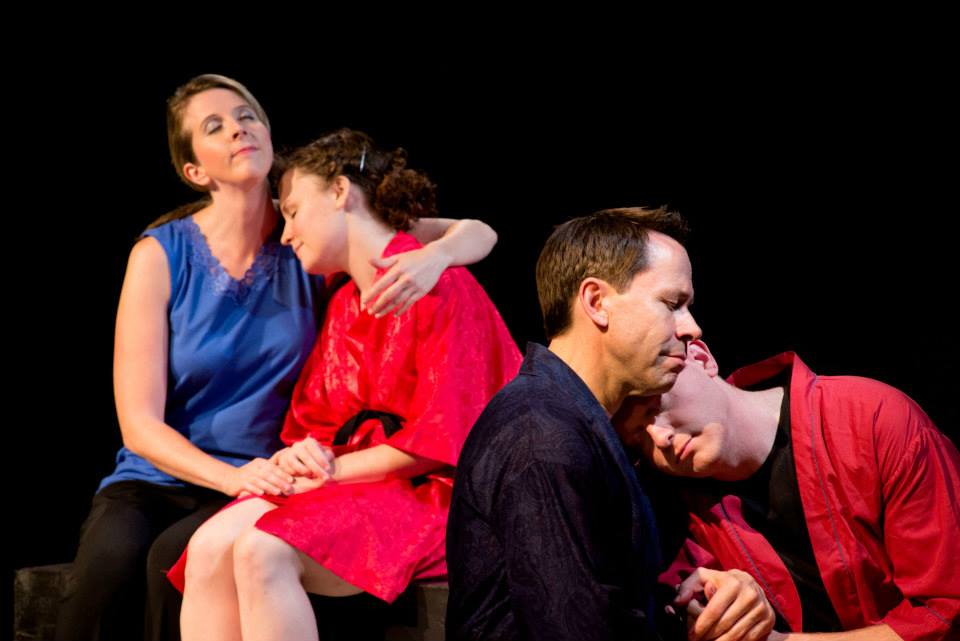
I wasn’t going to mention my current theater (at Arlington, Virginia’s American Century Theater) project here, until I dropped Ethics Alarms’ conservative warrior Steven Mark Pilling a note on Facebook that I had just posted on the topic he is most passionate about, preventing the abuse of child actors in Hollywood. Steven is not, to say the least, a fan of gay marriage (this might be the topic he is next most passionate about) , and I realized that my Facebook thumbnail, showing two same-sex couples in an intimate moment from my show, might put him off.

The show I just finished directing ( with the assistance of Quinn Anderson and my musical director Tom Fuller)  the old Harvey Schmidt-Tom Jones chestnut, “I Do! I Do!”, ( Remember “My Cup Runneth Over, Ed Ames fans? Hello? ) the tw0-actor Broadway musical based on the 1950 play “The Fourposter.” Back in 1966, when Robert Preston and Mary Martin starred in the musical, it was considered an affectionate and  perceptive look at the institution of marriage, and the show has attracted nostalgic, usually elderly married couples to regional and dinner theaters ever since. Productions of  “I Do! I Do!” are becoming rarer, however, because the societal developments have rendered the tale of the epic marriage of Agnes and Michael Snow increasingly alien to the current American scene. In particular, what was once a musical intended to speak to all married couples and candidates for future nuptials now appears to exclude the very group that comprises musical theater’s hardiest supporters: gays.

In marked abandonment of my theater’s usual principles (we don’t update shows, believing that it is more interesting and fair to the authors to let audiences reflect on what has changed since an original production, and what has not), I decided that for the benefit of audiences, the culture and the show itself, it was time to re-conceive “I Do! I Do!” so it would gain renewed relevance and vitality in a post DOMA age. My approach, courageously and generously approved by the authors, was to show the marriage of the show’s couple through a constantly rotating prism that alternately revealed them as a same-sex female couple, a same-sex male couple, and the traditional heterosexual couple of the 1966 version. This required four very versatile and gutsy actors who could pull off the illusion of showing one marriage three different ways without giving the audience whiplash or confusing them hopelessly. In Steve Lebens, Esther Covington, Chad Fournwalt and Mary Beth Luckenbaugh, I found the dream cast. Continue reading

Ethics Quiz: The Vigilante Cell Phone Police

Say goodbye, cell phone!

Say goodbye, cell phone!

National Review blogger and theater critic Kevin Williamson raises an issue that especially interests me, as part of the management of a professional theater company. How far can an audience member ethically go to quite a persistently rude and disruptive spectator who insists on using her cell phone during a performance? Here’s how far Williamson went while viewing the musical Natasha, Pierre, and the Great Comet of 1812 that a woman was in the process of ruining for him, after he complained to the management without success and received this series of responses from the woman:

“I asked her to turn it off. She answered: “So don’t look.” I asked her whether I had missed something during the very pointed announcements to please turn off your phones, perhaps a special exemption granted for her. She suggested that I should mind my own business.”

Williamson then grabbed the phone from her and hurled it against the wall. She slapped him, and complained. He, not she, was then escorted from the theater.

Let’s stipulate that hurling the phone was over the line. But let’s suppose that he had just confiscated the phone, walked into the lobby, and hidden it in a planter, promising to reveal the hiding place after the performance (having already failed to police the situation as was their duty, Williamson can not be blamed for bypassing management).

Your Ethics Alarms Ethics Quiz Question:

Is it ethical to confiscate the cell phone of a deliberately rude user during a theatrical performance, after appropriate warnings have been given and ignored? Continue reading

Concept Stealing Or Creative Evolution? “The Trip To Bountiful” Controversy And The Ownership Of Conceptual Innovation

"Pay up! Timothy Wilson owns that color!"

“Pay up! Timothy Wilson owns that color!”

The late playwright Horton Foote’s gentle drama (all of his dramas are gentle, come to think of it) “The Trip To Bountiful” is being revived on Broadway, and is stirring up the kind of nasty controversy he would have detested. (You probably know Foote better as the screenwriter who brilliantly adapted “To Kill A Mockingbird” into the classic movie it became.) The production has an all-black cast starring Cicely Tyson, and some are arguing that director Michael Wilson stole the idea of presenting Foote’s tale as the story of an African American family.They also claim that he owes Timothy Douglas, the professional director who first staged the play this way (in Cleveland, in 2011) public acknowledgment, and possibly compensation. Alisa Solomon lays out the theatrical ethics controversy here, and explores many related issues, including the murky distinction between colorblind casting and non-traditional casting.

As an ethicist and a professional stage director, I have a simple and direct answer for what Solomon seems to believe is a complex question: Baloney. Continue reading

Empty Chair Vindication: Don’t Wait For An Apology, Clint, But You Deserve One

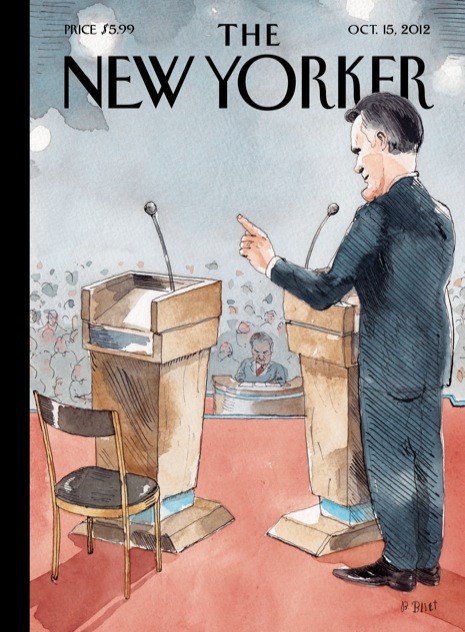
The media abuse heaped on movie icon Clint Eastwood for his unexpected performance at the Republican National Convention was one more link in the chain of blatant and unprofessional anti-Republican bias that will surely continue right up to election day.  Eastwood, you recall, memorably held a one-way dialogue with the President as the invisible occupant of an empty chair. The pundits and columnists didn’t like Eastwood taking on their hero, so they trashed his method of doing it; they were personally offended by his message (which competent, objective journalists, now as rare as Ivory-billed Woodpeckers, would be able to put aside to give fair commentary), so they insulted Clint: they called him old (naturally; if he were fat, they would call him that, too); they called him out his depth, they called him befuddled and inept. The fact was, however, that it was they who were out of their depth, and they, not Eastwood, who embarrassed themselves. Continue reading

Discovered: An Ethics Hero and a Theater Code of Ethics—From 1945!

The ethicist in “Singing in the Rain”

For many years, I have been attempting to persuade the local professional theater community in Washington, D.C. to develop and adopt an official Code of Ethics. I have not been successful, and it’s not surprising. Theater, indeed professional show business of all kinds, has been almost ethics-free for centuries. These are tough pursuits, and tough pursuits easily gravitate toward the Law of the Jungle—“Kill or be killed”—unless the culture makes a concerted effort to evolve in a different direction. Theater certainly has not. There a few unwritten rules in theater that could form the backbone of a useful code, such as “The show must go on!”, and there have certainly been members of the profession who are thoroughly ethical, they tend to be very successful individuals who have taken on high ideals once the need to back-stab has lessened, people who are so talented and fortunate that the need to lie and cheat never arises, or, a special category, marginally talented but hard-working and versatile professionals whose trustworthiness is their primary asset. (This last group usually fares poorly in the end.)

Not only have I been unable to interest anyone in developing a code for the theater, I have never heard of one being developed anywhere else. Until now, that is. I recently learned that Kathleen Freeman, a great character actress* who died in 2001, wrote and adopted an ethics code for a small theater company, the Circle Players, that she established in Los Angeles when she was 24 years old. Continue reading

As Wisconsin Bans a Theatrical Production, Some Questions

“The forces of intolerance just won another victory in Wisconsin,” is how The Progressive headlines a story about a “rightwing evangelical” whose complaints prompted the Wisconsin Department of Natural Resources to cancel a planned production of  “The Bible: Complete Word of God, Abridged” in a state park. From the article:

“Vic Eliason raised a stink. Eliason is an evangelical clergyman in Milwaukee who runs the VCY (Voices of Christian Youth) America Radio Network. He has a show, “Cross Currents,” in Milwaukee, and on August 9, he dedicated his hour-long program to condemning the play as “blasphemous” and “diabolical.” He urged his listeners to contact the board members of SummerStage, and he gave out their numbers. He also urged listeners to call the businesses where some of the board members worked and ask them, “How can you have someone on the board who will literally spit in the face of the Bible?” Eliason also gave out the phone numbers of the DNR’s top two officials and told listeners to ask them why the state was allowing this play to go on, and why it was profiting from it. (The agreement with SummerStage and the Lapham Peak State Park is that 5 percent of ticket sales go to the park, Eliason said.)”

The article ridicules the state and Ellison on several grounds. The play, it notes, is “very light-hearted,” a spoof of the Bible. Ellison admits he never read the script, but that the theme of the comedy is enough. The statement of the Department in cancelling the play smacks of dishonesty: “SummerStage will not be performing ‘The Bible – the Complete Word of God, Abridged’ at Lapham Peak as the event did not meet the provision of the Department agreement requiring all productions to be family oriented,” said a spokesperson. Translation: “This was turning into a hassle with the possibility of a lawsuit, and it just isn’t worth it.”

I agree that Eliason is an officious trouble-maker, a bully who sees nothing wrong with stopping people from entertaining and being entertained if he doesn’t approve of their taste. But I have some questions: Continue reading

Comment of the Day: “The Ice Child” and Staging Theft Ethics”

Arts blogger Jeremy Barker contributes a provocative counter-argument to my stance in the controversy over a D.C. based theater company that borrowed/adapted/stole an original production concept from a New York company without attribution or permission.  My position was (and is) that no rule, principle or law designed to discourage such conduct could avoid suffocating legitimate adaptations, mutations and new uses of  ideas devised by others, with devastating effects on creative expression. This is one of the great ethics controversies in the world of art, and I am glad to see it back in the ring.

Here is Jeremy’s Comment of the Day on my post, “The Ice Child” and Staging Theft Ethics.

“Jack–I just came across this piece and wanted to respond because I think, in quoting me, you ignore part of my argument, and I’m curious if you can clarify your perspective.

“Specifically, I feel like your caveated argument in favor of Factory 449 is based on the sense that it’s common practice to borrow such design or staging elements in text-based theater. I agree, it is. But if we were speaking of a specific author’s text, I think most commenters would have swung the other way. We tend to protect the playwright’s text in a different fashion than we do a design concept. A writer could be accused on plagiarism for either (a) imitating a distinctive plot, or (b) appropriating the same words. Yes, we can argue about what is an acceptable form of “referencing” (no one thinks Arthur Laurents wrote Romeo & Juliet, for instance) and what crosses the line. Often, this applies to how the text is used. But we understand and appreciate a playtext as a protected, distinctive thing.

“Indeed, I’d argue that this logic, which privileges the text, is the basis on which people in this thread are defending Factory 449′s appropriation. Since it wasn’t the same “play,” by which they mean “play text,” it’s not really the same thing, ergo, it’s not ripping someone off wholesale. Continue reading