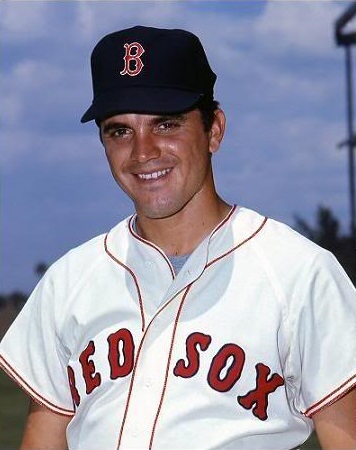
I Hereby Solemnly Pledge, With My Hand On My 1967 Boston Red Sox Yearbook Turned To The Photo Of Tony Conigliaro, That I Will Vote For All African-American Politicians, Regardless Of Policies Or Party, Who Declare That They Will Not Exploit Racial Divisions, And Will Never Blame Criticism, Justified Or Not, On The “Racism” Of Their Critics

That politician would not be new New York Mayor Eric Adams.

Adams yesterday ranted at reporters for not being sufficiently laudatory regarding his performance so far in his still-young term. “If you want to acknowledge or not, I have been doing a darn good job and we just can’t live in this alternate reality,” Adams fumed. To what does the Democrat attribute what he says is this lack of appreciation? Of course!

“I’m a black man that’s the mayor but my story is being interpreted by people that don’t look like me. How many blacks are on editorial boards? How many blacks determine how these stories are being written? How many Asians? How many East Asians? How many South Asians? Everyone talks about my government being diversified, what’s the diversification in the newsrooms? Diversify your newsrooms so I can look out and see people who look like me.”

Continue reading

Morning Ethics Warm-Up, 6/10/19: On Chaos, Pots, Bigotry, Hate Speech And Proving the Obvious.

GOOD MORNING!

And hang in there, David.

1. Ethics and Mortality.  My first harsh experience with the random cruelty of life came in 1967, when Red Sox slugger Tony Conigliaro, young, handsome, dating Hollywood starlets, playing for his hometown team and already a local idol while looking like a cinch to have a glorious Hall of Fame career, was hit in the face by an errant fastball thrown by Angels pitcher Jack Hamilton. That moment violently changed the course of Tony C’s  life, which ended with him in a semi-conscious state at the age of 45 after suffering a catastrophic heart attack seven years earlier that left him brain-damaged and disabled. I get choked up every time I think about Tony, but his tragedy taught me hard lessons. Don’t be smug; don’t get cocky. Do all the good you can and make the most of your life as quickly as you can, because random disaster can strike at any time.

I’m not sure that I needed to have that lesson refreshed, especially since it was also a cornerstone of my father’s philosophy that included refusing to worry about what he could not control. Nevertheless, last night came the news that David Ortiz, Red Sox Nation’s beloved “Big Papi,” had been shot in the back in his home town of Santo Domingo.  The assailant was apparently a motorcycle-riding thief (whom bystanders mobbed and held for the police—don’t you love it when that happens?). So far the news on David is promising, but the bullet pierced his stomach and damaged his liver, gall bladder and colon.

Prior to the attack, it would have been difficult to imagine anyone with a better life than Ortiz. He was still young, rich, with a thriving and stable family, recognized everywhere, and universally admired and loved as a symbol of unity and community. Ortiz’s biggest problem, he said in an interview last year, was deciding among the many attractive options  open to him in baseball, business, philanthropy, broadcasting and entertainment.

Well, he’s got bigger problems now.

I just saw an internet poll in which only 54% of the responders knew who David Ortiz is. I wonder how many know about Tony Conigliaro.

I’m depressed now.

2. When trying to defeat Kettle, running Pot may not be the ideal choice. One of the most common mantras of the Trump Deranged is that the President lies so much. One would think, would one not, that this theme would make it incumbent upon those trying to defeat the incumbent to keep their own public lies, hypocrisies and misrepresentations to a minimum. This, apparently, they cannot do.

For a while there the New York Times appeared to have chosen Senator Kamala Harris as its favored candidate for the Democratic Party’s nomination, but the paper shows signs of  concluding, as any objective observer should by now, that she is a loser. Harris also does not have a friendly relationship with facts, as a recent Times “factcheck” of her recent statements on the stump demonstrated.

They didn’t find that any recent contentious substantive statement by Harris were true. They did find that three statements were “misleading” and one was an “exaggeration” (when the Times purported to list all of Trump’s mendacities, fudges, fantasies, exaggerations and misleading statements were referred to as “lies”), but this one they didn’t bother to spin: Harris had tweeted,

“Members of our military have already given so much. Raiding money from their pensions to fund the President’s wasteful vanity project is outrageous. Our service members deserve better.”

This is false, sayeth the Times:

“To build his border wall without the approval of Congress, Mr. Trump will draw from an account for military construction projects, a Treasury Department forfeiture fund and a Pentagon drug interdiction program. He has not announced plans to “raid” military pensions.”

To be fair, most of the Democratic field has been lying at a prodigious rate.

3.  Shut up, RBG. Justice Ruth Bader Ginsburg’s  remarks at a judges conference in New York last week included praise for rookie Justice Kavanaugh for hiring only women for his team of law clerks.  “Justice Kavanaugh made history by bringing on board an all-female law clerk crew. Thanks to his selections, the Court has this Term, for the first time ever, more women than men serving as law clerks,” she said.

Wow, that’s excellent progress, since we all know that men are toxic, rape-prone, violent,  sex-obsessed blights on humanity, as, in fact, Kavanaugh was accused of being at his confirmation by Justice Ginsburg’s fervent supporters. Kavanaugh’s hiring choices appear to have been grandstanding and pandering to the admirers of RBG who called him a sexual predator.  Ginsburg’s comments are bigoted. Why is having women rather than men as clerks intrinsically  wonderful?

4. Again: Progressives neither understand nor support the First Amendment. At last week’ s California Democratic Party Convention, Resolution 19-05.94 read as follows…

WHEREAS, Protecting First Amendment rights is critical, but is also limited to exclude hate speech using the concept that offending statements first should be viewed through the lens of the party experiencing the hate, and that Jews, LatinX, African-American, Asian Pacific Islander, Muslims, Disabilities and LGBTI communities can be targets of oppression and hate speech for a variety of reasons.

It is fair to say that we have been sufficiently warned that progressives believe that only they are qualified to define “hate speech,” which includes, for example , “Make America Great Again” and “The Triumph of the Will,” as well as, to generalize, any speech they find inconvenient.  Such an exception in the First Amendment would permit the Left to muzzle dissent and opposition using the iron boot of the law…which is exactly what they seem to want to do.

Serious question: How can anyone in their right mind trust these people?

5. Just musing here...but is it ethical to spend scarce research funds to prove what is, or should be, obvious? I know, I know: lots of conventional wisdom is wrong, so many things that “everybody knows” turn out to be false when researchers look closely. Still—does the fact that dog-owners get more exercise than those without dogs really need independent confirmation? If I don’t take my Jack Russell Terrier, Rugby, out for a good 45 minute walk, he will do everything short of pulling a gun on me to exact his revenge. (My previous Jack, Dickens, did pull a gun on me once. I’m not kidding.)

Another recent study revealed the shocking conclusion that people who are attractive and conventionally good-looking have an automatic advantage in all aspects of social interaction over those who are not attractive or disfigured. Is there anyone on Earth who doesn’t know that? Beautiful people know it, and rely on it. Ugly people know it because they experience the bias every day.
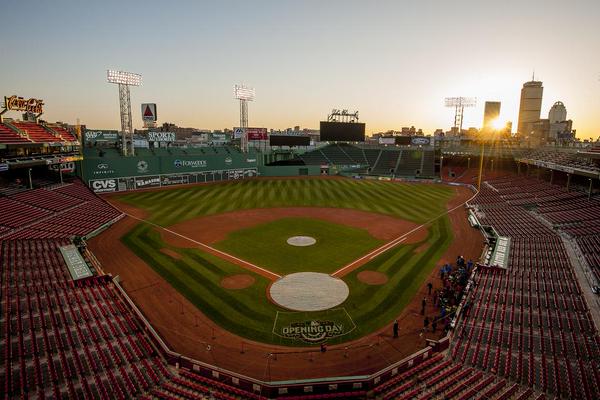
 

Morning Ethics Warm-Up, 3/29/18: Baseball Opening Day Edition, Plus Earlobes, Insults, And Tampons…

Good Morning, And Play Ball!

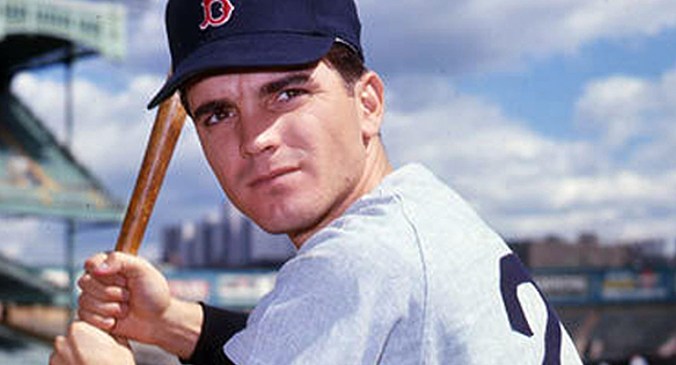
1. To Tony C.  This is always a happy day for me, but I want to mute my joy a bit by dedicating this baseball season to the late Tony Conigliaro. Since my teens, he has been my constant inspiration to live every day to its fullest, because no matter how bright and promising the future seems at any moment, everything can change in the blink of an eye, or an errant pitch from Fate right into your face.

That’s what happened to Tony C. on a cruel August night in 1967. He was playing right field and batting clean-up for his home town baseball team, in a season that would see them win a miracle pennant. He was young, handsome and incredibly talented. He had become the youngest player ever to hit a hundred home runs,  and was in his fourth big league season at the tender age of 22.Then everything changed. Tony’s existence was swept up and placed on a new and dark road that ended with a fluke heart attack and stroke at the age of 37, and a lingering twilight half-death in brain damage until he mercifully passed away eight long years later.

All we can do now is remember a beautiful young man and a brilliant athlete who gave his home town many thrilling moments to savor in the brief time allotted to him, who had everything, and then lost it without reason, warning or justice…and also remember that every day should be lived right, and well, with the determination to be the best we can be, because we may never have a chance to be any better.

Yes, this baseball season is dedicated to you, Tony.

For me, I guess they all are.

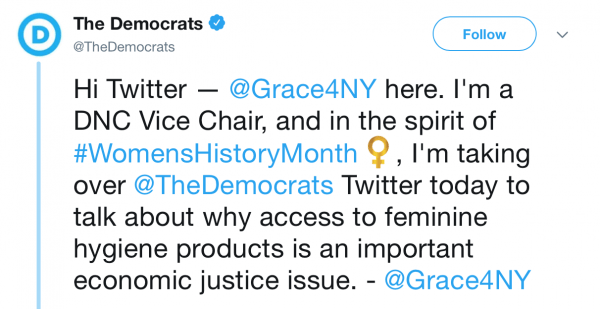
2. No, this isn’t The Onion. This is a real tweet from the Democratic Party, authored by Congresswoman Grace Meng:

She continues

“Women deserve equal access to our economy, not punishment for their gender. That’s why I’ve been working with my fellow women to fight for more access to tampons, pads, and the full range of menstrual products since 2015. …I’ve introduced legislation to make these products more affordable — because leveling the playing field and stopping period-shaming give women, especially low-income women, a better chance to succeed in our economy…What else would give women a better chance to succeed? Electing more women to fight these fights with me — because we need leaders who understand the experiences of those they represent. ..Head to and commit to vote in 2018 and beyond, because women can’t wait for economic fairness any longer.”

I hope I don’t have to explain what is wrong with this, and I eagerly anticipate being able to parry any brain-melted partisan who reads something like this and says, “Hey, what a good idea!” Yet obviously millions of people are in thrall to this kind of slippery slope progressivism: if a gender, or a race, or a nationality or any other tribe has a unique need or problem, then all of society must help pay for it, or life is unjust. Was a virus released into the water system of certain major cities.? What else can account for such abdications of personal responsibility being accepted as fair and reasonable?

Hey! Why doesn’t the government pay for my electric razor? Continue reading

Morning Ethics Warm-up: 8/16/17

GOOD MORNING!

1. I’m heading to Boston and Fenway Park in a few hours to meet with two of my high school classmates and together pay our respects to the 1967 Boston Red Sox, the spiritual beginning of Red Sox Nation, and a group of men, then barely more than boys, who had as profound an effect on my life and view of it as anything I have ever experienced.

It’s the 50th Anniversary of that amazing team and the heart-stopping pennant race it won against all odds, in a four team race that came down to the final game of the regular season. I mean heart-stopping literally: the team wasn’t called “The Cardiac Kids” for nothing. TWO of my father’s colleagues at the Boston Five Savings Bank died of heart attacks while attending Red Sox games, during one of the 9th inning desperation rallies for which the team was famous. The only reason I didn’t perish in like fashion is because I was just 16 years old.

Why was this team, and that summer 50 years ago, so important to me? I don’t have time or space to answer that question well, and you’d probably wonder what I was babbling on about anyway. A 2017 film by Major League Baseball called “The Impossible Dream” does a fair job of explaining it, but it’s too short to do the job right.

I had listened to, watched or attended every Boston Red Sox game for five years, as the team lost and lost. From those bad teams, followed weakly by the city in those days, in a crumbling old park that seemed destined to be abandoned and torn down, I learned that winning wasn’t everything, that loyalty wasn’t easy, that Hemingway was right, and that baseball was about courage, humility, perseverance, doing your job every day, sacrifice, and hope, as well as usually losing at the end. That summer of 1967 taught me that hope is worth the effort even though hope is usually dashed by the ice water of reality, that you should never give up, that miracles do happen, and that nothing is as wonderful as when a community is united in a single, inspirational goal, no matter what that goal might be…and that you should never be afraid to give everything you have in pursuit of a mission, even when it is likely that you will fail.

I learned difficult, discouraging lessons, too. When an errant pitch hit Red Sox right-fielder Tony Conigliaro in the face on August 18, 1967, it was the beginning of a lesson that revealed its tragic last chapter 23 years later. That one taught me that life is horribly, frightening unpredictable, and that we envy others at our peril. It taught me that we need to do what we can to accomplish as much good as we can as quickly as we can, because we may lose our chance forever at any moment.

Tony C, as he was and is known as, was a beautiful, charismatic, local kid, the idol of Boston’s huge Italian-American community,  in his fourth season with his home town team at the age of 22. He dated movie stars; he recorded pop songs; he had a natural flair of the dramatic, and was destined for the Hall of Fame. One pitch took it all away. Although he had two comebacks and played two full seasons facing major league fastballs with a hole in his retina and his field of vision, Tony was never the same. After his final attempt to keep playing failed at the age of 30, he became a broadcaster, and at 37 was seemingly on the way to stardom again in 1982 when he suffered a massive, inexplicable heart attack—Tony  did not smoke, and had no family history of heart problems– that left him brain damaged until his death in 1990.

As Henry Wiggin, the star pitcher protagonist of the novel, play and movie “Bang the Drum Slowly” observes as he  reflects on the death of his catcher and roommate, everyone is dying, and we have to remember to be good to each other. But it’s so hard. Ethics is hard. The ethics alarms ring faintly when we are about the task of living, or not at all…

At the end of the story, the narrator, the best friend of the catcher (but not really that close a friend) recalls how quickly everyone on the baseball team went back to their selfish ways after their teammate went home to die Even the narrator, who was the leader of the effort to make the catcher feel loved and appreciated in his last days, ruefully recalls his own failing. The catcher had asked him a favor, just to send him a World Series program (the team won the pennant after he had become too ill to play), and he had forgotten to mail it until it was too late. How hard would it have been, the narrator rebukes himself, to just put it in an envelope and mail it? Why are we like that, he wonders?

1967 was the beginning of my exploration of that mystery too.

So I am going to Boston for the 30 minute ceremony. I can’t even stay for the game; I have a seminar to teach tomorrow morning, and the last flight out of Logan is at 9 PM. There will probably be just a small contingent from the Cardiac Kids: most of them are dead now, or too infirm even to walk onto the field. But Yaz will be there, and Gentleman Jim Lonborg; Rico Petrocelli, Mike Andrews, and maybe even Hawk Harrelson  and Reggie Smith. I will be there to say thank-you, that’s all.

And to show that I remember. Continue reading

Thanking Dick Williams…Finally

The late Dick Williams, doing what great leaders do

If you are not a baseball fan, or under the age of thirty, you probably never heard of Hall of Fame manager Dick Williams, who died yesterday at the age of 84. I never met Williams myself, but I have been indebted to him for four decades. I never told him the immense difference he made in my life, just by doing his job.

In the winter of 1967, I was a devoted fan of my home town team, the Boston Red Sox, and had been since 1962.  Over that period I had listened to every single baseball game on my transistor radio when a game wasn’t on TV, which was most of the time, or when I wasn’t at the game, which was almost always the case. I was the only person I knew who followed the team, and for good reason: it was torture. The Red Sox were hopelessly mediocre on the way to awful, and hadn’t had a winning season in more than ten years.

It is a great character builder to follow the fortunes of a terrible baseball team. Almost every day, for six months, you are let down, and yet return to the scene of your despair the next, attempting to muster hope while steeling yourself against likely disappointment. You find yourself finding things to appreciate other than winning: the gallant veteran player who “plays the right way” (Eddie Bressoud, shortstop, 1962-1965); the exciting rookie who gives promise of a better future (Tony Conigliaro, right fielder—rest in peace, Tony); the unique talent who is worth watching for his own sake (Dick Radatz, relief pitcher, 1962-1966). These things help, but following a perennial losing team and caring about them is like being punched in the gut four or five days a week without knowing which day you’re getting it.

Since 1965, I had always reserved seats for the first day of the season and one of the last two home games, just in case those last games would be crucial to a (hahahaha!) Red Sox pennant drive. This was especially pathetic, since the team was getting worse. They had finished in a tie for 9th place in 1966, and as the 1967 season loomed, Vegas had them installed as 100-1 underdogs to win the American League pennant. In truth, the odds should have been longer. Nonetheless, I wrote the Red Sox and got my tickets, this time for the next to last day of the season.

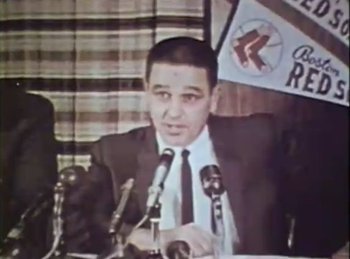
The team was full of rookies and near rookies, and appropriately had hired a minor league manager, Dick Williams, to be the new skipper. Williams was something else, however: he was a gifted leader. One day, in the middle of Spring Training, a Boston scribe asked the new manager what the prospects were for the upcoming season. Would the team escape the cellar? Would there be forward progress? Williams’ answer was instant front page news:

“We’ll win more than we lose.” Continue reading

Tony C., Chaos, and the Ethics of Blame

“And then one night

The kid in right

Lies sprawling in the dirt.

The fastball struck him square—he’s down!

Is Tony badly hurt?”

Just about everyone who lived in Boston, Massachusetts in 1967 knows that bit of doggerel, an epic poem written to commemorate the Boston Red Sox miracle “Impossible Dream” pennant that year. Tony, “the kid in right,” was Tony Conigliaro, or Tony C. for short, the 22-year-old Italian stud from nearby Swampscott who was ticketed for the Hall of Fame. Tony had everything: looks, talent, an adoring hometown public and a flair for the dramatic—everything but luck. On August 19, 43 years ago today, an errant pitch from Angels starter Jack Hamilton struck him in the face, nearly killing him. The beaning began a series of events that turned “The Tony Conigliaro Story” from a feel-good romp to an epic tragedy. He was never quite the same after the beaning, though he bravely played three more seasons with a hole in his vision he never told anyone about. He quit, tried pitching, actually made a second comeback that was derailed by injuries, and quit again. He was about to become the Red Sox cable TV color man when he suffered an inexplicable heart attack that left him brain-damaged and an invalid until his death, at only 45, in 1990.

Since 1967, there has been a storyline connected with Tony C.’s beaning, and it resurfaces every year. Let’s have an enthusiastic Red Sox blogger tell the tale: Continue reading

Nomar, Beantown, and the Legacy Obligation

Organizations have histories, and that means they have debts to pay. Time moves on, and personnel changes, but the organization that neglects the human beings who played major roles in defining their image, goals, achievements and success has breached its integrity, and violated its Legacy Obligation.

For nearly eight seasons, shortstop Nomar Garciaparra was the face, heart, and soul of the Boston Red Sox. A spidery gymnast in the field who completed the Holy Trinity of Hall of Fame-bound shortstops—Jeter, A-Rod and “Nomah” —who lit up the American League in the mid-Nineties, Garciaparra was a home-grown fan idol. He did everything wonderfully and with panache; Ted Williams, the city’s reigning baseball god, pronounced him his official successor.

Then, suddenly, it all unraveled. Continue reading