Ethics Dunce Collective: The American Music Awards

I can make this uncharacteristically short. Just re-read the post on John Oliver’s nasty full-show, post-election anti-Trump rant, and substitute “American Music Awards.” Also worth reviewing is the list of rationalizations used to justify Oliver, which I posted here, especially since so many of them are also being trotted out to excuse the ambushing of Mile Pence when he dared to exercise his right to enjoy “Hamilton” on Broadway without being personally called out and attacked by the cast.

It can be argued that the American Music Awards’ insults to the duly and lawfully elected POTUS—who has yet to do anything as President— last night were even worse than Oliver’s disrespectful ad hominem barrage. At least Oliver, a skilled satirist, was occasionally amusing. The two AMA hosts from Saturday Night Live were juvenile, desperate and amateurish, counting on their Trump-hating demographic for laughs they didn’t earn. If we ever see a more inept impression of Donald Trump than Jay Pharoah’s, be it in four years or a century, I’ll be shocked. Worst of all, however, was Gigi Hadid’s unfunny, mean and hypocritical imitation of Melania Trump, for the crime of existing.  The principle, just for application to Republican First Ladies, now, is apparently that having an accent  makes you ridiculous and an idiot.

If anyone, anywhere, on a live television show had dared to do such a grotesque mockery of Michelle Obama when she was the incoming First Lady, they would have been tarred a boor, a racist, and a virtual traitor.

I wonder which of the rationalizations will be used to defend Hadid? Whatever they are, the real defense is just this, the same that is being used to defend “Hamilton”: We hate these people, and they don’t deserve to be treated fairly.

Got it.

One clarification: Green Day is a political band, and their decision to shout No Trump / No KKK” during their performance of the catchy and tuneful  “Bang Bang” is as fair as it was predictable…also moronic, but what do you expect? It’s a band.

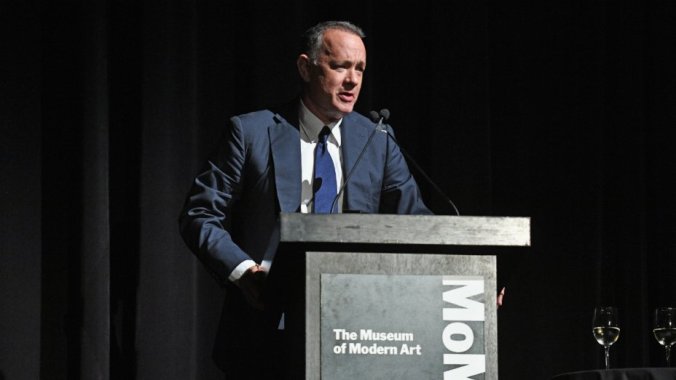
Ethical Quote Of The Week: Tom Hanks

tom-hanks-moma

“This is the United States of America. We’ll go on. There’s great like-minded people out there who are Americans first and Republicans or Democrats second. I hope the president-elect does such a great job that I vote for his reelection in four years.”

—-Actor Tom Hanks, to the Hollywood Reporter which was covering his remarks while being honored at the Museum of Modern Art in New York.

Hanks was a critic of Trump during the campaign, and contributed to skewering the President Elect during a recent Saturday Night Live show. His statement is one which every fair, rational, patriotic citizen should be able to endorse.

In the alternative, one can adopt the approach of Progressive Scold in Exile Keith Olbermann, who said on his web show, “The Resistance”:

“Give him a chance? What, in the hope that he will someday grow up enough to be able to see over the top of the Oval Office desk? We do not have time for the White House edition of “Celebrity Apprentice” starring President-Elect Pussy-Grabber. And so we will resist,” he intoned.

It should be an easy choice.

Hanks’ remarks at the museum ceremony are also worth reading. You will see them here.

Flashback: When Even Herb Block Was Gracious To The President Elect He Hated…

herblock-free-shave

I’ve referred to the cartoon above, from 1968, several times here. “Herblock” was a legendary, hard-line Democrat political cartoonist for the Washington Post, and reflected the styles and sensibilities of the old school in his field. Corporations and bankers were always fat guys in top hats and formal wear, “the poor” were always represented by thin, desperate Depression figures in tattered clothing. Liberals were always caricatured as dignified champions and Republicans were usually drawn to look like criminals and maniacs. Herb Block got more extreme as he aged: when Reagan won in 1980, Block drew a cartoon showing cave dwellers carrying clubs and troglodytes riding Mastodons marching into Washington.

He hated Nixon; all liberals did. He was regarded as just short of  Joe McCarthy by liberals, for he had won his House seat by tarring his opponent as a pro-Commie tool, and saved his tenure as Eisenhower’s VP by the infamous “Checkers” speech, as revolting an example of using sentimental hogwash to cloud a scandal as has ever been tried. The country was a tinderbox in 1968. Colleges had been engulfed in demonstrations, strikes and violence for two years. The Democratic National Convention sparked riots in the streets of Chicago. The Vietnam war was raging. Martin Luther King and Bobby Kennedy had both been assassinated. The young idealists who had followed those two liberal icons as well as non-conformist Democratic Senator Gene McCarthy were angry and disillusioned.

In part because of the intemperate “law and order” rhetoric of Nixon’s attack dog running mate, Spiro Agnew, some feared that Nixon’s ascent would mean martial law. Nixon had said that he had a “secret plan” for ending the war, and many thought that plan was to nuke North Vietnam. Ominously, Senator Barry Goldwater, whom Democrats had painted as an atom bomb-happy madman when he had lost to Johnson in the previous election, supported Nixon vigorously. The Republican nominee appealed to the “silent majority” who found the nation’s noisy turn leftward in the Sixties distasteful.

For more than a decade, Block had drawn Nixon as a sinister, menacing presence with an overgrown 5 o’clock shadow. You think I’m exaggerating? Here’s an example… Continue reading

Revelations From The John Oliver Video Post: What I Have Learned

light-bulb PREFACE: I have just returned from a crazy three day odyssey that had me lecturing on Massachusetts legal ethics in Boston, Washington, D.C. legal ethics in the nation’s capital, and, professional ethics, legal ethics and accounting ethics in Tucson, Arizona. Keeping pace with ethics developments was even more difficult than it usually is when I’m on the road, because I had almost no time in between flights, meetings and various hassles to get to a newspaper, surf the web, or watch TV. And my browser kept crashing.

I wrote the John Oliver post, frankly, as low-hanging fruit. His performance was vile and hateful, barely funny, self-indulgent, and disrespectful in a damaging way, and I didn’t think, and still don’t, that there should be much disagreement on that assessment. I expected the usual “lighten up,” “he was only joking “[he was NOT only joking], and “he has right to free speech” comments, because I always get those any time I point out that a comedian has been unfair and irresponsible. I did not expect,for the post to get more single day traffic than all but one previous Ethics Alarms entry, and so many comments, many of which with troubling social and political significance. I returned to my office to find more comments waiting for moderation than have ever been there at one time, and I apologize for that: I try to get them cleared withing hours if not minutes. Of course, a disproportionate number of them were garbled nonsense, or just invective with no point whatsoever. They didn’t make it.

I also had some tough calls, with repetitious comments that misrepresented the post, made irrelevant or factually mistaken assertions, and also were abusive. I fear that I may have been inconsistent, and perhaps less tolerant than usual, and I’m not referring to the occasional comment I allowed to be published just to show the kind of comments that weren’t being posted. The problem is that this site is a intended to be a colloquy, and poor quality comments just make the threads hard to read, and also undermine the site.

I may have to be more ruthless in moderating comments in the future. I’m thinking about it.

Ethics is all about processing new information. Here are some useful things I learned, or re-learned, from the reaction to the post, “Ethics Dunce: HBO’s John Oliver”….

1. Otherwise reasonable, fair, smart people really do think that Donald Trump justifies unethical conduct and that makes it okay. Continue reading

Calling Balls And Strikes

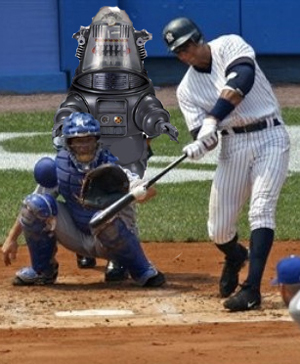
Robot Umpire

Calling balls and strikes in major league baseball has to be mechanized. This is obvious and beyond argument, and the only question is what will finally make the bitter-enders abandon their rationalizations and capitulate to reality.

I last wrote about this in 2012 in a post titled “Umpire Accountability, As the Day Of The Robot Approaches,” following a 1-0 game in which a batter in a position to tie the game was called out on strikes by an umpire named Larry Vanover, who rang him up with three balls out of the strike zone for the final 9th inning out. This particular contest was between two teams that had finished the previous season with one of them edging out the other for the play-offs by a single game, on the last day of the schedule. The pitches called strikes in this particular at bat weren’t even close to being over the plate. You could see that all three were wide with the naked eye as they arrived in the catcher’s mitt; you could see it in the computer graphic on the screen, and after the game, the pitches’ locations were charted to show that they were, in fact, balls. I wrote…

Baseball fans invest too much time and emotion into following the games and their teams to just shrug off results warped by obvious incompetence. The kind of atrocious umpiring demonstrated by Vanover…poses a direct challenge to baseball’s integrity. What will baseball’s leaders do about it?

They have only three choices:

1.They can, for the first time, take public and punitive action against umpires whose poor performance exceeds a missed call or a human mistake, and demonstrates inexcusable incompetence or a lack of professionalism. First time: a stiff fine. Second time: a suspension without pay. Third time: dismissal.I know that the umpires union in Major League Baseball protects its incompetents as zealously as the teachers unions, but baseball has its product to protect.

2. Baseball’s leaders can make a commitment to automated strike and out calling, and cut back on crews to one field umpire to keep order and one booth umpire to read the printouts, watch the TV screen, and study the replays.

3. Baseball can reject integrity and credibility, and continue to let the Vanovers on the field wreck the games and alienate fans.

So far, disgracefully, the sport has chosen #3, but the clock is ticking. Continue reading

From The “Everybody Does It” Files: “Welcome to Chico’s Bail Bonds Park!”

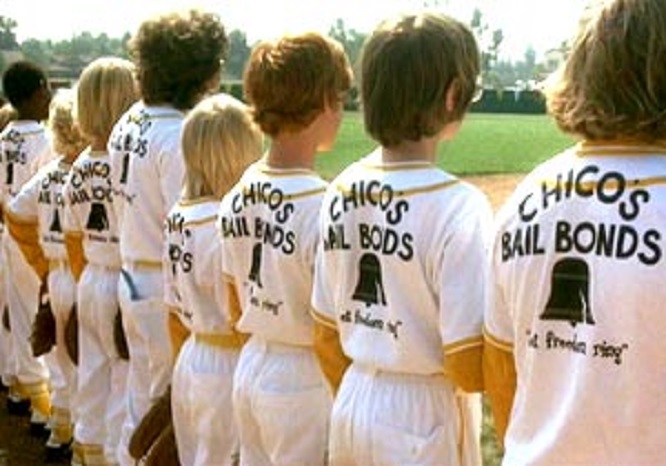
Bad News Bears

The Washington Nationals announced this week that it has partnered with Major League Baseball Advanced Media and the consulting firm Korn Ferry to sell naming rights to Nationals Park, as the team’s home field has been known since it opened in 2008.

After all, the team explains, plastering a corporation’s name on the ballpark could add between ten and twenty million dollars a year to the team’s revenue, and imagine how much better the team will be with another starting pitcher or slugging outfielder. Why wouldn’t a team sell its home’s name, and a large chunk of its identity, to a bank, a website, or a pet supplies company?

I admit it: being a life-time fan of the Boston Red Sox, who play in one of the the ten major league parks ( the others: Angel Stadium of Anaheim, Dodger Stadium, Fenway Park, Kauffman Stadium, Marlins Park, Nationals Park, Oriole Park at Camden Yards, Turner Field, Wrigley Field, and Yankee Stadium ) belonging to teams that have not accepted filthy lucre to mar their stadium entrances with the names of companies Bernie Sanders would hate, I find the idea revolting.  A baseball team represents its community; its lore becomes part of the culture and shared memories passed downfthrough generations.. That has value, and symbolic significance. How much is it worth? It’s priceless, or should be. Continue reading

Christmas Music Blues

Who are those guys?

Who are those guys?

At the rate things are going, I am certain that before long no pop vocal interpretations of traditional Christmas music will be easily accessible on the radio. This is a cultural loss—it’s a large body of beautiful and evocative music—and someone should have, one would think, the obligation of preventing it. But I have no idea who.

I realized this when I felt myself getting nostalgic and sad as I listened to a series of “Christmas classics.” For one thing, they all reminded me of my parents, whose absence beginning in 2011 permanently kicked my enjoyment of the season in the groin. For another, all the artists were dead. Bing: dead. Frank: dead. Andy Williams, Nat King Cole, Dean Martin, Judy Garland, Burl Ives, Gene Autry, The Andrews Sisters, Perry Como, Elvis, John Denver–dead. Long dead, in most cases. Christmas has become a serenade of dead artists. Except for the narrow range of country music stars for those who enjoy “O Holy Night” with a twang, living pop artists don’t sing these songs. OK, Mariah Carey and Michael Buble. Not many others. Sirius-AM was desperate to find living artists that it has been playing the Seth McFarland Christmas album. Seth can sing, but I’m sorry, but it’s hard to enjoy “Silent Night” while picturing “The Family Guy.”

Current pop stars are, understandably, looking for new Christmas hits that will be identified with them, and those have always been hard to come by. Bing Crosby made annual recordings of terrible entries in the Christmas song market—I just heard a station play a few of them. Gene Autry too: many of his efforts were bombs, though I rather like this weird one:

Continue reading

An Unethical Photo And Caption, And The Ethics Fog Of A Baseball Fight

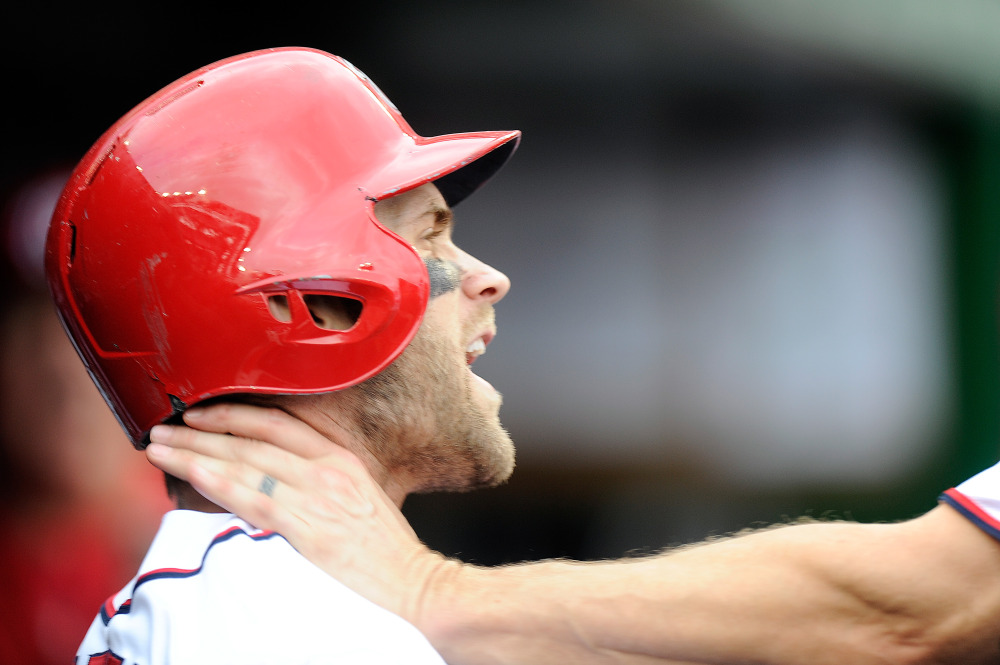
WASHINGTON, DC - SEPTEMBER 27: Bryce Harper #34 of the Washington Nationals is grabbed by Jonathan Papelbon #58 in the eighth inning against the Philadelphia Phillies at Nationals Park on September 27, 2015 in Washington, DC. (Photo by Greg Fiume/Getty Images) ORG XMIT: 538595765 ORIG FILE ID: 490330798

According to USA Today and many other reputable news sources, Washington Nationals pitcher Jonathan Papelbon “choked” team mate Bryce Harper in a dugout altercation in full view of fans and TV cameras during yesterday’s loss to the Phillidelphia Phillies. The photo above, freezing the moment in which Papelbon’s hand touched Harper’s neck, was presented full page width in the Nats’ home town paper, the Washington Post.

Now here’s the video:

Papelbon’s hand was on Harper’s throat for less than a second, as opposed to the impression given by the still, in which you can almost hear Harper gagging ACK! GAH! LLLLGGGGHHH!  The USA Today headline “Bryce Harper was choked by Jonathan Papelbon in Nationals’ dugout fight” is pure sensationalism and an intentional misrepresentation. I’m not even certain Papelbon was trying to choke Harper, but if he was, he failed immediately because Harper backed away.

This incident transcends its context for ethical interest, because it demonstrates how much context and biases influence public and media assessments of right and wrong.

First, some context: Continue reading

Ethics Quiz: The Duchess of York’s Website And The Duke of Plazatoro

The category is Celebrity Ethics, Royal Ethics or Marketing Ethics, depending on your point of view. Unfortunately for ethical clarity, how you answer today’s Ethics Alarms Ethics Quiz may depend on which category you choose.

Sarah Ferguson, Duchess of York, is embarrassing the Royal Family again, only this time it isn’t by throwing snowballs at photographers or by not being as demure and lovely as the late Princess Diana. This time, the self-exiled and divorced Fergie is trading on her title to make a living as an internet huckster. She has a website that peddles a juicer for weight loss and “The Perfecter Ultra”:

The Perfecter Ultra Heated Styling Brush combines innovative ionic technology with pure black tourmaline heating plates for ultimate convenience in achieving salon quality hairstyles at home. Create silky straight styles or beautiful bouncing curls, reduce frizzies or add volume to thinning hair, the Perfecter Ultra is the remarkable styling tool that does it all.

The Duchess has also been appearing on QVC, the cable shopping network where shopping addicts, lonely recluses and easy marks hang out. Among the Royals, with whom she is already on the outs, this is considered…unseemly. Concludes Tom Sykes at the Daily Beast:

“Her website majors in its attempts to cast her shill as public service, saying, “One of my missions in life now is to help people fight their weight challenges so they can live longer, healthier and happier lives. Take it from me: you can do it!”  But the truth is, Fergie is selling her title, and getting paid a no-doubt healthy fee for her promotional activities.”

There’s little doubt that “selling her title” is a fair description.

Your Ethics Alarms Ethics Quiz of the Day is…

As Duchess of York, does Sarah Ferguson have an ethical obligation to behave like the symbol of the British Commonwealth that she and the rest of the Royal Family is, or can she ethically use her title as she chooses, including to sell junk on the internet?

Continue reading

Why Obama’s Re-Naming Of Mount McKinley Is Unethical, And Why It Matters

McKinley

Probably not one in 20 Americans could tell you three facts about William McKinley, our 25th President. He was thoroughly overshadowed by Teddy Roosevelt, the flamboyant and transformative Chief Executive who succeeded him when he was assassinated—that, by the way, is the one fact that one in 20 probably do know. Probably three-fourths of those ignorant 20 know the name Mount McKinley, however, and that it is the tallest mountain peak in the United States.

That alone was one very good reason to keep the mountain named as it was. A nation and its culture requires continuity, tradition, reverence and respect to its past, and it is important for a nation to have abundant reminders of  important historical figures who would be forgotten over time without landmarks, memorials, monuments, holidays, town names, statues and streets that prompt this kind of exchange with one’s children and grandchildren:

“Who was McKinley, daddy?

…Or Lincoln, or Washington…or Obama. A nation that respects and strengthens these bonds with its own history helps ensure that the public maintains a common understanding of the nation’s character and mission. In the case of the United States, it reinforces the vital concept ours is a nation of one people, not warring tribes and factions. This is especially true of our Presidents, who were and are the leaders of the entire nation, not just specific regions, states and nationalities. Continue reading