Ethics Quote of The Week: The California Supreme Court

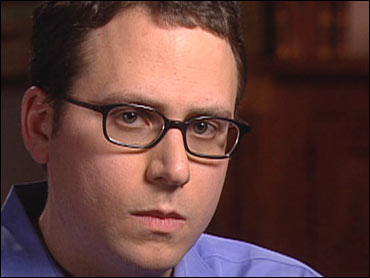
stephen_glass

“Glass and the witnesses who supported his application stress his talent in the law and his commitment to the profession, and they argue that he has already paid a high enough price for his misdeeds to warrant admission to the bar. They emphasize his personal redemption, but we must recall that what is at stake is not compassion for Glass, who wishes to advance from being a supervised law clerk to enjoying a license to engage in the practice of law on an independent basis. Given our duty to protect the public and maintain the integrity and high standards of the profession (see Gossage, supra, 23 Cal.4th at p. 1105), our focus is on the applicant‟s moral fitness to practice law. On this record, the applicant failed to carry his heavy burden of establishing his rehabilitation and current fitness.”

—–The California Supreme Court, finally rejecting the application of disgraced journalist Stephen Glass for admission the the California Bar, on the grounds of trustworthiness and poor character.

This should end Glass’s efforts to enter the new profession of law after spectacularly destroying his reputation in his former one, that of star journalist for The New Republic. After he was found to have fabricated more than 40 pieces for the magazine and gone to elaborate efforts to deceive fact-checkers. Stephen Glass  (Whom I first wrote about here) was fired in 1998. Luckily for him, he was already a student at Georgetown Law Center at the time, attending its night school, as he almost certainly would not have been admitted after his public exposure as a serial liar. Glass graduated, and beginning in 2002 commenced on this long,  difficult and ultimately unsuccessful journey to professional redemption, taking and passing multiple bar exams and being rejected, first by New York and now by California.

Upon reflection, Glass may well conclude that lying to the New York Board of Bar Examiners was an especially bad idea. Continue reading
Reluctant Self-Promotion Dept.: An Honor From Trust Across America

Trust

I am directed by management to announce to you all that your Ethics Alarms host was recently honored by Trust Across America, whose co-founder and Executive Director Barbara Kimmel often weighs in here. The inspiring non-profit organization, which pursues the crucial mission of enhancing trustworthy behavior in organizations, annually names its Top 100 Thought Leaders In Trustworthy Business, and I made the 2014 list, which is a distinguished one. For example, it also includes Charles H. Green, whose commentaries on posts here often enhance the site.

The list is described on the TAA site this way:

“While there are many “top” lists and awards, none specifically address trustworthy business – perhaps because the word “trust” presents a definitional challenge. For five years Trust Across America has been working with a growing team of experts to study, define and quantify organizational trust. During the course of our research, we have met with and spoken to hundreds of experts, across a variety of professional disciplines who, when their efforts are combined, help create trustworthy organizations. As our understanding of trust deepens, so does our pool of exceptional candidates. Many of the honorees are well-known CEOs and leadership experts, while others are quietly working behind the scenes as teachers and researchers. We intend to shine the spotlight on both groups, to redirect the focus from the “scandal of the day” to the trustworthy leaders and organizations of the day.”

I could not be more grateful, honored or humble (hey, I can be humble!), and I want to thank Barbara and her organization for this recognition and encouragement. Trust, as I write here often, really is the essential goal of ethics, for without trust, productive human society is impossible. We have a very long way to go to repair the fraying societal and institutional trust now plaguing America, but groups like Trust Across America give me hope that the task is not impossible, just daunting. I do believe that together, by setting and maintaining high standards and not allowing ourselves to be distracted by biases and rationalizations, a more trusting, ethical world is within reach.

Ethics Tales Of Three Governors, As Hope Slowly Dwindles

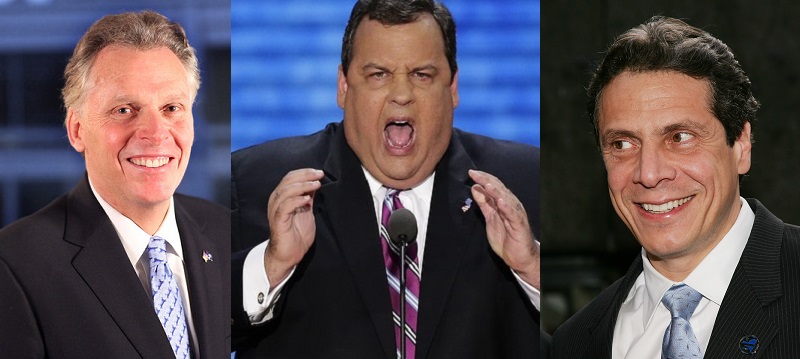
McAuliffe-Christie-Cuomo

The U.S.’s recent experiment with a Senator-President has been disheartening—persuasive words unhinged to action and actual principles. There was a remarkable example of this in the President’s NSA speech, in fact, in a quote that would have been the Ethics Quote of the Month had it not been so cynical coming from him. The President said

“Given the unique power of the state, it is not enough for leaders to say: Trust us, we won’t abuse the data we collect. For history has too many examples when that trust has been breached. Our system of government is built on the premise that our liberty cannot depend on the good intentions of those in power; it depends on the law to constrain those in power.”

Wonderful! If only this had been uttered by a leader with credibility and integrity, rather than one who has shrugged off, firing no one, interference with the federal election process by the IRS, illegal spying by the NSA, and the intentional facilitation of illegal firearms coming into the murderous hands of drug cartels by his Justice Department, after bombing Libya illegally in defiance of law, selectively enforcing immigration laws, using drones to kill American citizens abroad without due process, making recess appointments when the Senate wasn’t in recess, and more recently, unconstitutionally amending the ACA on his own after it was signed into law.

This was all foretold, however. Community organizers and senators make speeches and inspire people, but unfortunately seldom have a clue how to actually govern unless, as Obama himself has wistfully noted, they have absolute power. This is why, in theory, at least, state governors, who at least have experience governing, now seem like a better recruitment field for the next occupant of the Oval Office. It sounds good in the abstract, but the recent news from the state houses  is like ice water in the face—-

Re: Obama’s NSA Speech—Ralph Lopez Is Right. So Was James Otis. So Why Aren’t More Liberals, Progressives And Democrats…Wait, Didn’t I Just Write This?

James-Otis-Quotes-1A political writer from the alternative media wrote a clear, well-researched, pretty much irrefutable 0p-ed for the Digital Journal , crystallizing an issue that should have been obvious all along. The NSA’s incursions on the privacy of U.S. citizens are a bright line violation of the Fourth Amendment, one of the bulwarks of American individual rights. Yesterday, President Obama rationalized and embraced those unconstitutional acts and policies. The writer, Ralph Lopez, is angry and outraged. Why isn’t everybody?

In particular, why isn’t the very same group that compared the less obtrusive Patriot Act measures imposed by the Bush administration to “1984” and fascist regimes screaming bloody murder? That group would be, in case you’ve forgotten, liberals, progressives and Democrats. The technical terms for this are “hypocrisy,” “absence of integrity,” “dishonesty,” “blind loyalty,” “misplaced priorities,” and “foolish.” The technical term for the consistent Republicans who support the NSA’s over-reach is “wrong.”

Unfortunately, Lopez’s piece is burdened by a ridiculous title (“Should Obama be tried for treason after his NSA speech on Friday?,” indicating that either Lopez or his headline writer has been infected by the signature delusion of this President and his enablers—that giving a speech is the same as doing something), but its main points are as solid as granite:

  • “The language of the amendment, which embodies the sentiment in Patriot speeches of the American Revolution that “a man’s house is his castle,” is beautifully crystalline in clarity as all the Founding Fathers’ declarations were. The Fourth Amendment guarantees:

“The right of the people to be secure in their persons, houses, papers, and effects, against unreasonable searches and seizures, shall not be violated, and no Warrants shall issue, but upon probable cause, supported by Oath or affirmation, and particularly describing the place to be searched, and the persons or things to be seized.”

“In modern times, electronic communications such as emails and telephone calls have been held to be an extension of a person’s “papers and effects,” from a time when the only non-verbal communication was written letters, i.e. “papers.” This means, quite simply, that all private communications of private citizens are none of the government’s damned business, unless it can show “probable cause” that they involve a crime, and the government can prove it to a judge. In the real world judges already tend to give wide latitude to police and prosecutors who are convinced they have “probable cause,” a fairly low standard which might consist of a mere hunch based on the most circumstantial of evidence, like a man rooting around in a dumpster where, the day before, the cops found a cache of drugs.” 

In his speech yesterday, the President said, …in an extraordinarily difficult job, one in which actions are second-guessed, success is unreported and failure can be catastrophic, the men and women of the intelligence community, including the NSA, consistently follow protocols designed to protect the privacy of ordinary people. They’re not abusing authorities in order to listen to your private phone calls or read your emails.”

Really? They are collecting private data that can allow them to do that when and if they choose, and that is a violation of the Fourth Amendment. Continue reading

KABOOM! The Hypocrisy of Robert Gates

exploding_head2My head, already weakened by the discussion of “Duty,” Robert Gates’s tell-all memoir, finally detonated when I read the following passage:

“I was put off by the way the President closed the meeting. To his very closest advisers, he said, “For the record, and for those of you writing your memoirs, I am not making any decisions about Israel or Iran. Joe, you be my witness.” I was offended by his suspicion that any of us would ever write about such sensitive matters.”

Yes, Gates actually wrote that he was offended that the President would have so little trust and respect in his closest advisors that he believed some of them would betray that trust by including details of confidential meetings in their memoirs, as Gates now betrays the President’s trust by including details of that very same confidential meetings in his memoirs.

How could he write this? Did he really not perceive the obvious hypocrisy? The irony? Is he admitting that he had an unjustifiably high opinion of his own professionalism that he now is recanting? Did he think that statement by Obama gave him permission to reveal such confidences while the President was still wrestling with some of the same matters they involved? Where was the editor who is supposed to keep an author from undermining his own credibility by making blatantly hypocritical statements?

___________________________

Pointer: Althouse

Source: Slate

And The Winner Of The Curmie Is….

blue ribbon

….Just whom I thought it should be…and a previous winner on Ethics Alarms.

Writes Rick Jones, announcing that his annual poll to pick the worst example of misconduct by education professionals that highlights the deep, deep problems in the field wisely selected Principal Greer Phillips of PS 79 (the Horan School) in East Harlem, who, you may recall, decided to terrify special needs students and her staff by running a surprise “a school massacre is happening right here at our school! ARGHHH!” drill shortly after the Newtown shooting…

“…it’s difficult to argue with the collective wisdom of Curmiphiles. Principal Phillips managed to do something not merely colossally stupid, but arrogant, cruel, smug, unethical, insensitive, reckless, boorish, and—oh, yeah—illegal, as well. Plus, in the kneejerk world of post-Newtown, it also succeeded in being an emblem of everything that makes me crazy about the world of public education and self-righteous liberal do-gooding.I may not have had preference among the finalists at the beginning of the voting, but you have convinced me that the right person won. I’ll send the Curmie along to her, but perhaps first I should call her up and tell her that there’s a serial killer waiting for her in her apartment and that he’s amusing himself by setting her cat on fire. She won’t really appreciate the Curmie until she gets out of therapy, anyway, right?”

Read his whole post here, and I urge you, again, to follow Rick’s blog.

Just So We’re Clear: Some School Sexual Predators Are More Unethical Than Others

lunchladyJanelle Foley, 32,  who works in the cafeteria of Chapman Middle School in Weymouth, Mass., was charged with four counts of statutory rape for having sexual relations with a 15 year old student at the school during the Thanksgiving and New Year holidays.

This is statutory rape, and wrong, but approximately half as wrong as when the sexual predator’s target  is her (or his)  student rather than someone she glops mashed potatoes for in the lunch line. True, every employee in a school has to be worthy of some level of trust, but a teacher is blatantly misusing her authority and blurring roles to the detriment of education as well as social development when she exploits the position of teacher/role model/ authority figure/mentor for the purposes of sexual gratification. A lunch lady is just picking up horny teens. One is a professional breach and a sleazy crime. The other is a sleazy crime, and nothing more.

On the other hand, the role betrayal involved when a friend’s mother seduces her son’s underage friend is every bit as reprehensible as the acts of a predator teacher. I tend to think the Sexual Predator Lunch Lady is not a serious threat in our schools.

And where does “The Summer of ’42” land along this spectrum?

I ‘m not certain, but closer to the lunch lady than to the teacher, I think.

_______________________________

Pointer: Fark

Facts: Boston.com

Ethics Observations On Sticks, Leadership, And Chris Christie’s Vindictive Bridge Closing Scandal

Christie apologizes

Before we delve into the starting point for most ethics inquiries—What’s going on here?— a summary…

Last September, the Port Authority of New York and New Jersey closed all but one lane of the George Washington Bridge , horrifically tangling commuter transportation in Fort Lee, New Jersey, just across bridge from Manhattan. The lane closures  delayed emergency responders to four calls, and may have resulted in at least one death. New Jersey Governor Chris Christie’s office had attributed the lane closures to a traffic study.  But smoking gun e-mails emerged proving beyond the shadow of a doubt that the bridge closing was far more sinister: top Christie aides engineered the gridlock specifically to cause problems for Fort Lee, whose mayor had angered the Governor by refusing to endorse him for re-election. It was political payback of a particularly brutal and Machiavellian sort.

“Time for some traffic problems in Fort Lee,” wrote Bridget Anne Kelly, a deputy chief of staff to Christie, in an email on Aug. 13 to David Wildstein, Christie’s appointee at the Port Authority. Wildstein resigned in December after news of the scandal first broke; he has since refused to answer questions in a hearing on the matter, citing the Fifth Amendment. Christie fired Kelly yesterday, and in a long and emotional press conference, profusely apologized while insisting that he knew nothing of the plot, but accepted responsibility for the actions of his staff. The incident is attracting national interest because Christie, a Republican,  is an intriguing and controversial  potential candidate for a 2016 Presidential run.

Observations:

  • This is bad, and there is no defense for it. Government power should never be abused like this, by anyone. Distorting one’s duties to the public to harm members of the public out of such motives as spite, revenge, retribution, intimidation or personal and political gain is the moral equivalent of a crime.
  • In fact, it should be a crime. It can’t be, because the problem is that some degree of such distortions of the duty to act in the public’s best interest are essential political tools that cannot be jettisoned without undermining effective leadership as well. Politics works through the carrot and the stick, and the stick virtually always causes collateral damage. At every level of government, refusing to do what a powerful leader wants must have negative consequences, or nobody will do what the leader wants, and he or she will no longer be effective. That, in the end, hurts the public too–presumably more seriously than the short-term harm from political payback. Continue reading

The Fifth Annual Ethics Alarms Awards: The Worst of Ethics 2013 (Part Two of Three)

Snowden

The Ethics Alarms review of a truly disheartening year in ethics continues with fallen heroes, ficks, fools and follies with Part Two of the 2013 Worst of Ethics awards….and there’s one last section to come. Be afraid..be very afraid:

Fallen Hero of the Year

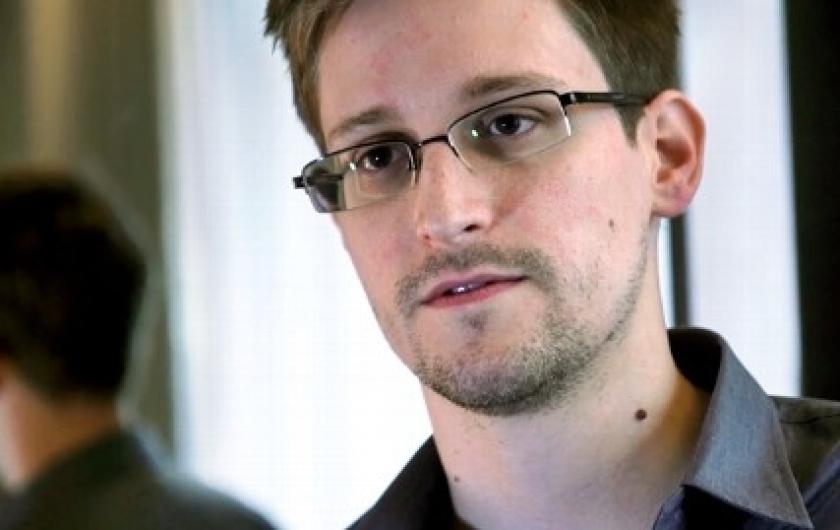
Edward Snowden, whose claim to civil disobedience was marred by his unwillingness to accept the consequences of his actions, whose pose as a whistle-blower was ruined by the disclosure that he took his job with the intention of exposing national secrets, and whose status as a freedom-defending patriot lies in ruins as he seeks harbor with not only America’s enemy, but a human rights-crushing enemy at that. The NSA’s over-reach and mismanagement is a scandal, but Snowden proved that he is no hero.

Unmitigated Gall of  The Year

Minnesota divorce lawyer Thomas P. Lowes not only violated the bar’s ethics rules by having sex with his female  client…he also billed her his hourly fee for the time they spent having sex , a breach of the legal profession’s rule against “unreasonable fees.” Yes, he was suspended. But for not long enough…

Jumbo Of The Year

(Awarded To The Most Futile And Obvious Lie)

Jumbo film

“Now, if you had one of these plans before the Affordable Care Act came into law and you really liked that plan, what we said was you can keep it if it hasn’t changed since the law passed.”

—–President Obama

2013 Conflicts of Interest of the Year Continue reading

Betrayal: Robert Gates Gets Even

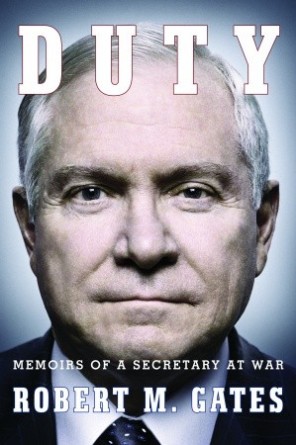
dutygates

When General George Marshall, World War Two military leader, former Secretary of State, and architect of the Marshall plan, was offered a million dollars to write his memoirs in the 1950s, he demurred, saying that there was no way he could write a truthful memoir without undermining people still at work in the government and military.

And then there was David Stockman…Paul O’Neill

…and Robert Gates.

Bottom line: these people betray their colleagues for money, and often, as is Robert Gates’s case, out of spite. Former Defense Secretary Gates, like the others, was given an opportunity to serve his country in a high executive branch position. He was privy to policy discussions and the inner workings of the administration. He was trusted. To reveal details of his tenure while the administration he worked for is still in office, done in a way designed to provoke criticism and embarrass his former associates and boss, is the height of disloyalty, and a breach of implicit confidentiality.

The honorable and ethical way to write such a book would be to wait until it could not actively interfere with the work of the Executive Branch. The people may have a right to know, but they do not have a right to know everything immediately. People in high policy-making positions must be able to be themselves, express opinions, and have productive meetings with the confidence that those they work with are not collecting notes for a future Book-of-the-Month sellout. Books like Gates’s undermine that trust, make it more difficult to get candid and controversial opinions and ideas into the decision-making process, and ultimately hurt all of us. The former  Secretary and those who appreciate the additional ammunition for administration-bashing can assemble a lot of rationalizations for the  book, but they all boil down to “Everybody Does It,” the most threadbare and cowardly rationalization of all.

The ethical thing would have been for Gates to write the book in a few years, or not to write it at all. The ethical conduct for the reading public is to discourage betrayals, no matter who is the one betrayed, by sending such books to the remainders bin.

I suppose I should mention that except for the substitution of Robert Gates’ name for that of Paul O’Neill, and replacing “Treasury” with “Defense,” every word above was written in 2004, when I condemned the sell-out of fired Bush Treasury Secretary O’Neill, who had just provided the information used in a Bush-bashing tell-all called “The Price of Loyalty: The Education of Paul O’Neill.” (Yes, the old Ethics Scoreboard is coming in handy today.) Every word applies with equal force to the new memoir by Gates, who was President Obama’s Secretary of Defense and whose current tell-all attack has set Washington buzzing, except that Gates’s conduct is ethically far worse. Continue reading