Unethical Quote of the Month: Rep. Marcia Fudge (D-OH)

“It is a shame that anytime something goes wrong, they pick on women and minorities..All of the things they have disliked about things that have gone on in the administration, they have never called a male unqualified, not bright, not trustworthy. There is a clear sexism and racism that goes with these comments being made by unfortunately Sen. [John] McCain and others . . . How do you say that a person with Susan Rice’s background is not qualified? I wonder what your qualifications are for your job. Where did you finish in your class? You know, I know one of them finished in the bottom of their class. Susan Rice was a Rhodes scholar. How do you say a person like Susan Rice is not qualified?…I mean, Susan Rice’s comments didn’t send us to Iraq and Afghanistan. Somebody else’s did. But you’re not angry with them.”

—-Rep. Marcia Fudge (D-OH), accusing GOP Senators John McCain, Lindsay Graham, and Kelly Ayotte (a woman) of sexism and racism for their harsh criticism of UN Ambassador Susan Rice for her repeated assertion on multiple news shows that the Benghazi attack that killed the American ambassador in Libya was a spontaneous demonstration over a YouTube video after the Obama Administration had been told otherwise.
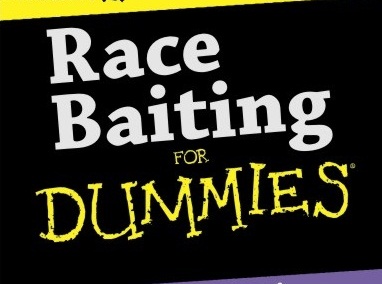
It must be comforting to be able to rationalize all criticism arising from your own conduct and to attribute it to the biases of your critics. Crippling, but comforting. If one cannot regard criticism as legitimate, then one can never assess one’s own mistakes and weaknesses and work to improve.

Fudge is one of the habitual race-card players in Congress: earlier this year, she accused the bi-partisan House ethics committee of racism because a disproportionate number of the Congressional Black Caucus’s members were under investigation. (This was, of course, because a disproportionate number of  the Congressional Black Caucus’s members, like Fudge, have engaged in dubious practices that indicate a weak grasp of ethics.) This time, she had lots of company, including Rep. James Clyburn (D-NC), who later said that the word “incompetent” was racist code. Brilliant! This means that no black public official can ever be called incompetent! Sure to be added to the code book if this theory sticks: inept, ineffective, corrupt, careless, irresponsible, and unqualified. Fudge, Clyburn and their colleagues propose to make legitimate criticism of black and female officials—those who are Democrats, that is—impossible, one word at a time. Continue reading
If This Is Obvious To Everybody, Why Isn’t It Obvious That Petraeus Had To Go?

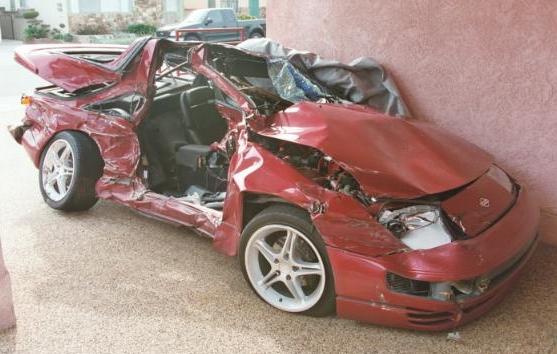
Look, Sheila must be back at work—that’s her car in her parking space!”

From the Boston Globe:

“The administration of Governor Deval Patrick, embarrassed by revelations that the state highway safety director has a driving record that includes seven accidents, four speeding violations and two failures to stop for a police officer, announced today that the director will be removed from that job.

“Sheila Burgess, the top safety officer since 2007, is on medical leave recovering from an Aug. 24 one-car accident in Milton in which she drove off the road and suffered a head injury. She told police she swerved to avoid an oncoming vehicle in her lane. Burgess will be assigned to a “different role” within the state Office of Public Safety and Security, according to a statement released today by Mary Elizabeth Heffernan, the public safety secretary.

“Given her driving record, it is clear that Ms. Burgess should not have been hired as the director of Highway Safety in 2007,” Heffernan said in the statement. “Burgess is a former fund-raising consultant to high-profile Democratic candidates for public office, including Congressman James McGovern, whose office said on Friday that McGovern asked the newly elected Patrick administration in 2007 to hire Burgess, but without suggesting a specific role for her. She is paid $87,000 annually. Burgess had no experience in public safety, transportation or government administration when hired, according to her resume.”

“Heffernan called Burgess “a solid and dependable employee” during the intervening years, but today, following a Globe story that revealed her driving record, said she no long has confidence in Burgess leading the state’s efforts to reduce accidents by promoting good driving practices…” Continue reading

Be Careful What You Wish For Dept.: “Occupy” May Finally Have a Plan, and Sure Enough, It’s Ethically Bats

Oh, yes,THIS is bound to work out well…

The core of my objection to Occupy Wall Street and its progeny was and is that it never had the discipline, cohesion or communications skills to make it clear what the “movement” really wanted to accomplish, other than generally blaming all the world’s ills on the wealthy and successful. This was the reason for its failure, though Occupy fans like to say that it “succeeded” by starting a national dialogue about corporate executive salaries and the growing disparity in income levels between the richest and the poorest Americans—as if that dialogue hadn’t been ongoing long  before the first sign went up in Zuccotti Park.

Now there are signs that the Occupy bitter-enders are hard at work launching a real, substantive effort with a specific goal, albeit and insane one: to bring down the financial system with a “debt strike.” ( In These Times headlined its story about this “You Are Not A Loan.” Pretty clever!) The idea is to refuse to pay back the interest or principal on outstanding debt, and to insist that all loans and interest  be forgiven, since the debt system is inherently corrupt and rigged to transfer wealth from the poor to the rich.

We shouldn’t have to expend a lot of argument on why this is unethical. People, companies and nations in serious debt reach that point because they spend more money than they have. They borrow money promising to repay, agreeing to pay an additional fee, interest, for the privilege of using money that doesn’t belong to them. The vast majority of debt is not amassed by desperate debtors who have to deal with the equivalent of Loan Shark Larry and risk broken legs or death unless they pay unconscionable fees. Most debt comes from wanting something before you can pay for it. While laws are in place to minimize predatory lending and to provide a safety net (in the form of bankruptcy) so people and companies don’t end up destitute and in debtor’s prison, essentially the system, like society itself, exists on trust, the cornerstone of all ethics.  Lenders give their money to trustworthy loan-seekers, and charge higher interest rates to those who they deem less trustworthy. That is fair. Continue reading

Ethical Quote of the Month: Gen. David Petraeus

“Yesterday afternoon, I went to the White House and asked the President to be allowed, for personal reasons, to resign from my position as D/CIA. After being married for over 37 years, I showed extremely poor judgment by engaging in an extramarital affair. Such behavior is unacceptable, both as a husband and as the leader of an organization such as ours. This afternoon, the President graciously accepted my resignation.”

—-Gen. David H. Petraeus, Director of the Central Intelligence Agency, in a public statement announcing his resignation from that position.

How quaint.

Democrats and Republicans must have felt that they had stumbled into the Way-Back Machine and delivered into England circa. 1904. A high government official resigning over adultery, sex,…”personal misconduct?” How bizarre! Naturally, Sen. Diane Feinstein, who heads the Senate Intelligence Committee,  announced that she would have supported Petraeus if he had chosen to stay. “I wish President Obama had not accepted this resignation, but I understand and respect the decision,” she said in a statement, and described Petraeus’s resignation as an “enormous loss for our nation’s intelligence community and for our country.”

The right way to leave after an affair, apparently, is to try to cover it up, submit to extortion, corrupt others in the process, and only quit when the hideout is surrounded, the hounds are clawing at the door and someone is yelling at you through a bullhorn—you know, like former GOP Sen. John Ensign, who waited two years to resign while his colleagues, like Feinstein, looked the other way. Nobody gets it in Washington—“it” being the ironclad principle that leadership must set the highest example, not the lowest level it can get away with, or the whole system rots below. Nobody, apparently, except the man who just resigned. Continue reading

Relax, Americans: The President Will Be A Good Man…Whoever He Is.

The good guys.

The degree of anxiety over today’s Presidential election—perhaps more accurate than anxiety is hysteria—is palpable. It is also unnecessary and foolish. I have read the fevered rantings of Andrew Sullivan, who fears Mitt Romney like the Germans feared the invading Russian army at the end of World War II, and the apocalyptic monologues of conservative radio talk show host Mark Levin, who is prone to statements like, “It’s over, that’s all! Do you understand? If Obama wins, this country is never coming back!” I have watched both parties exploit and encourage this kind of irrational fear, and its by-products, predictably, are hate, division and anger. There was a time in America when political adversaries referred to each other as “my honorable opponent.” The candidates were not more honorable then. We were more sensible.

The history of the United States has shown that very few truly bad men have the opportunity to run for President. It makes sense, if you give it a modicum of thought. A Presidential contender must negotiate the perils of life for at least four decades without accumulating damning evidence of disqualifying character traits and malign intent. The candidate must have shown sufficient ability and character to impress those he worked with and owed duties to. Most of all, a potential President must have been able to engender a sufficient amount of trust over more than half of his natural life.

We should not judge political leaders by the same standards as other professionals, because the nature of politics, by definition, is ethically ambiguous. Politics knows only one ethical system: utilitarianism. The practice of governing and making human progress advance in the civic arena rules out absolute principles, and requires delicate calculations of ends and means. This often appears, to non-practitioners, as corruption, and it certainly can become that. Effective, trustworthy leaders are able to avoid the occupational hazard of believing that the ends necessarily justify the means. If they cannot, they will not have the opportunity to be President. Continue reading

Hyundai: Ethics Corrupter

As we try to build an ethical culture, it doesn’t help to have amoral corporations employing ethics-challenged advertising flacks to send America toxic messages about honesty and trust. Hyundai, in its campaign for the 2013 Santa Fe, represents family members keeping secrets from each other and parents enlisting their children as accomplices in lies as funny, normal and cute. “Don’t tell mom,” a father orders, in the midst of a movie that will give his young children nightmares, and other misadventures (including one incident of father-led vandalism.). “Don’t tell Dad,” says Mom, after taking her son parasailing. I’m presuming she’ll have to tell him when her son breaks his neck on their next flight. Continue reading

A Disappointing and Damaging Ethics Dunce: The Obama Campaign

No matter who wins the Presidency on November 6, one thing is for certain. We now can be sure that the day will come when a future Presidential campaign runs an ad that concludes, “Don’t vote for him: he’s an asshole!” For that, we will be able to place the blame on, of all people, Barack Obama, and his 2012 campaign. This is the same Barack Obama who promised, the first time he was running for President, to change the tone in Washington; the same President Obama who told a group in 2010…

“But there is a sense that something is different now, that something is broken, that those of us in Washington are not serving the people as well as we should,” Mr. Obama said. “At times, it seems like we are unable to listen to one another, to have at once a serious and civil debate. This erosion of civility in the public square sows division and cynicism among our citizens. It poisons the well of public opinion….Civility is not a sign of weakness.”

Yet his 2012 campaign’s embrace of gutter-level name calling and divisive rhetoric, with the full participation of both the President and the Vice-President, has guaranteed that the tone Obama promised to change will change for the worse, and that the well of public opinion will be more toxic than ever. Continue reading

If You Liked “Enhanced Interrogation,” You’ll Love The “Disposition Matrix”

Is THIS the Administration’s secret weapon against terrorists?

The Washington Post launched a three-part series today about the U.S. drone strike program, in which terrorists abroad are targeted and assassinated from the sky. I’m not prepared to attempt an ethical analysis of this deadly tool against international terrorism, although I will acknowledge that my initial, gut level assessment is that the unique nature of terrorism requires adjustments in the ethics of national security and warfare, and drone killings seem to be a fair and reasonable adjustment.

Yet it is still killing. It is also controversial, with many human rights activists, international law specialists and ethicists vehemently condemning the tactic, especially when used against turn-coat Americans abroad without due process of law. Consequently, the Post’s revelation that the Administration’s “kill list” is called something else rings the ethics alarms.

The Post:

“Over the past two years, the Obama administration has been secretly developing a new blueprint for pursuing terrorists, a next-generation targeting list called the “disposition matrix.” The matrix contains the names of terrorism suspects arrayed against an accounting of the resources being marshaled to track them down, including sealed indictments and clandestine operations. U.S. officials said the database is designed to go beyond existing kill lists, mapping plans for the “disposition” of suspects beyond the reach of American drones.” Continue reading

“Mitt Romney — He’s Not One Of Us”

“I’m Barack Obama, and I approved this message.”

I must admit that I could not devote my full attention to last night’s final Presidential debate. I had just seen the latest from President Obama’s attack machine, a television spot approved by Barack Obama, that concludes with the legend, “Mitt Romney—He’s Not One of Us.”  It is an unfair, shocking, miserable, indefensible, dangerous argument to be employed by any party, any candidate, in any race for any office in the United States, at any time in the nation’s history. For it to be employed with the approval of a President of the United States, and this President in particular, should be cause for mourning, but also anger.

If I thought that President Obama was actively involved in releasing this disgrace to his campaign and the ideals he claims to represent, I would have no difficulty concluding that it alone disqualifies him for a second term. I don’t believe that. Perhaps I won’t let myself believe that. One of Obamas myriad weaknesses as a leader, however, is that he tolerates unethical, incompetent and untrustworthy staff and advisors. He trusted his campaign advisors, and they betrayed his trust. Still, he is accountable. Continue reading

Trust and “The Paradoxical Commandments” of Dr. Keith

In case you were wondering what was on that third tablet that Moses dropped…

I’m preparing a long business ethics program for a large corporation with some ethics issues (which is to say, for a large corporation), and while reviewing my files on business leadership re-discovered some material that I hadn’t looked at for a long while. One of them was “Anyway,” a poem that was also turned into an inspirational book by its author, Dr. Kent M. Keith.  He first wrote it for student leaders in 1968 while an undergraduate at Harvard.

One wonders if what he called “The Paradoxical Commandments” would have occurred to anyone but a student, before he could become jaded, cynical, disillusioned, or stuffed with so many scholarly  details, controversies and nuances regarding ethics that such an idealistic view was tainted forever.  (I should note that Dr. Keith has obviously become none of those things, perhaps because he was able to remain true to his own youthful advice.)

The poem is really about trust, the essence of ethics. There is no question that those who trust—in people, in institutions, in justice, in fairness—will inevitably be betrayed and disappointed, sometimes tragically.  Yet to stop trusting in those things, which so much human experience and simple logic dictates is the safest, most sensible course, is to damn one’s life and the society we live in to perpetual mediocrity, fear, and darkness. Democracy is based on trust of an idea: that human beings can be trusted to live their own lives, and that under the inspiration and catalyst of freedom, will create, persevere, love and build a healthy and happy society. There is plenty of evidence that suggests that trusting this idea is risky and foolish, yet trust is its only hope for fruition. So we must trust anyway.

I’ve never posted Dr. Keith’s poem on Ethics Alarms before. I should have. Here it is: Continue reading