Iowa’s Kirkwood Community College Imprisons Its Students In Deference To Hillary Clinton

"This is a great community college, you know?"

“This is a great community college, you know?”

I’m willing to entertain the notion that the exigencies of the situation may have justified Boston’s police ordering citizens to stay in their homes during the dragnet for the Boston Marathon bombers in 2013, Barely. Still, the explosion of extra-legal, unconstitutional abuses of power by national and state governments during the Presidency of Barack Obama is profoundly troubling, and even more so is the complacency of the public and media when it occurs.

Yes indeed, I see this particularly frightening fish-rot as being initiated from the head in the White House, who has embraced the governing theory that if consensus and compromise on desired measures, laws and policies can’t be achieved under the Constitution’s formula, do it anyway. This isn’t strength, you know. It is weakness, the desperate resort of an unskilled executive with contempt for democracy. Under this administration, we have seen a President and a Justice department refuse to fulfill their duties and defend a duly passed and signed law that they just didn’t like (DOMA). Wrong. We have seen a President unilaterally amend his own sloppy health care law because he knows that if he tried to fix it legally, the Congress would gut it. Wrong. We have seen Obama repeal immigration restrictions by executive order, and declare that the Senate was in recess in order to avoid the bother of getting legally mandated  confirmation of his appointments—that one, at least, was struck down by the Supreme Court.

The cumulative effect of all of this is gradually increasing public tolerance for official breaches of the rule of law, at all levels of government, and by private entities too. I believe that that this threatens the democratic culture, and I do not understand why progressives are not as outraged by this development as moderates and conservatives. Do they really think that having allowed Constitutional protections to erode so their precious agenda can be advanced, those protections will be suddenly vigorous again when their adversaries have the upper hand? What utter, utter fools:

The sickening effect of this complacency was on display at Kirkwood Community College in Monticello, Iowa, Continue reading

Ethics Over Compliance: The Dutch Banker’s Oath

bankers oath

“Professional ethics” is a never-ending battle between compliance and ethics, between rules and penalties on one side, and principles and values on the other. Compliance is easier: all you do is tell people with rules and regulations what they must or can’t do, and promise that there will be consequences if those rules are violated. For ethics to work, people actually have to understand ethical values and be committed to living by them in a professional context.

Compliance has little to do with ethics. Jack the Ripper will follow rules if they are clear, if he knows he’ll get caught if he violates them, and if the punishment when he does will be  harsh enough. That won’t make him ethical. In fact, compliance–rules-based professional conduct control—is often antithetical to ethics. Rules and laws are merely a challenge to the type that Oliver Wendell Holmes called “The Bad Man”-–which includes bad women—to find ways to do things that are wrong but that avoid violating rules sufficiently to justify punishment.  This is why most compliance codes have language in their introductions noting that it’s impossible to make a code that will cover every wrong someone can think of, so ethics are important too.

Pure compliance-based systems don’t improve ethical conduct. The financial collapse in 2008 was largely caused by financial manipulators operating in the grey areas of the rules and laws—that’s why so few of them could be prosecuted. In politics, The compliance mindset is extremely convenient for clever liars and cheats like the Clintons, which is why Hillary could try to explain her e-mail shenanigans by saying that “I fully complied with every rule I was governed by (heh-heh-heh!).” Unethical people will always find ways to get around rules. Ethical people, in contrast, barely need rules at all.

Another benefit of ethics over compliance is that ethics rules–compliance codes—have to be long and detailed, otherwise it’s too easy for Clinton-types to find loopholes, though they usually will find some anyway. Ethical values, on the other hand, can be stated very simply. An ethical employer thinks, “Hmm, that intern is cute, but I am married and have duties of loyalty and honesty to my wife and family, and it would be an abuse of power and influence as well as irresponsible for me as a leader to have an affair with someone under my supervision in the organization.” The Bad Man thinks, “Wow, she’s hot; my wife won’t care as long as I’m not caught; getting a hummer isn’t considered sex where I come from, and there’s nothing that says a President can’t fool around!” For the former, “A leader should not have sex with subordinates” is clear as a bell; his values tell him why. The latter, though, is thinking, “Hmmm. How can I get around this? That rule says “should” but not “shall”— that’s good. No punishment is specified. Sounds like more of a guideline than a rule. “Sex”—that must mean sexual intercourse: great! Lots of wiggle room there. And “subordinate”—is an intern really a subordinate? And I bet I could argue that this is personal, not official conduct. All good…now where’s that cigar?

Invoking ethics rather than compliance is a new oath required by the Dutch Bankers Association. It could be printed on a postcard, and if a banker is ethical, it is all he or she needs:

I swear within the boundaries of the position that I hold in the banking sector…

…that I will perform my duties with integrity and care;

…that I will carefully balance all the interests involved in the enterprise, namely those of customers, shareholders, employees and the society in which the bank operates;

…that in this balancing, I will put the interests of the customer first;

…that I will behave in accordance with the laws, regulations and codes of conduct that apply to me;

…that I will keep the secrets entrusted to me;

…that I will make no misuse of my banking knowledge;

…that I will be open and transparent, and am aware of my responsibility to society;

…that I will endeavor to maintain and promote confidence in the banking system.

So truly help me God.

And if a banker isn’t ethical,

it won’t matter anyway.

__________________________

Pointer: Legal Ethics Forum

Sources: Bloomberg, The Conglomerate

Graphic: Bloomberg

Yes, Aaron Schock Is Untrustworthy. Why Wasn’t that Obvious From The Start?

SchlockRep. Aaron Schock (R-Ill) resigned from Congress this week, effective March 31, after it was revealed that he charged more driving miles of travel to taxpayers than he had mileage on his car. This was just the latest indication that Schock was infected with a fatal sense of entitlement, which you can read about here and  here. I’m not going to waste time declaring the Congressman unethical: obviously he is unethical. What concerns me is that he was elected to Congress three times despite being such a textbook example of a Narcissistic Personality Disorder victim that everyone should have been running away. This was a stunning instance of voters, journalists and pundits being naive, ignorant and incompetent. Continue reading

Some Hillary E-Mail Ethics Test Results: Dowd, Carville, Maher, Whitehouse, Boxer, Huffington

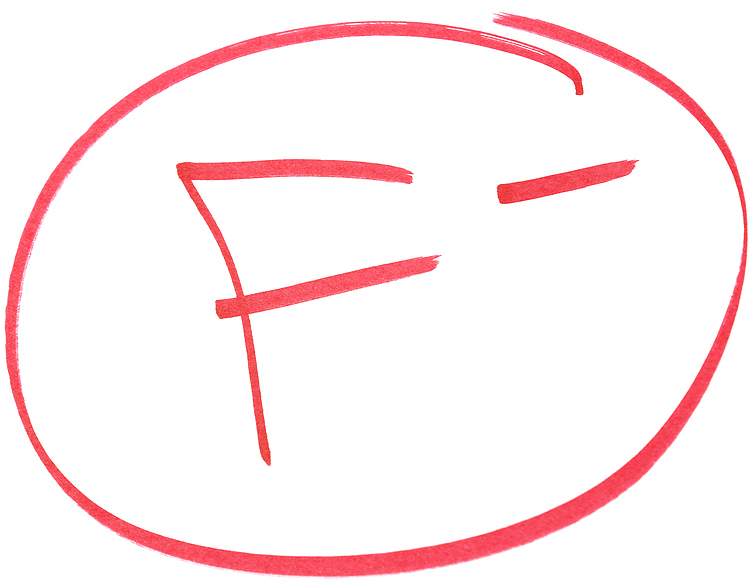
F minusLast week I pointed out that the controversy over Hillary’s secret e-mail server and the various deceits and lies she has employed to justify is invaluable, not merely as further evidence of the character of the woman Democrats seem determine to stuff down America’s throat as the next President, but also as an integrity and values test for the politicians, elected officials, pundits and journalists who choose to publicly defend her…or not.

So it has been, and continues to be. Unfortunately, Republicans and reliably conservative pundits are disqualified from the test, as they would be condemning Hillary whether there was an ethical defense of her e-mails or not. They will end up on the right side of this issue by simply following their ideological proclivities, and thus deserve no credit for being incidentally correct.

Here is what you have to remember, however: the fact the Republicans and conservatives who reached their position on this issue without giving it any thought detest and distrust Hillary Clinton and are being, in some cases, unattractively gleeful about the scandal does not make Hillary’s defense any stronger. As I explained in the earlier posts, she has no legitimate defense, just spin, rationalizations and deceit. That’s why the e-mail incident challenges the non-Hillary haters to exhibit integrity.

I was tempted to exempt Democratic strategists and Clinton consultants from the test as well, since they are, in essence, paid liars. For anyone inclined to believe them, however, the fact that these people—Karen Finney, Donna Brazile, Lanny Davis, David Brock, James Carville— will go on national TV, look an interviewer and the American public in the eye and say what they know is false should prove that their level of trustworthiness is below sea level.

Carville, for example, gave a tour de force of rationalizations on ABC’s “This Week” yesterday, making the recently popular argument that the Clinton’s just can’t get away with fudges and sneaks that other politicians do, and that this is so, so unfair.  Let’s go to the Rationalizations List! This is the Golden Rationalization (“Everybody does it”) squared by the #39. The Pioneer’s Lament, or “Why should I be the first?” (That argument is disingenuous, because the Clintons are not like everyone else. They have a long, ugly record of deception and rule-breaking. At this point, they cannot credibly claim, “We just made a mistake” —# 19 and #20. There is a pattern. Once a pattern is established, you have to be especially careful not to repeat it, or there is a rebuttable presumption that you can’t help yourself. Is it unfair to an alcoholic to make a bigger deal out of him coming home drunk than when an occasional drinker does the same thing?) Continue reading

The Unethical French Animator, the Mammalian Duck, Dysfunctional Ethics Alarms

“Oggy and the Cockroaches” is a French animated comedy series produced by Xilam and Gaumont Film Company. Its future on the Nickelodeon children’s TV cartoon channel NickToons is in doubt, however, after the channel was thrust into an unwanted controversy by an unknown French cartoonist’s practical joke.

A recent episode that aired on NickToons featured a brief view of a framed wall hanging showing a cartoon female duck sporting a pair of bikini briefs, sunglasses and bouffant hair-do, and most significantly, naked torpedoesque breasts of a variety more familiar to afficionados of “Fritz the Cat” than the target audience of eight-year-olds. Naturally, the station was deluged with complaints from parents.

The NickToons  website now appears to have removed the show from both its schedule and its homepage. Good start. It should also end any relationship it may have with Xilam and Gaumont.

I know cartoonists are not known for an excess of maturity, but a network needs to be able to reside a modicum of trust in its contractors, suppliers and partners. If an animator would think it’s funny to slip a topless, sexy duck into a kid’s show, then who is to say the next “joke” won’t be a giant talking penis or Adolf Hitler having sex with a cow?

Far more disturbing than the prank itself are the rationalizations and justifications being offered for it in online comments to the story and in social media: Continue reading

Hillary’s Defense: An Ethics Mess

  • I’m going to go rely heavily on links here. I have written a lot about this story already, and there are many other issues to cover. I’ll summarize the content in the pieces linked to, but the thrust is this: Hillary’s explanation in her 20 minute press conference was deceitful, dishonest, and unbelievable. Of course it was.
  • I would declare Hillary’s e-mail fiasco an Ethics Train Wreck, and still might, except that so many are refusing to buy a ticket. Even Bill is afraid to go near the tracks.
  • There are a few who are disgracing themselves—I don’t count paid Clinton cleaners like Lanny Davis, or Media Matters—but one head-exploding performance I saw today was that of Van Jones, the former White House Czar turned CNN pundit, in a “New Day” discussion this morning paired with CNN’s resident conservative pundit—because heaven forbid we examine Clinton’s conduct based on truth, honesty, and principles rather than as political gamesmanship. The two (Ann Navarro for some reason is the only Republican CNN can usually find in the morning) were asked about the phony “Colin Powell did it!” defense dreamed up in the Clinton bunker. Navarro, like anyone else who has examined that argument, found it to be bunkum, simply because the use of e-mail, its regulation in government and what we know about e-mail security has changed so much since Powell referred to it as “new-fangled.” Here’s what Jones said, after first saying that he couldn’t argue with Navarro on her reasoning, emphasis mine:

“Again, she’s playing to the heartland. If you say, listen, I did what Colin Powell did. I’m trying to do a good job. I want convenience. You know, the average person in the heartland, if you hate the Clintons, no answer is good enough. But if you’re — if you’re an honest person, well, geez, maybe this makes sense. I actually do agree, though, that we are in a different world from the Colin Powell days. I think the Colin Powell excuse sounds really good from a press point of view. I hope she keeps saying it. But I do think that, at the end of the day, we are in a different world.”

That’s Jones; that’s the Democratic spin machine, that’s the “the ends justify the means” crowd, and that’s who the networks are asking for analysis: ‘Yes, it’s just designed to confuse the yokels, and it’s not true, but it works,and I hope she keeps saying it.’

Kaboom.

Exploding head

There goes the old skull, exploding again.

Have I ever heard such an open, shameless admission that politicians not only do deceive the public, but that these horrible people like Jones think it’s fine if they do? Fire him. Continue reading

Iran Letter Ethics Q and A: Senate Heroes, Blame, Trust And Captain Queeg

Question:  Are the seven GOP Senators who did not sign the Iran letter Ethics Heroes?

Answer: I almost designated them as such, but that would have been a mistake. There are too many non-heroic and even unethical reasons Sen. Lamar Alexander (R-Tenn.), Sen. Lisa Murkowski (R-Alaska), Sen. Dan Coats (R-Ind.) and Sen. Thad Cochran (R-Miss.), Sen. Susan Collins (R-Maine), Sen. Jeff Flake (R-Ariz.), and Sen. Bob Corker (R-Tenn.), Senate Foreign Relations Chairman might have chosen to refuse to go along with their colleagues. Based on the explanations I’ve read, that seems to be the case. Collins, for example, says that she didn’t think the letter would work. Wrong answer: the reason to reject the letter is because it’s a flat-out violation of legislative limits imposed on the Constitution. Similarly, Flake says that he didn’t think the letter was necessary, whatever that means. It is also likely that some of the seven felt they could have their cake and eat it too: they want the letter to undermine U.S. diplomacy, but don’t want to take the criticism that goes with signing it.

Question: Do I blame President Obama for the letter?

Answer: A friend who is such a knee-jerking Obama enabler and excuser that it’s a miracle he can walk posted yesterday’s  Thirteen Ethics Observations On The GOP’s Letter To Iran on his Facebook page, and one of his knee-jerking friends wrote, “Typical: blame Obama.” I did not and do not blame Obama for the fact that the Republican Senators engaged in a foolish, dangerous and bright-line violation of the separation of powers, and anyone who could read the post otherwise is so deranged by bias that their faculties are impaired…or they just aren’t very bright.

I did write, and it is true, that the President shares significant responsibility for the poisonous and dysfunctional relations with the Congress that led to this fiasco. He is at the top of the government; it’s ultimately his job to make the government and the system work. Obama and his enablers reject accountability at every turn, but the unavoidable facts are that he is in charge, he took the job voluntarily, and whatever doesn’t work, including the government itself, is on his record. He never made a good faith, sincere, dedicated effort to work with the Republicans in Congress; he never worked to develop the negotiation, compromise, horse-trading, cajoling, quid pro quo skills that successful, competent Presidents have used to deal with the same levels of political opposition that he has found impossible to cope with. He took no steps to build trust in Congress, and engaged in serial conduct that was guaranteed to destroy trust, and has.

Finally, his illegal immigration executive order (the illegal accurately modifies both “immigration” and “order”) and his unilateral alterations to his own, incompetent and sloppy, health care law showed exactly the same contempt for constitutional limits as the Senate letter.

Obama is not to blame for the letter. He is absolutely and ultimately accountable for the conditions that prompted the letter and the decision to send it.

Question: Is there an ethical justification for sending the letter? Continue reading

Hillary’s Secret E-Mails: An Invaluable Ethics Litmus Test

finney_newday

All civic minded citizens should encourage as many individuals—public, private, elected, celebrities, media figures, reporters and pundits—to discuss the issues and significance of the Clinton e-mail scandal. It is a marvelous litmus test to unerringly reveal whether the individual understands basic ethical principles like integrity, honesty, responsibility and trust, as well as his or her reliance on intellectually and ethically bankrupt rationalizations like “Everybody does it,” “It’s not the worst thing,” “Don’t sweat the small stuff,” and others, or, just as disturbing, whether the individual is willing to reject basic ethical principles in a misguided effort to defend a public figure unworthy of the sacrifice, like Hillary Clinton. Keep this public debate going. Before it has run its course, we may have outed thousands, hundreds of thousands, who we will know cannot themselves be trusted.

It takes all my will and civility reserves not to say that this is an IQ test as well. I keep reading comments on blogs and Facebook by people who really seem to be unable to fathom why it should matter when the individual who leads our official dealings with foreign governments mysteriously chooses to take dominion over all her official communications, allowing her to destroy them at will, when such conduct violates the policies and directives of the administration of which she is a member, her own department, and common sense, despite incurring security risks, despite questions over her foundation soliciting contributions from foreign governments while she was in a position to have such contributions warp national policy, when the individual involved, was well as her husband, has a history of skirting laws, obfuscation and mendacity. “This is just more manufactured Hillary-bashing!” Seriously? I know the Clintons pay people to say this, but really believing it requires total corruption or life-threatening brain lesions.

As an example of how this issue exposes a lack of honesty and integrity the way those blue light things show traces of blood on “CSI,” let’s examine the CNN transcript of yesterday’s segment on “New Day,” which featured a “point-counterpoint” style debate on the Clinton e-mails featuring former Bush press secretary Ari Fleischer and former Hillary press secretary (and current Media Matters partisan warrior) Karen Finney.

This pairing is manipulation by CNN, by the way. Nobody but hacks, liars and fools honestly defends Clinton’s conduct here, and many non-partisan commentators can articulate clearly exactly what’s wrong with it. Placing a presumed partisan like Fleischer opposite Finney cleverly and unethically suggests that this is one more political dust-up without substance, where there’s no real dispute, just a red/blue divide. That may be what CNN wishes were true, but this issue is not partisan, and shouldn’t be presented as such. The Washington Post, which has, like most of the print media, been pretty straight on this issue, played to the partisan spin by saying,

“Instead of a fresh chapter in which Clinton came into her own, her time as the country’s top diplomat now threatens to remind voters of what some people dislike about her — a tendency toward secrecy and defensiveness, along with the whiff of scandal that clouded the presidency of her husband, Bill Clinton.”

Wait, there are people who like secrecy and scandal? Are they called Democrats, perhaps? Clinton supporters? What an idiotic way to frame Hillary’s problem.

It’s not complicated: the issues involve trust and the character of a potential President.

Now here is the CNN transcript, with my comments in bold: Continue reading

Hillary Clinton and the E-mails: A Case Study In Ethics Corruption

corrupted

I’ve been meaning to write this post for a couple of days now, but haven’t had the heart. Frankly, I am really sick of having to make the same point about the Clintons over and over again—they never learn, and will never change—knowing that so many people will just immediately turn off their brains and run for the rationalizations dispensary any time dishonesty, hypocrisy, deceit or misconduct by one of them is uncovered.

This happens, you see, because the Clinton are perhaps the most prominent among a particular harmful species of individual in our culture, the ethics corrupter. Ethics corrupters are popular, powerful, successful and famous people who, because they are popular, powerful, successful and famous, many citizens conclude that they must also be good and wise, and therefor trustworthy. Since they are (many believe) good and wise, what they choose to do must also be good, and when they are accused of doing wrong, even when the evidence is unavoidable that they have done wrong, there can be only two explanations to those vulnerable to correuption. The first is that the evidence, no matter how strong, cannot be believed, and those wielding it are in fact enemies of right, good, honesty and fairness. The second is that if these good and wise people did it, then what they did cannot be wrong, or can be justified, usually by “the ends justify the means.”

Thus by gaining the trust and admiration of good people, usually through clever use of dishonesty, deception and manipulation, ethics corrupters set their admirers and supporters up to have their own values weakened or destroyed. Richard Nixon caused honest people to defend the covering up of crimes. Charlie Rangel caused people with integrity to support accepting bribes. Bill Clinton made feminists excuse exactly the kind of sexual harassment they persuaded Clinton to sign a law prohibiting, and inspired lawyers to excuse perjury because “everybody lies about sex.” Lance Armstrong made parents who once taught their children not to cheat to defend cheating, because he had a foundation with a noble cause. Brian Williams and Bill O’Reilly made TV viewers excuse lying by journalists.

Ethics corrupters make their supporters worse parents, friends, employees, employers and human beings; in turn, those corrupted supporters make society less ethical and more cynical as well. These are genuine cultural polluters; indeed, they are cultural pollution.

Hillary Clinton is an ethics corrupter, and the response to the revelations of her use of exclusively personal e-mails proves it beyond the shadow of a doubt.

There is no benign interpretation of her conduct regarding her State Department e-mails. It was not a mistake; one cannot claim that it was accidental. Since it was intentional, there must have been a purpose, and the only conceivable purposes are unethical ones. According to the 2009 National Archives and Records Administration regulations in effect when Clinton took office, “Agencies that allow employees to send and receive official electronic mail messages using a system not operated by the agency must ensure that Federal records sent or received on such systems are preserved in the appropriate agency recordkeeping system.”  With a private e-mail account and only using that for official correspondence, Clinton did not have a system that ensured such preservation. She, not the system, determined what would be preserved. Anything not preserved or left on her private account would not be subject to the Freedom of Information Act. Is there any explanation for having a private account only, an justification that is simultaneously responsible, plausible and does not suggest that Clinton wanted to control which of her communications could come before the public and the press?

No.
Continue reading

Hillary’s E-mail Ethics Breach: The Only Questions Are 1) “How Can Anyone Trust Her?” and 2) “Is there Nothing Her Supporters Won’t Excuse?”

hillary-clinton-pointing2The ethics issue here is very straightforward and uncontroversial. As the New York Times put it:

“Hillary Rodham Clinton exclusively used a personal email account to conduct government business as secretary of state, State Department officials said, and may have violated federal requirements that officials’ correspondence be retained as part of the agency’s record. Mrs. Clinton did not have a government email address during her four-year tenure at the State Department. Her aides took no actions to have her personal emails preserved on department servers at the time, as required by the Federal Records Act.”

I don’t know why the Times says “may have violated.” Her exclusive use of personal e-mail does violate the rules, and in fact the law, as the Times correctly states in the final sentence. Moreover:

1. This is a blatant example of Clinton again refusing to abide by rules and laws other officials are required to abide by. As the Washington Post notes, it was intentional: Clinton’s personal account was established on the same day that Clinton began her confirmation hearings to be Secretary of State., and the expiration on the domain is shortly after the 2016 election. Continue reading