The Strange, Strange Case Of The President’s Uncle: Why Trivial Lies Matter

Bill Clinton now seems to suggest that he was joking in the infamous interview back in 1993 when he claimed that he “didn’t inhale.” Yeah, that’s some comic delivery you had there, Bill. The moment seemed to encapsulate Clinton’s remarkably generous definition of truthfulness, and for the rest of his political career to date, it has proven to be an accurate predictor.

What has always seemed notable about Clinton is that he will lie when he doesn’t have to, about matters large and small. It is the trivial, pointless lies, in fact, that really inform us about a public figure’s truthfulness. A normally ethical individual, in a crisis and a moment of panic, might speak a falsehood, as all of us might and probably have. People with integrity, however, don’t resort to lies as a first option.

That is why yesterday’s puzzling story about President Obama’s uncle is insignificant in itself, but very significant as the nation and the public reaches a verdict–and such verdicts are almost impossible to overturn—regarding the trustworthiness of this leader and his government. The Washington Post relates: Continue reading

NOW Do You Agree That Congress Should Read Bills Before It Passes Them?

runaway-train

The Obamacare meltdown should not be cause for joy anywhere, although I can understand why the Republicans are giddy and conservative pundits are searching for ways to say “Didn’t I tell you?” in unobnoxious ways. There are no obnoxious ways. There is no worse feeling than knowing that a leader, a movement or a cause that you fervently believed in and defended against doubts and criticism was not worthy of your trust. For the politically and socially committed, comparing this experience to losing a loved one is no exaggeration. Are you in the habit of pointing at your neighbor and shouting, “Haha, your mother died! I told you she looked sick!”? Mocking and razzing the Democrats or progressives in your life is not much better.

We all, however, share responsibility for running this republic, and lessons must be learned. Back in 2010, I wrote of the process whereby the Affordable Care Act was passed…

“…Once the bills began to emerge, though, things got worse. They were far too long and convoluted to read and understand; this was incompetent and irresponsible. None of the Senators or Representatives (or the President himself) who advocated the bills in the most emphatic terms had read them, which is a breach of diligence, and many frequently made statements in public that misstated the provisions of the bill, sometimes egregiously. Not reading a technical bill on a well-understood or narrow matter and still voting for it may be common (though, I would argue, outrageous), but doing so with a massively expensive and complex bill affecting the life of every American is irresponsible and an abuse of power. This has continued. Politicians who the public should be able to trust are still making assertions of fact that are not facts they have independently confirmed, and they are insufficiently familiar with the details to either make fair arguments or inform the public.

“Since nobody could read the bill, this allowed the President and his allies to make general arguments that were often half-truths devised to mislead the public or avoid raising sensitive subjects. President made many “promises” about what would and would not be in the bill, knowing that they were promises he might well not be able or willing to keep. Indeed, the bill now being voted on fails to fulfill many of those pledges.  Important policy trade-offs that might erode support were not discussed, or misrepresented.”

This isn’t a partisan point, you know. I am sure that Republicans don’t read bills before voting for them either, but the practice is unconscionable, professional negligence and reckless, and if nothing else good comes out of this miserable blot on democracy, if the public finally demand that its law-makers read, understand and be candid about the laws they make, then something of value may lie beneath the rubble. Continue reading

I Regret Being Obligated To Say It, But I Told You So…

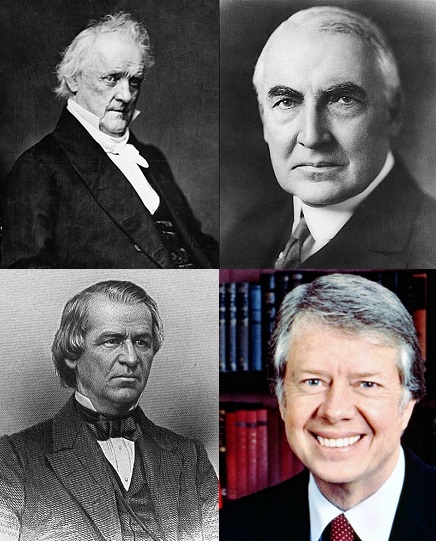
You might want to get to know these guys, Mr. President: you are probably going to spend a lot of time with them in the history books.

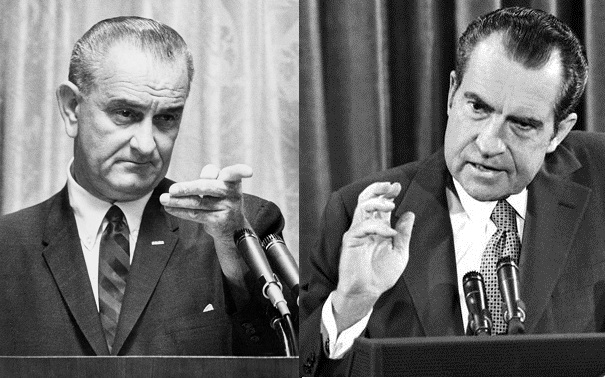
You might want to get to know these guys, Mr. President: you are probably going to spend a lot of time with them in the history books.

(I have wrestled to the floor past urges to write a post like this, but this time, I think I have to.)

In May, I concluded a post about the “scandal trifecta” with this:

“Four years of hyperpartisan, arrogant, irresponsible, rudder-less and badly managed government have had the predictable result, and I will be stunned if we have yet seen the worst of it.”

I was not stunned, unfortunately. And we may see worse yet. We probably will.

May 2013 was far from the first time I noted the apparent vacuum of leadership in the Oval Office. Two years earlier, when the Administration was breaching security to take credit for Bin Laden’s death, I wrote, “To hell with “Hope and Change”…I’ll settle for responsibility and competence.” Of course, we have gotten neither, nor did I expect a different result even then. I didn’t expect a different result in January of 2009, to be frank. Oh, I hoped, as I think almost everyone but Rush Limbaugh and Mitch McConnell did, that Obama would prove adept at the job he had the audacity to seek.  Some Presidents with leadership credentials almost as thin as Obama’s have turned themselves into competent executives, though I suspect that those successes had the self-awareness and humility to know that they had some learning to do, as Obama does not. They also did not have a chorus of sycophants in the media and the public telling them how magical they were. It was quickly obvious, however, that President Obama’s concept of leadership was (and is) to give speeches, raise campaign funds, appoint loyalists, and sit back while they do the best job they can until they royally screw up, then express surprise and disappointment and let the same people have another crack at it.

And lie, of course. Can’t forget that. Continue reading

Unethical Quote Of The Week: Josh Barro

“‘If you like your health plan, you can keep it’ was never a reasonable promise; health reform that addressed America’s combination of high cost, middling outcomes and spotty coverage was necessarily going to have to change a lot of people’s health plans. So yes, that statement is proving false — and it’s a good thing.”

—–Josh Barro in Business Insider, joining the ranks of the untrustworthy while discussing the unfolding realities of the Affordable Care Act.
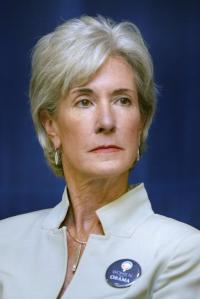
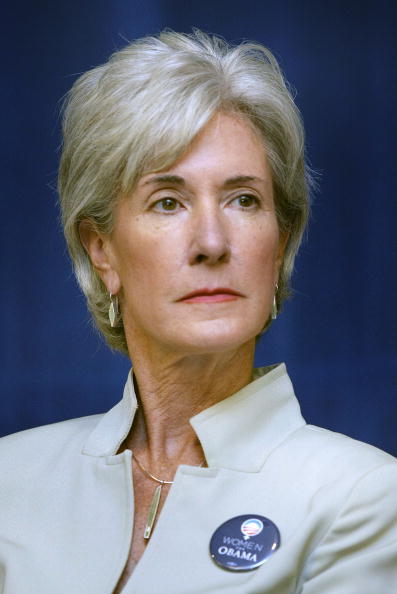
Or as HHS Secretary Kathleen Sibelius would say: "Whatever."

Or as HHS Secretary Kathleen Sebelius would say: “Whatever.”

James Taranto has catalogued several more disgraceful efforts to deny the undeniable—that President Obama’s assertion that nothing in the Affordable Care Act would cause any American to lose a plan that he liked was a calculated and intentional lie—thus adding those individuals to the growing list of people Americans should never pay heed to again on any topic, because they have proven themselves to lack integrity and are thus untrustworthy.

Among them: New York Times pundit David Firestone, James Carville (I’m shocked!), Time’s Kate Pickert, and my friend Jason Linkins over at the Huffington Post, a funny, smart man who ought to be ashamed of himself.  The comments that most alarmed me, however, were those of another addition to the list, commentator Josh Barro. “The statement is proving false” is a particularly loathsome version of “mistakes were made,” which attempts to remove the human being responsible from identification and accountability. Obama’s statement isn’t changing or doing anything. Barro’s dishonest phrasing denies the fact of human agency. Obama made a promise regarding matters that he had complete control over in every way, and that promise was false when it was made. By him. The President could have guaranteed that his promise would be kept by refusing to sign a bill that didn’t make certain, through its provisions, that it would be kept. In fact, he has known all along (or has no excuse for not knowing)that millions of Americans wouldn’t be able to keep the plans they wanted to. The promise isn’t “proving false;” it was always false.

As for Barro’s airy declaration that the fact that it is “proving false” is a good thing, this is essentially an endorsement of lying as tool of public manipulation. Lying to the public is never a good thing, and a President lying to the public is a terrible thing. That so many of President Obama’s allies and supporters, like Barro, endorse lying and shamelessly so if it achieves ends that they happen to believe are beneficial should set off not merely ethics alarms, but democracy and republic alarms. Self-government cannot flourish or even survive when this kind of conduct by elected leaders becomes commonplace and accepted.

Although I have seen scant evidence of it so far, I hope that the progressives, Democrats, journalists and others who are now discarding all semblance of honesty and objective reasoning to rationalize away the President’s words in this episode recognize that their obligations to their illusions and ideologies must be secondary to their duties to the culture, fellow citizens, American values and the nation. Many of these desperate deniers are my friends, some are my family. I call on them to stop amplifying a lie and excusing betrayal. You’re disillusioned—I accept that. I’ve been in your position. It is devastating when those you have admired, believed, and tied your own credibility to show themselves to be unworthy of that trust, and abuse it. But denial makes the consequences of that conduct worse, and indeed ratifies it and guarantees that it will continue. This is cowardly and irresponsible. You are better than that; the country is better than that. This is not a culture that has embraced the concept of “the King can do no wrong,” indeed, the Constitution and the Declaration are predicated on the truth than leaders are fallible.

The President lied to everyone, and that is not “a good thing.” It is something that should never be trivialized nor allowed to pass without serious, meaningful consequences, and there can be no consequences when good and intelligent people abdicate their duty of self-government, which includes the duty of oversight, to protect the wrongdoers. All the polls say that we want our government to be trustworthy. Well, it can’t be trustworthy if we excuse its lies. For the government to be trustworthy, we have to be trustworthy too. We have to be able to trust each other not to aid the lies we are told, and to confront the liars.

It’s not too late.

______________

Pointer and Source:Forbes, Business InsiderWall Street Journal

The Unprofessional Cause Of Unprofessional Lawyer Brian Zulberti

Brian ZYoung Brian Zulberti may be nice guy. He may even be a competent lawyer, though the chances of his being able to demonstrate that are diminishing daily. Nevertheless, his quixotic and misguided, and dare I say it, really stupid, quest to show that professionalism, judgment and character are not properly relevant to the practice of law is an exercise in hubris that must fail, deserves to fail, and of course, will fail, leaving him to pick up the pieces of fifteen minutes of media fame purchased at the price of a reputation. It looks like he’s having fun, and that’s something, I guess. Ten years from now, I doubt that he’ll think it was worth it.

Shortly after passing the Delaware Bar, Zulberti, a 2009 law school grad,  emailed the entire Bar membership asking for a job. In lieu of his résumé;  he attached a photo of himself in a Villanova Law muscle shirt that would be more at home on a dating site for the shallow. The web also contained his half-naked selfies, and various websites with varying motives picked up the story. Interviewed on YouTube, Zulberti proclaimed that being true to himself was more important to him than getting hired, and that he wasn’t about to change his Facebook privacy settings to portray himself as a traditional, dignified, applicant for legal work.

Let me pause here to say that in many ways I sympathize with Zulberti. Continue reading

How Partisanship Makes Pundits Untrustworthy

Healthcare down

Ezra Klein is a relentlessly progressive Washington Post reporter. He’s obviously also a smart guy, and it is a shame that he has allowed his total immersion into pro-Democratic politics render him incapable of seeing current events in  anything but political combat terms. But that is what he has become, and as a result, his analysis of any issue must be considered pre-poisoned by the lack of any objectivity, and a rooting interest in “his side.”

Here is an instructive paragraph from his Post blog, in a post that was also re-written slightly as a column this weekend. He was nominally criticizing the Obama Administration’s Affordable Care Act website:

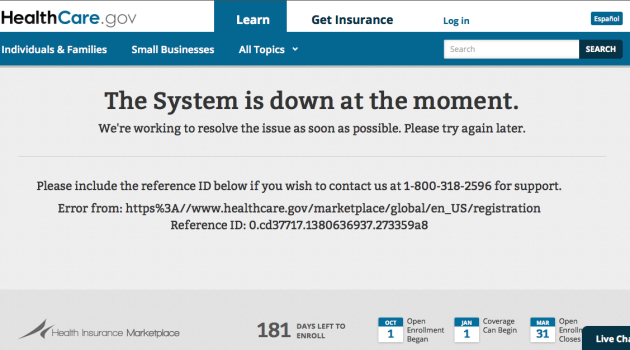
But the Obama administration did itself — and the millions of people who wanted to explore signing up — a terrible disservice by building a Web site that, four days into launch, is still unusable for most Americans. They knew that the only way to quiet the law’s critics was to implement it effectively. And building a working e-commerce Web site is not an impossible task, even with the added challenges of getting various government data services to talk to each other. Instead, the Obama administration gave critics arguing that the law isn’t ready for primetime more ammunition for their case.

Amazing, isn’t it? Continue reading

And The Lies Just Keep On Coming

"Yes, children, there really was a time, long ago, when the American people got angry when their leaders lied to them...."

“Yes, children, there really was a time, long ago, when the American people got angry when their leaders lied to them….”

I wonder at what point President Obama decided that he could just lie with impunity, and that most Americans wouldn’t care. We should care, you know. There is no reason that I can see why anyone here or abroad should trust the President or believe him or anything he says.

I take no satisfaction or joy in writing this.  It is a terrible development for everyone, and I wish it were not true, just as many of the President’s supporters will deny that it’s true. It is true nonetheless. Continue reading

The Authority Trap: Elizabeth O’Bagey’s Three Ethics Strikes

Woman-pulling-off-a-mask

It is not, you see, enough to have a good idea, an original argument, or a brilliant solution.There must be reason for important people, people who make decisions that affect lives, to pay any more attention to you than they do anyone else who claims to have such things, because its is often difficult for even intelligent and experienced individuals to distinguish genius from well-expressed garbage. There must be something that elevates that unique and valuable perspective you bring to a problem above the swirling mess and noise generated by the blabbering and shouting competition, and the thing is, if you really have a valuable perspective to contribute, you owe it to not just yourself, but to your country, even humanity.

There is one asset, if you are otherwise unknown, that will provide that elevation besides the inherent virtues of your brilliant idea, and that is authority...a book, a connection everybody knows and respects, or, perhaps most of all, academic credentials. And there are two things that will make it impossible to raise your special contribution above the throng, and they are a conflict of interest, and a reputation for hiding the truth. These are the murderers of trust.

This brings us to the strange case of Elizabeth O’Bagy, a senior analyst at the Institute for the Study of War, who managed to get the Wall Street Journal to publish her analysis of the civil war in Syria, and her conclusions, based, we were to assume, on her study, analysis and time in the country, regarding the benefits of U.S. employment of military force in the region. Continue reading

Leadership Trust: Is This Finally The Public’s Tipping Point On President Obama?

giant-jengaTipping points are events that establish major shifts in public attitudes and the culture, and what determines a tipping point varies from circumstance to circumstance. When the switch is flipped on public trust, a leader is done for, at least in a democracy. This is why, in a parliamentary system,  prime ministers call for elections at such times, or even resign. It’s a tradition the U.S. might do well to consider.

The tipping point on the George W. Bush presidency was glaringly obvious: it was the botched handling of Hurricane Katrina, even though that particular fiasco was mostly an example of effective  blame-shifting by New Orleans mayor Ray Nagin. Bush had already accumulated many legitimate reasons to doubt him, but the traditional American eagerness to like and trust whoever holds the same job as Washington, Lincoln and FDR had kept his presidency afloat…until it drowned in Katrina. All was downhill from there.

Interestingly, nobody at the time argued that Americans should support the lousy response to Katrina because not doing so would cripple the Bush presidency going forward. But I digress..

Now it appears that the Obama proposal/decision/ argument—who knows what it really is?—to engage in a limited missile attack on Syria may be the public tipping point on Obama’s leadership, the moment when the veils fall and the nation reluctantly but decisively admits that the man it elected—twice—as its leader cannot be trusted. If so, it is remarkable this took so long, testimony to how much we all wanted our first African-American President to succeed. The tipping point for me was years ago. Following the Bush experience, I thought that the bungled government handling of the Gulf oil spill would clinch it, but no. Then came the Benghazi mess, with an ambassador and other Americans murdered without any decisive response other than deceptive spin and obfuscation to avoid electoral consequences—the I.R.S. tea party harassment (still being investigated, and looking worse all the time)—the NSA revelations, and the growing evidence that while the Affordable Care Act may not be the cataclysmic socialist disaster conservatives claim it is, it is also far from what the President promised. No tipping point though, until Syria, and the consequences flowing directly from the President’s undisciplined off-the-cuff rhetoric—a constantly repeated flaw in his leadership style.

Now, as tipping points do, this current controversy is resuscitating all of the past incidents, and serving as the catalyst for a reappraisal of Obama’s leadership. The looming conclusion is that he cannot be trusted.

Occasionally am beaten to the punch by a pundit or blogger who delivers an essay that says exactly what I was preparing to write, even as I was almost finished writing it. Such a pundit is Forbes contributor Merrill Mathews, who delivered an article on that publication’s website over the weekend, titled “What Happens When You Can’t Believe A Thing The President Says?” (My title was going to be “When Trust Is Gone”).

Some key quotes from the article: Continue reading

The Curse of Michael Steele Lives On

Past-DueDuring the deplorable reign of Michael Steele as chair of the Republican National Committee, the RNC set new lows for deceptive fundraising practices, bordering on mail fraud. Replacing Steele with the superficially less ridiculous Reince Priebus has failed to dispel Steele’s lingering curse, and here is the latest example.

Yesterday, a brown envelope arrived at Chez Marshall with a block red message “Past Due” on it. We get a number of such envelopes—fewer now than a while back—but they are always a cause for alarm. This one, however, was a fake. Back in 2012 when, if you remember, there was a campaign going on, my wife, for the first time in her life, sent a small contribution to the Romney camp. As a result of that wasted gesture, we have received an average of ten phone calls a week from the RNC seeking funds, prompting my wife to tell every caller, futilely, of course, that any party that could not defeat Barack Obama wasn’t worthy for her money or anyone else’s, and to stop with the calls already. Naturally, this has had no effect, leading me to remind her, as when she imprudently ordered some kind of miracle anti-aging cream from Madagascar over the internet, “I warned you!”

It turned out that this urgent letter was also from the RNC, using the “Past Due” stamp to fool us into opening it rather than sending it directly into the trash. Nothing was past due, of course, though the enclosed donor card was falsely labelled a “statement,” and we were asked to “renew” a “membership” we never agreed to, and had no benefits, other than the pleasure of being harassed for money. Continue reading