On The Disapproval Of President Trump

Talk about cognitive dissonance…

The recent barrage of  anti-Trump stories, self-inflicted Presidential wounds and media smears has the President’s approval ratings down again, back to his unshakable 37% or so core, presumable the American who, as he so memorably joked, would support him if he shot someone in Times Square. It has also been as high in some polls as 50% in the not so distant past, and substantively, not much has changed, except that the economic news keeps getting better. “There’s Never Been a President This Unpopular With an Economy This Good,”writes Bloomberg, and I’m sure that’s true. There was also never an individual as unpopular as Donald Trump elected President of the United States before he was.

The “disapproval rating” of his performance is incoherent, of course, because it is an undecipherable mess of apples, oranges, and wooden shoes.  Some disapprove of Trump because of his almost completely revolting character. Some disapprove of him because they disagree with his policies, since they are socialist, statist  One Worlders who believe, against all evidence, that Barack Obama was a great leader. Some are Republicans who are embarrassed to have such a man representing their party, no matter what policies he pursues. Some are conservatives who regard Trump as not sufficiently conservative, for indeed he’s not a conservative at all. Some are classist snobs. Some are morons who just believe what social media and the mainstream media tells them to believe. I’d love to know how this group breaks down, but we’ll never have that information.

Still, I find it encouraging that Trump remains unpopular despite his many positive achievements, some arguable, some not. It is good that the idea that there is more to being a respectable and admirable President than presiding over positive economic times, strong foreign policy, and military success. It is especially encouraging to see Democrats and progressives being driven to that position after stubbornly refusing to acknowledge that the character of a national leader is important during the Bill Clinton years, and after nominating Hillary. The President of the United States is not a CEO, and not a mere policy wonk (Yes, I recognize the absurdity of calling someone like Donald Trump a “wonk” of any kind). Leadership is as much a symbolic role as a pragmatic one. Leaders shift cultural values and norms; they define, or should, what a nation and its public regard as good, bad, right, wrong, admirable, and unacceptable. This was the basis of my initial, long-held, endlessly expressed, and unyielding opposition to his leadership style and personal demeanor, perhaps most forcefully explained here.

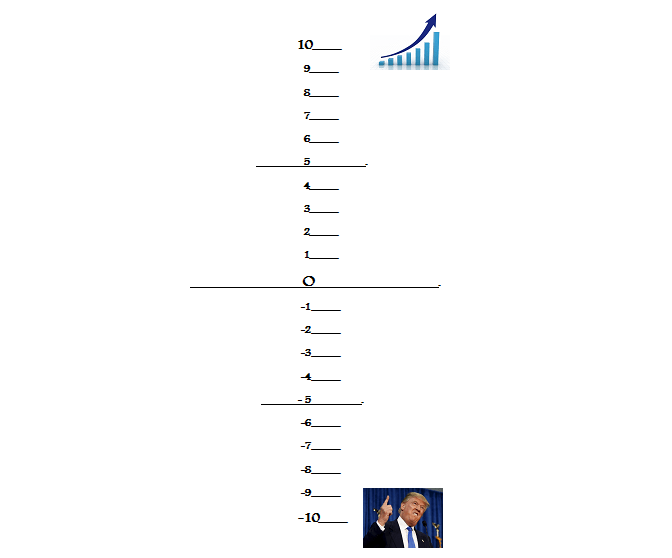
The importance of a President’s character goes far beyond being an automatic role model, however. A President, while he is in office, defines the Presidency itself. If he defines it in negative terms and values, everything connected to the Presidency suffers as well (See: the Cognitive Dissonance Scale): our system, democracy, the separation of powers, constitutional government and its institutions. A President has a duty to strengthen his office for future occupants, and to uphold the highest standards that his predecessors set. Donald Trump does not understand this aspect of his job, and never has. The reasons for this can be debated; he is obviously not a student of history, and as someone who has succeeded by breaking rules and defying conventional wisdom, he would be unlikely to understand why this role should be regarded as different from any other executive post. Continue reading

Morning Ethics Round-Up, 8/16/18: Those Wacky Conways, And The Anti-Trump News Media Goes To The Dogs

Good morning.

1. A conspiracy theory about a conspiracy theory about conspiracy theorists...Last night, a CBS procedural that I am finally sick of, “Criminal Minds,” appeared to be taking sides in the Trump vs. the FBI wars, with a side-swipe at Alex Jones, not that there’s anything wrong with that. The episode set up a conflict between the Good FBI agents who are the stars of the show, and the crazy, paranoid, anti-government  “Truthers” who see government law enforcement as sinister and manipulative. (There was special focus on the ridiculous Sandy Hook conspiracy theory, with one of the tough serial killer hunter breaking down in tears remembering the massacre.) The most vocal anti-FBI character in the episode, who sneered out her every line about the series heroes (bad direction, in my view), was revealed at the end as the “unsub,” the psychopathic killer.

For some reason this was the first time it occurred to me how much prime  time network TV serves as a PR service for the FBI, with the virtue, bravery and unquestioned rectitude of the agency and its employees being central to multiple dramas. The propaganda is escalating too: Dick Wolf of “Law and Order” fame is launching a new CBS series called, creatively, “FBI.” You would think, would you not, that this would be an odd time to produce such a series, with the reputation and credibility of J.Edgar’s baby at an all-time, and most deserved, low. However, Hollywood and the entertainment industry now sees its role differently than seeking mere ratings.

There is nothing wrong with TV writers and producers bring their political agendas into our living rooms, and there’s not a thing we can do about it anyway, other than change channels. Rod Serling used to get awfully preachy sometimes on “The Twilight Zone.” This was mighty ham-handed pro-Peter Strzok advocacy, though by CBS, or at least it seemed that way to me.

2. Marital Ethics. This is weird. Ethics Alarms has discussed the unethical conduct of Kellyanne Conway’s husband George, who has become a popular “resistance” and #NeverTrump figure by tweeting virulent criticism of the President, who employs his wife. Now Kellyanne has escalated the problem with an interview criticizing her husband, telling a reporter that his sniping ” is disrespectful, it’s a violation of basic decency, certainly, if not marital vows.”  Then, according to an AOL report, she asked that her comments be attributed to “a person familiar with their relationship.” The reporter, correctly, refused.

It is a breach of loyalty and respect for one spouse to criticize the other in the news media. It is cowardly and a breach of honesty to criticize one’s spouse and to try to remain unaccountable for it by pretending the critique came from someone else.

What a fun couple! What a strange couple. What an unethical couple… Continue reading

Morning Ethics Round-Up, 8/15/2018: Rationalizations, Corruption And Mass Impeachment [UPDATED]

Mornin’, all!

1. “That Dog” Ethics. I can think of more accurate and meaner names for Omarosa than “that dog,” but then my vocabulary is larger and more versatile than the President’s…but then, whose isn’t?  I have never heard of “dog” being identified as a racist term—because it isn’t one—though it is a sexist term, often used to denote an unattractive female. Nonetheless, this is presidential language, indeed gutter, low-life language that demeans a President, his office, and the nation he leads when it issues from the White House.

Among the rationalizations that suggest themselves are 1A.  “We can’t stop it” (apparently not, and neither can John Kelly), 2. A. “She had it coming” (nobody short of a traitor or a criminal deserves to be attacked by the President of the United States using such language), 7. “She started it” (which is excusable if you are in kindergarten), 8A. “This can’t make things any worse” (oh, sure it can), 22. “He’s said worse” (true) and many others: I don’t have the energy to go through the whole list.

Of all the dumb, incompetent, self-inflicted impediments to doing the job he was elected to do, the Omarosa fiasco might be the worst and most unforgivable. I’m not sure: I’d have to go through that list, and not only do I not have the energy, I think I’d rather rip my eyelids off.

2. I’m sure glad the new Pope fixed all of this. This story would normally fall into the category of being so obviously unethical that it isn’t worth writing about. Moreover, Ethics Alarms had referenced the Catholic sexual predator scandals in many ways, on many occasions. What distinguishes the latest chapter in this ongoing horror is that the latest revelations are coming after all of the lawsuits, damages, mea culpas and promises of reform, and they did not come from the Church. This means that the cover-up was and is ongoing. It means that even with the thousands of children who were raped and abused that we know about, there were many more. It also means, in all likelihood, that the abuse is continuing. Continue reading

The Ethics Conundrum Of The Undisciplined Mind: What Does The President Mean When He Says He Mispoke?

Today President Trump said he had “realized that there is a need for some clarification” regarding his remarks yesterday.

“In a key sentence in my remarks I said the word ‘would’ instead of ‘wouldn’t” The sentence should have been, ‘I don’t see any reason why it wouldn’t be Russia.’ Sort of a double negative.”

Contradicting what most critics took to be his message yesterday,  the President proclaimed his “full faith and support for America’s great intelligence agencies,” adding,

“I have felt very strongly that while Russia’s actions had no impact at all on the outcome of the election, let me be totally clear in saying that — and I’ve said this many times — I accept our intelligence community’s conclusion that Russia’s meddling in the 2016 election took place.”

Knowing what we know about Donald Trump—I’m not speaking here to the anti-Trump unhinged, who “know” that he is a fascist, colluding, cheating autocratic moron menace who stole the election and who is only President to con the nation and raid its coffers—what does all that mean? What does it mean when someone who thinks and speaks—and acts— like Trump does says, ‘I didn’t mean what I said’?

Not only don’t I have any idea, I don’t think it is possible to know. I see the following possibilities: Continue reading

Ethics Analysis: My CVS Confrontation

As with many ethics problems, the most important question to answer  is “What’s going on here?”

This is what happened.

I take quite a few drugs, some of which keep me breathing. My doctor now e-mails the full slate, usually a three-month supply, but with automatic refills, after every check-up. This time, I actually witnessed the prescriptions being sent. From the start, however, there was a screw up. The first three drugs I tried to get refills for turned up expired: there was no record of the directive from my doctor. Each time, the same thing happened: the CVS pharmacy automated line said the order “was being filled;” when I arrived to get it, I was told that the prescription had expired; I explained that they had a glitch in their system; one of the staff agreed (“Ugh! This ticks me off! Someone is automatically cancelling these orders!”); and I eventually got my drug, sometimes after giving me a partial refill and my having the doctor call CVS to confirm. The last time, however, the prescription I sought was ready. (They all had been e-mailed at the same time.) They also offered me another drug, and extremely expensive one, that I didn’t need immediately. I said I didn’t care to spend the money just then, and they told me they would hold it.

Yesterday I needed that drug, the previous supply having run out the day before. I had no opportunity to go to the pharmacy until nearly 9 PM, but it shouldn’t have mattered: the pharmacy during the week is open until the CVS closes at 10 pm, and I knew the prescription was ready, because of my previous visit.

But it wasn’t. The pharmacist, a young woman, told me that I had no valid prescription. “Nope,” I said. “Wrong.” And I explained what had been happening with my drugs, how I was told that the system glitch had been fixed, and also that I actually saw the filled prescription I now needed when I picked up my last prescription. AND, I said, firmly, skipping a day was not an option. This drug was one of the ones I could not skip.

Then the excuses started. Continue reading

Morning Ethics Warm-Up, 7/13/2018: Trump And Strzok

Good Morning, London!

1. Trump Trump Trump. You know, I was on a political Facebook page in 2016 where an idiot kept posting “Trump Trump Trump” despite everyone, including the moderator, telling him to cut it out. Eventually he was banned from the site. Unfortunately, there is no similarly simple solution to this problem when a combination of the Trump-hostile news media and the President himself forces a variety of ethics issues on me, when I would rather be musing about baseball, old sitcoms, and guys in lobster hats.

  • The pardons. President Trump  pardoned Dwight L. Hammond, now 76, and his son, Steven D. Hammond, 49, a pair of Oregon cattle ranchers who had been serving out five-year sentences for arson on federal land, which had sparked the armed occupation of a wildlife refuge in 2016. Naturally these pardons were attacked, because anything Trump does will be attacked. The resulting conflict brought widespread attention to anger over federal land management in the Western United States,and that’s a good thing. How can the federal government justify owning almost half of Western land?

As for the pardons, both men have served most of their sentences already, and not only were the sentences unusually harsh for their offenses, the cases had the whiff of political prosecutions about them. They were perfectly legitimate objects for Presidential pardons, but then so are hundreds of thousands of other cases. Presidents should issue as many pardons as possible, which means eliminating a lot of the red tape. So far, Trump has sucked the tape by cherry-picking beneficiaries in his own, eccentric, biased way, using his unique, unassailable Constitution-based power to court supporters, celebrities and particular constituencies—not that there’s anything wrong with that, as long as other deserving citizens also get pardoned, and really, all but the most unrepentant, vile and dangerous felons deserve mercy and compassion eventually. Unless the pardon power is used broadly and constantly, its blessings too often depend on who you know. In the case of the ranchers, for example, a large donor to Vice-President Pence lobbied for the pardons. Again, that doesn’t mean the pardons can’t be justified. It does mean the process is skewed by factors not related to justice or fairness.

I found this to be the most ethically intriguing paragraph in the Times story about Pence pal, tycoon Forrest Lucas, and his likely influence on the pardons:

“While other presidents have also gone ahead of Justice officials to pardon apparent allies, they have often waited until their final days in office to do so. Mr. Trump, by comparison, has issued high-profile pardons early and comparatively often — seemingly unconcerned by the appearance of leaning his ears toward those at the top.”

So is Trump being unethical in a more ethical fashion than his predecessors?

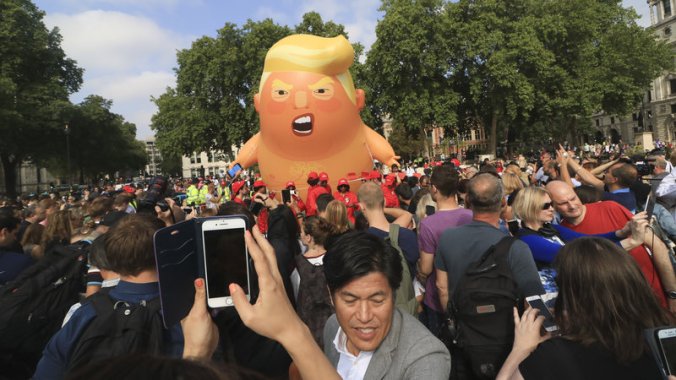
  • Bad host, worse guest. The President’s derogatory comments about the British Prime Minister were indefensible, of course. We know how he thinks: Great Britain, as he has said, with justification, has made him feel unwelcome—that insulting “Trump baby” blimp over London is a real diplomatic low—and thus, in Trump’s rudimentary ethics system, akin to that of a lizard, the proper response is tit-for-tat. None of this is unexpected, and nobody who voted for Trump can say that they didn’t give him license to behave this way by electing him.

I do wonder now why I ever thought that he would react to being elected by moderating the very conduct that, in his mind and probably in reality, got him where he is today. My role model for him was President Arthur, who was about as different in character and background from Donald Trump as a human being could be.

I’m an idiot. Continue reading

From “The Ends Justifies The Means” Files: Senator Feinstein’s Ugly Hybrid, And An Ethics Test For Democrats

The test is simple: how unethical are Democrats willing to be, and how flagrantly, as they desperately try to derail President Trump’s nomination to fill the Supreme Court vacancy, when the right to fill such a vacancy is one of the President’s unquestioned powers, as long as his choice meets basic minimum qualification standards?

Based on the recent tweets from superannuated California Senator Feinstein, fighting for her professional life and apparently pandering to the extreme Left as a result, the answer is “Very unethical, unfortunately.”  The Senator tweeted,

“Two-thirds of Americans don’t want women’s access to reproductive health care restricted. President Trump’s SCOTUS nominee could do just that by overturning Roe v. Wade and setting off at least 20 states’ “trigger laws” restricting abortions.

and…

“Overturning Roe v. Wade would take us back to the days of women being severely injured and dying because they can’t get basic medical care. We’ve come too far to go back to those days.

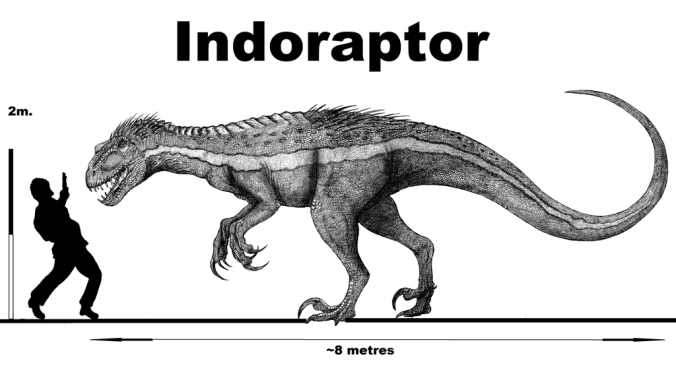
These are both ugly hybrids designed with malign intent, kind of like the Indoraptor in “Jurassic Park II,” except the components of the vile mutation in this instance aren’t a T-Rex and a Velociraptor, but misrepresentation and fear-mongering.

1. President Trump’s (at this point) un-named nominee can’t “overturn” anything; only the full court can do that. He or see could  ride in the Kentucky Derby, I suppose. Any of Obama’s appointees “could” also “overturn” Roe, if enough Justices went along with them. In a case presenting that possibility. Of which there are none currently before the Court. And which may not get before the Court.

Ethics offense: Deliberately making the public more ignorant. And fear-mongering.

2. Feinstein is falsely using “reproductive health care” as a substitute for “abortion.” They are not the same thing.  I don’t know what polling results the Senator is referring to, but if it involved “reproductive health care,” it wasn’t about abortion specifically. Pew, which is the closest thing we have to a fair and non-partisan survey organization, found only 25% of the public wants abortion to be legal in all cases, which is what no restrictions on access to abortion means, assuming Feinstein’s ” “reproductive health care” is the deceptive code it appears to be. (If she really means “reproductive health care,” she’s nuts. Who has ever stated an opposition to “women’s access to reproductive health care”?)

Ethics offense: Dishonesty. Deceit. Obfuscation. Misuse of statistics to confuse rather than clarify.

And fear-mongering.

3. The second tweet is irresponsible and flat-out false. Overturning Roe-–in that yet to be identified future case that has gone through the lower courts and poses the issue in a way that a majority of the Court deems appropriate for review, with the result accomplished by the presumed vote of the unidentified Justice who, like the rest of the yet to be assembled Court majority, will determine the case without regard for the facts or established law, stare decisus or the outcome of oral arguments—would not do anything but return the determinations of policies regarding what restrictions, if any, will be placed on abortion to the states, and to the voters in those states, with the results very much in doubt.

Ethics offense: Deliberately making the public more ignorant. Dishonesty. Deceit. Obfuscation.

And fear-mongering.

No elected official who deliberately engages in dishonest tactics like this can or should be trusted by the public with power or influence. We should all keep close watch on how much lower abortion advocates are willing to go. For the ends do not justify the means, and politicians, parties, and party leaders who signal otherwise are a menace to democracy, no matter what the issue may be.


Morning Ethics Warm-Up, 6/4/2018: 500 Days Edition

Good Morning!

1.  In one respect, it is his fault. The most infuriating defenses of the Samantha Bee cunt-fest may be the rationalizations who pronounce her blameless (and thus Turner/TBS) because President Trump made her do it. (Well, maybe the second most infuriating: CNN fake-ethics commentator Brian Stelter actually referred to the episode in a tweet as the “feckless” controversy. You see, Brian, when your field is journalism ethics, you can’t play deceit games like that, because…oh, why do I bother?). To be fair, however, while Bee and the other potty mouthed resistance members and DNC leaders should be held responsible for their own ugly conduct, electing Donald Trump did give a cultural green light to incivility and assholery.

Since nobody else gives me credit and public recognition when I’m right before most of the chattering class (Ethicists Don’t Matter), I have to do it myself. Here is what I wrote in part on September 10, 2015:

We have elected Presidents without experience, who were narcissists, sociopaths or psychopaths, who were not too bright, who were unjustifiably cocky, who spouted policy nonsense, who had only style without substance, who acted tough, who were the product of marketing rather than talent. Some of them turned out to be pretty good; some of them surprised everyone and changed their ways. None of them wrecked the nation. I am confident that even at this difficult time in our nation’s history, reeling from the serial incompetence of  the Bush and Obama administrations, the United States could survive a Trump Presidency as a nation.

We could not, however, survive it as a culture.

Placing a man with Trump’s personality and his rejection of the basic features of civilized conduct and discourse to an extent that only the obscenely rich or the resolutely misanthropic can get away with would ensure that American culture would deteriorate into a gross, rude, selfish, assault muck in which no rational human being would want to live…

Even if Trump was a policy whiz, a political magician and a foreign policy master who balanced the budget and restored American’s primacy in the world, it would not be worth what would be lost: dignity, fairness, civility, caring, respect.

Continue reading

Saturday Morning Ethics Warm-Up, 6/2/2018: Goodby, Shut Up, My Condolences, WHAT??, And Don’t Say I Didn’t Warn You!

Feelin’ groovy!

1.  The Republicans keep robocalling, and the Democrats...keep emailing. I have protested both. However, right now I am really ticked at the Democrats, whose endless lists I have dutifully asked to be deleted from, then been told that my cyber-door would not be darkened by them again, only to have Tom Perez, Nancy Pelosi and Keith Ellison, plus  show up in by in-box the next day. Do they think this direct violation of my privacy along with their own assurances doesn’t reflect on their fitness to govern? If so, they are wrong.

2. Great news! Now you can identify as British for no good reason whatsoever. I love this story: Thomas J Mace-Archer-Mills Esq. and his insight into the British monarchy a regular feature TV  during that royal wedding I missed because of a sock drawer crisis. His website lists  many media appearances, and one article described him as “the most interviewed man” on the subject of the Wonderful Nuptials.

It has now been revealed that Thomas J Mace-Archer-Mills Esq. is really  Tommy Muscatello, a 38-year-old Italian-American who grew up in upstate New York. But he says he  identifies more as  British than American, so there is that.

Now imagine how well anonymous sources are vetted by crack journalists. [Pointer: Curmy)

3. About that “fever”…An esteemed commenter here proclaimed his exit because of Ethics Alarms’ characterization of the so-called (actually “cleverly-called” is appropriate) “Spygate” scandal (here and here), saying that he would be gone until “the fever” had passed as if questioning the integrity of the Justice Department’s Trump investigation/ “resistance” assistance is obviously a partisan delusion. I almost made that post a Comment of the Day, except that I concluded that denial shouldn’t be mocked. It is, after all, the first of the seven stages of grief, and apparently one which Democrats and progressives are stuck in, while others have progressed at least as far as anger (Stage #3), culminating in episodes like a female comic calling the President’s daughter a “cunt” on television to reactions like this.

Anger, however, only makes one seem overcome with emotion. Denial makes us look blind and gullible. I do not understand the Left suddenly trusting the FBI (Hoover? Felt?) and the Justice Department as if they have always been paragons of virtue. This is pure denial, or, if you prefer, ignorance. If anything, there should be a presumption of politicization in the Justice Department, particularly the Obama version and particularly in light of the post-election conduct of its holdovers like McCabe, Comey and Yates. The FBI, meanwhile, is permanently scarred by Comey’s self-celebration tour, his book, his botching of the Clinton investigation, his dubious testimony before Congress, and his probably illegal leaks of classified information specifically to cause problems for President Trump.

A beloved relative, also in denial, actually tried to tell me last week that the astoundingly suspiciously-timed tarmac meeting between Loretta Lynch and Bill Clinton shouldn’t have raised any alarms. She’s a lawyer. She’s brilliant. She’s sincere. She’s also in denial, Stage 5. That was such a perfect example of the appearance of impropriety that a photo of it should be on Wikipedia under “appearance of impropriety.”) When the leaders of the FBI do things like that in the middle of a Presidential campaign, how can someone of good faith and full cranium argue that it’s irrational to question the act of the same people placing a mole in the Republican candidate’s campaign?   This is the pot calling the Corningware black.

Those in denial have their perceptions warped by their own fever, one that causes them to assume, absent any evidence whatsoever, that President Trump must have been working to steal the election. (They also assume he is guilty of other impeachable crimes, they just don’t know which ones.) Hillary lost, you see, and the polls said it was impossible, so he must have cheated. It can’t be that Trump won because he was running against an epically terrible candidate smugly presenting herself as the “third term” of a spectacularly inept and divisive President. It just can’t. Continue reading

Another White House Closed-Door “Gotcha,” Another Chunk Gouged Out Of Our Liberties

The icky ethics category of private or limited audience statements that get unethically publicized by malign third-parties to embarrass and harm the speaker has been explored here many times, notably in the case of Donald Sterling, the NBA owner and billionaire who lost his franchise, millions of dollars and his reputation over a remark he made in his own bedroom that was surreptitiously recorded and released by a treacherous girlfriend.. The position of Ethics Alarms on these incidents, which also includes spurned lovers sharing private emails to the world in order to humiliate a correspondent, the Democratic Senators who leaked the President’s course rhetoric about “shithole” countries that took place during a meeting that was supposed to be private and confidential, and Donald Trump’s infamous “pussy-grabbing” statements, is simple. Once the embarrassing words have unethically made public, they can’t be ignored. Neither should the circumstances of their making, or the unethical nature of their subsequent use was weapons of personal destruction.


There is not a human being alive who has not made statements in private meetings or conversations, whether  those statements be jokes, insults, rueful observations or deliberate hyperbole, that would be horribly inappropriate as public utterances. Thus the feigned horror at such statements by others is the rankest kind of Golden Rule hypocrisy. In addition, the opprobrium and public disgrace brought down on the heads of those whose mean/ugly/politically incorrect/vulgar/ nasty/insulting words are made public by a treacherous friend, associate or colleague erodes every American’s freedom of thought, association and expression, as well as their privacy.

The most recent example of this unethical sequence occurred after Kelly Sadler, a White House special assistant, stated in a closed-door policy meeting that Senator John McCain’s opposition to Trump’s nominee for CIA director “doesn’t matter” because “he’s dying anyway.” Some saboteur in the meeting, determined to harm both Sadler and her boss, leaked this small moment in a private meeting, in which participants reasonably assumed they did not have to be politically correct, nice, kind, civil or careful because everyone in the meeting had tacitly agreed that the meeting was confidential. That, and only that, is the ethical breach here. (Nah, there’s no “deep state”…there are just nefarious moles in the White House who coordinate with the news media to undermine the President. That’s all!). Continue reading