Ethics Warm-Up, 10/24/2018: Catchers, Judges, Photographers, And Journalists Behaving Badly. Then There Are The Bombers….

Good afternoon!

You might as well know: I’ve been what they euphemistically  call “under the weather” recently. Ethics is getting in the way of my naps…

1. About those bombs…Not much that needs to be said about the explosive devices sent to Soros, the Clintons, Obama and—it fits–CNN, except this: it was inevitable. With conservatives being harassed and attacked in public places, Fox News offices and Republican offices being vandalized, and Democratic leadership and the media openly feeding the hate while rationalizing extreme incivility ( Philippe Reines, former adviser to Hillary Clinton, on MSNBC regarding mobs harassing Mitch McConnell and others: “People are doing these things because it’s all that’s left.” Gee, I guess there were some other tactics left after all, eh, Phil?), that some unstable wacko would decide to bring a gun to knife fight was a near certainty. Naturally, the news media and Democrats want to blame Republicans for the crimes. That’s not going to defuse the situation, and it’s also wrong.  The blame falls on all of those who have encouraged the rhetoric of hate and uncivil conduct rather than conducting political debate in a manner that doesn’t shame democracy.

You can make that list as easily as I can. When the Oklahoma City bombing occurred, the extreme anti-government rhetoric—by the standards of those times, at least–of the Right was fairly accorded the bulk of the blame for raising anger to a dangerous level. This time, the hate machine is being operated around the clock by the Left, and for two years without a break or a significant easing on the accelerator—indeed, it is pretty much the Democratic theme of the 2018 elections.

2. It’s a huge bat! It’s a black-robed blur! It’ SUPER JUDGE! In Chehalis, Washington, Judge R.W. Buzzard left the bench and chased  after two handcuffed inmates when they made a run for it from his Washington state courtroom. 22-year-old Tanner Jacobson and 28-year-old Kodey Howard bolted for the door and down  four flights of stairs, but the judge grabbed Howard just as he was about to exit the courthouse, and Jacobson was caught by police apprehended Jacobson a few blocks away.

As with the cases of bank tellers and grocery clerks who spontaneously play vigilante, the judge was exceeding his authority and interfering with law enforcement. This wasn’t his job, and is not the kind of image the judiciary wants to project. He should be disciplined, but probably won’t be.

Sheriff Rob Snaza said of the incident, “These things don’t happen very often.” No kidding. And they shouldn’t happen at all.
Continue reading

Morning Ethics Warm-Up, 10/15/18: Overthrowing The Government, Replacing Umpires, and Fooling Some Of The People Who Never Did Their Science And Math Assignments [UPDATED!]

Good morning…

1. Baseball Ethics: Again, Robocalls, please! Last night, Game #2 of the American League Championship Series between the 2017 World Champion Houston Astros and some team from Boston again showed why Major League Baseball must install automated ball and strike calls and automatic video review if the game is going to have any integrity at all. Regarding the latter, there was a play in which a Houston batter’s swing and miss for strike three was erroneously called a foul ball by the home plate umpire, and the replay claerly showed that the bat had missed any contact by inches. Nonetheless, the batter got another chance. He struck out (“no harm, no foul” literally) a second time, but that was just moral luck. If he had hit a home run, altering the game’s outcome, the system would have been changed with lightning speed: Ye Olde Barn Door Fallacy.

Regarding the constant missed call and strike calls that risk changing the outcome in every game, the previous game in the serious contained a classic example. In a close contest with the two runners on base and a 3-2 count, Red Sox batter Andrew Benintendi was called out on a pitch about six inches outside the strike zone. Instead of the inning continuing with the bases loaded and the AL season RBI leader, J.D. Martinez, coming to the plate, the inning was over. Listening to the ex-players like TBS color man Ron Darling babble excuses and rationalizations is almost as infuriating as the obviously wrong calls. “Well, the ball wasn’t too far off the plate” and “That pitch has been called a strike earlier tonight” and “The umpires have a difficult job”: Shut up, Ron. The strike zone is set by the rules; a ball is either a strike or it isn’t, so a call is either correct or it’s botched. Blatantly missed calls were “part of the game” in an earlier era when nothing could be done about them, but that’s not true now. Baseball is supposed to be determined by the skill and performance of the players, not by random, unpredictable mistakes by the bystanding officials. Can you imagine a criminal defendant sent to prison in a trial where the judge repeatedly allowed inadmissible evidence against him because he misinterpreted the law, and the appeals court shrugging and rejecting an appeal with a unanimous opinion that said, “Hey, mistakes happen! It’s part of the system’s tradition and charm!”

2. Run, Fauxahontas, Run!  Fake Native American Senator Elizabeth Warren (D-Mass) announced that she finally did have her DNA tested. No cheapie home test for this aspiring Cherokee: she had the DNA test performed  by Carlos D. Bustamante, a Stanford University professor (and Democrat) and expert in the field who won a 2010 MacArthur fellowship for his work on tracking population migration via DNA analysis.  He concluded that “the vast majority” of Warren’s ancestry is European, but he added that “the results strongly support the existence of an “unadmixed Native American ancestor,” and calculated that Warren’s pure Native American ancestor appears in her family tree “in the range of 6-10 generations ago.” That’s a big range: six generations would make her 1/32nd American Indian, but ten generations would make her 1/1024th Native American. Nothing in the test proves she has the Cherokee ancestry she claims.

UPDATE: Apparently the Globe reporters and editors are among the math-challenged. Mid-day, it issued a second correction:

“Due to a math error, a story about Elizabeth Warren misstated the ancestry percentage of a potential 6th to 10th generation relative. The generational range based on the ancestor that the report identified suggests she’s between 1/64th and 1/1,024th Native American,” the Globe explained.

This means Warren is somewhere between 0.09 and 1.5 percent Native American, not between .19 and 3.1 percent as originally claimed.

Continue reading

Todd Frazier’s Cheat And The Umpire’s Revenge

Why is the umpire standing on home plate?

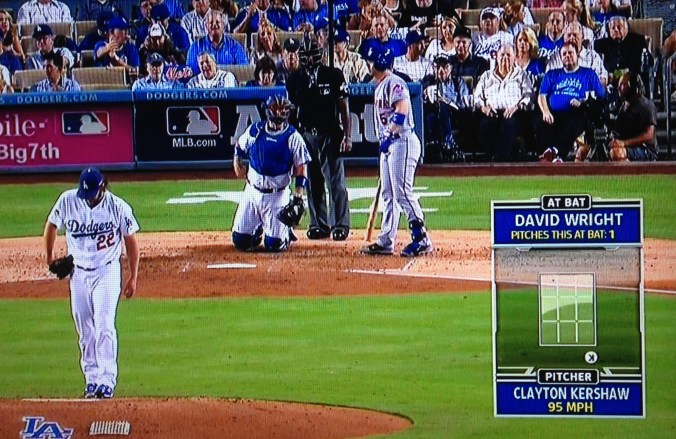
In a Mets-Dodgers game a week ago in Los Angeles,  Mets third baseman Todd Frazier leaped into the stands to catch a foul ball. Climbing out, he quickly showed the umpire his glove with the ball in, the umpire signalled an out, and then Frazier tossed the ball to a fan. Did I say the ball? I should have said a ball. The ball Frazier showed the umpire wasn’t the ball hit by the Dodgers’ Alex Verdugo, but a white rubber ball, presumably belonging to a spectator,  that he grabbed after the real one rolled out of his glove during his fall. Frazier claimed that first he thought it was the real ball,  but when he realized it wasn’t, tried to sell the non-catch anyway. And it worked!

“It is Hollywood,” Frazier said later in the week. “Sometimes you’ve got to act out a little bit….I was trying to get out of there as quick as possible. I saw someone pointing at the right ball and I was like, ‘All right, I’m just going to have to play this off.’ I got in the dugout and was telling people I was flabbergasted that I even got away with it.”

There are gray areas is baseball gamesmanship. I wrote an essay about the topic several years ago, and ruled what Frazier did clearly unethical, for several reasons. It was not like the common situation when a player traps a ball in the outfield and acts like he made the play. If the umpire calls an out, the fielder has no more obligation to correct the umpire to the detriment of his team than a batter has an ethical duty to say, “No, ump, that wasn’t a ball four, it was strike three. You missed the call. I’m out.” Frazier actively deceived the umpire by placing the dropped ball in his glove out of the umpire’s sight. Worse, he even used a fake ball to sell the deception. With the exception of the rubber ball, the trick was reminiscent of a famous World Series cheating controversy: Continue reading

Labor Day Ethics Leftovers, 9/4/18: Big Lies, Big Jerks, Big Mistakes [UPDATED]


Good morning!

1. So, so predictable. Yesterday was fun: I assumed that the post about the undeniable pettiness, incivility and hypocrisy at Senator McCain’s funeral service in D.C. would prompt multiple exclamations of “But…but…Trump deserves it!”, “He’s worse!” and “What about what Trump does?” I was not disappointed. Each one of these desperate efforts to avoid facing the issue discussed and admit reality is signature significance for having crippling flaws in one’s ethics analysis abilities, gaping holes in one’s basic understanding of right and wrong, and a victim of stupidity-inducing bias. Nothing in the post excused or referenced the President’s own conduct in any way.

2. Baseball ethics. No, it is not unethical for pitchers to carry crib sheets. During the top of the eighth inning in Saturday night’s Phillies game against the Cubs in Philadelphia, third base umpire Joe West noticed the Phillies  pitcher looking at a card he had pulled from his pocket, and confiscated it. The card contained scouting reports on how to pitch a Cubs batter. The advanced analytics baseball teams now use to devise how to position fielders and pitch to batters are too detailed for the typical player to commit to memory. Lots of them carry little cheat sheets, sometimes in their hats. Although lots of old school players and tradition-loving fans hate the development, it’s here, and there are no rules against it.

Never mind: Joe West, who is one of the more arrogant and autocratic umpires, felt that the piece of paper constituted a “foreign substance” under the rules, and thus surmised that it was prohibited by the provision designed to stop pitchers from making the ball do tricks by surreptitiously applying K-Y Jelly or slippery elm. Yup, ol’ Joe thought the pitcher, Austin Davis, was  going to use the card to doctor the baseball. Good thinking, Joe! MLB quickly set him straight the next day, announcing that West, as he often is, for he is an awful umpire,  was mistaken.

The fact that West couldn’t figure that out himself, and that he is the longest tenured MLB ump, tells you why we will have robo-umps calling strikes within five years or less.

3. Nah, there’s no mainstream media bias! Today’s nauseating example of mainstream media’s refusal to report and comment on the news objectively comes from the New York Times—Surprise!—which writes sympathetically about the Democratic Party’s dilemma as it tried to derail the Supreme Court nomination of Bret Kavanaugh. There’s no filibuster any more! Multiple Democrats tell the Times how unfair this is. Guess whose name is completely absent from the article? Why, former Senate majority leader Harry Reid, who resorted to the so-called nuclear option to pass Barack Obama’s judicial nominations over Republican opposition. “They are making a mockery of the process, and that is because the No. 1 goal …. is to stack the bench with ideologues, because they know they cannot achieve their goals through the elected branches,” said the Republican leadership at the…no, wait, that quote is from Senator Chuck Schumer of New York, the current Democratic leader. He doesn’t mention that his predecessor is the reason the system is “broken.” At least the Times, in one brief sentence , acknowledge that “Democrats” eliminated the filibuster for federal judges below SCOTUS level. They do not make it clear that this shattered a long-standing Senate tradition, and that it made the GOP follow-up of killing the device for Supreme Court nominations both politically feasible and inevitable.

The Times also does not remind readers that its editorial board applauded Reid’s move at the time. Continue reading

Morning Ethics Warm-Up, 4/23/2018: An Overdue Pardon, A Questionable No-Hitter, A Stupid Tweet, A Modest Hero…

Yes, I’m still here…

For one of the very few times since 2009, there were no posts yesterday. I’m sorry. I was pressed on a client’s urgent deadline from 7 am to 11 pm, with errands and sanity breaks in between, and never could get my schedule or brain cleared sufficiently to work on Ethics Alarms.

1 This is the news media. This morning, HLN  has spent 5-10 minutes every hour covering the birth of Queen Elizabeth’s latest grandchild. He’s a boy, in case you were on pins and needles. This isn’t fake news, it’s non-news. Why is this important? What possible use does detailed information regarding the latest addition to the succession train (he’s fifth in line) of an increasingly anachronistic monarchy have to the U.S. public? I’m looking at the morning New York Times, and literally 98% of its contents are more newsworthy.

Among the events broadcast in connection to this non-event was an elaborately dressed “town cryer” in London, ringing a bell and reading from a scroll to announce the royal birth. After CNN’s remote cameras recorded this memorable moment, it was revealed by a London correspondent that the elderly man dressed like a Tower Beefeater is a wacko, with no official significance whatsoever. Then a half hour later, HLN showed the wacko’s act again, sans any wacko label, but text that said, “Moments ago.” Thirty minutes is “moments”? Then we got new post-birth news, the London odds-makers take on what the likely name of this completely unimportant future prince will be. The odds on “Jack” were 9-1. Said Robin Meade’s sidekick Jennifer Westhoven: “Jack? Wouldn’t that be ‘James’?”

No, you ignorant moron. A., Jack is a real name. I can prove it, and B. It is a nickname for John, not James.

Yeah, we should trust these people.

2. Trump Tweets. Okay, what is this? President Trump, flush with success over questionable reports that North Korea has decided to halt nuclear testing (you know, like Iran, and equally trustworthy), tweeted,
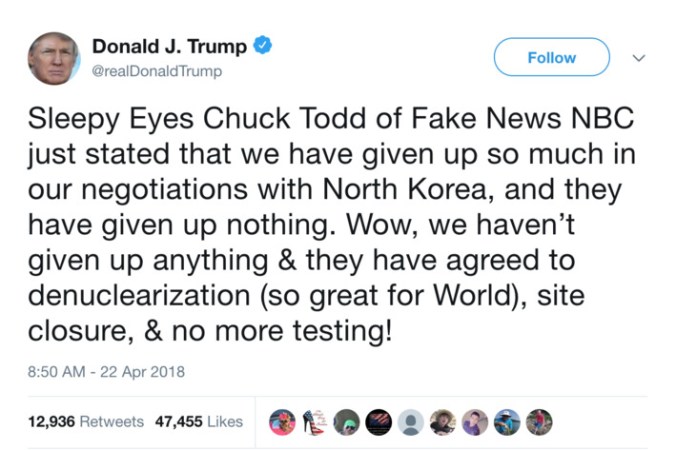
Now, it is easily determined that the North Koreans have not agreed to “denuclearization.” Meetings haven’t even taken place. The tweet is fantasy. This is the kind of thing the mouth-foaming Trump haters point to as an example of the President’s “lying.” A statement that can’t possibly deceive anyone else, coming from someone who habitually makes such statements, is a falsehood, but whether it is a lie is questionable. Does Trump believe this tweet, at least when he wrote it? I suspect so. He communicates–indeed, he thinks— in cloudy generalizations and concept clouds. Is this tweet and its ilk spectacularly irresponsible and self-destructive to his ability to be respected and believed? Oh, definitely. Stupid and embarrassing too. But a lie? I’m not sure. “Trumpism” might be a better term.

Calling out NBC with “fake news” in front of a tweet with fake news is certainly audacious stupidity, however.

3. Now the Good Trump (maybe): Reportedly, spurred by the suggestion of Sylvester Stallone, the President is considering a pardon for Jack Johnson, the first black heavyweight champion (1908-1915) who was hounded by the government and personally destroyed, mostly because of his proclivity to have relationships with white women. Johnson’s primary crime was being a successful, defiant, black man at the height of Jim Crow. The play (and movie) “The Great White Hope” tells his story, which is an American tragedy; Ken Burns also made a superb documentary about Johnson.

Johnson was convicted of violating the Mann Act, for transporting women across state lines for immoral purposes, in his case, miscegenation. Eventually he served time in a federal penitentiary. There have been calls to grant Johnson a posthumous pardon for at least a decade. A 2008 bill requesting President George W. Bush to pardon Johnson in 2008 passed the House, but failed to pass in the Senate. Senator McCain,  Representative Peter King, Burns and Johnson’s great-niece requested a presidential pardon for Johnson from President Obama in 2009, and again in  2016, in honor of the 70th anniversary of Johnson’s death in a car accident. A vote by the United States Commission on Civil Rights also called on Obama to “right this century-old wrong.” There was also a Change.org petition. Obama never acted, causing a firestorm of protest from the Congressional Black Caucus.

No, I’m kidding: it was hardly mentioned in the news media or by black activist groups. And Jack Johnson’s life, despite the fact that hardly anyone under the age of  50 could tell you anything about him, mattered. If President Trump finally does the right thing and clears Jack Johnson’s name, I wonder how progressives and the news media will attack him for it?

4. Wait, why wasn’t he texting, “I’m so terrified!”? James Shaw Jr., 29, rushed a shooter armed with an AR-15 (and not wearing pants) who had opened fire yesterday in a Waffle House in Antioch, Tennessee.  Four people had been shot dead and many other were injured before Shaw grabbed the gun’s barrel, pulled it away and threw it over the Waffle House counter. He suffered a gunshot wound and burns from grabbing the gun’s barrel.  Although his actions are credited with saving many lives,  Shaw Jr. denies that he’s hero. “I was just trying to get myself out. I saw the opportunity and pretty much took it,” he says.

Real heroes seldom regard themselves as heroes. The fact is that he took action, placed himself at risk in doing so, and had the right instincts, exactly the ones this culture is supposed to nurture but increasingly does not: take control of your own fate, and do what needs to be done.

Trust me on this, James (can I call you Jack?): You’re a hero. Continue reading

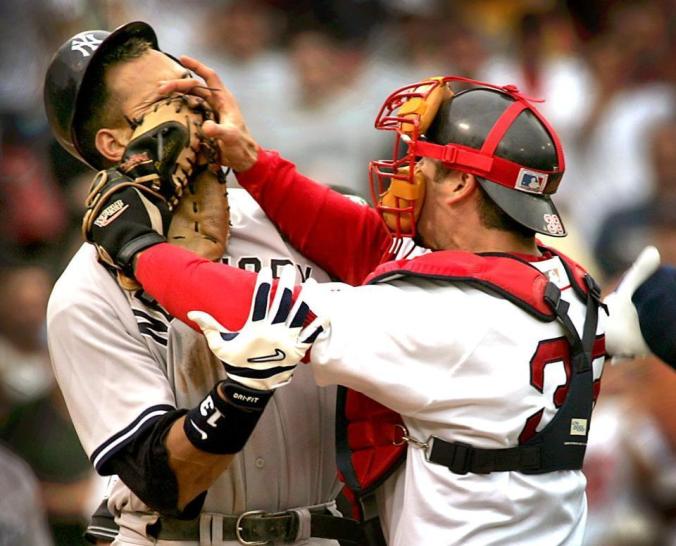
Baseball Brawl Ethics [UPDATED]

I noted in the Morning Warm-Up that last night’s Red Sox-Yankee rumble put me in a good mood. I should elaborate: it’s not because I like seeing a New York Yankee player get a fat lip, although I do. It is because such episodes are usually rife with ethics good and bad, and this one was no exception. Here it is again…

It began with an earlier play. Yankee rookie DH Tyler Austin employed an illegal slide when he was forced at second base. A few years ago, the Dodgers’ Chase Utley broke a shortstop’s leg while sliding into him hard to break up a double play. The ugly injury was on national TV, because it was in the play-offs, and Major League Baseball enacted a major rule change.

From the beginning of professional baseball, runners had been allowed to plow into infielders trying to make the pivot at second base and complete a double play like linebackers blitzing a quarterback. The resulting collisions often wrecked knees, ankles and careers, and a ridiculous tradition developed. Umpires allowed infielders to come off the bag before they actually received the ball for the force-out, as long as they were close to the base. The out was called anyway: it was known as the “neighborhood play,” because the infielder’s foot was in the neighborhood of second. After Utley’s slide, baseball made the attempt to interfere with the double play by slamming into the fielder illegal, with the consequence being that the double play was called complete whether the relay throw to first was completed or not.

Ethically, I applauded the rule change. For one thing, the take-out slide was already illegal: runners aren’t allowed to interfere with fielders according to the original rules, but take-out slides were tolerated, indeed encouraged anyway. As often happens when rules are ignored, integrity suffered, resulting in that absurd “neighborhood” convention. The so-called baseball purists complained, and still are complaining, but trading illegal-but-allowed hard slides that required calling imaginary outs and needlessly injured players for some gratuitous violence in a non-violent sport was always an unwise exchange.

So now a baserunner bearing down on second base when a double-play may be in progress has to slide  at the base, not at the fielder. But last night, Austin had his leg high as he slid, and spiked second baseman Brock Holt, Holt, who never threw to first, had words with the Yankee, and both dugouts emptied, though no punches were thrown. It was an illegal slide, no question about it, but because Holt wasn’t interfered with, the umpires did nothing. No penalty out was called. Austin wasn’t thrown out of the game.

This is when the ancient baseball code kicked in. A Yankee had tried to hurt a Red Sox player with an illegal slide, and had gotten away scot-free. If the Sox did nothing to retaliate, they would be showing weakness. I have literally  seen this plot a thousand times. I said to my wife, watching the game with me, “The Red Sox are going to throw at Austin, and there will be a fight.”

Sure enough, Sox reliever Joe Kelly, who throws pitches between 96 and 100 mph, threw a fastball into Austin’s back  later in the game. Austin charged the mound, as you can see, and all heck broke loose.

Ethics notes: Continue reading

From The Moral Luck Files: Searching For The Tipping Point On Robo-Umpires

Tonight the MLB play-offs end, leaving us with a World Series featuring either the Yankees against the Dodgers (tell me how that one turns out), or the Houston Astros against the Dodgers, which is better. My wife’s wish for a blown ball-strike call so obvious and outrageous as well as game-deciding that baseball resolves to let computers police the strike zone did not, alas, occur.

This did, however:

In the top of the eighth inning of a crucial  Dodgers-Cubs NLDS game, Dodger batter Curtis Granderson struck out. The pitch hit the dirt, and Cubs catcher Willson Contreras, as the rules require when a strike isn’t caught cleanly, tagged Gunderson for the final out of the inning. Granderson argued to home plate umpire Jim Wolf that his bat had made slight contact with the ball. It  didn’t. The replay showed that his bat missed the ball by at least four inches.  Nonetheless Wolf, after conferring with the other umpires agreed that the ball was a foul tip. Gunderson’s at bat was still alive.

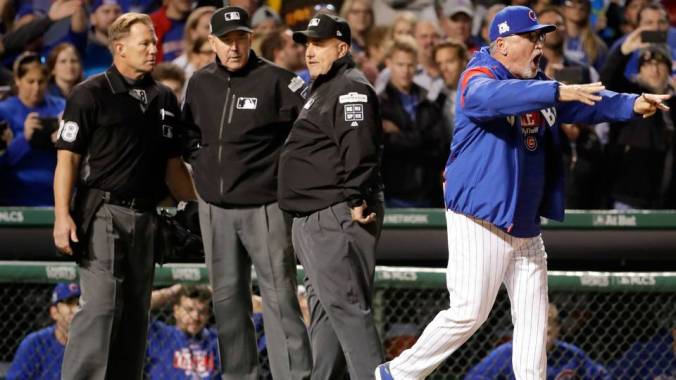
Cubs manager Joe Maddon rushed out to argue the call and was ejected. Meanwhile, the Cubs big video screen in centerfield showed the replay, as the crowd booed. The umpires  deliberately did not look at the Jumbotron. After the game, Wolf watched the video and told reporters that he had indeed, as everyone already knew, blown the call.
Continue reading

How The Human Factor Foils Technology And Ethics: A Case Study (UPDATED)

Baseball finally installed a replay review system to address umpire calls that were shown by TV slow-mo to be clearly wrong. For all the complaining about the system, it was the only ethical choice. Mistaken calls were changing the results of games, and because of technology, this was now obvious to all. Only technology could solve the problem.

Unfortunately, however, human beings still control the technology. Bias, emotion and other impediments to ethics will still prevail more often than we like to think. Yesterday’s Red Sox Yankee game provided a classic example.

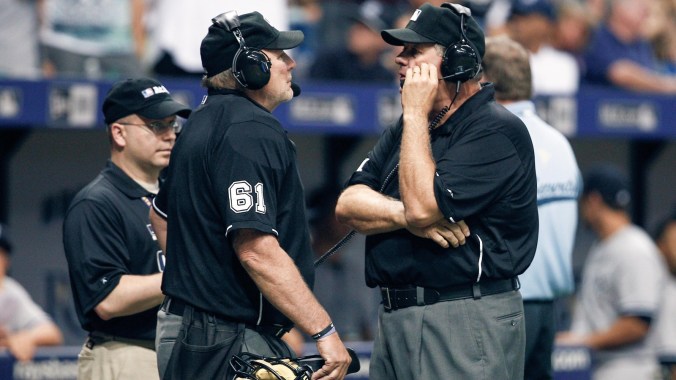
Yankees manager Joe Girardi challenged a safe call on the Sox’s Andrew Benintendi when he slid into second base for an apparent double. The video showed that the second base umpire had missed the play. Upon review—the umpires put on headsets to get the verdict from a New York studio where another set of umpires check the video from multiple angles—the call was reversed, and Benintendi was out.

In the same inning, Red Sox manager John Farrell challenged an inning-ending double play. The review showed Red Sox baserunner Mookie Betts safely reached second before the throw, allowing the Red Sox to score the game’s first run. For the second time in a single inning, Greg Gibson,  the second base umpire, had his call reversed. I have never seen this happen before. For an umpire, this is not just embarrassing, it is professionally humiliating.

Later, in the seventh inning, the same star-crossed (cross-eyed?) umpire  called Yankee Greg Bird  out as he was doubled off second base after a lineout. The video this time was more conclusive than the first challenge: the umpire blew it, again. Bird had beat the throw.

While the challenge was being reviewed, the Red Sox broadcasters, who had concluded that Bir should have been called safe at second, were talking about the rarity of the same umpire being reversed three times in a single game. Sox color man Dennis Eckersley wondered aloud if professional courtesy and loyalty might affect the review.  What he was really asking was whether the umpires in New York would allow a colleague to be exposed to the disgrace of being reversed three times in one game. This wouldn’t only  make him look bad, after all. It would make umpires look bad. Three strikes and you’re out, after all.

Sure enough, the decision from New York was that the call at second was correct. Bird was out, even though the video showed he was safe.

The umpires have plausible deniability here: this was hardly the first time that a replay review seemed at odds with a video. Nonetheless, it was a sobering display. By all appearances, the umpires distorted the game to protect one of their own who was having a terrible night. They were employing the Golden Rule in the kind of setting where the Golden Rule works against an ethical result, not for it.

Fortunately for the umpires, allowing the third blown call at second was allowed to stand had no effect on the game’s outcome, but that is just moral luck. The umpires made a very clear statement. They regard loyalty to colleagues as more important than their profession, the game, their fans, or public trust. They, or at least the umpires involved, cannot be trusted to put aside their biases and conflicts when their duties demand it. Technology may be unbiased, but the humans using it are not. Professionals are not always professional when a colleague’s fate is involved.

Humanity is the ultimate conflict.

When “Ick!” Strikes Out Ethics: The Intensifying Robo-Umpire Controversy

[I see that I last wrote about this issue in April, and before that, in June of 2016, and in 2012 before that.Well, it’s worth writing about again, and again, until ethics and common sense prevails.]

This weekend Major League Umpires held a silent protest, wearing armbands in support of colleague Angel Hernandez, whose competence was publicly questioned by Detroit Tiger player Ian Kinsler. In fact, Angel Hernandez is a terrible umpire, and terrible, indeed, even mildly fallible umpires have a problem now that they never had to worry about in the good old days: their mistakes are obvious and recorded for all to see.

Yesterday Red Sox color man and former player Jerry Remy was reminiscing during the Red Sox -Yankee game broadcast about one of his few home runs. He said he had struck out, missing with his third swing by almost a foot, and was walking back to the dugout when the umpire called him back, saying he had foul-tipped the ball. “I know that was wrong, but I’m not going to argue I’m out when the ump says I’m not.” Remy said. He went back to the plate, and on the next pitch hit a home run. “Of course, they didn’t have replay them,” Jerry added.

Before every game was televised and before technology could show wear each pitch crossed the plate, balls and strikes were called definitively by umpires, many of whom proudly had their own strike zones. “As long as they are consistent with it ” was the rationalization you heard from players and managers. It was, however, a travesty. The strike zone isn’t a judgment call; it is defined, very specifically, in the rules. A pitch is either within the legal zone or it is not. A strike that is called a ball when it is not, or vice-versa, is simply a wrong call, and any time it happens can affect the outcome of the at-bat and the game. If you watch a lot of baseball, you know that we are not just talking about strikeouts and walks.  The on-base average when a batter is facing a 2 balls, one strike count as opposed to a 1-2 count is significantly higher. The wrongly called third pitch can change the result of the at bat dramatically.

Since the technology is available to call strikes correctly 100% of the time, why isn’t the technology being used? Actually it is being used, in TV broadcasts. The fan can see exactly when the umpire misses a call, and the broadcasters talk about it all the time. “Where was that?” “That was a gift!”  “Wow, the pitcher was squeezed on that one.” Once, a missed call in a game was virtually undetectable, because one could assume that the umpire had a better and closer view than any fan or broadcaster could have. Now, there is no doubt.

Yet the players, sportswriters and broadcasters still overwhelmingly argue against the use of computer technology to call balls and strikes. It’s amazing. They know, and admit, that  mistaken  ball and strike calls warp game results; they complain about it when it happens, point it out, run the graphics repeatedly to show how badly a crucial call was botched, and yet argue that a completely fixable problem with massive implications to the players, the games and the seasons, should be allowed to persist.

These are the rationalizations and desperate  arguments they advance: Continue reading

Morning Ethics Update: 8/10/17

http://www.youtube.com/watch?v=15qc3_joy5A

Good Morning!

1. Less than two weeks after social justice bullies on social media chastised actor Mandy Patinkin for agreeing to take the place of a black actor in Broadway’s “Natasha, Pierre & The Great Comet of 1812,”  causing the politically impeccable Mandy to withdraw with humble mea culpas, and the “woke” creator of the  the Tony winning musical to humbly kowtow to the new show business principle that it is better for a show to close entirely, putting everyone out of work, than for a white actor to take over a role from a black actor who took over the role from a white actor in the first place, “The Great Comet’s” producers announced that the show will close in September.

Good job, everybody!

Morons.

2. First Amendment incursions are creeping in from all sides and all angles so fast it’s hard to slap them down. Cowboy Joe West, the major leagues’ longest-serving umpire,was just suspended for three days for comments he made a in an interview with USA Today published on June 20, to mark   the umpire’s 5,000th regular-season game. Asked which player beefed most frequently about his calls, West said “it’s got to be Adrian Beltre.” Beltre, who recently punched his own ticket into the Hall of Fame by getting his 3000th hit, is apparently something of a human Bermuda Triangle for ethics controversies.

“Every pitch you call that’s a strike, he says, ‘Whoa! Whoa! Whoa!,'” West was quoted as saying.  “I had a game with him recently and the pitch was right down the middle. He tells me, ”That ball is outside.’ I told him, ‘You may be a great ballplayer, but you’re the worst umpire in the league. You stink.'”

MLB suspended West for three days, telling the umpires union in a letter that the discipline was in response to an “appearance of lack of impartiality.” Beltre has said that he never assumed West was being anything but facetious. The umpires union is livid, and West is likely to file a grievance.

There are two theories about this strange episode in the Marshall household. I think it’s more evidence of slippage on the societal slope to speech suppression. My wife thinks baseball is laying the groundwork for replacing umpires on balls and strikes with robo-calls. After all, robots aren’t biased.

I hope she’s right, but I doubt it.

3. Why don’t Democrats want to clean up eligible voter rolls?the Justice Department filed a Supreme Court amicus brief  supporting the state of Ohio as it fights to defend its law that purges names from voter rolls if  those names aren’t attached to votes for a significant period. This reverses the Obama Administration’s position, which backed a lower court decision  that it ran afoul of the 1993 National Voter Registration Act.

Why does Ohio want to de-register voters who don’t vote for two years, then are sent notices asking that they confirm their voter registration, don’t respond to the notices ,and continue to not vote for another four years? I assume it is because the state doesn’t want dead people on the voter rolls. Why do Democrats want the names of dead people listed as eligible voters?

I’ll leave that to your imagination… Continue reading