Thanks, Lenddo, For A Brave, New…Crummy…World

I hate you, Jeff, and I hate your friends.

I hate you, Jeff, and I hate your friends.

Some ideas that brilliant young people have in the technology field should have remained unthought, and if thought, promptly rejected on the grounds that however clever and profitable, they will make the world a crummier place. This is one of those ideas:

From CNN Money we learn that Lenddo, a new financial lending companies (apparently none of the brilliant young people work in the marketing department—Lenddo???)  has figured out that one’s Facebook friends, and how friendly you are with them,  are a revealing indicator of your credit worthiness. If one of those FB friends is late paying back a loan to Lenddo, their data indicates that it means you are more of a credit risk than if that friend was right on time. Not only that, if the delinquent friend is someone you frequently interact with on the social network, it means you are even more likely to be a deadbeat.

“It turns out humans are really good at knowing who is trustworthy and reliable in their community,” happily crows Jeff Stewart, a co-founder and CEO of Lenddo. “What’s new is that we’re now able to measure through massive computing power.”  Fascinating, Jeff!

You suck. Continue reading

Scapegoating Ethics

Scapegoat

Meet Rick Eckstein. He understands. Really.

As it does predictably and constantly, the daily drip-drip-drama of baseball has given us another ethics quandary to ponder, arising in the context of the sport but with far more significant applications. The issue: is it ethical for an organization to deal with a crisis by firing someone for symbolic value, rather than for cause?

I have written about this traditional phenomenon in baseball before, but the current example is far less defensible on either tactical or public relations grounds. Last season, the Washington Nationals accumulated the best record in the sport, and though they flopped in the play-offs, were almost unanimously expected to be strong pennant contenders in 2013 by baseball prognosticators and more importantly, their fans. So far, at least, those expectations have been dashed. The season is almost two-thirds done, and the Nationals have been uninspiring at best. They have won fewer games than they have lost, and are trailing the Atlanta Braves by an alarming margin. Their pitching has been worse than expected, and their offense has been atrocious.

As is often the case in baseball when teams have a disappointing season after a good one, there is no obvious way to fix the problems mid-season, other than to hope the players start playing better. Unlike the other major team sports, baseball team performance is notoriously quirky, just like the game they play. Excellent players have down years frequently (though not the same players, or they would no longer be considered excellent). Team chemistry evaporates; the ball bounces funny ways. In the case of the Nationals, the most obvious problem has been a flood of sub-par years from almost all the starting position players, with an unhealthy serving of injuries.

The team’s response to its frustration and, really, lack of any substantive way to address it was to fire the team’s batting coach, Rick Eckstein, last week. Continue reading

ARRRGH! Outrageous Ethics Malpractice By “The Ethicist”!!!!

Well, you did it again, Chuck..you made my head explode. But now I have a place to keep my keys...

Well, you did it again, Chuck..you made my head explode. But now I have a place to keep my keys…

It’s time for Chuck Klosterman, the New York Times’ designated amateur who now handles “The Ethicist” advice column, to hang it up, and let some randomly chosen unemployed New Yorker take a shot at the job. Since assuming his post, Chuck has had good moments and bad, but this botch is embarrassing, and signature significance—no one who isn’t a bona fide Ethics Dunce could make such a terrible call.

Get this: Klosterman was asked whether surreptitiously taking cuttings from plants owned by a shopping center was unethical:

“…While walking through our local shopping center, we noticed a particular plant that we both liked and decided to get it for our patio….My wife thought she could grow it from cuttings, so we went back and took about three or four cuttings from one of the many plants that were scattered around the shopping center. The plant was not hurt or damaged in any manner or form, but my gut instinct told me that this was wrong. Was it?”

Does this question really need asking? Apparently, because the fraud masquerading as an ethicist at the Times thinks it’s a “thorny” question (Chuck likes puns…maybe the column should be called “The Punster”) about an “unethical act that has a positive impact.” ( Helpful hint to Chuck: the issue is stealing.Klosterman then embarked on a rationalization orgy: Continue reading

Superhero Ethics: The Duty To Rescue

Which is the cold, calculating, utilitarian face?

Which is the cold, calculating, utilitarian face?

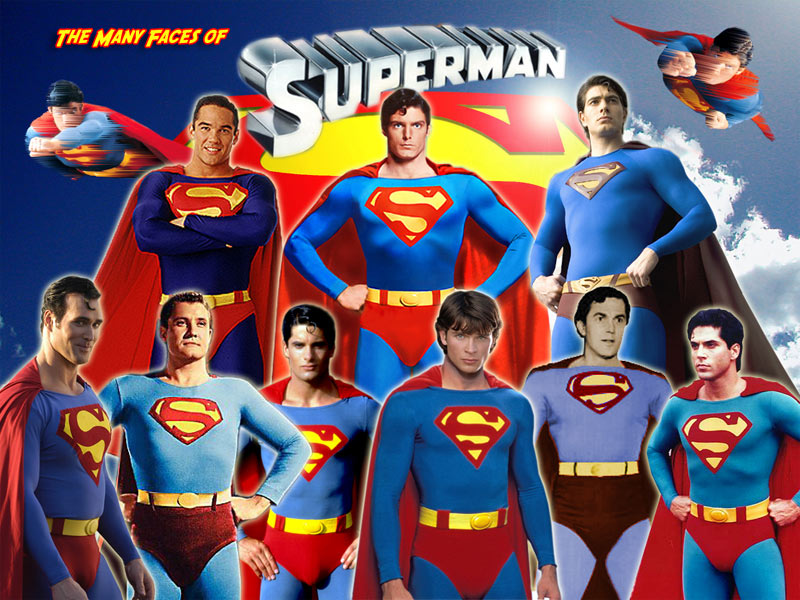
In the new Superman film, Supie fails to rescue an important character in distress after the character requests that he allow him to perish.

Lawyer and superhero obsessive James Daily, co-author of “The Law and Superheroes” and the Law and the Multiverse blog, has taken to his keyboard to examine whether the transplanted Kryptonian had a legal duty to rescue the victim anyway.

His conclusion, and the law’s, is no. Daily writes,

“People are sometimes surprised to learn that, by default, there is no obligation under American law to help or rescue other people…Even “Good Samaritan” laws do not create an obligation to act as a Good Samaritan, but instead only encourage such acts of kindness by shielding some would-be rescuers from legal liability if they accidentally end up hurting rather than helping the victim. This “American rule” (not to be confused with the American rule for attorneys’ fees) applies even when a life could be saved with the most minimal of effort. As a result it has been called “morally repugnant” and “revolting to any moral sense,” but it is nonetheless the law in most states….” Continue reading

The Teacher, The Ex, and Zero Sum Ethics

"Carie? Your ex-husband is hear to see you!"

“Carie? Your ex-husband is here to see you!”

Domestic violence victims advocates are outraged over an incident in which second-grade teacher Carie Charlesworth, a teacher at San Diego’s Holy Trinity School, lost her job because of threatening conduct by her ex-husband.  After an incident where the school was placed on lock-down because Charlesworth’s ex, undeterred by a restraining order, came to the school to confront her, the school district decided that her continued employment was a risk to the safety of the school and its students.

In a termination letter, the district informed Charlesworth that her ex-husband’s “threatening and menacing behavior” made it impossible for her to continue teaching at the Holy Trinity School. Predictably, Charlesworth is angry, and suing. “They’ve taken away my ability to care for my kids,” she says.  She has four. “It’s not like I can go out and find a teaching job anywhere.”  Now she is publicizing her dilemma to dramatize the plight of domestic violence victims.

She is focusing her resources and anger on the wrong parties. Continue reading

The Worst Sting Of All

Not funny, not clever, not necessary. Just cruel.

Not funny, not clever, not necessary. Just cruel.

The combination of the 24-hour cable news glut and the internet causes some significant  distortions in public perception. The public periodically thinks that sharks are mounting an organized assault on humanity, for example, which is bad for sharks. The public believes that gun violence is suddenly worse than ever in the U.S., when it is in fact dropping dramatically, which is good for hysteria-based gun control efforts.  It believes that storms like the recent tornadoes are more frequent and more deadly than they have ever been, leading ignorant news reporters and Congressmen to link the deaths to global warming. This good for Al Gore. In my case, stories like this one, which I would have blissfully been unaware of earlier in my life, come across by computer screen every day, leading me to contemplate moving to Pago Pago, or Mars out of despair for the decline of fairness and intelligence in the human race. I will steady myself and presume that without more detailed evidence, it is foolish to conclude the police and the schools are not, in fact, in league with Satan.

Only some of them are.

In Temecula, California, an undercover cop masquerading as a student orchestrated a drug bust in a Temecula Valley Unified School District high school by befriending and manipulating an autistic boy into obtaining small amounts of marijuana. You can read the whole awful tale here (the boy’s family is suing). Continue reading

Why Photographer Arne Svensen Is An Unethical Creep

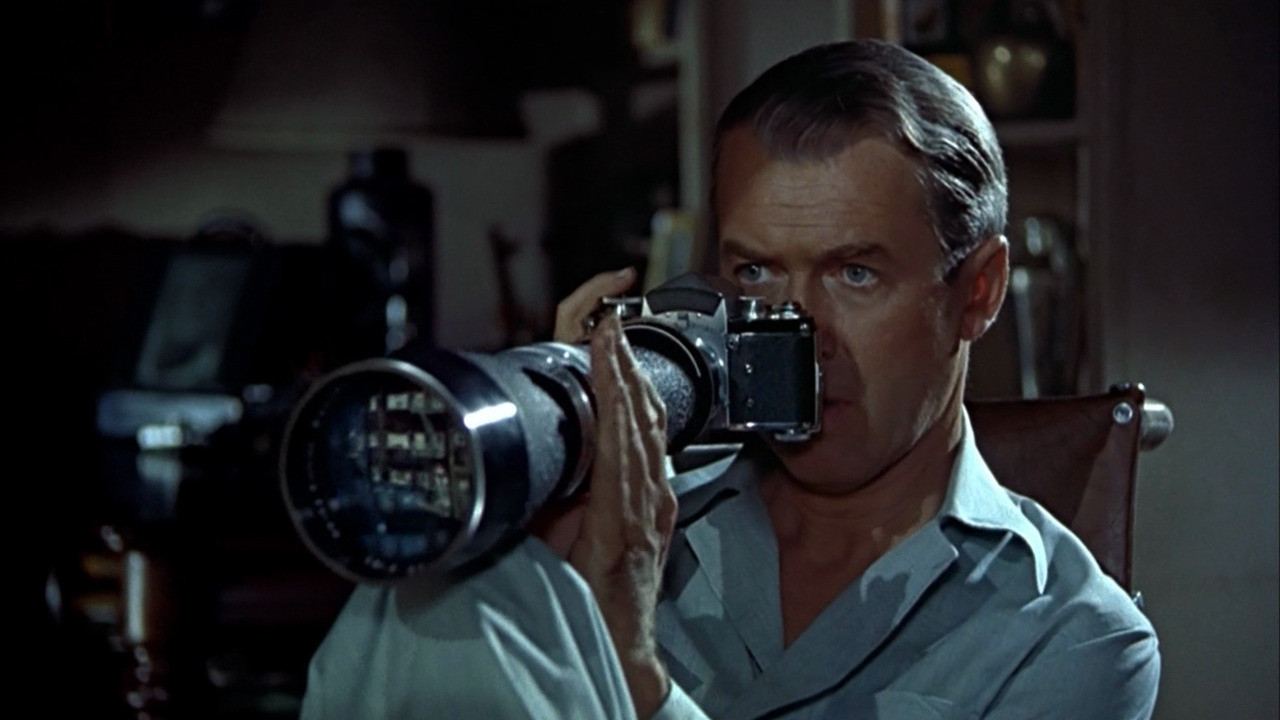
Photographer/artist/ Peeping Tom Arne Swenson as played by Jimmy Stewart in "Rear Window."

Photographer/artist/ Peeping Tom Arne Swenson as played by Jimmy Stewart in “Rear Window.”

“For my subjects there is no question of privacy; they are performing behind a transparent scrim on a stage of their own creation with the curtain raised high. The Neighbors don’t know they are being photographed; I carefully shoot from the shadows of my home into theirs.”

Believe it or not, this is how photographer Arne Svensen justifies his wildly unethical photographic peeping Tom excursions into his neighbor’s bedrooms for his own profit. This artist has provoked a controversy by 1) stalking the people who live in the New York apartment building across from his, 2) keeping a camera lens on them when they dare not to keep their windows shuttered as if they were vampires, 3) shooting photographs of whatever he sees that tickles his artistic sensibilities, fetishes or perversions, 4) choosing photos that do not show the faces of his subject victim, and 5) exhibiting and selling the results as artwork.

Amazingly, his neighbors object!

Let me cut to the chase here and be direct, because any minute now we are likely to find out that President Obama’s EPA has been secretly causing coal mine cave-ins and assassinating oil execs to forestall global warming, and that the President is outraged and just heard about it when we did, and will take strong action by telling the officials involved that they have to sit in the back during the next White House concert, and I’ll be distracted. Continue reading

A Party Of Portmans, Of Cynics, Of Losers, Or No Party At All

GOP-ButtonThe just released GOP post mortem on the 2012 election is either wishy-washy, cynical, ambiguous or confused, depending on your level of charity. Personally, I would call it useless, as any internal assessment is likely to be when an organization knows that it will be dissected by unfriendly critics and used against them by outright enemies. It is also depressing.

In its essence, the report is about “messaging,” a.k.a marketing, a.k.a. “making people like what you’re peddling by not really letting them know the truth about it.” Undeniably, the Democrats have been better at this in recent years, as passing Obamacare without ever explaining what was in it either to the public or the legislators voting for it, running in 2008 as the tonic for all of George W. Bush’s supposed assaults on human and Constitutional rights and then pretty much adopting all of them and a couple more, like drone strikes, and perhaps most of all, making “transparency” a centerpiece of the 2008 campaign and then delivering a governing style that is anything but. “Messaging” to political parties means “lying” to the so-called “low information voter,” and no doubt about it, the Democrats were better at lying—not necessarily more prolific at it, now, but better—than Republicans in 2012

They must be so proud.

Thus the post mortem lurches between vague appeals to messaging and disturbing assertions that principle and integrity are just too darn risky in 2013 America. For example, the report notes that Republicans were tarred as the party of the rich–hardly a new label, based on those 1920’s political cartoons I have on file, but apparently more Americans don’t like rich people, and would rather be poor people who take the rich people’s money, or something…the report isn’t quite clear on why being rich in America is now somehow a bad thing. The report, therefore, seems to suggest a range of alternatives: Continue reading

Ethics Hero Emeritus: Ewald-Heinrich von Kleist-Schmenzin

The first Nazi soldier Ethics Hero.

The SECOND Nazi soldier Ethics Hero!

Ewald-Heinrich von Kleist-Schmenzin didn’t accomplish anything heroic, but boy, did he try. The last surviving member of the most famous and closest call of the many failed plots to kill Adolf Hitler, von Kleist-Schmenzin is a ringing example of how the only difference between a a deathless hero and some guy with an unspellable name that you never hear of until he dies sometimes is just luck, and moral luck at that.

von Kleist-Schmenzin was 90 when he perished at his home in Munich this week, outliving almost all of his fellow conspirators in Operation Valkyrie by just short of seven decades. After that near-miss assassination attempt failed (because the bomb-in-a-briefcase dropped near Hitler’s feet by chief conspirator Claus von Stauffenberg was inadvertently moved just enough to save Der Fuhrer’s miserable life), von Kleist-Schmenzin managed to convince Gestapo interrogators that he wasn’t part of the plot, though in truth he was originally given the assignment of planting the bomb. He ended up in prison (the fact that his father was also involved in the plot and was one of those executed guaranteed that) and later was sent back onto the battlefield, but only random chance prevented him from being remembered as the man who ended the war…in fact, it foiled him twice. Continue reading

“The Walking Dead” Ethics: The Toughest Leadership Dilemma Of All

“Michonne, you’re gone..these are words that Rick choke upon, my Michonne…

“Michonne, you’re gone..these are words that Rick should choke upon, my Michonne…

In the absence of “Homeland,” currently waiting for Claire Danes to get back in shape after becoming a mom, AMC’s “The Walking Dead” is the best ethics show on TV. Apocalypse ethics is instructive and fascinating, because it addresses ethical problems as they were originally considered, before laws, before enforcement methods, and before organized morality. The objective is survival and continuation of the tribe and the species, without abandoning all semblance of humanity.

Yesterday’s episode built to an ethical dilemma of major consequence; naturally, some reviewers thought this was boring. Rick, the former sheriff leading the (mostly) good guys through the zombie-filled wilderness that was once the United States, is trying to protect the group’s refuge, an abandoned prison, from the imminent attack of a larger, better-armed commune run by a deranged psycho who calls himself “the Governor.” A former member of Rick’s group who now consorts (cough!) with the Governor (and who has been rightly condemned as an idiot for doing so, since she either knows or should know that he has the basic instincts of Vlad the Impaler), attempts a mediation to avoid bloodshed, and Rick and the Governor meet to parley. Continue reading