Forget Balancing: Lance Armstrong Is a Villain

A constant conundrum faced by every culture is how it should categorize significant individuals whose positive contributions to society and civilization are marred by other acts that range from the unethical to the despicable. How much bad can a great man do and still be called “great”? How much wrong can a good woman engage in and still fairly be remembered as “good”? Can one wonderful act erase a lifetime of bad conduct? Are some bad acts so terrible that nothing can compensate for them? Every real human being is going to yield to some temptations, make some bad choices, be selfish, be cruel, lie, or worse. If we insist that all our heroes have an unblemished record in every aspect of their lives, we simply forfeit our heroes.

One reaction to this persistent dilemma is that we tend to be reluctant to look under the rock of a heroes accomplishments for fear that we will be disillusioned, or once the rock is lifted, we will attempt to rationalize into invisibility the ugly things we find there, or insist that they don’t matter. Of course they matter. It matters that Thomas Jefferson, who gave this nation its beating heart, didn’t pay his debts, cheated his friends and refused to live up to his own ideals. It matters that Clarence Darrow, who saved over a hundred men from execution, was a terrible father and husband and an unethical lawyer. It matters that Arthur Miller, whose plays dramatized the plight of the aging worker and the dangers of political persecution, rejected his mentally-challenged son, leaving him institutionalized and without contact from his father, though he knew who his father was. Charles Lindbergh, Jackie Kennedy, Diane Fossey, Thomas Edison, George Washington, Andrew Jackson, Frank Sinatra, Ted Kennedy, Pete Rose, Lillian Hellman, Walter Cronkite, Hillary Clinton—the list of the great, near-great, lionized and admired who behaved less than admirably or worse in significant ways can circle the globe. In assessing their character, as well as whether their lives deserve to be regarded as positive or negative influences on their society, fellow citizens and civilization, all we can do is apply a complex balancing formula, with factors in their lives weighted according to ethical principles, experience and our own priorities.

The question of how this balance should be applied has been raised in recent weeks in the wake of the final verdict on Lance Armstrong’s cycling career, which was decisively removed from the categories of “alleged misconduct,” “controversies,”and definitely “witch hunts” for all time as mountains of documentation, lab tests, and testimony moved it squarely into the categories of “outrageous cheating’, “criminal activity”, “corruption” and “fraud.” Continue reading

The Zumba Instructor’s List and Public Shaming In Maine: Choose Your Ethical System

What those Zumba ads never told you…

Kennebunk, Maine’s popular Zumba dance instructor Alexis Wright and her “business partner” are being charged with solicitation and prostitution. Now the Maine Supreme Judicial Court is about to decide whether  Wright’s substantial client list should go on the public record, as it will unless the court agrees to put it and its names under seal.  Defense attorneys will argue that the harm that will result from allowing Wright’s “johns” to be outed to their families, employers and neighbors is too great. “We think there’s a really important principle at stake here: These people are presumed innocent,” defense attorney Stephen Schwartz said. “Once these names are released, they’re all going to have the mark of a scarlet letter, if you will.” Continue reading

Hypocrites of the Year: The NCAA

Emmert: “Never again will the NCAA be blamed for the results of the culture we encourage and support. We hope.” (Or words to that effect.)

What’s wrong with the NCAA’s epic sanctions against Penn State in the wake of the Jerry Sandusky pederasty scandal? I’ve been thinking about this for a couple of days, and I’ve concluded that the answer is “Just about everything.”

Most of the focus of the media and pundits have been on the “punishing the innocent” complaint. As a general rule, I detest aversion to punishing the innocent as a justification for inadequately punishing the guilty or otherwise avoiding necessary steps to address problems; it’s a rationalization for encouraging unethical, exploitive, illegal and even deadly conduct. This toxic rationale has caused incalculable harm across the globe; it currently abets illegal immigration, out-of-wedlock childbearing, and the international crimes of dictators. The United States, within our lifetimes, may drive itself into financial collapse by adopting the theory that it is unfair and unethical to “punish” the expectant beneficiaries of entitlements that the nation can no longer afford by reducing  benefits, or by taxing wealthy citizens who opposed the profligate spending in the first place. As Ethics Bob writes in his post about the Penn State sanctions,

“Accountability for wrongdoing often brings down the innocent along with the guilty. Think about the workers at Enron, Arthur Anderson, or MCI-Worldcom, who lost their jobs when their bosses’ malfeasance destroyed their companies… there is no way of punishing the guilty without harming people close to, or dependent on them. Even a mass murderer–when he is sent away his mother suffers along with him. When Al Qaeda militants are killed, their family members often die with them.”

Bob isn’t making an invalid “everybody does it,” argument, but a practical, “that’s the way the world works” argument.  If we believe in accountability, we have to accept the fact that the innocent will often be collateral damage. It isn’t fair, but this is utilitarianism at its most persuasive. Allowing wrongdoers to  prosper is ethically worse.

If the NCAA sanctions against Penn State were otherwise appropriate, I wouldn’t have a problem with the collateral damage. They aren’t appropriate, however. The sanctions are unethical. Continue reading

Comment of the Day: “The Ethics of Bloomberg’s Soft Drink Ban”

Peter, who is a physician, a libertarian, and one of my oldest friends (we met in the 6th grade) from Arlington, Massachusetts, generously responded to my request for his professional expertise and philosophical perspective regarding the New York City soda ban.  Here is his thoughtful response, the Comment of the Day, on the post The Ethics of Bloomberg’s Soft Drink Ban: 

“It has become a reflex response to answer adverse circumstances with more regulation. To a lawyer, there is always a law, or regulation for any and every misstep in human behavior. Of course, we forget that we cannot predict the unintended consequences, not even to mention reviewing the effects of the laws we pass to determine if they are even having the INTENDED effect. Somehow, we believe that it is appropriate to pass laws to deny other people’s freedoms due to the “discomfort” of whiny types who have the connections and persistence to keep whining until they can get someone to pass a law. The consequence of such legislation’s continued passage, at ever more confiscatory levels of our liberties, is that we are legislating our way into a police state, and the widespread acceptance of the idea that it’s OK to deny personal liberty because it makes someone else “uncomfortable.” Again, as RR so aptly pointed out, “the government that is big enough to give you everything you want, is big enough to take away everything you have.” And this goes for not just your personal assets, but your freedoms as well.

“That said, in this context, yes, drinking lots of sugary sodas will make you fat, smoking will kill you, too much alcohol will kill you, doing extreme sports can kill you, and so on. And as long as one’s decisions affect only himself, have at it. However, when you want me to pay, through my insurance premiums, and my taxes, for the consequences of your stupidity, you cede the sovereignty of your decision to others beside yourself. If you want to ride your motorcycle without a helmet, while drunk, sure, do it. Just don’t expect me to pay the costs of your head injury. Continue reading

The Ethics of Bloomberg’s Soft Drink Ban

It’s a serious problem.”

“Something needs to be done.”

“This is a public health issue.”

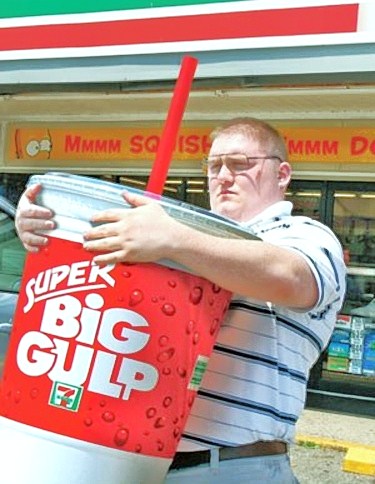
The media defenses of New York Mayor Bloomberg’s controversial decision to ban the sale of large soft drink servings in New York City, and Bloomberg’s defense as well, set up a classic utilitarian argument for a government intrusion into personal choice and lifestyle. It is, simply, that the ends justify the means, and as we all know, sometimes they do.

Sometimes, however, those means sacrifice too much: lives, dignity, fairness, liberty, fun. Sometimes employing those means require crossing lines that have not been crossed before, opening the door to more and greater sacrifices that even advocates of the particular measure would find objectionable and wrong. This leads to the slippery slope dilemma, and invokes absolutism. Some things must never be considered as just means, no matter what the ends being sought may be. Immanuel Kant’s philosophy of absolutism declared that it was always wrong to use human beings against their wills to solve problems, no matter how great the problems are. The Declaration of Independence holds that a human being’s rights to life, liberty and the pursuit of happiness must never be breached by government. Continue reading

“Show Boat” Ethics: Defining Deceit

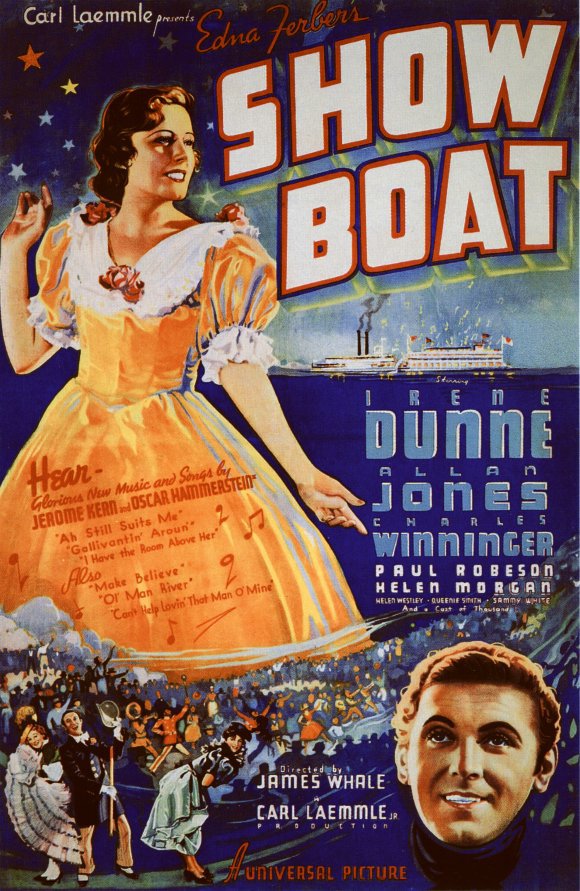
I frequently discuss the concept of deceit in ethics seminars, and my favorite example, which I have also used on Ethics Alarms, is the famous “Does your dog bite?” gag from “The Pink Panther Strikes Again!” This morning I was reminded of an even better example, though not so funny, while watching Turner Movie Classics. TMC was showing the 1936 Hollywood adaptation of “Showboat,” the black-and-white version directed by James Whale of “Frankenstein” fame, that is richer and more faithful to the original Oscar Hammerstein-Jerome Kern Broadway musical than the later, color version starring Ava Gardner, Kathryn Grayson and Howard Keel. Continue reading

T-shirt Ethics and Bigotry In Lexington, Kentucky

The offensive T-shirt design. Honest.

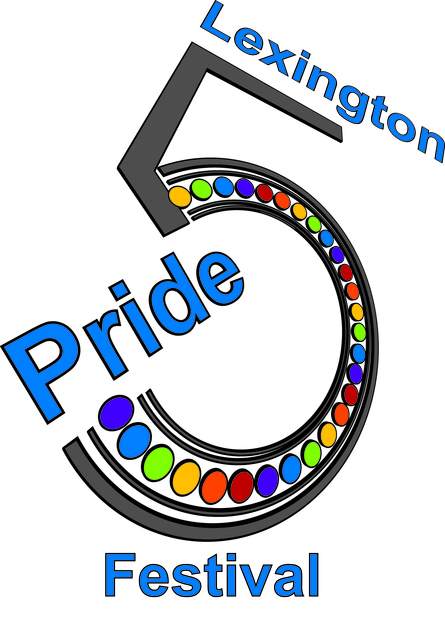
Hands On Originals is a T-shirt company in Lexington, Kentucky that is now under fire for refusing the business of the Gay and Lesbian Services Organization, which organizes Lexington’s annual gay pride festival every June. The organization wanted to print up some T-shirts, and the company told them to take their business somewhere else. The reason: the T-shirt company is a “Christian organization”, and the owners don’t want to assist in promoting a message that goes against their religious beliefs.

The Gay and Lesbian Services Organization filed a complaint, and now there will be an investigation to decide whether this violates Lexington’s Fairness Act, which protects people and organizations from discrimination based on sexual orientation or gender identity. Lexington’s mayor has weighed in against Hands On, and boycotts against the company and the closely related company Wildcat Wearhouse have been threatened. Meanwhile the attorney for the Alliance Defense Fund, which is representing the T-shirt company, argues that “No business owner should be forced to violate his conscience simply because someone demands it. The Constitution absolutely supports the rights of business owners to decline a request to support a message that conflicts with their deeply held convictions.”

I am not going to comment on the legal and constitutional issues, but the ethical issue is clear. Should society respect the choice of a business to refuse to provide products or services to groups, individuals or causes it opposes or objects to on moral or religious grounds? Continue reading

“Blue Bloods” Ethics: The Good Lie?

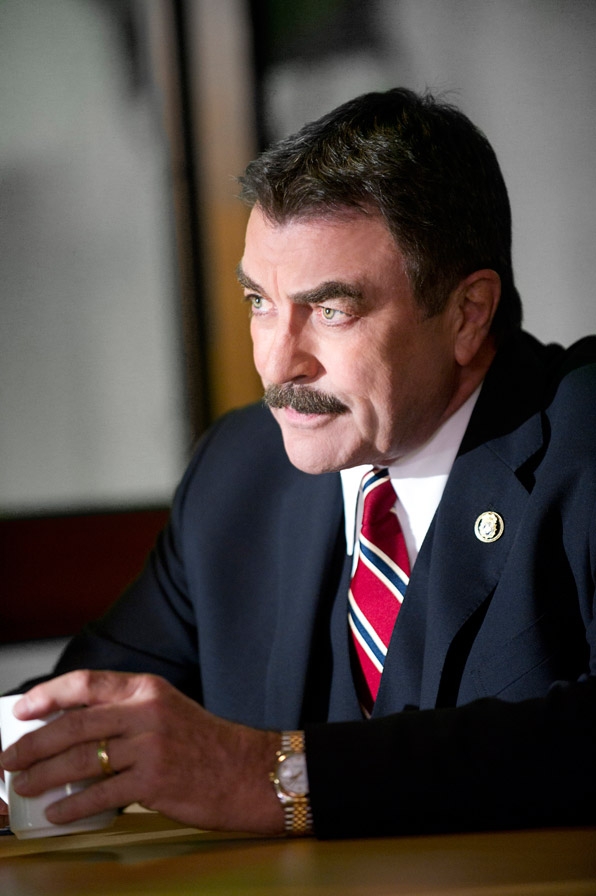
Tom Selleck as NYC Chief of Police Frank Reagan

Tom Selleck’s CBS drama “Blue Bloods,” chronicling the exploits of  the Reagans, an improbable fictional New York City family that dominates NYC’s law enforcement, featured an excellent example of a necessary lie last night, in which utilitarian principles would hold that the lie,  a rather serious and extensive one—many interlocking lies, really—was the most ethical option available.

The situation arose because the Chief of Police (Frank Reagan, played by Selleck) learned that his police officer son, Jamie Reagan, had rescued a child from an explosion, and the press and city were clamoring to know who the hero was. (Nobody saw the rescue, which is a contrived detail, but necessary to set up the ethical dilemma.) But Jamie was also working undercover in a serious and dangerous operation, having infiltrated an organized crime family. (Why was a uniformed cop allowed to stay on the street while leading a double life? Seems reckless to me, but Father Chief knows best.) To protect the undercover operation and his son, Frank Reagan decides on an elaborate deception, persuading his son’s partner, who was on the scene of the rescue, to take the credit and even accept a commendation in a public ceremony.

Lying to the public and the press to such an extent is almost always inexcusable, but protecting an anti-crime effort in the public interest, as well as the imperiled officer involved in it,  is a rare case in which the balance tips away from the truth. The “Blue Bloods” solution was the best one available given the situation and the law enforcement priorities.  But… Continue reading

Obamacare Defenders, Spinning

Are you hypnotized yet?

It would be nice, it really would, if partisans on both sides of a legitimate, close issue of national importance would admit that there are valid arguments on each side, show some mutual respect, and not frame their arguments as if anyone who thinks differently is deluded, stupid or evil.

Thus it has been elevating, if, I suppose, misleading, to read over a year’s worth of debate on the topic now under consideration by the Supreme Court, Obamacare’s so-called individual mandate, over on the scholar and lawyer- glutted blog, the Volokh Conspiracy. Written by distinguished and articulate academics, it is a right-leaning and libertarian site for sure, yet manages to cover all sides of most of the issues it considers thoroughly and fairly. Nobody could read the detailed, case and precedent-filled essays about the individual mandate and think for a moment that its constitutionality is an open and shut case. It’s obviously a very close question, and one that involves far wider implications than merely one health care law. This is one of the periodic landmark constitutional cases in which the Supreme Court is being asked to approve another key adjustment in the meaning of our remarkably flexible but hard to amend national by-laws, or, in the alternative, put up a red flag and a brick wall that reminds our government that there are some things is cannot do, even if it would dearly like to.

If you care about the case being argued in the Supreme Court as I write this, go read some—it would take you a month to read it all—of the discussions on this topic over at Volokh. If you can understand the sometimes technical and overly-dense writing, you will recognize how difficult a legal issue this is. If you can’t understand it, then stop rendering opinions about the case, the mandate, and the inevitability of its approval or rejection. Journalists and pundits should follow the same advice. Continue reading

Poll: 84% Don’t Have a Clue What “Ethical” Means

Was Norman Bates unethical or sentimental? Well..wait, WHAT?

OK, that was a somewhat misleading headline. According to a poll run by ABC News, 84% of the public thinks that cloning dead pets is unethical. But since there is absolutely nothing unethical about cloning dead pets, I think the headline above is accurate. Well, maybe 84% accurate.

The story is over at Sodahead, which is dedicated to dumb polls. The analysis of the poll, if one can call it analysis, is almost totally bereft of anything remotely connected with ethics or ethical theory. In a previous poll on the subject, Sodahead asked those polled to choose whether the practice was “unethical” or “sentimental”, which is a choice akin to, “Do you like baseball, or can you swim?” Of course cloning a pet is sentimental—why else would someone do it? Who came up with the boneheaded idea that sentimental and unethical were mutually exclusive? Norman Bates dressing up as his beloved mother and killing people was sentimental, but I’d also say it was less than ethical. Continue reading